| | In tonight’s edition: Even as the public increasingly leans on AI for basic writing, a recent Financ͏ ͏ ͏ ͏ ͏ ͏ |
| |  Atlanta Atlanta |  New York New York | Los Angeles |
 | Media |  |
| |
|
 - Netflix’s missing piece
- CNN editorial board?
- Jon Stewart’s uncertain future
- Why Netflix walked on WBD
- Daily Mail’s video hire
- Social media ban momentum
- Traffic update
|
|
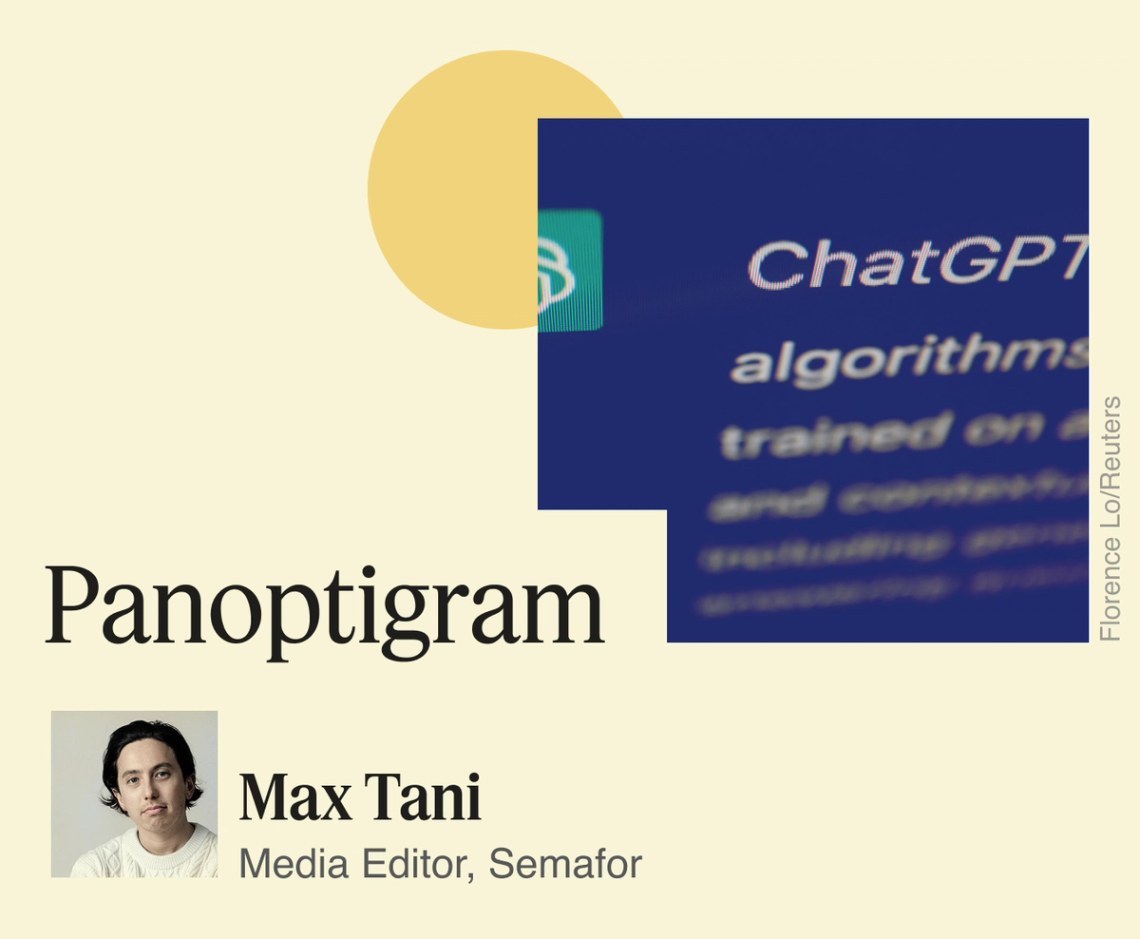 When some uncanny text appeared in an FT column about tariffs and US debt by Harvard Growth Lab Director and Ricardo Hausmann last week, X users called it AI. I was a bit skeptical that a Harvard professor would outsource his authority on the subject to AI, but put a comment request into the Financial Times. And sure enough: An FT spokesperson Sunday pointed me to the update that Hausmann had broken the publication’s rules by using AI to “condense” his work. It’s a strange feature of this moment that even as the public increasingly leans on AI for basic writing, social media power-users are now on high alert for prose exhibiting the hallmarks of AI syntax. (A corollary: It’s never been a worse time to be a high-profile writer with a boring, derivative style.) And media companies are trying, imperfectly, to signal to readers that their writers are not merely large language models. Earlier this summer, Substack announced it would work with Pangram, a popular service that claims it incorrectly identifies text as an AI output only about one in every 10,000 times. Substack said the goal was to ensure that its platform was not overwhelmed with boring AI-generated writing. But the tools are still flawed and, to some, frustrating. The Guardian has continued to bat away suggestions that one of its editors used AI tools to write columns despite viral insistence from people online (citing Pangram) that the pieces are AI generated. And so far, the best way to check for AI plagiarism appears to be broad, crowd-sourced yelling on the internet, backed up by questions from media reporters. Pangram’s CEO acknowledged this to The Atlantic earlier this year, saying the service was a starting point for investigations into AI use, not the ultimate arbiter of whether a piece of writing was written by a machine. Of course, another larger question looms: As AI tools become more closely integrated into everyday writing surfaces, how much longer are we going to care? Also today: The Daily Mail’s strategy for growth, Jon Stewart faces questions over The Daily Show’s renewal under Paramount, and CNN mulls how to hedge against possible Paramount meddling. |
|
Warner Music CEO pitches Netflix music |
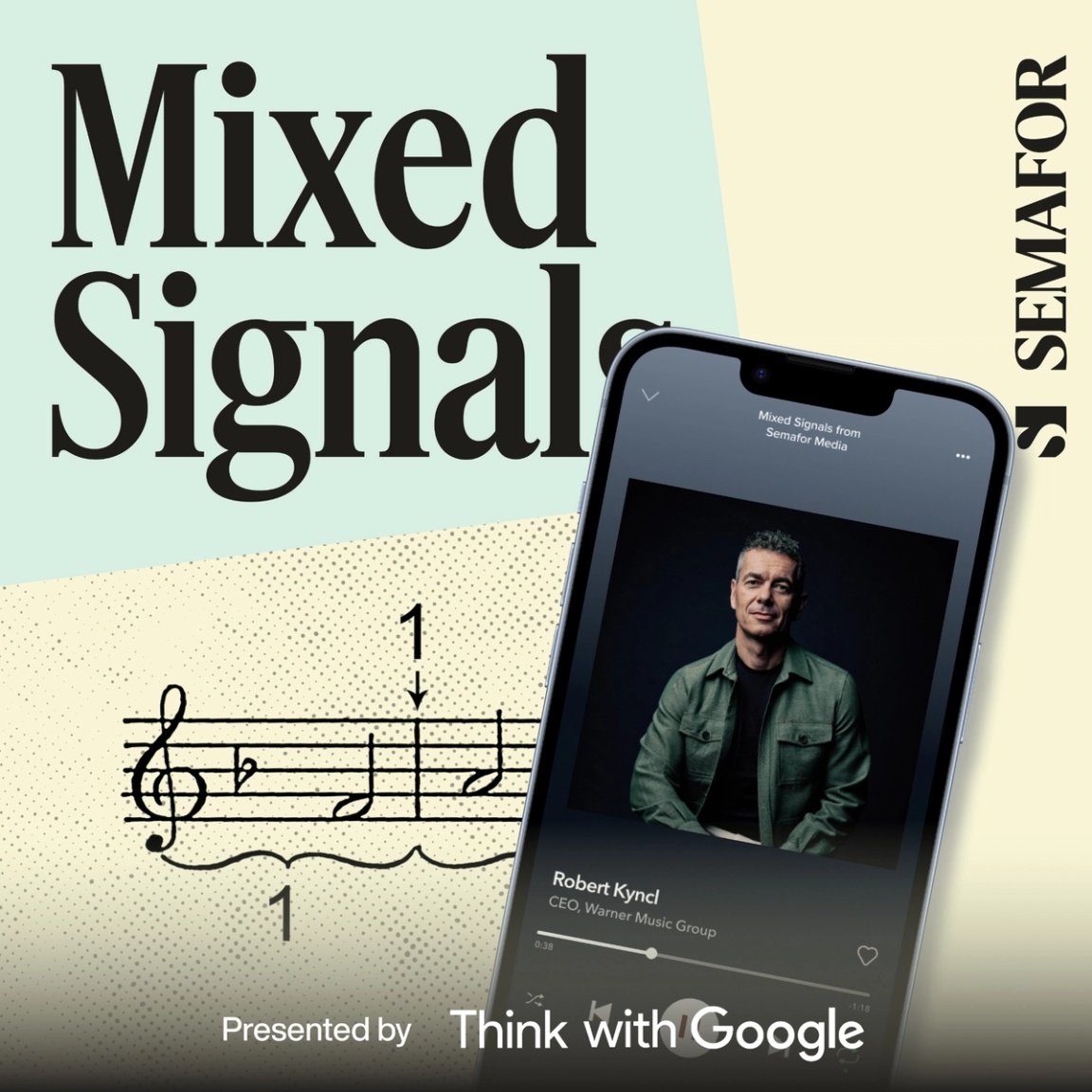 If you were running Netflix right now — growing sluggishly, with YouTube and addictive short-form video eating away at your audience — what would your next big move be? This week’s Mixed Signals guest, Warner Music Group CEO Robert Kyncl, has an intriguing, if somewhat self-serving answer: music. During an hour-long conversation, Semafor asked Kyncl, an early Netflix employee and former YouTube business chief, if he thought instead of licensing one-off video podcast content, Netflix should look to buy Spotify. Kyncl noted that the concert clips and officially uploaded tracks you can watch on YouTube aren’t exclusive to YouTube, even if that’s where people go to watch them. Netflix should just license all of that content, he said, rather than shelling out for Spotify. “It would be the single largest content ingestion that anybody could go through,” Kyncl said. “Imagine a section on Netflix that’s purely music-dedicated, that you can create lots of consumption around, and then [you] create a whole bunch of super interesting original programming on top of that.” |
|
CNN eyes adding editorial board |
 Semafor SemaforCNN’s potential new parent company and its network chief have separately both floated the same idea to assuage viewers jittery about future meddling in the iconic cable news network’s journalism. Last week, The Wall Street Journal reported that Paramount leadership had discussed forming an independent editorial board to oversee CNN as it hopes to complete its merger with CNN parent company Warner Bros. Discovery. The report came days after Endeavor chief Ari Emanuel, a major proponent of the merger, pitched the idea on CNBC. CNN has not weighed in on the idea publicly, as the network awaits the resolution of Democratic-led states’ lawsuits to block the deal. But in recent months, CNN President Mark Thompson has pondered a similar setup. In a private gathering with media executives last November, Thompson informally suggested that the network could establish an independent board, similar to British models like the Guardian’s Scott Trust, which shields the UK media outlet from business-side meddling. |
|
Paramount looks to keep Stewart |
 Cheriss May/Reuters Cheriss May/ReutersWill Jon Stewart walk away from the new Paramount? It’s a question that has been on the minds of Daily Show fans and staff over the course of the last year amid a series of corporate moves that included the cancellation of the Stephen Colbert-hosted Late Show, and the decision by new owner David Ellison to purchase the proudly anti-woke publication the Free Press and appoint its founder to serve as the editor-in-chief of an ideologically different CBS News. Stewart’s deal is up at the end of the year, and while there is strong interest from Paramount in renewing the liberal media icon’s deal heading into a general election season, the two sides have yet to ink an extension. |
|
Hastings: Why Netflix got outbid for WBD |
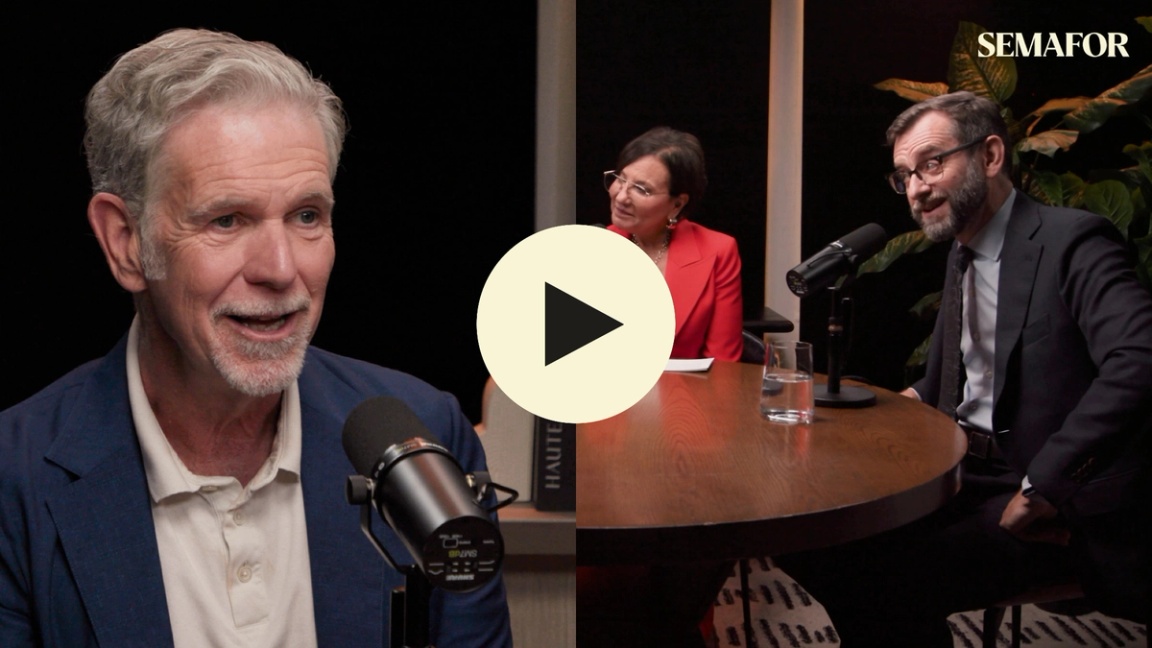 Former Netflix CEO Reed Hastings “wasn’t involved” when co-CEOs Ted Sarandos and Greg Peters conceded to Paramount’s Ellison in the $110 billion bidding war for Warner Bros. Discovery. Hastings was still chairman of the board until this June, the culmination of a years-long succession process — but well before his last day, he was leaving some of the company’s most consequential decisions to his twin successors, he told Penny Pritzker and Semafor’s Andrew Edgecliffe-Johnson on last week’s CEO Signal show. Sarandos and Peters weighed the trade-offs together before deciding they just couldn’t match Ellison’s $110 billion bid. But Netflix is not disinterested in M&A writ large, Hastings said; its CEOs are just waiting for the right buy. “We’ve always been open-minded about acquisitions. Do them when they make sense. Don’t do them when they don’t,” he said, adding: “It kind of depends upon the pricing climate.” |
|
Daily Mail looks to show revenue |
 Toby Melville/Reuters Toby Melville/ReutersThe Daily Mail is bringing in a new business executive with plans to grow its direct advertising and launch (and monetize) popular new shows based around the tabloid’s journalism. On Sunday, the US outpost of the UK tabloid told Semafor that it had hired Mike Rothman, a veteran digital media hand who was most recently president of the center-right news startup The Dispatch, as the company’s new general manager. The publication told Semafor that Rothman will oversee its North American business, with the goal of accelerating subscription growth and building partnerships with advertisers. Rothman told Semafor in an email that the company has long relied on programmatic advertising, but it needs to deepen its commercial partnerships and build new products, in addition to growing its subscription business through personalization, scoops, and tailored subscription bundles. |
|
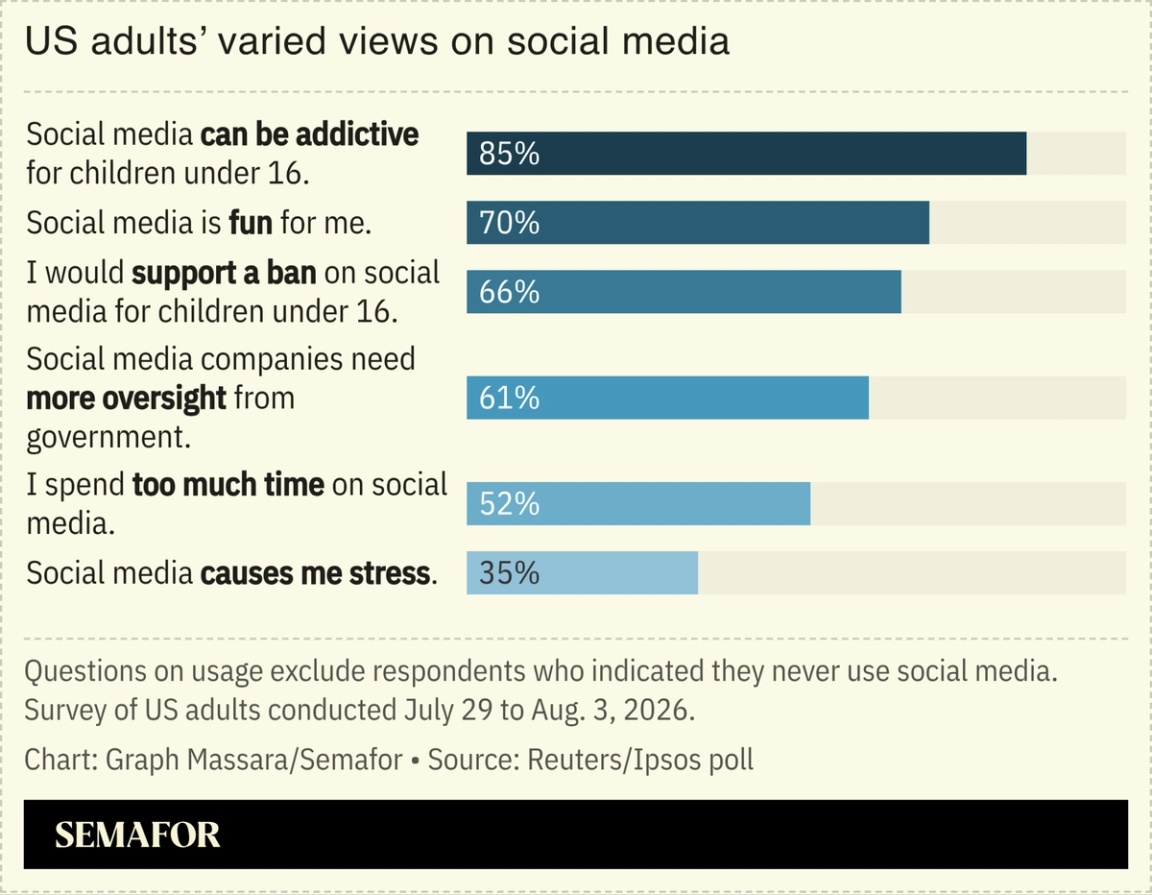 Public support is mounting for a ban on social media access for minors, even if most Americans still seem to like logging on. A Reuters/Ipsos poll out last week found two-thirds of US adults would support a ban for children under 16, matching findings from a Pew survey last month. More striking: Eighty-five percent of Americans said they believe social media can be addictive for minors, and six in 10 said social media companies need more government oversight, including 62% of self-identified Republicans. Still, Americans’ newfound enthusiasm for regulating Big Tech is likely to stop with children: Seven in 10 of the Reuters/Ipsos poll respondents who use social media said they think it’s “fun,” and only three in 10 say it stresses them out. — Graph Massara |
|
 Gabrielle Lurie/Reuters Gabrielle Lurie/ReutersWeb traffic declined 6% in 2025 from the previous year, according to Chartbeat — a big number, but something short of the AI apocalypse. The firm found that as search crashes, it’s been replaced in part by internal traffic — the kind of engagement that registers, for example, if you ping-pong around Semafor’s homepage after reading this. That’s the biggest single driver of web traffic, generating 41% of pageviews year-over-year. Meanwhile, “dark social” referral sources like private messages and emails make up a healthy 10% of traffic as of early this year. (AI, Chartbeat found, still accounts for a comparatively tiny share of overall traffic, which seems to track with polling that suggests relatively few people use chatbots for news.) The upside of this, Chartbeat says, is that the news outlets best poised to survive the SEO death spiral will be those that “build for retention, not just acquisition” — and keep readers reading once they earn that initial click. — Graph Massara |
|
|


