|
|
|
|
|
|
|
|
|
The Home of the Week overlooks the ocean and disappears into its lush B.C. island surroundings. Prime Focus Pictures
|
|
|
|
|
This week: Ontario’s HST rebate isn’t helping condos much, and seniors and students find a novel solution to the housing crisis. Plus, the power deserts threatening Ontario’s home-building goals, and one property worth a look. |
|
|
|
|
|
|
|
|
|
|
HST rebate boosts Ontario home sales, but not condos |
|
|
|
|
|
|
|
|
|
Buyers in Ontario are opting for single-family homes over condos, despite the HST rebate aiming to kick-start sales for both. Fred Lum/The Globe and Mail
|
|
|
|
|
|
|
|
|
The condo conundrum continues. Single-family homes are selling more thanks to Ontario’s HST rebate
on new builds, according to a new industry report this week, but the measure hasn’t had the intended effect on condos sales. In the first three months after the tax break began, 7,215 new detached or single-family homes sold – more than double the same quarter last year, and about 15 per cent higher than the 10-year average – but only 1,195 condos moved, up just 12 per cent year-over-year and a whopping 88 per cent below the 10-year average. |
|
|
|
|
And it’s not just a Toronto problem, according to the report by five industry groups, including the Building Industry and Land Development Association. As Rachelle Younglai reports, condo sales are faltering across the province. In Hamilton and Kitchener-Waterloo, single-family homes sales were around triple last year’s, while condo sales dropped. “The trend everywhere is single-family home sales rising and condos not,” Justin Sherwood, BILD’s chief operating officer, told Rachelle. |
|
|
|
|
|
|
|
|
|
|
|
|
|
|
|
|
Home shares are on the rise, pairing seniors and students looking to save |
|
|
|
|
|
|
|
|
|
Suzanne Petrie shares her home in Barrie, Ont., with 20-year-old Max Benitez-Arreguin, thanks to a growing home-share platform connecting retirees and students. TANNIS TOOHEY
|
|
|
|
|
After retiring from teaching, Suzanne Petrie has found a more unconventional way to continue helping students: living with one. The 65 year old shares her Barrie, Ont., home with a student from Cancun, charging him a low amount of rent in exchange for some chores and watching the house while she’s on trips. “I don’t want to waste space, not when so many people need housing,” Petrie told Kerry Gold. |
|
|
|
|
Seniors with the space and students looking to save are finding home shares a win-win
as Canadian platforms to arrange them explode. SharedSpaces helped Petrie and her housemate Max Benitez-Arreguin connect after it partnered with Georgian College in 2023, where the 20-year-old just finished his occupational therapy assistant studies. The platform operates in several provinces and just started in Metro Vancouver, one of several regions that a federally funded home-sharing platform, Sparrow, also covers. |
|
|
|
|
But the novel solution to the housing crisis – and for seniors who don’t want to downsize – isn’t just about saving money. “It’s also about strengthening communities and creating meaningful connections at a time when many Canadians are feeling increasingly isolated and disconnected,” SharedSpaces CEO Rylan Kinnon told Gold. |
|
|
|
|
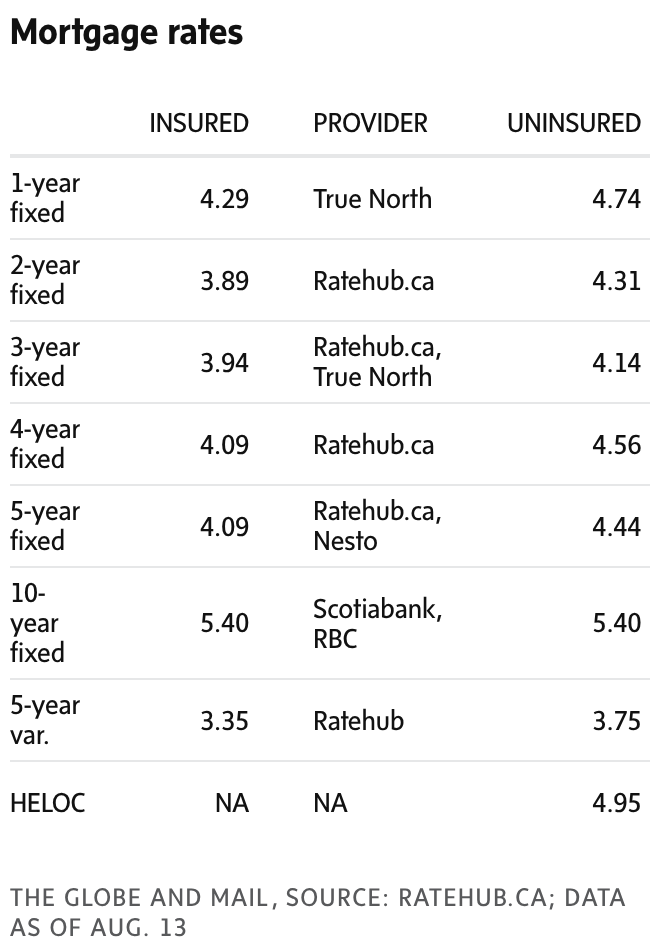
This week’s lowest fixed and variable mortgage rates in Canada |
|
|
|
|
|
|
|
|
|
|
|
|
|
|
|
|
|
|
The power crisis threatening Ontario’s housing goals and your electricity bills |
|
|
|
|
Those empty lots where new subdivisions were meant to be built around Toronto? They could mean you’ll pay more for your electricity soon in Ontario. Power deserts are short-circuiting plans to build much-needed housing, thanks to a patchwork of local electricity companies without the infrastructure to connect many of the 1.5 million new homes Ontario has pledged. |
|
|
|
|
As Matthew McClearn reports, the province’s fragmented power grid is in need of major last-mile upgrades – estimated up to $120-billion – but developers, local distribution companies and municipal governments are fighting over who will foot the bill. |
|
|
|
|
And in the meantime, lots for proposed subdivisions in communities around Toronto, like Brooklin where he visited, remain empty. “It would be like organizing a railroad, having all your main lines, all the engineers, but you don’t have any track into a station,” David McFadden, a long-time energy lawyer who has served as chair of Toronto Hydro’s board of directors, told Matthew. |
|
|
|
|
The province’s Energy Minister Stephen Lecce is weighing options, and what he decides to do could change who owns the LDCs and drive up your power bills or property taxes, depending on who gets stuck with the tab. So read Matthew’s deep-dive into the Ontario’s power struggles and keep an eye on your electricity rates. |
|
|
|
|
|
|
|
|
|
|
Are ceiling fans really the kiss of death for decor? |
|
|
|
|
|
|
|
|
|
Ceiling fans are an affordable way to keep cool – and they don't necessarily have to be ugly. ALEX LUKEY/Supplied< |