| | In today’s edition: The Gulf stays stuck between war and peace, Iran prepares for a long conflict, a͏ ͏ ͏ ͏ ͏ ͏ |
| |  Washington, DC Washington, DC |  Ankara Ankara | Abu Dhabi |
 | Gulf |  |
| |
|
 - Indefinite war footing
- Iran set for long conflict
- Türkiye’s F-35 dilemma
- Crucial conference season
 There are two wolves lurking inside of AI. |
|
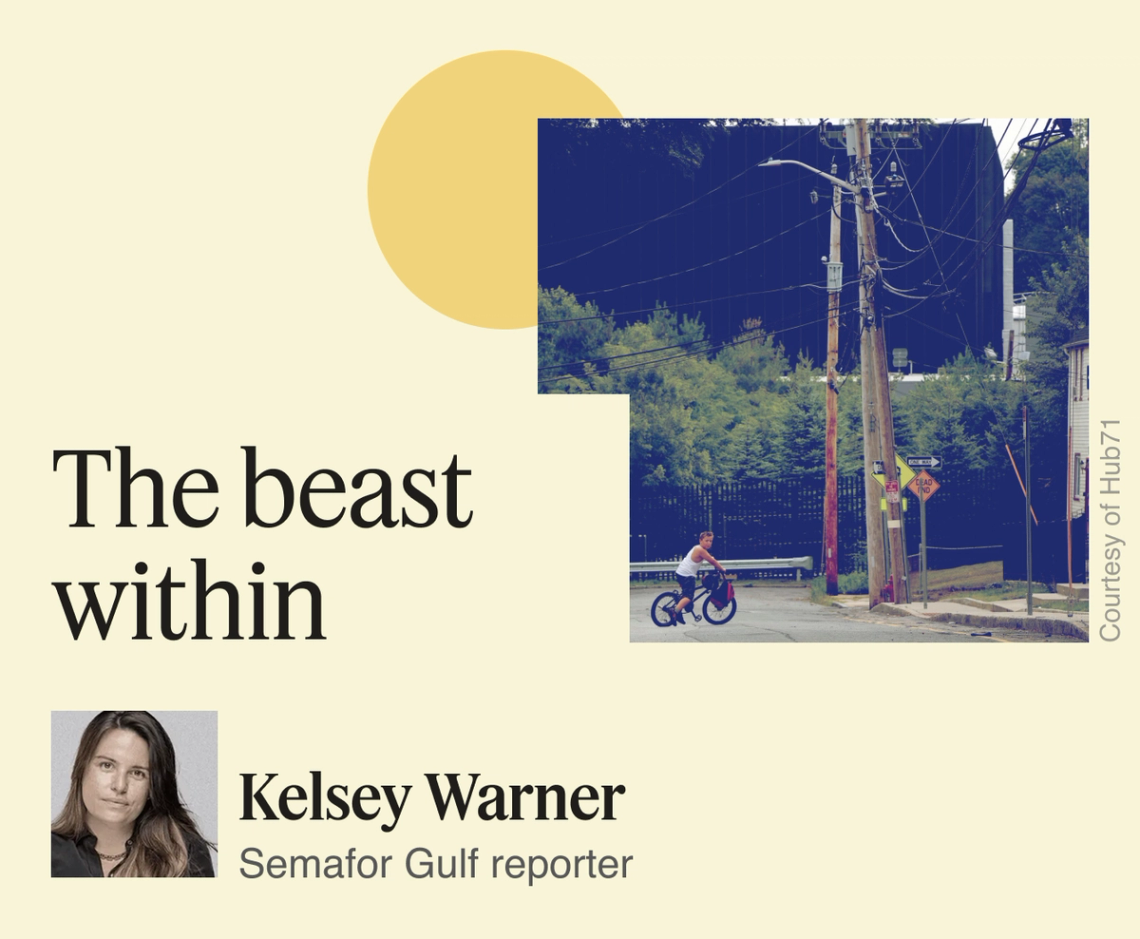 There are two wolves inside AI. The light wolf may reside somewhere in the Empty Quarter between Abu Dhabi and Riyadh, where new AI buildouts are packaged as straightforward infrastructure projects attracting big backers with the promise of cheap land and plentiful, inexpensive energy. It’s in AI’s promises to accelerate the energy transition and help transform economies long dependent on oil, making them more livable, healthier, and prosperous. And it could be in “good news” stories, like the discovery of a potential non-opioid pain medication in a UAE lab. The dark wolf is easier to find. It lives closer to Wall Street, where there is talk of a bubble. Nvidia’s $500 billion deal with some of the world’s largest finance houses this week — Blackrock CEO Larry Fink described it as a “future for financial engineering” — is the latest example. It may be in a planned Amazon data center that could become the single biggest polluting power plant in the US. Or perhaps it’s in the 75 American data center projects worth $130 billion that were blocked or delayed in the first quarter of this year alone. The Gulf is feeding both wolves. Its sovereign funds are limited partners in the American buildout and investors in the frontier models. At home, rulers, policymakers, and business have embraced AI. The Gulf’s domestic plays are smaller than what is happening in the US, but its target to offer advanced computing to much of the Global South points to its ambition. The US, however, remains the center of gravity of this “everything is AI” era, as a PitchBook research director put it to me this week, pulling dollars out of other markets. How these beasts coexist — and just how exposed the region is to one or the other’s success or failure — is anyone’s guess. Email me if you have any idea. |
|
Gulf stuck in war-and-peace limbo |
 US Navy/Handout via Reuters US Navy/Handout via ReutersThe “region cannot remain in a state of neither war nor peace indefinitely,” Anwar Gargash, diplomatic adviser to UAE President Sheikh Mohamed bin Zayed, warned this week. But this limbo looks likely to persist. US President Donald Trump is taking a “low-key” approach to squeezing Iran economically, while his energy secretary says as many as 15 million per day of the prewar 20 million barrels of oil that passed through the Strait of Hormuz are making it to consumers. It’s clear that these flows are helping to keep prices below $100 a barrel despite nearly six months of disruption, but liquefied natural gas, fertilizers, and other goods are still trapped in the Gulf. Diplomatic efforts are being revived: Pakistan is pushing for a renewed 60-day pause under a new US-Iran framework. But, as Abu Dhabi newspaper The National argued, another ceasefire falls short of the Gulf’s need for a durable settlement protecting navigation through Hormuz and removing the “recurring threat of war.” Washington is maintaining its war posture, as is Iran (see below). The Wall Street Journal reported that a fresh US aircraft carrier will relieve one that spent a record of more than 250 consecutive days at sea. The US secretary of war insisted the naval blockade of Iran can continue “indefinitely.” |
|
Iran digging in for a long war |
 Majid Asgaripour/WANA (West Asia News Agency) via Reuters Majid Asgaripour/WANA (West Asia News Agency) via ReutersIran’s recent reshuffle, as well as its shifting battlefield tactics, suggests it is adapting for a lengthening conflict with the US. Tehran has reordered its leadership in part because of repeated assassinations of its top brass by American and Israeli strikes. But the changes also indicate that Iran is “preparing for a prolonged confrontation,” an expert wrote in Foreign Policy, noting that Iran was centralizing its military apparatus and increasing its focus on offensive operations. The use of a drone swarm against a US fighter jet, meanwhile, pointed to how “Iran has sought to learn and implement important lessons about the modern battlefield,” in particular from the Russia-Ukraine conflict, the Institute for the Study of War said. |
|
Türkiye-US fighter jet deal headwinds |
 Emrah Gurel/Reuters Emrah Gurel/ReutersTalks over the UAE buying Türkiye’s Russian-made S-400 air defense system — a workaround that would clear the way for Ankara to receive US-made F-35 fighter jets — have stalled, Semafor reported. The conversations come as Abu Dhabi deepens its integration into US missile defense: Lockheed Martin this week won a $211 million contract to provide additional THAAD launchers for the UAE, the first international customer to buy the system, which was deployed against Iranian missiles this year. Acquiring the S-400 would then, in turn, complicate the UAE’s efforts to buy F-35s. Saudi Arabia is separately lobbying for its own F-35s, though there has been no public progress since November. One US official told Semafor that a sale to the UAE is still possible, noting that it has “no problem buying sh*t from the Russians.” |
|
Abu Dhabi’s closely watched RSVPs |
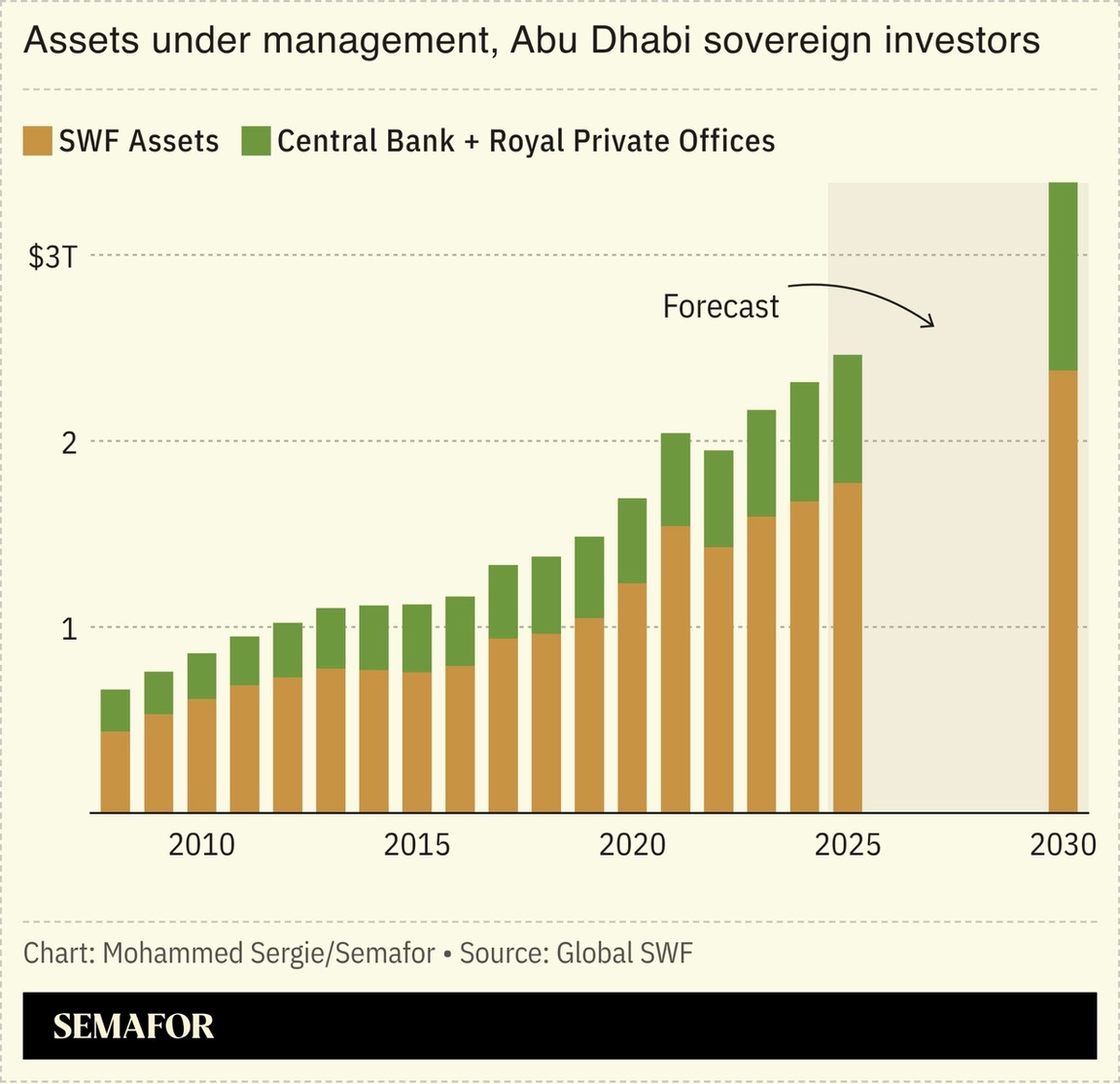 The titans of finance are lining up for Abu Dhabi Finance Week, the multiday gathering of private capital, sovereign wealth, and crypto executives in the UAE’s self-styled “capital of capital” this December. The roster includes Allianz CEO Oliver Bäte, State Street chief Ron O’Hanley, Morgan Stanley international CEO Clare Woodman, Temasek’s Dilhan Pillay Sandrasegara, and Standard Chartered’s Bill Winters. Much hope is pinned on tentpole events like ADFW, or FII in Riyadh, to substantiate the Gulf’s comeback story in the second half of this year. But without a resolution to the war in Iran, organizers are left in a state of uncertainty. Attendee lists will be scrutinized for the faithful: An absence could mark a fair-weather fan — or perhaps just someone without the necessary insurance coverage. — Kelsey Warner |
|
| |