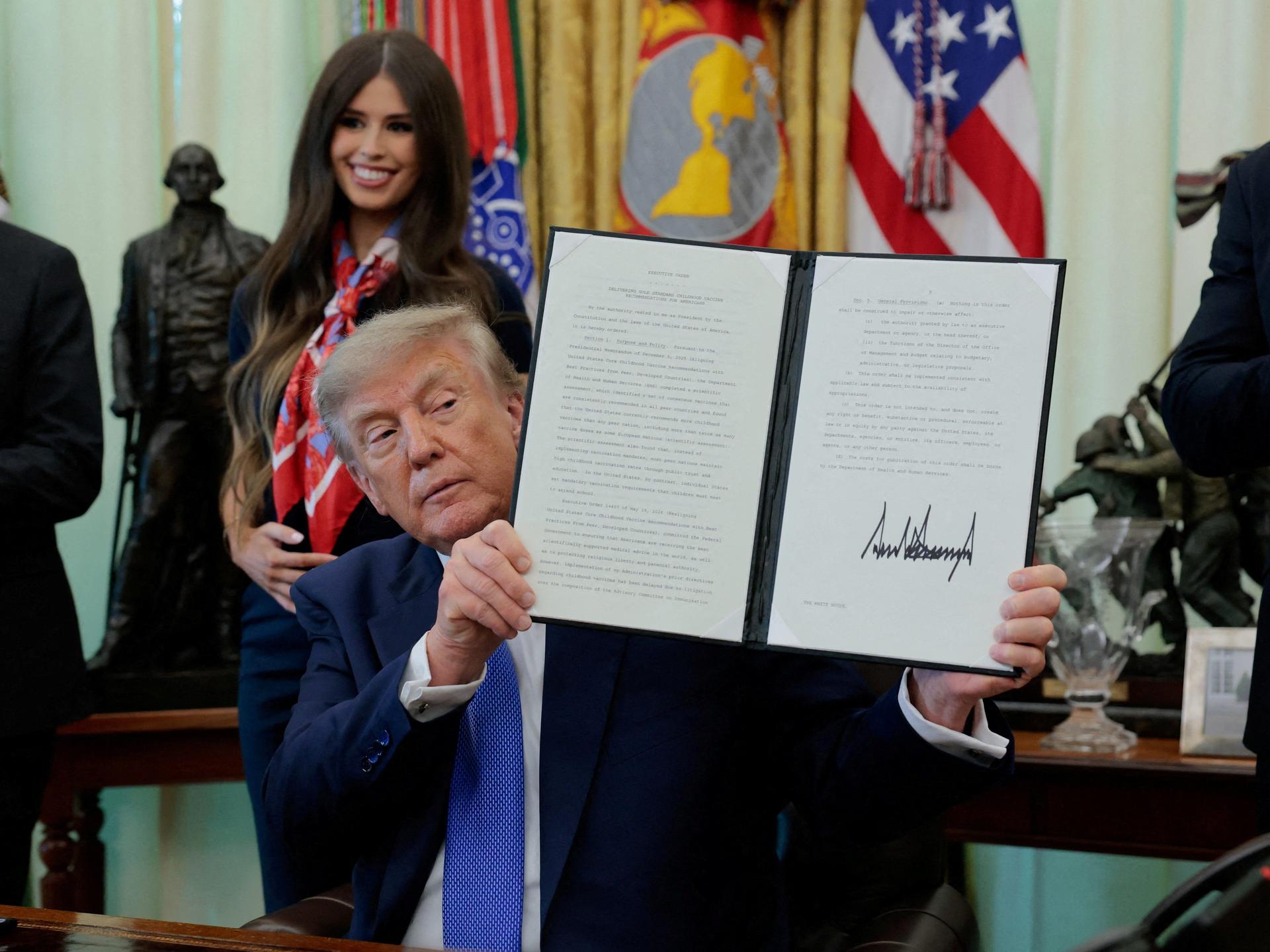
On Monday, U.S. President Donald Trump signed an executive order that, among other recommendations, directs agencies to split the measles, mumps, and rubella (MMR) vaccine into three separate shots. Although Trump claims the decision will align the U.S. vaccine schedule with scientific evidence and best practices from peer countries, no other developed countries appear to promote a comparable set of recommendations. The order, which comes as the United States faces its largest measles outbreak in decades, ignores evidence that the combined MMR vaccine is safe and offers no credible proof that separating it into three shots would make it safer.
To lead this week’s edition, Luciana Borio, CFR senior fellow and former chief scientist of the U.S. Food and Drug Administration (FDA), and Philip Krause, the FDA’s former deputy chief for vaccines, explain how fragmenting the childhood vaccine schedule could lead to missed pediatrician appointments, lower vaccine adherence, and poorer health for American children.
Meanwhile, the number of noncitizens living in Japan exceeded 4 million, the highest number since the country began keeping record in 2013. But as Japan recruits more foreign workers to supplement its aging population, it will need to reform its health-care system to accommodate them. Hansani Madushika Abeywickrama, an assistant professor of health sciences at Niigata University, outlines how language barriers and cultural nuances prevent immigrants to Japan from accessing quality care.
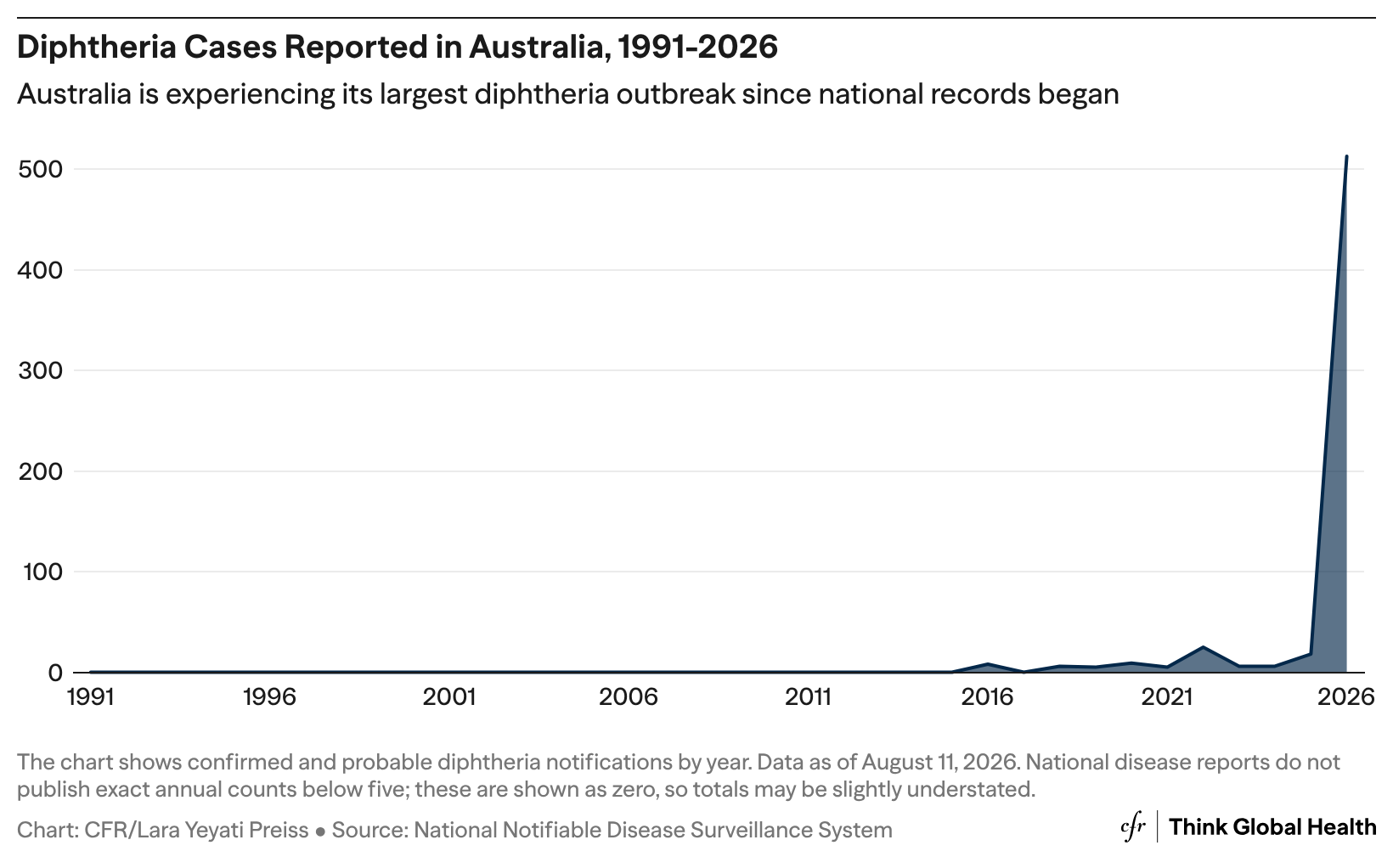
To wrap up, journalist Sam Nichols describes how Australia’s largest diphtheria outbreak in decades, which has disproportionately affected the country’s Indigenous communities, is symptomatic of wider health inequalities.
Until next week!—Caroline Kantis, Associate Editor