|
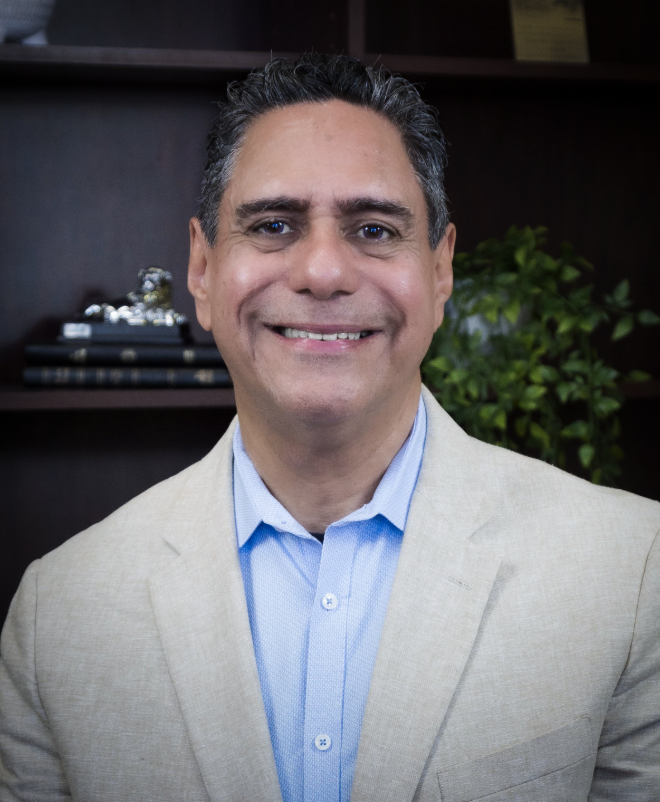
By Stephanie Rasmuson Sam Acevedo has spent more than two decades working at the intersection of faith, education, and community service in Boston. Today, as lead pastor of Congregation Lion of Judah, Acevedo leads a predominantly Latino, charismatic Christian church whose influence extends well beyond its congregation. Through educational initiatives, immigrant services, youth programs, outreach to those experiencing homelessness and addiction, and partnerships with churches throughout Greater Boston, Lion of Judah has established a broad presence across the region. For Acevedo, however, the path to leading the church was anything but predetermined. Born in New York, Acevedo grew up as the son of an Assemblies of God pastor serving in Spanish Harlem. Around fifth grade, his family relocated to Orlando, Florida, where he spent the remainder of his formative years and eventually attended Stetson University. Acevedo is one of four siblings, and much of his extended family eventually followed a similar migration from the Northeast to Central Florida, leaving Acevedo as the only sibling separated. Faith was a constant presence throughout his childhood. However, Acevedo recalls reaching a point around age 12 when Christianity became a personal conviction rather than simply the faith he had inherited from his parents. “There was a moment where Jesus became my God, not just my parents’ God,” Acevedo said. Around the same time, he began wrestling with an unexpected sense of uncertainty about his future. “I looked at my future. It was like this wide-open ocean, and I knew—I just had this foreboding sense—I was going to drown in this thing without Him,” he said. One of the first people to recognize his leadership potential was his seventh-grade American history teacher, Daniel Carmichael. Carmichael encouraged the young Acevedo to run for student government, pushing him toward an experience entirely outside his comfort zone. “I’d never run for anything in my life—never made a speech in my life,” Acevedo said. It became an early introduction to leadership and one of several formative encounters Acevedo now credits with helping direct the course of his life. He later became the first member of his family to attend college. But the years following graduation brought a period of profound personal uncertainty. His marriage ended, he moved through four jobs in roughly two and a half years, and eventually found himself staying in his aunt’s apartment in a housing project in Spanish Harlem. Although Acevedo had considered himself a Christian throughout his life, he said those circumstances forced him to confront the difference between professing faith and relinquishing control. “Jesus was indeed my Savior, but he had not yet become my Lord, not fully,” Acevedo said. “He was more of a consultant, and I still ran my life as the CEO.” In February 1988, Acevedo said he reached his lowest point and contemplated taking his own life. He remembers that night as a decisive turning point when his faith became an act of complete surrender. “Why don’t you just die to me? Let me surrender your life and your life over to me,” Acevedo recalled hearing from the Lord. His response was simple. “So I tossed Him the keys of my life,” he said. Within a few years, Acevedo arrived in Massachusetts to attend Boston College Law School, beginning a chapter that would eventually redirect both his professional life and his understanding of his calling. While studying law, he began attending Central Baptist Church in Cambridge, where he met pastors Roberto and Mercedes Miranda. The relationships he formed there would prove consequential. Acevedo said he became “absolutely enamored” with the congregation. Even after graduating from law school and spending six years practicing law in New York City, Roberto Miranda remained an important pastoral influence in his life. Boston remained equally difficult to leave behind. During his law school years, Acevedo had developed a conviction that the city was poised for what he understood as a future spiritual awakening. “I became as convinced as I’ve ever been anywhere else or at any time that Boston was primed for a special visitation from God,” Acevedo said. He also believed the congregation he had encountered in Cambridge would have a role in whatever came next. He likened the conviction to an astronomer who knows that a remarkable event is about to occur in a particular corner of the sky and trains his telescope toward it. “I did not want to miss out when Boston went nova. I wanted a front-row seat when this happened,” Acevedo said. “I wanted to be part of it.” In 1999, he returned to Boston. By then, the church Acevedo had known as a law student was undergoing a transformation of its own. Under Roberto Miranda’s leadership, Central Baptist Church moved from Cambridgeport into Boston and became Congregation Lion of Judah. The church acquired the first building of what would become its three-building campus at 68 Northampton Street in 1993. Miranda envisioned a congregation whose influence would reach not only Boston’s Latino community but the wider spiritual and civic life of the region. Acevedo’s first significant full-time leadership role after leaving the legal profession, however, was not behind a pulpit. It was in education. Acevedo became executive director of the Higher Education Resource Center (HERC), an initiative developed under Lion of Judah to expand educational opportunities for students who historically faced barriers to higher education. HERC built its model around placing coaches directly inside public school classrooms. Many of those coaches were young college graduates who had themselves been among the first in their families to earn degrees, giving them firsthand familiarity with many of the challenges facing the students they served. The organization primarily works with Black, Latino, and other historically underserved students, providing guidance that extends beyond college admissions. Students can remain connected to the program from seventh grade through completion of their college degrees. Under Acevedo’s leadership, HERC strengthened its relationship with Boston Public Schools and expanded its reach. Today, coaches serve students in Boston, Chelsea and Revere. Lion of Judah materials document HERC coaches working in 13 Boston public high schools in addition to neighboring communities. According to Acevedo, the organization now serves approximately 1,600 students, including those who continue receiving support while enrolled in college. That work became one of the clearest expressions of a principle that would later characterize Acevedo’s pastoral leadership: ministry, in his view, must extend beyond the walls of a church and into the practical needs of the surrounding community. Acevedo’s involvement in education has also extended beyond HERC. He was a founding trustee of Boston Trinity Academy, a Christ-centered college preparatory school in Hyde Park, and continues to serve on its Board of Trustees. Founded in 2002, the school educates students in grades six through 12 in an academically rigorous environment rooted in faith, integrity, and service. Boston Trinity currently enrolls 265 students, the majority of whom come from African American, Latino, Asian American, and multiracial families. More than 65% of students receive financial aid, and the school reports a 100% college or university placement rate among its graduates. The relationship between Boston Trinity and Lion of Judah extends beyond Acevedo’s own involvement with the school. Students from Lion of Judah families attend Boston Trinity, and the school has maintained an active connection with the congregation, including outreach and admissions events held at the church. Acevedo also serves as a trustee of Gordon College, a Christian liberal arts college in Wenham. He joined Gordon’s Board of Trustees in 2023, extending his involvement in Christian education from middle and high school students through higher education. After Roberto Miranda died unexpectedly in 2022, Acevedo joined Lion of Judah’s staff full time. He was succeeded at HERC by a leader he said he had mentored for a decade. Miranda’s death also confronted Lion of Judah with a significant transition. Acevedo was eventually tasked with helping lead a congregation whose identity had been closely associated with its longtime pastor. Rather than viewing that position as ownership of Miranda’s legacy, Acevedo speaks of it in terms of stewardship. “My role is—I’m the steward,” he said. The responsibility encompasses a church whose work now reaches into education, immigrant services, youth outreach, women’s ministries, and assistance for people confronting homelessness and addiction. Agencia ALPHA, which emerged from Lion of Judah’s work and later became an independent nonprofit organization, serves immigrants throughout New England. The church’s women’s ministries have attracted participants from Massachusetts and neighboring states, while its youth programs have brought together Latino, Anglo, Brazilian, and African-American young people from congregations across the region. Lion of Judah draws between 650 and 800 people to its two Sunday services each week. Its online audience is larger, with roughly 2,000 people typically watching services live through platforms including Facebook and YouTube. Miracle Mile Ministries has become another significant expression of that community-oriented approach, serving people affected by homelessness and addiction. The initiative has also evolved into a gathering point for Christians across Greater Boston. Acevedo reported that the number of churches and ministries represented among Miracle Mile volunteers grew from 47 in 2022 to 258 in 2025, with approximately 700 volunteers participating during the previous year. For Acevedo, that expanding network points to something larger than the growth of any individual ministry. “And it’s not static; it’s growing. It actually seems to be escalating,” he said. That collaborative approach is central to Acevedo’s vision for Lion of Judah. His ambition, he said, is not simply to increase the size or prominence of his own congregation. A 2022 visit to Holy Trinity Brompton in London helped crystallize that idea. There, Acevedo listened to the church’s new vicar as he assumed the difficult task of succeeding longtime leader Nicky Gumbel. Acevedo could sympathize with the challenge even before realizing that he would soon confront a similar transition in Boston. More significantly, he was struck by the church’s vision for its relationship with London. The objective, as Acevedo understood it, was not merely to build a larger church but to serve and reach an entire city. Acevedo brought that principle back to Boston. “Our goal is to win Boston for Jesus,” he said. For Acevedo, those developments carry particular significance because they echo the conviction that first drew him back to Boston more than two decades ago. “Something very special is happening in Boston,” he said. He sees evidence of that change in congregations increasingly working across institutional and denominational boundaries. Within Lion of Judah itself, Acevedo has identified two principles he hopes will define the congregation under his leadership: a deep reliance on the Holy Spirit and an equally strong commitment to serving others with Christlike love. “We want to be known as a church that seeks—has sought—the fullness of the Holy Spirit in all of His gifts and manifestations and power,” Acevedo said. Acevedo’s leadership, however, is not limited to articulating a spiritual vision. As Lion of Judah’s ministries and partnerships have expanded, he has also emphasized the organizational structure required to sustain them. “My job is to prepare Lion of Judah for this: spiritually, operationally, and with respect to our financial and human resources,” Acevedo told the congregation in a 2026 sermon. For Acevedo, the responsibility he carries today is inseparable from the people who helped shape him along the way: his parents, his pastors, teachers such as Carmichael, Roberto and Mercedes Miranda, and members of Lion of Judah who first welcomed him as a 25-year-old law student. More than three decades later, he now finds himself leading the community that once welcomed him. The front-row seat Acevedo once hoped to occupy has become something considerably more demanding: a responsibility to carry forward the work of those who came before him while preparing Lion of Judah for what comes next. For Acevedo, that means ensuring the church remains focused not simply on its own growth, but on the city that first called him back to Boston.
|