| | Why the Strait of Hormuz may be more porous than it seems, oil prices have ticked down despite Iran ͏ ͏ ͏ ͏ ͏ ͏ |
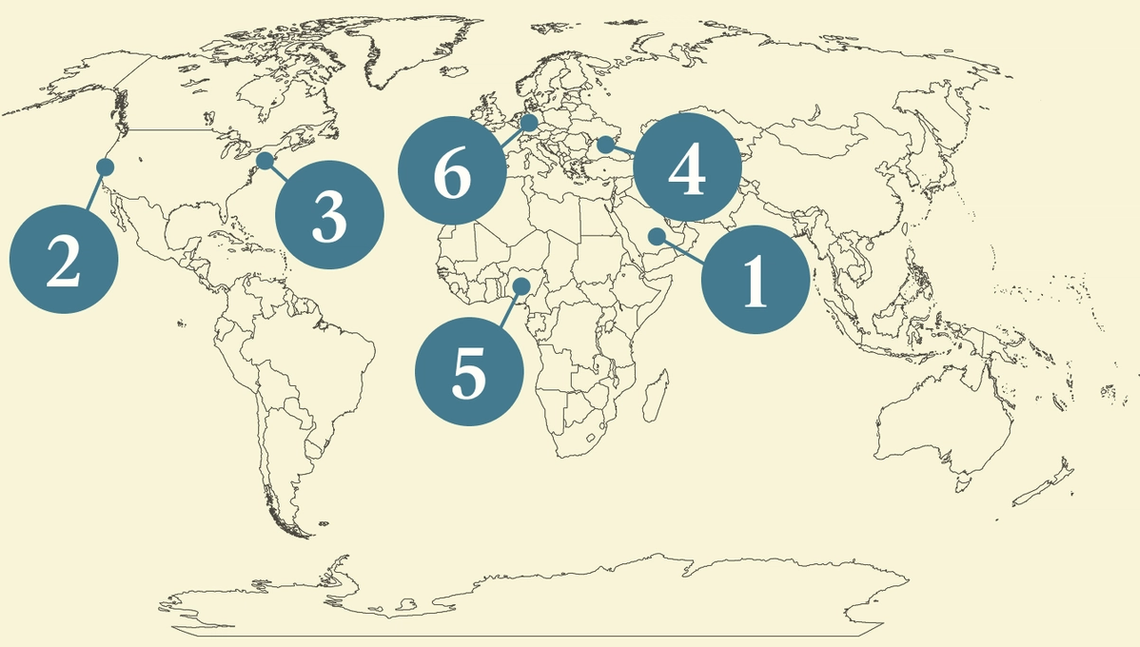
| |  Novorossiysk Novorossiysk |  Boston Boston | Lagos |
 | Energy |  |
| |
|
 - Oil demand down
- Record power demand
- Home battery boom
- Trading energy blows
- Big Oil tax breaks
- Europe’s economy bakes
 As more big AI companies go public, they’ll have to cough up more details about their carbon footprints. |
|
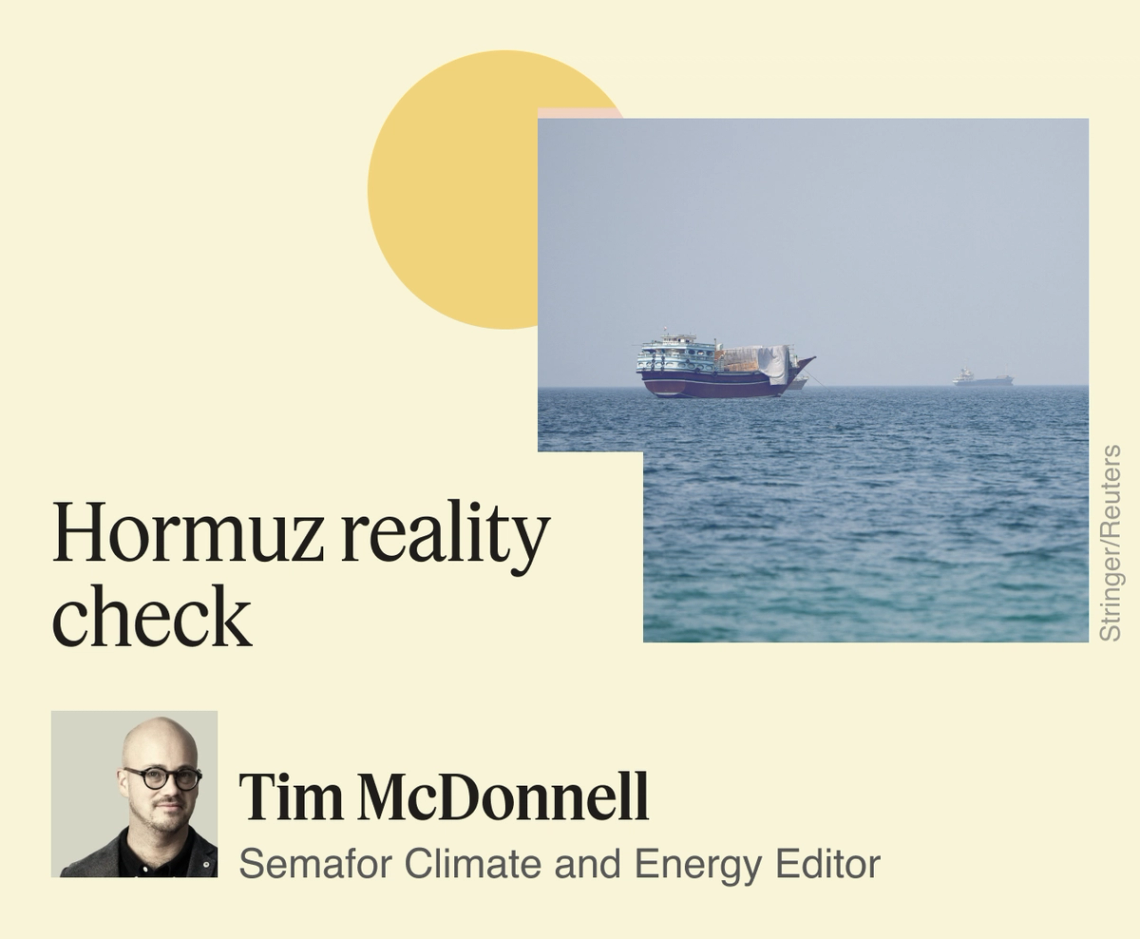 US President Donald Trump said this week the US effectively “owns” the Strait of Hormuz, but it might be more accurate to say that in practice, it belongs to the loose cohort of oil tankers that have established what could be a new status quo. While hourly headlines send the price of oil hither and yon, a dedicated core of professional tanker trackers armed with satellite imagery, transponder data, and a host of proprietary AI tools are assiduously monitoring what’s actually moving through the strait. Michelle Weise Bockmann, senior maritime analyst at the intelligence firm Windward, told me this week that tracking ships in the strait is getting harder as more of them go “dark” and more commercial satellite imagery is withheld under pressure from Washington. But over the past month or so, she said, clear patterns have emerged. There are roughly 70 very large oil tankers, each capable of carrying $150 million or so in crude, that now make up the core fleet making routine runs in and out. All of these use the southern, Oman-hugging corridor and stay dark during the trip. Most make “shuttle” runs, transferring their load to another tanker outside the Gulf, but some continue on to other global ports. Although they ostensibly have air cover from the US Navy, they are still occasionally attacked by Iran. All are turning handsome profits despite the high cost of insurance, danger pay for mariners, discounts to traders on high-risk barrels, and occasional drone attack. The total volume of crude leaving through the southern route is about 5 million barrels per day on average over the past month, by Bockmann’s reckoning. That’s about a third of pre-war volumes, and about half of what US Energy Secretary Chris Wright said on Tuesday. Bockmann acknowledges that some oil could be slipping out undetected either along the Omani or Iranian routes; as Bloomberg’s Javier Blas noted, even one clandestine supertanker would push the average closer to Wright’s. Either way, it’s more than enough to be worrisome to Tehran, Bockmann said, whose leverage with the US is inversely correlated to outbound oil flows. For that reason, public statements of progress notwithstanding, Bockmann is skeptical Oman and Iran will be able to finalize a deal on new shipping lanes: “If Iran wants to maintain its leverage, they have to shut down that southern corridor. If Oman wants to uphold the principle of freedom of navigation, they have to keep it open. So we have a massive impasse.” In the meantime, the current tanker status quo will likely drag on, she said, with great risk and reward for those shipowners, and their crews, willing to run the gauntlet. And Washington and Tehran will try to run down each others’ tolerance for economic pain. But Trump is the only player with an election looming in which energy prices could become a decisive factor. |
|
Oil prices sink despite Iran stalemate |
 Damaged oil tanker Caroline Bezengi, off the coast of Oman. Ambrey/Handout via Reuters. Damaged oil tanker Caroline Bezengi, off the coast of Oman. Ambrey/Handout via Reuters.Oil prices ticked down despite a lack of progress on peace talks between Washington and Tehran, as the industry’s outlook for global demand weakened and the US showed signs of rebuilding its stocks. The International Energy Agency and OPEC both slashed their demand forecasts, much of which is being driven by the “ongoing structural decline” of gasoline vehicles in China as they are replaced by EVs, the IEA said. The IEA also predicted that total oil supply this year would be about 4% lower than in 2025 because of disruptions in the Strait of Hormuz. Still, US commercial crude oil inventories, which don’t include the Strategic Petroleum Reserve, posted their largest weekly gain since 2023 as exports and refinery runs ticked down. Meanwhile, environmental watchdogs are warning of a “nightmare scenario” as a huge oil spill begins to hit Oman’s shoreline. |
|
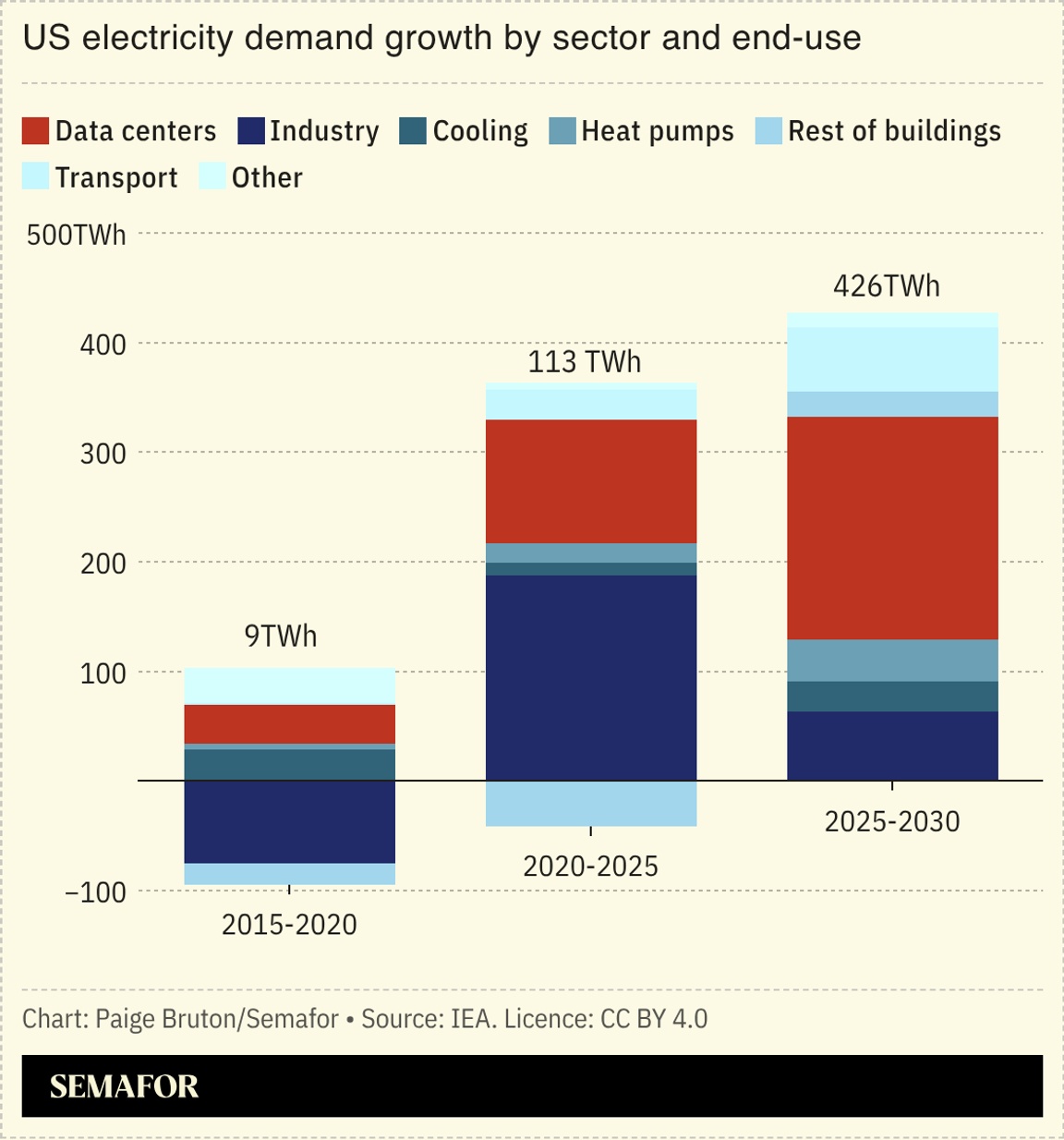 US power demand is set to hit new highs in 2026 and 2027, after two years of record peaks, according to a federal forecast. Data centers are the main driver of that growth, the Energy Information Administration said. The agency lowered its demand outlook for Texas after the state’s Republican governor implemented a moratorium on data center construction last week. And it projected that the total share of power provided by coal will slide to just 15% by 2027, mostly replaced by renewables. Meanwhile, governors across the political spectrum are intervening more directly to limit power prices, and California’s attorney general launched a probe into the Trump administration’s latest offshore wind buyout deals. But if the wind industry is in trouble, no one told Orsted and Vestas: The pair of top wind manufacturers and installers beat Wall Street estimates for second-quarter earnings. |
|
US clean investment surges |
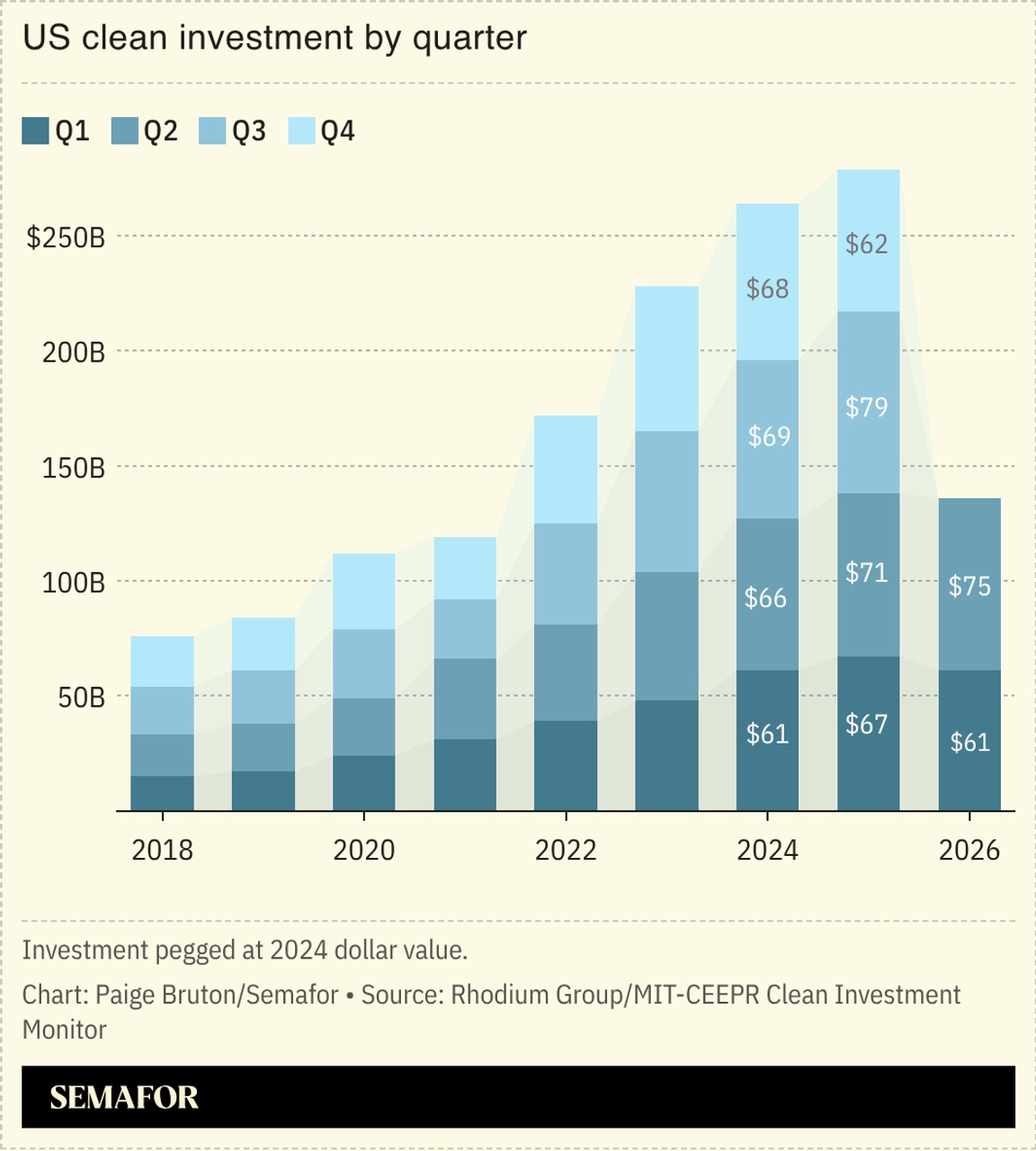 US clean energy and transportation investment reached $75 billion in the second quarter of 2026 — the second-highest quarterly figure on record and up 22% from the prior three-month period. The results, published by the Clean Investment Monitor, were largely driven by retail investment, with residential battery storage installations, in particular, reaching $12 billion, double that of the first quarter, and coinciding with a long period of solar price decline. Manufacturing investment also increased 4% compared to the last three-month period, breaking a six-quarter streak of consecutive declines, largely driven by the elimination of tax incentives following Trump’s One Big Beautiful Bill Act. However, while investment increased, project cancellations also rose by 4% from Q1, equivalent to $1.7 billion. — Paige Bruton |
|
Ukraine pivots on Russia energy attacks |
 Social media via Reuters Social media via ReutersUkraine backed off its drone campaign against Russian oil infrastructure on one front, but the energy war escalated on others. Kyiv called off further strikes against a Black Sea oil terminal that serves a pipeline in which US oil majors own a stake, after US Vice President JD Vance asked Ukraine’s President Volodymyr Zelenskyy on a July phone call, the Financial Times reported. Yet Ukraine continues to strike refineries deeper into Russian territory, driving pump prices up and fuel export revenues down, and forcing Moscow to import more gasoline from India. Yet Russia is keeping up its own bombardment. Gas production facilities in Ukraine owned by Naftogaz and DTEK had to be temporarily shut down this week following the first wave of drone attacks they’ve faced since the winter, and several regions of the country faced blackouts after attacks on grid facilities. Ukrainian special police also said they arrested a man accused of passing coordinates of energy facilities to Russian agents. |
|
Nigeria seeks new oil, gas investment |
 Tife Owolabi/Reuters Tife Owolabi/ReutersNigeria is rolling out tax incentives to attract as much as $50 billion in oil and gas investment as it seeks to rekindle international interest in offshore projects. Africa’s largest oil and gas producer is pushing to revive hydrocarbon exploration in deepwater reserves at a time when global oil companies have retreated from their onshore Nigerian assets due to pipeline vandalism. The newly signed executive order, which is based on a framework of tax rebates approved for Shell as it plans to pour at least $10 billion into offshore projects, offers “clear and predictable terms” for new investments, President Bola Tinubu said. The African Energy Chamber, a South Africa-based advocacy group, estimates that African oil and gas investments could reach $41 billion this year alone. Several countries, including Angola and Namibia, are also vying to secure funds, creating a competitive environment for investment. — Alexander Onukwue |
|
Heat shrivels Europe’s economy |
|
 As AI and emerging technologies reshape the global economy, three billion people remain offline, disconnected from the digital opportunities transforming our world. On Tuesday, September 22 in New York City, The Next 3 Billion will bring together leaders including Nigeria Federal Minister of Industry, Trade and Investment Jumoke Oduwole, Shell Foundation CEO Jonathan Berman, Amazon Chief Sustainability Officer Kara Hurst, GSMA Director-General Vivek Badrinath, Nvidia Head of Sustainability Josh Parker, and more to explore how AI, energy, and global development can expand access, unlock opportunity, and drive inclusive growth across the world’s fastest-growing regions. September 22 | New York City | Delegate Application |
|
|


