|
|
|
|
Good morning. What will be affected by the tariffs? What brought about the tariffs? Can Canada trust Donald Trump to keep his word? Readers had a lot of trade questions, and our reporters answered. We have some highlights from the Q&A in today’s newsletter. |
|
|
|
|
|
|
|
|
|
|
|
|
|
|
|
|
Trade: Sources on both sides of the border say that Ottawa is weighing a proposal to accept lower U.S. auto tariffs and drop its retaliatory tariffs on American-made cars. |
|
|
|
|
Banking: Industry leaders warn that the sale of Moneris Solutions Corp. to a U.S. owner adds risk to Canada’s data sovereignty. |
|
|
|
|
|
|
|
|
|
|
|
|
|
|
|
|
|
|
|
|
|
U.S. President Donald Trump speaks with Prime Minister Mark Carney on June 16 in Evian-les-Bains, France. Pool/Getty Images
|
|
|
|
|
|
|
|
|
|
|
Answering your trade questions |
|
|
|
|
Starting Aug. 19, the U.S. is set to impose new 50-per-cent tariffs on a range of Canadian goods in an escalation of its trade war against Canada. |
|
|
|
|
Political reporter Adrian Morrow and reporter Jason Kirby answered your questions on the threatened tariffs, which products could be affected and how they could affect Canadian businesses. In today’s edition we’re featuring some of the conversation, but to read more, you can check out the full Q&A on our website. |
|
|
|
|
What’s going to be affected the most by these new tariffs? Is there anything I should buy or sell now before the changes hit? |
|
|
|
|
|
|
|
|
Adrian: Trump’s latest threatened tariffs would hit Canadian dairy products, alcohol and a grab-bag of other items, including antiques, honey and electronics. |
|
|
|
|
So, yes, if you’re a Canadian sitting on a stockpile of whisky (or honey or certain types of antiques) that you’re hoping to export to the U.S., you might consider doing it this week to avoid the risk of your American purchasers turning you down after Aug. 19 so they can avoid paying Trump’s tariff. |
|
|
|
|
Could workers face layoffs if 50 per cent tariffs come in? |
|
|
|
|
Jason: It’s hard to say. On the whole, the new 388 tariffs would affect just 5 per cent of Canada’s exports to the U.S. – around $20-billion worth of goods. But within those sectors that are targeted, a 50 per cent tariff would be devastating. Especially for those companies that depend on the U.S. for most of their sales. Would that lead to immediate layoffs? It’s easy to see some job losses happening in the short term. Canada’s job market has been remarkably resilient in the face of the tariffs to date, but a 50 per cent duty is not something any company can absorb. |
|
|
|
|
Will the 50 per cent tariffs be added to the existing tariffs? |
|
|
|
|
Adrian: Yes, a Canadian good that is on the Aug. 19 tariff list and is currently subject to Trump’s “forced labour” tariff, because it trades outside of the USMCA, would be subject to both the new tariff and the forced labour tariff. In practice, most Canadian goods trade under USMCA aren’t subject to the forced labour tariff. So most of the goods that would get hit on Aug. 19 would only face that new tariff. |
|
|
|
|
Is there anything regular Canadians can do and have done to fight back against these tariffs? Do the boycotts work? |
|
|
|
|
Jason: The fact the Trump administration has railed so hard against the provincial boycotts of U.S. alcohol is a good indicator that the boycotts do get noticed. But of course, the alcohol bans are one of the stated reasons behind the 338 tariffs, so they come with risks. Likewise, the travel boycott
has blown a big hole in the U.S. tourism sector since Canada has historically been the largest source of international tourists to the U.S. It’s much harder for the U.S. to retaliate against Canadians collectively avoiding travel to the U.S., though I wouldn’t be surprised if the White House tried at some point. |
|
|
|
|
Even if we did strike a deal with the U.S., can Trump be trusted to keep his word, or are we going to be back here within a year? |
|
|
|
|
Adrian: Trump has shown that he does not keep his word on trade deals: By the terms of USMCA, which he signed in this first term, none of the tariffs he’s imposed on Canada should have been imposed. It’s quite possible that, if he agrees to a deal with Canada this month, he would renege on that, too. |
|
|
|
|
Carney has clearly decided that, despite this risk, he would rather get a deal that (even for a limited time) reduces U.S. tariffs than have tariffs remain at their current levels and have Trump add new ones. In exchange, he’s considering conceding a long list of U.S. trade demands. |
|
|
|
|
This is effectively the approach that every other country (with the exception of China) has taken to dealing with Trump. We’ll see if it’s better than the alternative of preserving negotiating leverage and fighting an escalating trade war. |
|
|
|
|
|
|
|
|
|
|
|
|
|
|
|
|
|
|
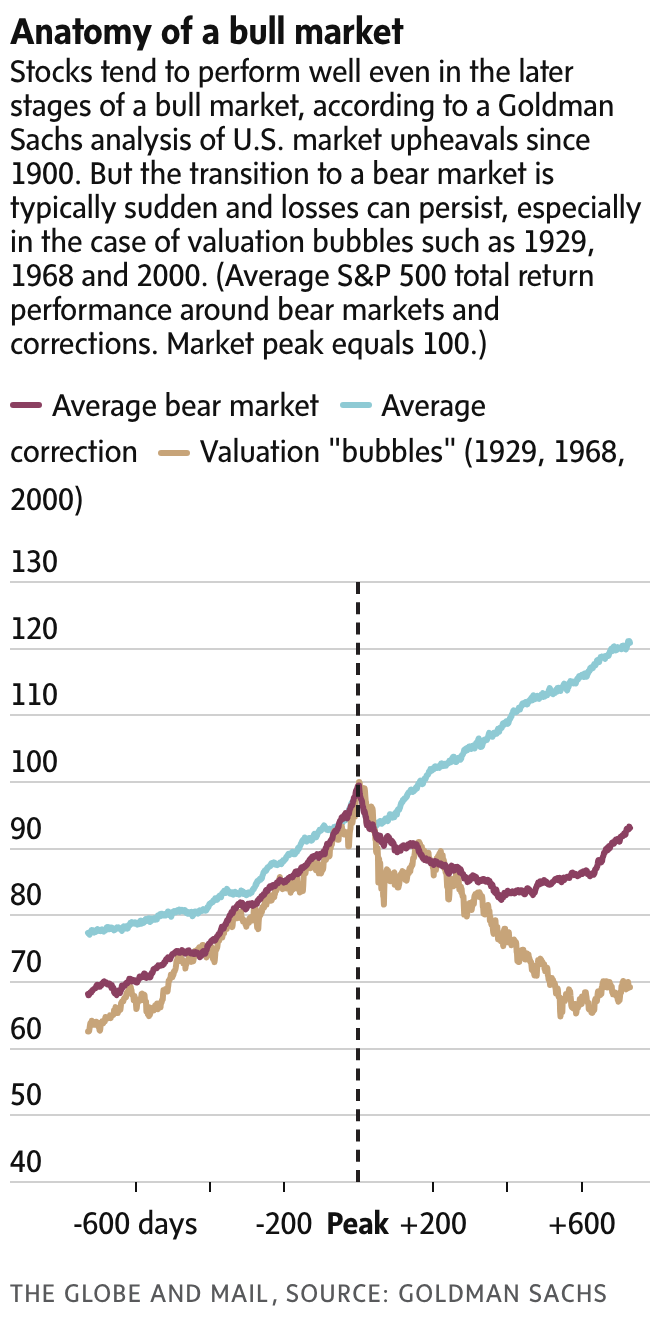
The market’s returns over the past five years have been historically unusual. Chances are you have just enjoyed a highly profitable few years. Here’s how to keep those gains. |
|
|
|
|
|
|
|
|
|
|
|
|
|
|
|
|
|
|