| | What an Oman-Iran Hormuz deal means for the global energy crisis, oil companies continue to cash in,͏ ͏ ͏ ͏ ͏ ͏ |
| |  | Energy |  |
| |
|
 - New routes
- More big oil profits
- Emissions-tracking M&A
- Data center slowdown
- Asia’s ‘cruelly hot’ weather
 Fuel exports are up from China and down from Russia, and a federal court reverses Trump wind down of green banks. |
|
 The impending deal between Iran and Oman delineating new tanker routes through the Strait of Hormuz doesn’t mean the oil spigot will open soon, and it doesn’t fix what sanctions experts say were major flaws in the short-lived June ceasefire. Any agreement out of Tehran and Muscat will likely revolve around a narrow plan to define the routes ships can take and the fees they should pay to do so. But for ships to actually start moving, it will require a new deal with Washington, which has insisted on a return to the prewar status quo of free navigation. And if the Trump administration wants to press for a change on that front, it will need to fix its sanctions dilemma. The last memorandum of understanding between Tehran and Washington in June shocked many sanctions experts by how much the US gave away to Iran for very little in exchange. The deal was actually “a memorandum of confusion and misunderstanding,” Miad Maleki, a senior fellow at the hawkish DC think tank Foundation for Defense of Democracies and a former senior Treasury Department sanctions official in the Biden and Trump administrations, told me. “It was drafted for failure, not for success.” It promised no new sanctions during the MOU period, waived sanctions on Iran’s oil exports, and assured the termination of all sanctions after the conclusion of a more comprehensive deal on Iran’s nuclear program. But completely scrapping all sanctions on Iran would require legislative changes by Congress, where very few things are getting through these days. And more urgently, the MOU let Iran ship out roughly $6 billion in oil practically overnight, much of which was essentially traded for civilian and “dual-use” hardware from China. It also allowed Iran to quickly rush oil out of floating storage ships, clearing space for production to continue once the US blockade kicked back in. Both of those effects, Maleki said, directly undermined US leverage in the more difficult nuclear talks and emboldened Iran to shrug off the ceasefire and keep attacking ships in the strait. “As soon as you tell them you’ll give them an oil waiver, they have no incentive to engage in nuclear talks,” he said. A better model, he said, is what the US is trying with Venezuela, in which oil revenue flows into a Treasury-controlled escrow account. This is fraught, too: As my colleagues scooped this week, Congressional Democrats want to ramp up oversight investigations into where exactly all that money — $13 billion, according to Trump — has gone. That kind of deal could help Tehran at least pay for food imports and other necessities, but it’s not clear it would be enough to change its military calculus. With conflicting statements coming out of Washington and Tehran about whether direct talks are even underway, and no clarity on what the next MOU might entail, the oil price roller coaster is in for many more climbs and drops in the weeks ahead. |
|
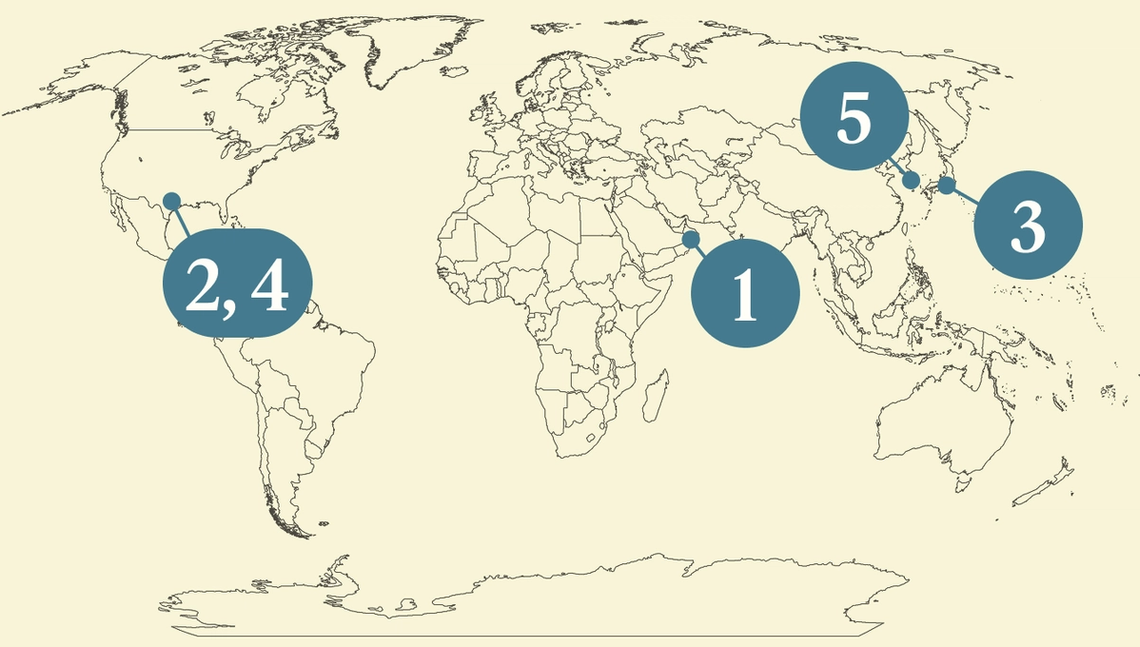
Iran, Oman near Hormuz Strait deal |
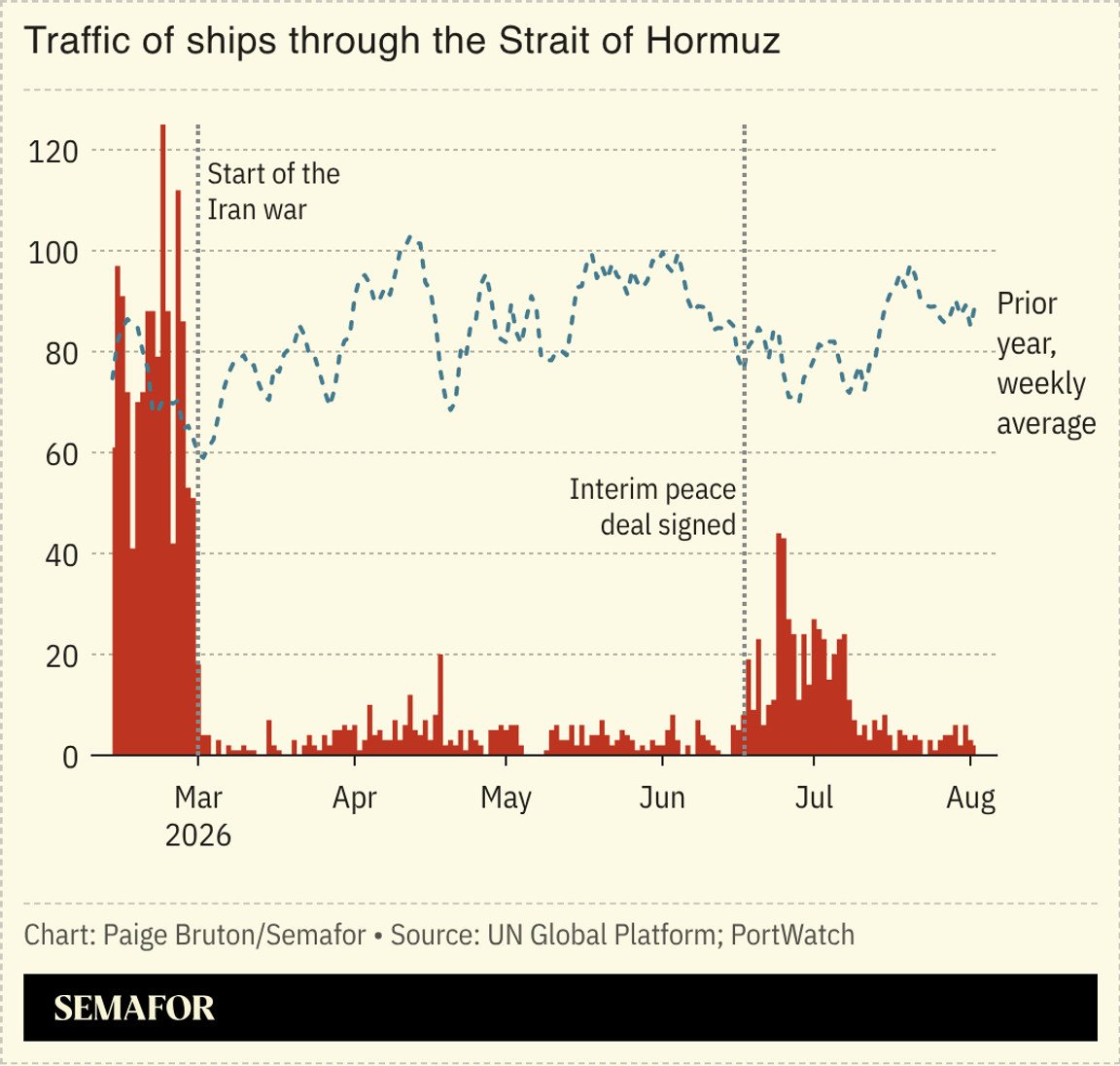 Iran said it was in the “final stages” of reaching an agreement with Oman on a commercial route through the Strait of Hormuz. Iranian officials have blamed US “interference” for delaying the process. But dysfunction at the top of the Iranian regime is also likely slowing talks: Iran’s president said interaction with Supreme Leader Mojtaba Khamenei has been “very difficult.” If Iran is ultimately able to impose a system of fees for transit through the strait, they would most likely be passed on to energy consumers, analyst Rachel Ziemba told Semafor. And as much as Gulf exporters and US policymakers might hope for new infrastructure to make the strait obsolete, the reality is that Iran’s “grip on Hormuz looks set to outlast the war,” the Economist reported. In the meantime, oil exports from the Gulf remain 40% below prewar levels. Meanwhile, there are signs the US is beginning to rebuild its depleted oil storage inventories as it imports more and runs refineries at lower levels. |
|
Oil profits surge, with caveats |
 Essam Al-Sudani/Reuters Essam Al-Sudani/ReutersProfits continue to roll in for oil companies, but it’s not good news for everyone. Occidental Petroleum posted its highest quarterly profit since 2022, although it tightened its forecast for total annual production because of disruptions to its drilling operations in the Middle East. Smaller shale producer APA also posted its highest profits in years. The UK’s Harbour Energy, meanwhile, boosted its annual production target and said it plans to return at least $800 million to its shareholders this year, including via $250 million in share buybacks. In the Permian basin, though, the heart of the US shale oil industry, crude price volatility caused by the war in Iran has caused a slowdown in mergers and acquisitions as buyers and sellers find it harder to agree on a fair price for drilling spots, Enverus Intelligence Research reported. Enverus says it’s a good time for smaller companies to hold on to their assets: “Public companies are willing to pay ever-higher prices for tier-one Permian acreage,” Andrew Dittmar, principal analyst, said. |
|
Emissions startups chase growth |
 Carlos Osorio/Reuters Carlos Osorio/ReutersThe move by US financial regulators to ditch corporate emissions reporting requirements may be a setback for climate action, but one emissions-tracking CEO sees it as a growth opportunity. Tokyo-based ASUENE, which provides software for companies to calculate and manage the carbon footprint of their supply chains and in-house operations, last month closed an $87 million fundraising round led by Decarbonization Partners, a joint venture between BlackRock and Temasek. It may seem like a strange time to pour cash into emissions-tracking firms, as the US and EU both move to scale back or spike disclosure requirements. But CEO Kohei Nishiwada told Semafor now is the perfect time to shop for M&A targets. “Except for a few market leaders, [startups in this space] are really struggling for growth,” he said. “That’s why we can talk really easily about growth through acquisitions. In the US, we can purchase companies for a reasonable price.” ASUENE has snapped up eight smaller emissions-tracking startups in the US, EU, and Asia in the past two years, and has its eyes on more in the near future, Nishiwada said, adding the company is building to its own IPO in the next two years. |
|
 The Gulf now reaches far beyond the region, shaping energy markets, supply chains, and the global economy. Semafor Gulf is here to help you make sense of it. Five days a week, editor Mohammed Sergie and our team across Abu Dhabi, Dubai, and Riyadh will connect you with what’s happening on the ground, and how it affects business, energy, and diplomacy — bringing clarity to the most consequential story in the world. |
|
Texas data center moratorium’s impact |
 The moratorium on new data centers imposed this week by Texas Gov. Greg Abbott could delay one-fifth of the total US data center energy projects under development, according to a BloombergNEF forecast. The move could also put billions of dollars in data center leasing revenue at risk. Still, it seems to be what the people want: Congressional candidates who campaigned on opposition to data centers won a number of victories in primary elections this week. |
|
‘Cruel’ heat grips East Asia |
 Kim Hong-Ji/Reuters Kim Hong-Ji/ReutersRecord-breaking heat in East Asia has caused thousands of hospitalizations and led Seoul to declare a “national disaster.” Extreme heat has been linked to 19 deaths in South Korea: Yangsan, in the country’s southeast, saw temperatures reach 42.5°C (108°F) on Sunday, the highest in 122 years of records. State media in North Korea urged residents to remain indoors during the day, while sweltering nights offer little relief. In Japan, recovery efforts following a deadly earthquake last month have been hampered by dangerous temperatures. Some 18,000 people were admitted with heat stroke in a week, and one woman died in her car. The national weather service coined the term kokushobi, or “cruelly hot day,” for when temperatures top 40°C (104°F). This item initially appeared in Semafor’s twice-daily Flagship briefing. Subscribe here. → |
|
|
 New EnergyFossil Fuels- China relaxed limits on its fuel exports for the second month running, after the Iran war caused Beijing to slash its shipments from March to June in order to protect domestic supplies.
- Oil industry executives have launched a campaign inside the Trump administration to prevent any discussions around curbing fuel exports, as the president’s criticism of the sector grows.
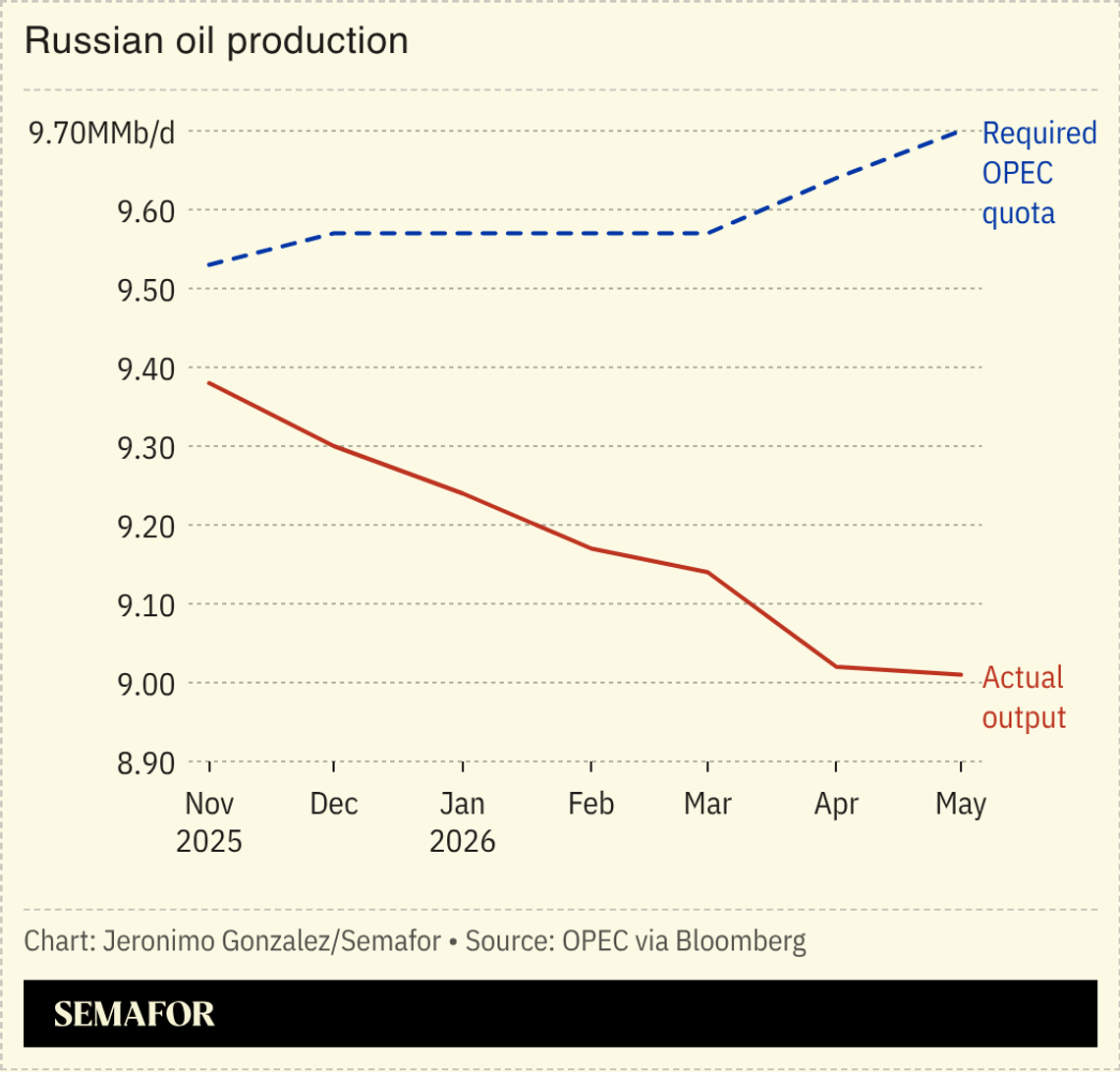 - Russian shipments of petroleum refined products fell to their lowest level in at least a decade, S&P Global reported, as Ukraine continues strikes on the country’s refining infrastructure.
FinancePolitics & Policy- A federal appeals court found the US Environmental Protection Agency was wrong to freeze around $20 billion in grants to clean energy groups, originally awarded under the Biden administration, which will be distributed subject to further appeals from the EPA.
Minerals & Mining- Thousands of South African farmers launched a campaign against the country’s push towards lithium mining, which Pretoria hopes will help to revive the flagging economy. The farmers say the lithium push risks 30,000 jobs in the agricultural sector.
EVs |
|
|


