| | Google’s DeepMind gets a major shakeup, Iran and Oman signal progress on a deal, and Saudi Arabia ma͏ ͏ ͏ ͏ ͏ ͏ |
| |  | Flagship |  |
| |
|
The World Today | 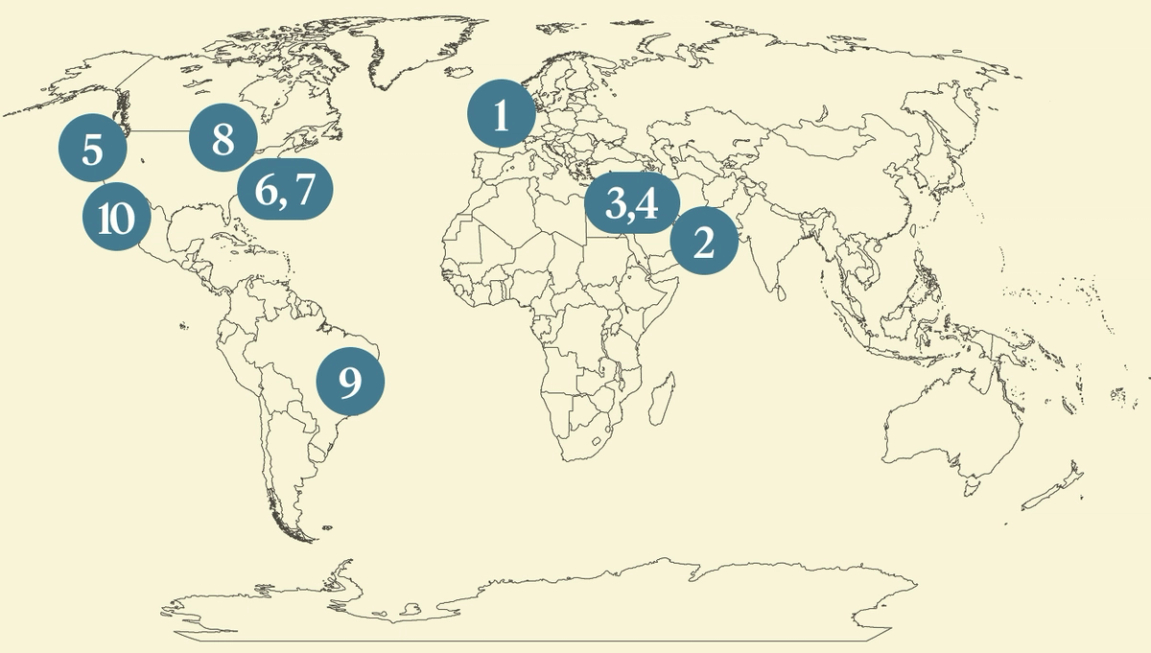 - DeepMind CEO steps down
- Progress on Hormuz deal
- Gulf’s business rebound
- Saudi makes gaming play
- Uber bets on robotaxis
- US exempts open models
- AI is underpriced
- Progressive win in US
- US-Brazil feud deepens
- Film franchise comeback
 An esoteric hallucinogen and its ‘superstar’ adherents. |
|
Major shakeup at Google AI lab |
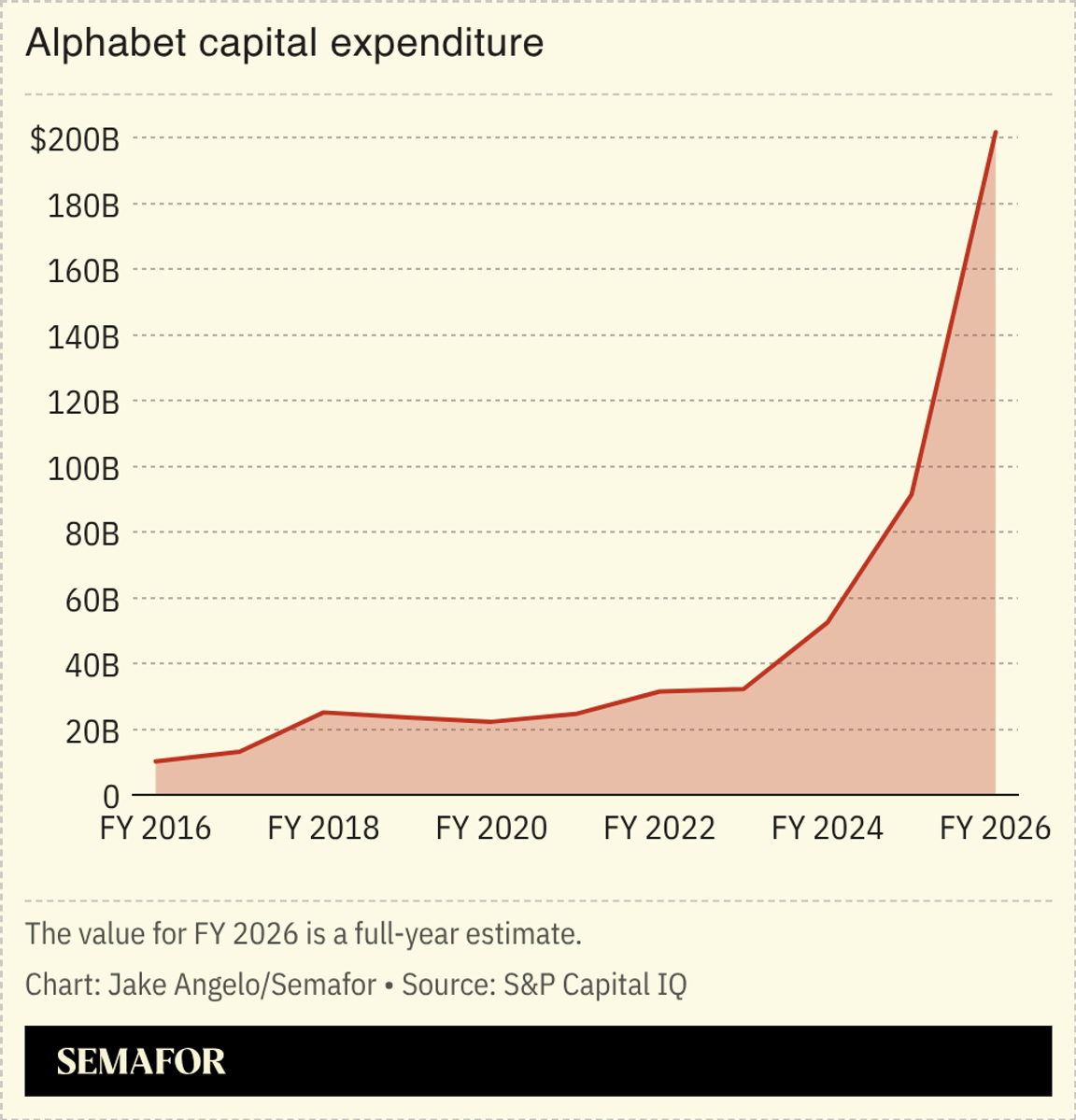 The head of Google DeepMind is stepping down from his role and moving into a chairman position, in a major shakeup at the AI research lab. Demis Hassabis, who founded DeepMind in 2010 before it was acquired in 2014, will become chief scientist at Google parent company Alphabet. Other high-profile DeepMind staffers, including 27-year veteran Jeff Dean, are leaving to launch a startup, sending shares down 4%. The company is rushing to keep up with OpenAI and Anthropic: An updated version of its flagship Gemini model, which was planned to launch in June, remains unreleased. Another AI laggard, Meta, is also playing catchup, releasing an agent on Wednesday to contend with Claude Code and OpenAI’s Codex. |
|
Iran, Oman signal Hormuz deal |
 Stringer/Reuters Stringer/ReutersIran and Oman were in the “final stages” of an agreement to establish a commercial route in the Strait of Hormuz, Tehran’s state media said Wednesday, though analysts cautioned the deal was unlikely to resolve the wider disputes fueling the conflict. Tehran has threatened to strike Gulf nations if Washington launches new strikes, Reuters reported, underscoring the Islamic Republic’s strategy of pressuring the White House by going after its regional allies, as they rush to replace depleted US munitions. US President Donald Trump’s expansive war aims have shrunk to merely reopening the strait, which was operating freely before the war, and claiming any sort of win is getting “harder and harder to do,” a former US ambassador to Saudi Arabia told the Financial Times. |
|
The Gulf’s economic comeback |
 Mohammed Salem/Reuters Mohammed Salem/ReutersThe Persian Gulf is showing signs of an economic comeback after five months of war-related disruptions. Non-oil business activity rebounded in July, an S&P Global survey found: Kuwait returned to growth for the first time since the war began, while the UAE recovered from a five-year low in June on renewed export demand and a return to hiring. Saudi Arabia notched a fourth straight month of business expansion. Meanwhile, Dubai’s population rebounded beyond its prewar total last month, quelling fears of a sustained expat exodus. The recovery is uneven, though: Qatar continued to contract, and renewed clashes later in July could’ve impacted figures. The war’s economic impact has fallen disproportionately on the Gulf — a fact Iran has been keen to exploit. |
|
Saudi Arabia’s gaming play |
 Tom Jacobs/Reuters Tom Jacobs/ReutersSaudi Arabia’s Public Investment Fund bought gamemaker Electronic Arts in perhaps the largest leveraged buyout in history. The $55 billion deal — part-funded with $20 billion borrowed against EA itself — buys Riyadh a profitable business and control of some of the biggest franchises in the world’s biggest entertainment industry. But the move is “not purely economic,” one expert told the BBC. The soccer franchise EA Sports FC alone gives the PIF a relationship with 20,000 players and 750 teams worldwide, a useful soft-power asset. Unlike the fund’s previous attempts to buy national prestige, though, like LIV Golf or the Saudi Super League, EA can reasonably be expected to make money, although the debt piled on may hamper its earnings. |
|
Uber makes bigger bet on robotaxis |
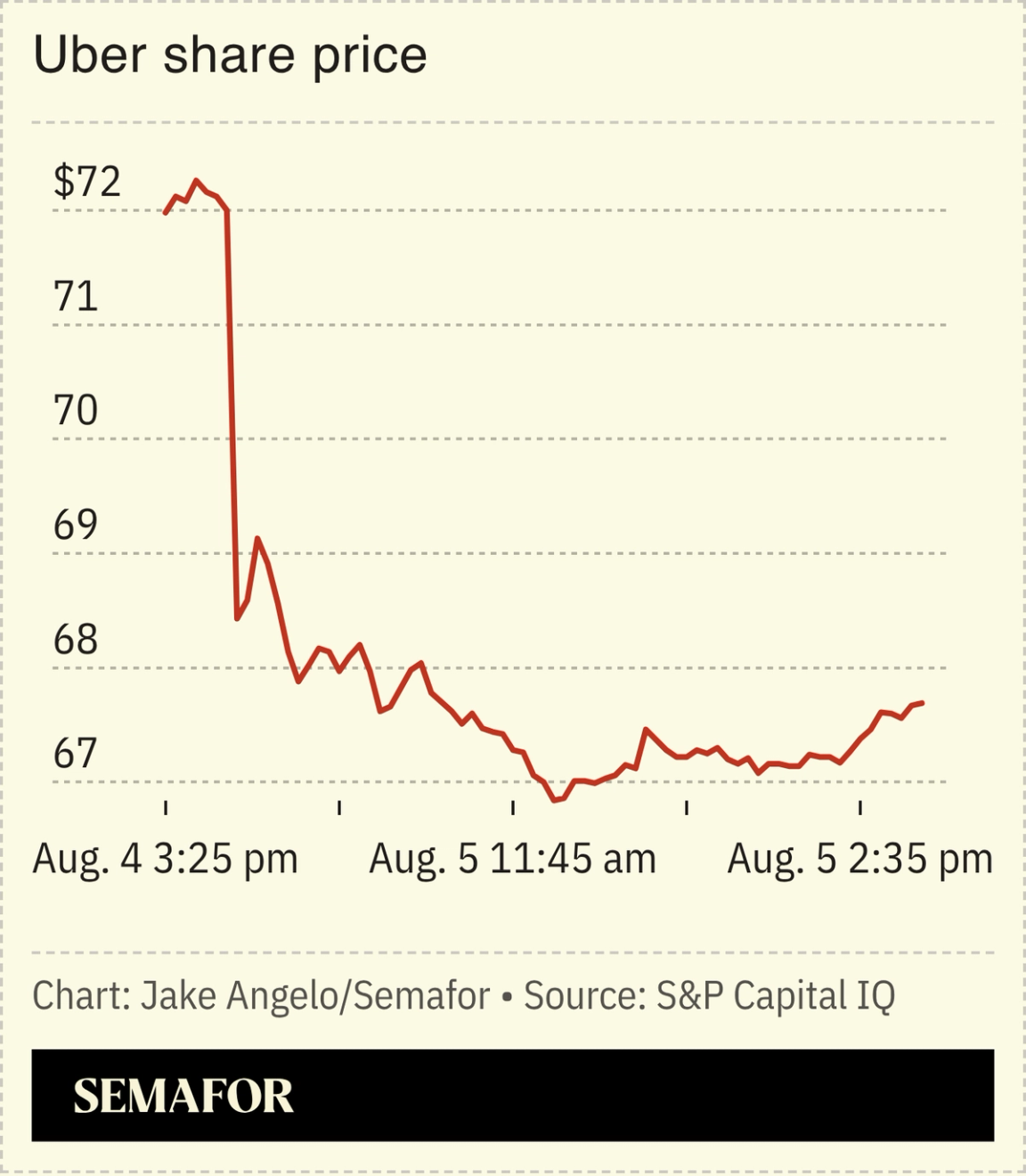 Uber shares plunged 6% after the ride-sharing company’s revenue fell short of analyst expectations. CEO Dara Khosrowshahi also pledged to make a bigger bet on autonomous vehicles and become “the long-term winner” in what Goldman Sachs expects to grow into a $400 billion market. But Uber’s capital-light model, leaning on partners like Waymo to build and run robotaxi fleets, may curtail its profit margin. Amazon-owned Zoox is going a different route, constructing a self-sufficient fleet from scratch that doesn’t have controls normally required for human drivers, like steering wheels. That could mean a higher profit. |
|
White House to exempt open models |
 Evelyn Hockstein/Reuters Evelyn Hockstein/ReutersThe White House will reportedly exempt open-source AI models from its pending regulatory framework as it attempts to regulate the technology without choking off innovation. The pending guidelines — the details of which were shared with some tech executives but not the public — are most likely to affect frontier AI labs building closed models like Google, Anthropic, and OpenAI. Keeping the rules secret is likely designed to give Washington a head start on whatever is coming, Semafor’s Reed Albergotti argued: Given that “we still don’t know exactly how large language models work or whether they can be completely controlled,” AI could be the first technology in human history where “we can’t afford to learn” by trial-and-error, justifying some degree of caution, Albergotti wrote. |
|
AI in politics is underrated |
 Carlos Osorio/Reuters Carlos Osorio/ReutersAI might be “the most underpriced issue in politics,” an analyst said. At the moment, AI rarely ranks among US voters’ top issues, apart from local anti-data center activism. But political observers told Puck that voters’ anxieties around jobs and the economy are tied to expectations of AI-driven instability, and that it will “become a central political topic in 2028.” AI’s employment impacts are hotly debated and tech leaders and politicians are calling for policies to ease the transition to an AI-powered economy. Elon Musk and OpenAI’s Sam Altman have both suggested universal basic incomes will become necessary, while Anthropic CEO Dario Amodei has argued for pro-employment incentives, including wage insurance and training grants, and eventually UBI. |
|
Populist Democrat wins Senate primary |
 Rebecca Cook/Reuters Rebecca Cook/ReutersPopulist Democrat Abdul El-Sayed prevailed Wednesday in the party’s US Senate primary in Michigan, in a rebuke of the party’s establishment and a win for its Israel critics. El Sayed’s narrow triumph over a candidate backed by the state’s governor and Democratic Senate leadership was “the culmination of nearly a decade of work” by the US left, Semafor’s David Weigel wrote, setting up its biggest test yet — to elect a left-wing senator in a political battleground state; El-Sayed’s vote share fell far short of projections, however, raising concerns about November. Pro-Israel groups spent more than $30 million opposing El-Sayed, a staunch Israel critic, whose candidacy experts see as a temperature check of the US electorate’s increasingly negative views on Israel. |
|
US revokes Brazil ambassador’s visa |
 Trump and Lula in 2025. Evelyn Hockstein/Reuters Trump and Lula in 2025. Evelyn Hockstein/ReutersThe US revoked the Brazilian ambassador’s visa after Brasília delayed in approving Washington’s diplomat, deepening a feud that has become central to the South American country’s looming presidential elections. US President Donald Trump has pursued aggressive policies towards the US’ southern neighbors during his second term, combining armed intervention against Venezuela with diplomatic jawboning across the continent in what Trump has embraced as the “Donroe Doctrine.” Latin America has shifted to the right, and its new leaders are courting the US president, deepening polarization between left- and right-led governments: Brasília withdrew its ambassador to Argentina after its president called Brazilian President Luiz Inácio Lula da Silva a “thief,” opening a rift between South America’s two largest economies. |
|
Big openings signal hope for franchises |
|
|


