Refining’s golden era
 

Power Up

Power Up

A Reuters Open Interest newsletter

By Ron Bousso, ROI Energy Columnist


Data refreshes every time you open this email. For more energy news, click here. Please send any feedback to powerup@thomsonreuters.com.

Hello Power Up readers,

Well, here we are again.

Oil prices tumbled on Monday after President Donald Trump held off a major attack on Iran over the weekend, choosing instead to give diplomacy another shot. The hope is that talks can break the deadlock over Tehran's nuclear programme and, crucially, get oil flowing through the Strait of Hormuz again.

Trump said on Sunday that talks with Iran would take place on Monday, although Iran's foreign ministry said no meetings with Washington were on the calendar. What we do know is that Iran and Oman have been holding advanced discussions on a possible new shipping route through Hormuz. But, in true Middle East diplomatic fashion, Iranian officials insist those talks have "no link" to whether the strait itself is opened or closed.

In other words, things are clear as mud.

But the real issue to watch here isn't official statements. It's tanker traffic. And for now, movement through the world's most important oil chokepoint remains a trickle, with several tankers hit in the Hormuz area over recent days. Gulf states are increasingly desperate to see oil and gas exports return to normal and, as we noted last week, many would rather live with an Iranian-managed Strait of Hormuz than an empty one.

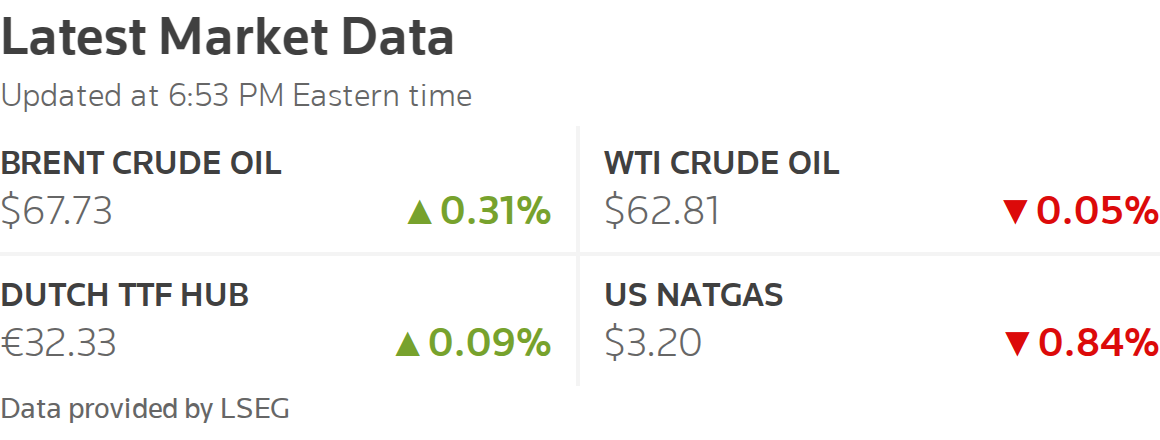
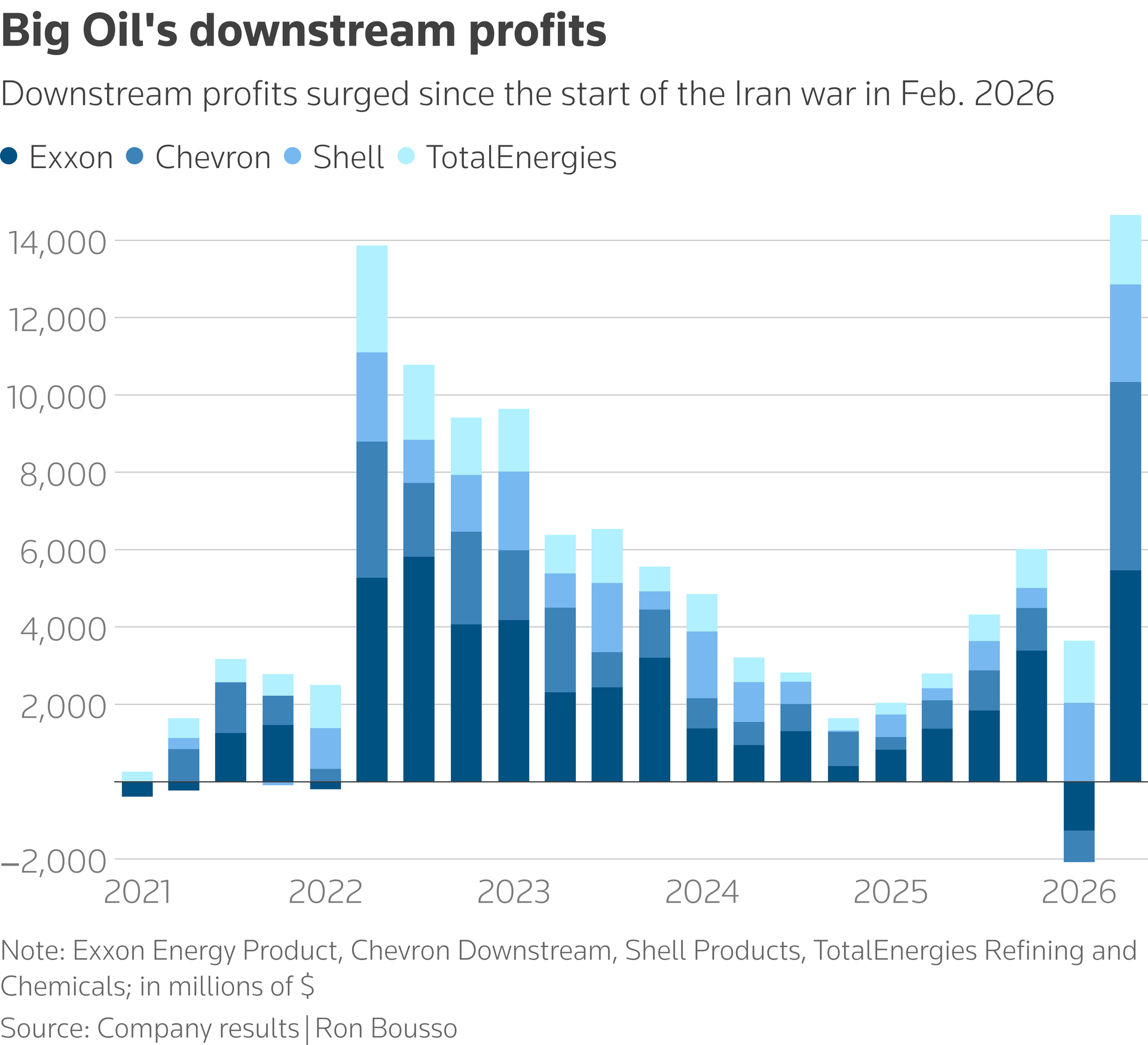
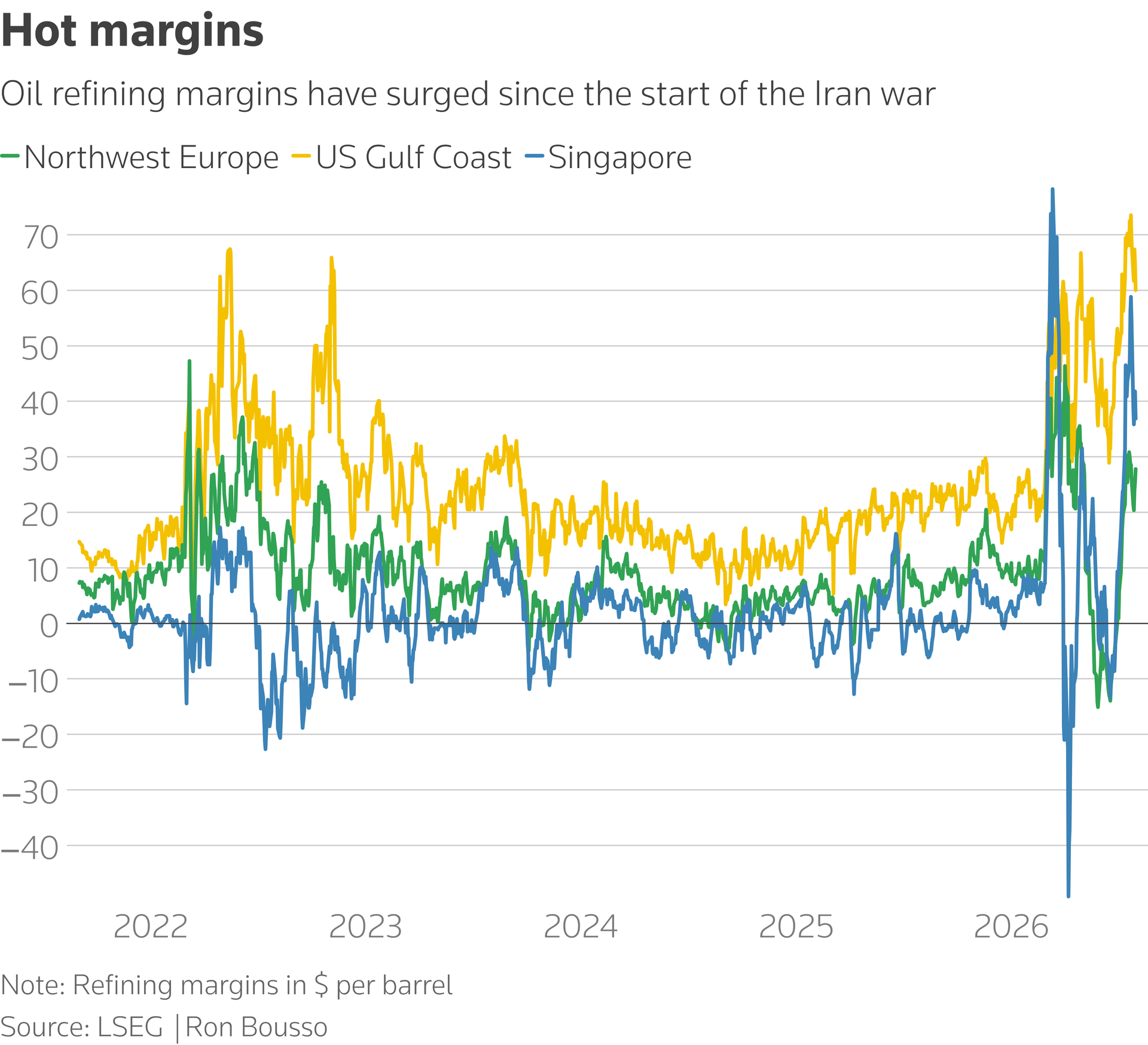
That ongoing disruption continues to squeeze global oil and fuel supplies, with one big winner emerging from the chaos: refiners. Sky-high refining margins have put rocket boosters under Big Oil's second-quarter earnings and revived a business that many investors had been quietly writing off. Tightening fuel markets suggest refiners could continue generating unusually healthy returns for several years.

But before anyone starts getting used to this new golden age for refining, it's worth remembering that longer-term shifts in energy consumption are still moving against the sector. More on that below.

Here are a few more headlines:

  • OPEC+ approved an oil production quota increase on Sunday of around 188,000 barrels per day from September, in a move that completes the group’s unwinding of voluntary output cuts. It's easy to dismiss the decision as a meaningless gesture in the face of disruptions caused by the Iran conflict. But they may be relevant in the future, writes ROI Asia Commodities Columnist Clyde Russell.
  • Europe has been battered by a succession of energy shocks this decade that left it with some of the world’s highest power costs. The bloc is now hoping to rebuild its competitive edge with a multi-trillion-dollar wager on home-grown electricity and renewables that could determine its industrial future, I wrote on Friday.

As always, don’t hesitate to contact me at ron.bousso@thomsonreuters.com or follow me on LinkedIn with any questions or thoughts.


Top energy headlines

  • Oil prices drop 5% to three-week low after Trump cancels attack on Iran
  • Shell sells European onshore renewables to TotalEnergies
  • War-fueled oil rally set to lift shale profits to highest since 2022
  • BP completes sale of Gelsenkirchen refinery as overhaul continues
  • Romanian carmakers Dacia, Ford stop production until Aug 19 as power crisis looms-PM


Refining golden era

Despite occupying a critical position in the global energy supply chain, refining has long been the least glamorous corner of the oil business. Western oil majors have steadily retreated from the sector over the past two decades, deterred by high operating costs, notoriously volatile margins, rising carbon costs and ‌growing competition from state-backed refiners in the Middle East, Africa and Asia.

But the refining environment has improved considerably in the past year, thanks to a spike in military conflict in the Middle East and Russia.

The combined impact of the two conflicts on refining profitability has been dramatic. The refined product shortage has left Big Oil with enormous pricing power and encouraged operators to run plants at full capacity. U.S. refineries, which emerged as the world's largest fuel suppliers during the conflict, operated at 97% of capacity in the week to July 24, well above their long-term average of around 90%.

But most of the immediate pressures supporting these refining margins are likely to ease – the question is how quickly. 

Read the full column
 

Sponsors are not involved in the creation of newsletters or other Reuters news content. Advertise in this newsletter or on Reuters' website

LiveIntent Logo
AdChoices Logo
 

Power Up is sent twice weekly. Think your friend or colleague should know about us? Forward this newsletter to them. They can also sign up here.