| | In today’s edition, inside Trump’s relationship with Thune.͏ ͏ ͏ ͏ ͏ ͏ |
| |  | Washington, DC |  |
| |
|
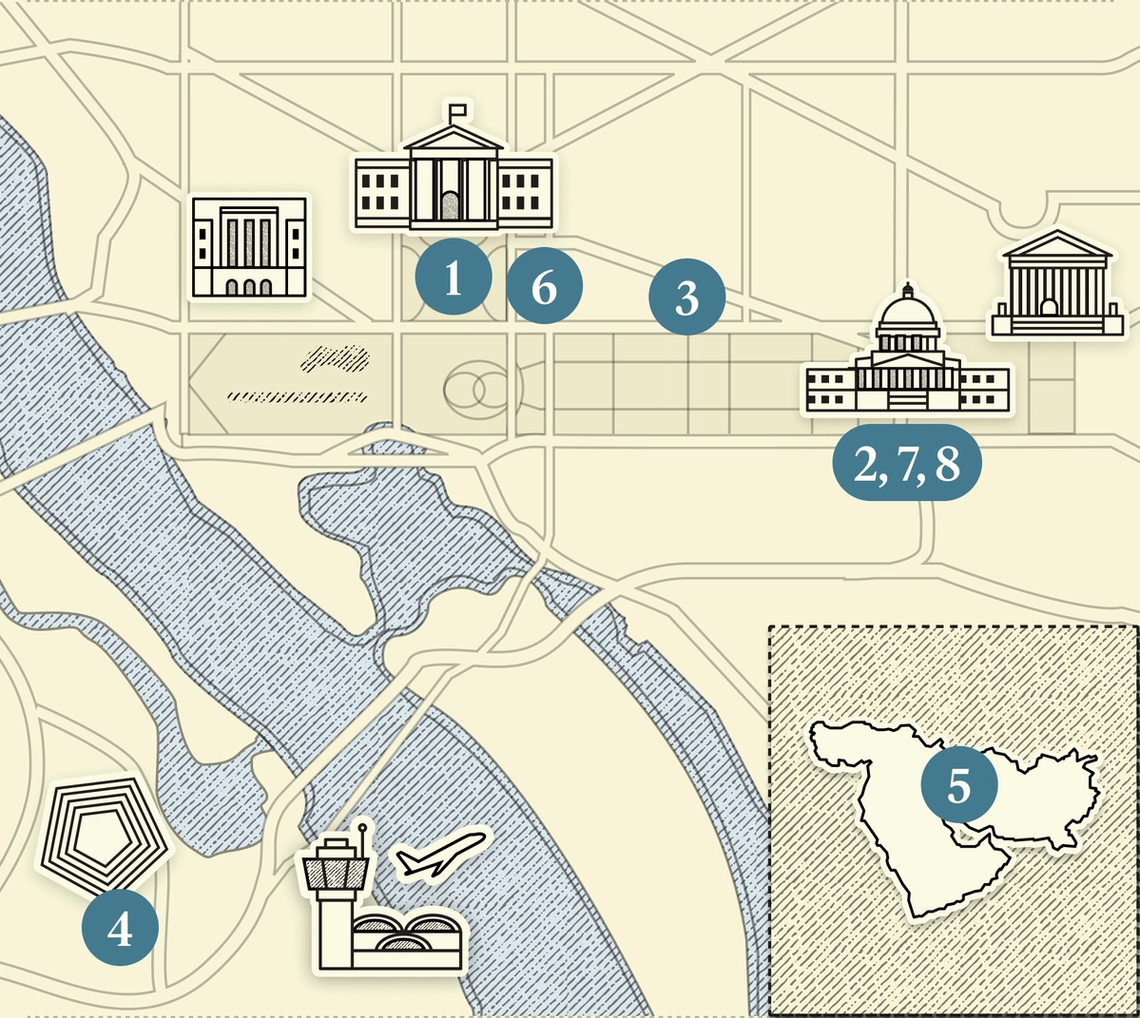 - Trump vs. Thune
- Crypto stuck in Senate
- Blanche in limbo
- Never-ending war
- Iraq’s DC dilemma
- Chinese AI warning
- Corruption push
- Midterm fears
PDB: Michigan Senate drama  US reports GDP, inflation data … Senate panel considers CDC, Labor nominees … Apple, Amazon report earnings |
|
Semafor Exclusive Trump’s needling of Thune isn’t helping his goals |
 Nathan Howard/Reuters Nathan Howard/ReutersPresident Donald Trump keeps needling Senate Majority Leader John Thune — on the SAVE America Act, on the filibuster, and even over whether he’s the right man for the job. But all he’s doing is splintering the Republican Party further, and demonstrating that Trump is already losing control of the Senate well before the November election, Semafor’s Burgess Everett reports. It’s setting up a potentially ugly conclusion to the Senate’s summer session as Trump heaps unattainable goals on Thune. “The president’s frustrated. The base is frustrated,” one Republican senator told Semafor. “And I don’t see a clear resolution or anything that comes out of this that’s favorable for anybody.” Some Republicans think it could lead one member to pose a quixotic challenge to Thune in November, though former challenger Rick Scott, R-Fla., said he’s not “planning” on running for leader again. |
|
Semafor Exclusive Crypto gets snarled in the Senate |
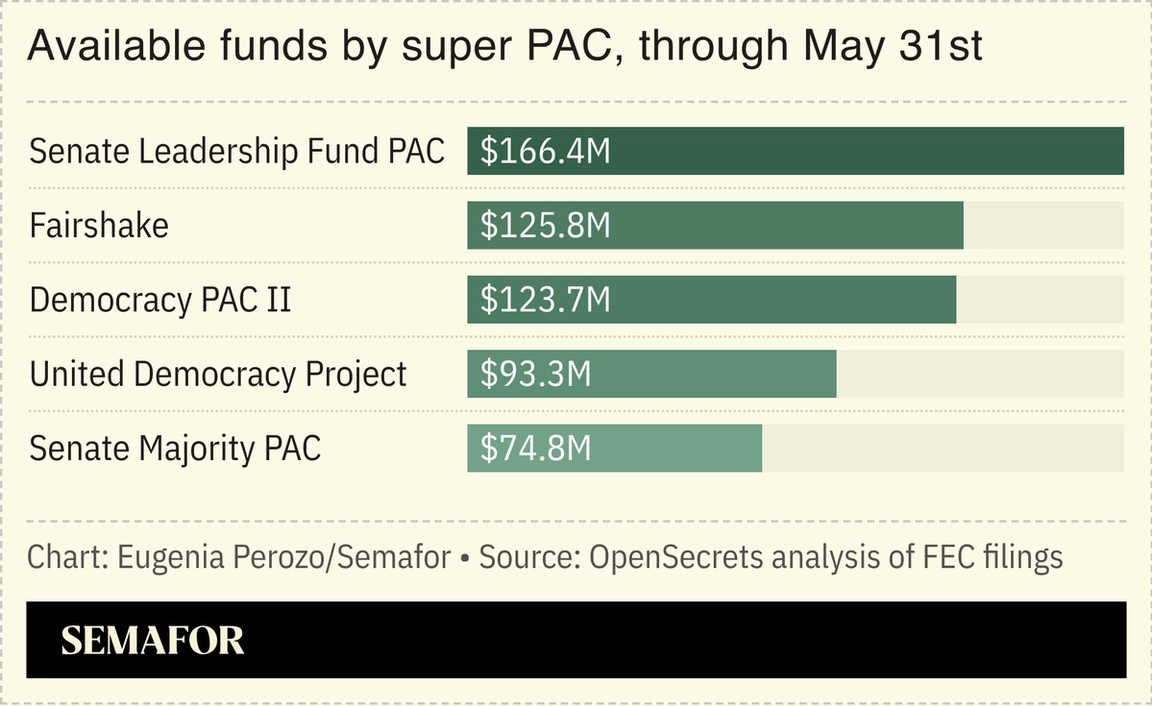 The shaky state of cryptocurrency’s top legislative priority is threatening the industry’s plans to unleash midterm campaign cash against its enemies, Semafor’s Eleanor Mueller reports. Senate Republicans had projected confidence about advancing the legislation, which would overhaul federal regulation of crypto, before senators leave Washington next week. But with just eight days to go, negotiators are still at odds on multiple fronts. That’s a problem for the crypto industry’s network of super PACs, known as Fairshake, which had nearly $140 million to spend at last count. Its backers, which include firms like Coinbase and Ripple, are counting on a Senate vote on their long-sought bill to help settle whether all that money should go to both parties or just Republicans. “That’s the whole reason Thune has to have a vote,” one industry executive told Semafor. |
|
Semafor Exclusive What’s next for Blanche |
 Anna Rose Layden/Reuters Anna Rose Layden/ReutersTodd Blanche is down, but not out. The Senate Judiciary Committee postponed its vote on Blanche’s nomination for attorney general as Sens. Thom Tillis, R-N.C., and John Cornyn, R-Texas, refuse to vote for him until he narrows Trump’s tax immunity deal. But the nomination isn’t toast yet as the two senators hold out; a spokesperson for Senate Judiciary Chair Chuck Grassley said “work continues to secure sufficient support” for Blanche. The Justice Department also sent a new written document to Cornyn aimed at addressing his concerns over Blanche’s nomination. A senior Trump administration official said they believe “there is significant confidence that a path forward is emerging,” but it remains to be seen whether it’ll be enough to mollify Cornyn’s apprehension. Cornyn said an earlier document from DOJ fell short of addressing his concerns. — Burgess Everett and Shelby Talcott |
|
 US Central Command/Handout via Reuters US Central Command/Handout via ReutersUS hostilities with Iran have ramped up again after Trump ordered retaliatory strikes overnight as a response to Iran’s latest attack on US forces. The strikes lasted roughly two hours and made clear that the brief pause in fighting over the weekend was just a blip. Trump on Wednesday afternoon told reporters that he’ll “pretty much” always hit back if Iran launches strikes, raising fresh doubts about the path toward a resolution to the five-month conflict. Administration officials have privately noted over the past few weeks that there’s no good options for the US as it looks to rein in Iran’s nuclear program, with gas prices rising and voters increasingly expressing discontent over the conflict. Oil prices remained broadly steady overnight, and Bloomberg reports that traffic through the Strait of Hormuz has actually picked up despite the conflict spreading. — Shelby Talcott and Morgan Chalfant |
|
Iran upends Iraq’s DC charm offensive |
 Evan Vucci/Reuters Evan Vucci/ReutersAmerican and Saudi strikes on Iran-backed militias this week laid bare the dilemma at the heart of the Trump administration’s Iraq policy: Washington wants to pull Baghdad closer, but Iraq remains on the front lines of a widening confrontation with Iran. Following US-Saudi strikes in eastern Iraq, Trump told Fox News the operation had been “coordinated” with the Iraqi government, but within hours, Iraqi leadership condemned the strikes. The dueling messages demonstrated the political bind facing Iraqi Prime Minister Ali al-Zaidi, the businessman-turned-politician who has sought to strengthen ties with Washington by pledging to rein in powerful Iran-backed militias that continue to wield significant influence inside Iraq. “Such a claim from the president, whether true or not, is deeply challenging for the prime minister,” said Victoria Taylor, director of the Iraq Initiative at the Atlantic Council. — Lauren Morganbesser |
|
Semafor Exclusive Trump urged to ban Chinese AI for contractors |
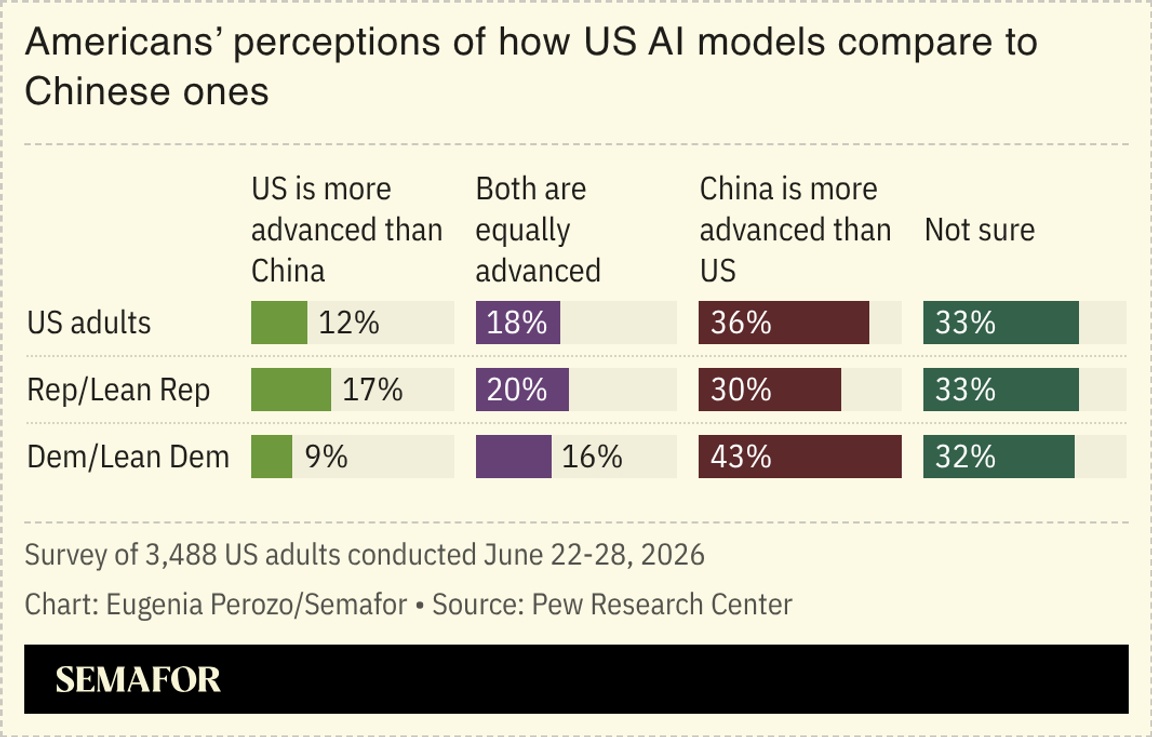 The US government should ban government agencies and contractors from using Chinese AI models, Sen. Tom Cotton, R-Ark., argued in a letter to Commerce Secretary Howard Lutnick sent this week. “Backdoors may be embedded into open weight Chinese models, and auditing produces limited assurances. American companies, particularly those that do business with the US government, should never jeopardize our security for higher profits,” Cotton wrote in the letter, which was sent yesterday and shared first with Semafor. The Republican senator raised broad concerns with the rising popularity of Chinese open-source AI models in the US, and urged Commerce to enact strict export controls on advanced compute and chipmaking equipment. He also urged the Trump administration to “actively nurture an open AI ecosystem in the US to rival” China’s, given that leading US models are mostly closed. — Morgan Chalfant |
|
Semafor Exclusive Dems miss mark on accountability: poll |
 Annabelle Gordon/Reuters Annabelle Gordon/ReutersDemocrats aren’t doing enough to win over voters with their approach to tackling government accountability and corruption, as those issues take on greater salience. New polling from the center-left group Third Way and Impact Research, shared first with Semafor, found that voters trust Republicans slightly more than Democrats to reduce government waste, fraud, and abuse, and to address corruption. This is the case even as most voters rate Trump’s stance on corruption negatively — a sign, Third Way argues, that Democrats have an opening. “For lawmakers looking to rebuild public trust, accountability is no longer optional — it is the starting point,” the polling memo says. Democrats have started to respond to calls to focus on graft and fraud: Senate Minority Leader Chuck Schumer plans to announce legislation today preventing presidents from using the office for personal profit, a spokesperson said. — Morgan Chalfant |
|
Midterm election fears run high |
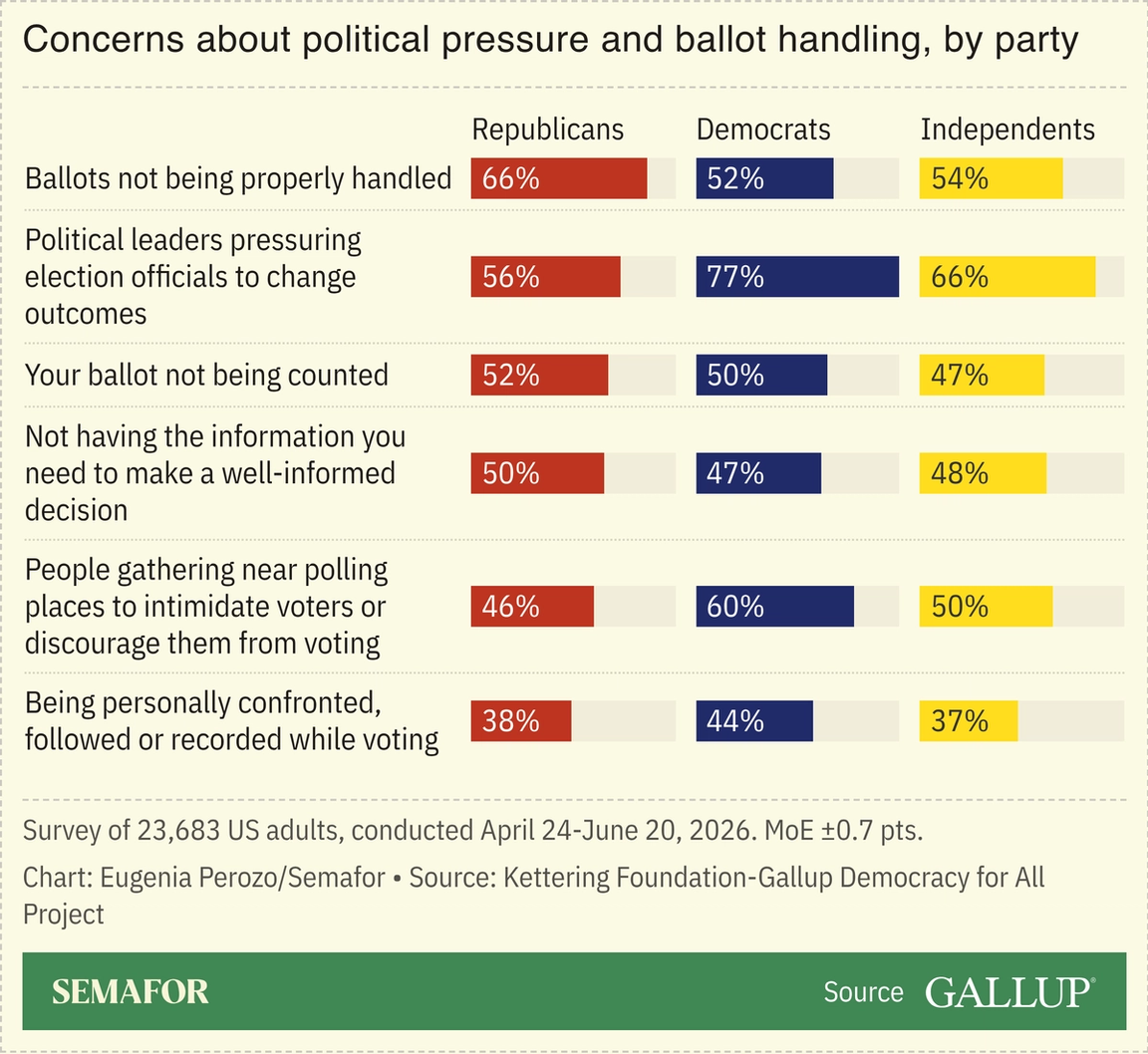 Majorities of Americans are worried about election officials being coerced, lax ballot security, and voter intimidation leading up to the 2026 midterm elections, according to new polling from Gallup. Nearly seven in 10 US adults worry about politicians pressuring election officials to change results. The number is higher among Democrats, following Trump’s attempt to overturn the 2020 vote, but 56% Republicans are also concerned about the possibility. And 57% are worried about ballots not being properly handled, counted, or secured, including two-thirds of Republicans and more than half of Democrats. The poll also shows that voters are skeptical of both parties’ efforts to gain an edge through redistricting: Nearly eight in 10 expressed concerns about gerrymandering. Fifty-three percent are worried about people ineligible to vote casting ballots — 78% of Republicans but only 36% of Democrats — a rarity Trump’s stalled voter ID bill nonetheless seeks to stop. |
|
How Congress entrenched its own unpopularity |
| |  | David Weigel |
| |
 When they’re not fighting each other, which is rare these days, Democrats agree on three points about their midterm election strategy. First, they want to talk about affordability. Second, they want to take on corruption. And lastly, the public perception that both parties are crooked makes it hard to talk about the second thing. “My friends who aren’t politically engaged — I say, ‘Trump has made $4 billion since he’s been president, he’s getting a jet from Qatar,’” former Bernie Sanders and Joe Biden adviser Alex Jacquez told me recently. “And they say, ‘Nancy Pelosi is long on Nvidia.’” Banning any stock trading by members of Congress is a wildly popular idea. But ironically, when Congress tried to rein itself in 14 years ago, its solution only strengthened the folk wisdom that many lawmakers are getting rich off insider information. |
|
 Beltway NewslettersPunchbowl News: Senate Majority Leader John Thune, along with Sens. Ted Cruz, R-Texas, and Amy Klobuchar, D-Minn., was closing in on a proposal to address risks of advanced AI models, but their idea ran into objections from Anthropic and Sen. Maria Cantwell, D-Wash. Playbook: Thune said Republicans are “as well positioned as we can be” ahead of the midterms but said they need to coalesce around a cohesive message “rather than us shooting each other.” Axios: Vice President JD Vance and Israeli Prime Minister Benjamin Netanyahu met one-on-one earlier this week and had a “direct” conversation about their disagreements. White House |
|
|


