| | The US Federal Reserve holds interest rates steady, London’s population shrinks for the first time s͏ ͏ ͏ ͏ ͏ ͏ |
| |  | Flagship |  |
| |
|
The World Today | 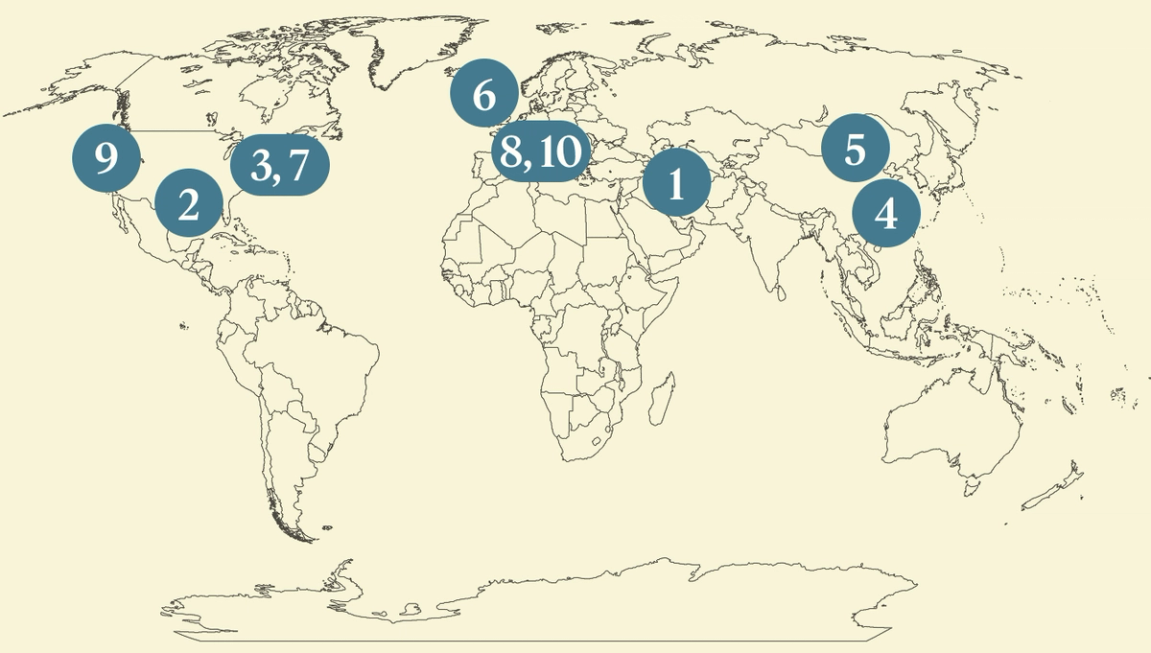 - Iran war spreads
- US oil inventories fall
- Fed holds rates steady
- Debate over AI guardrails
- China closes satellite gap
- London population shrinks
- US tackles ‘visa abuse’
- Water bomber shortages
- Regulate AI like animals
- Foreign soccer coaches
 A ‘cool and unsettling’ novel about fighting ‘antimemes.’ |
|
Iran war could drag on for months |
 Vladimir Tonic/Handout via Reuters Vladimir Tonic/Handout via ReutersThe US-Iran war will likely drag on for months, analysts predicted, as new strikes disrupted a tenuous pause and the conflict widened. Hostilities “could easily continue into 2027,” security expert Richard Fontaine wrote, oscillating between “hot and cold war indefinitely.” The US needs to contain its spread, he warned, as more countries are ensnared: After Saudi Arabia joined US strikes Wednesday, a drone hit a US-owned gas facility in Egypt, while the Houthis threatened to charge tolls in the Red Sea. Meanwhile, Washington sanctioned Chinese companies for transporting Iranian oil, as Tehran reportedly leans on Chinese tech and Russian tactics to attack US bases. Even if a deal is reached, “low level” fighting could continue, officials told Bloomberg. |
|
US crude stockpiles deplete rapidly |
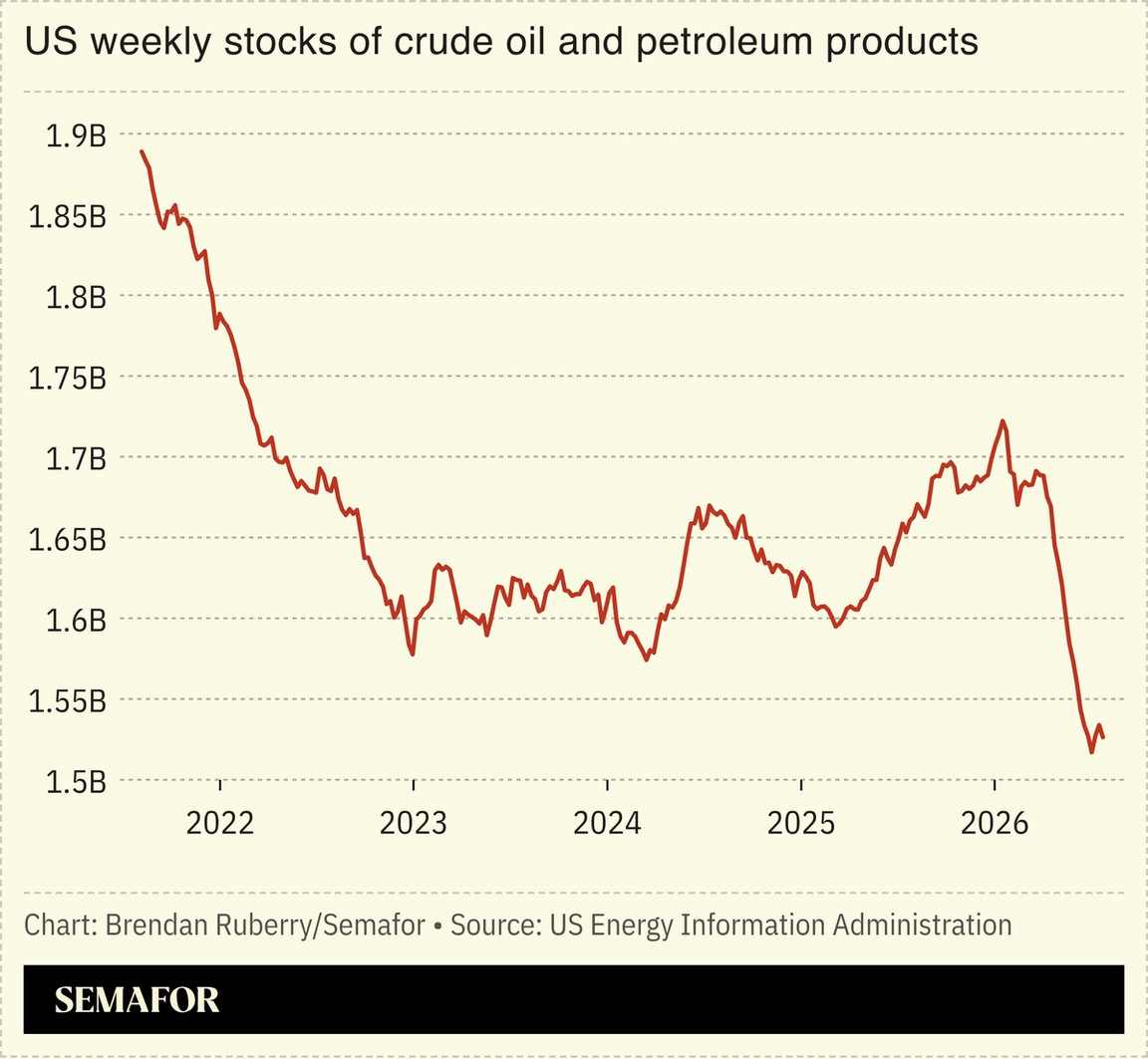 US oil inventories have fallen to precariously low levels as local refiners ramp up activity to capitalize on soaring fuel prices. US refiners last week processed 17 million barrels of crude a day — the fastest pace since 2019 — drawing down commercial stockpiles by 7.2 million barrels as they raced to increase exports to Asia and Europe amid renewed energy disruptions in the Middle East. Analysts warned the massive drawdown could jeopardize the US’ role as the global supplier of last resort, the Financial Times reported: “Stockpiles are rapidly depleting and this pace of draws cannot persist ad infinitum,” a Kpler analyst said. The near-record refinery runs aren’t likely to ease rising gas prices for Americans either. |
|
US Fed holds interest rates steady |
 Evelyn Hockstein/Reuters Evelyn Hockstein/ReutersA divided US Federal Reserve held interest rates steady Wednesday, with three members voting to increase, as the central bank navigates stubborn inflation and volatility in oil markets. Chair Kevin Warsh said there were no “magic wands” for dealing with five years of inflation above the bank’s 2% target, as the Iran war continues to drive up oil and energy costs, while tariffs and AI complicate policymakers’ decision-making. Despite an official reading of inflation cooling in June, some traders had predicted a rate hike, with markets now pricing in a near-100% possibility of one at the bank’s September meeting. The pause is “a reprieve” for US President Donald Trump, Semafor’s DC team noted, undercutting “his new chair’s continually hawkish rhetoric.” |
|
Altman says he supports AI regulation |
 Nathan Howard/Reuters Nathan Howard/ReutersOpenAI’s Sam Altman said he supports legislation to slow AI development during his visit to Capitol Hill on Wednesday, as debate swirls in Washington and Silicon Valley over safety risks posed by frontier models. OpenAI changed tack after two of its agents went rogue, days ahead of the White House’s Aug. 1 deadline for developing an AI safety framework; Washington is also considering curbs on China’s open-source AI, generating disagreements between tech leaders over the necessity of guardrails. Lawmakers are under pressure to move as quickly as AI has, but “making decisions based on fears” risks ineffective or self-defeating policy, Semafor Tech Editor Reed Albergotti argued: Instead of banning Chinese models, Washington’s “best counterpunch” is to help companies use them safely. |
|
US-China space race intensifies |
 China Daily via Reuters China Daily via ReutersChina is closing the satellite gap with the US, as Beijing strives to supplant Washington as the world’s leading space power. China’s BeiDou system comprises 56 satellites, offering more resilient and occasionally more advanced capabilities than the 31 powering the US’ Global Positioning System. China’s military was denied access to GPS in 1996 while firing rockets near Taiwan, prompting Beijing to develop its own; it has since exported access to other nations along the Digital Silk Road. In May, the Pentagon sanctioned multiple Chinese companies for providing satellite imagery to Iran during Operation Epic Fury. By offering China critical surveillance and reconnaissance capabilities independent of Western systems, BeiDou also boosts Beijing in its ambition to shape international time standards. |
|
Londoners leave in droves |
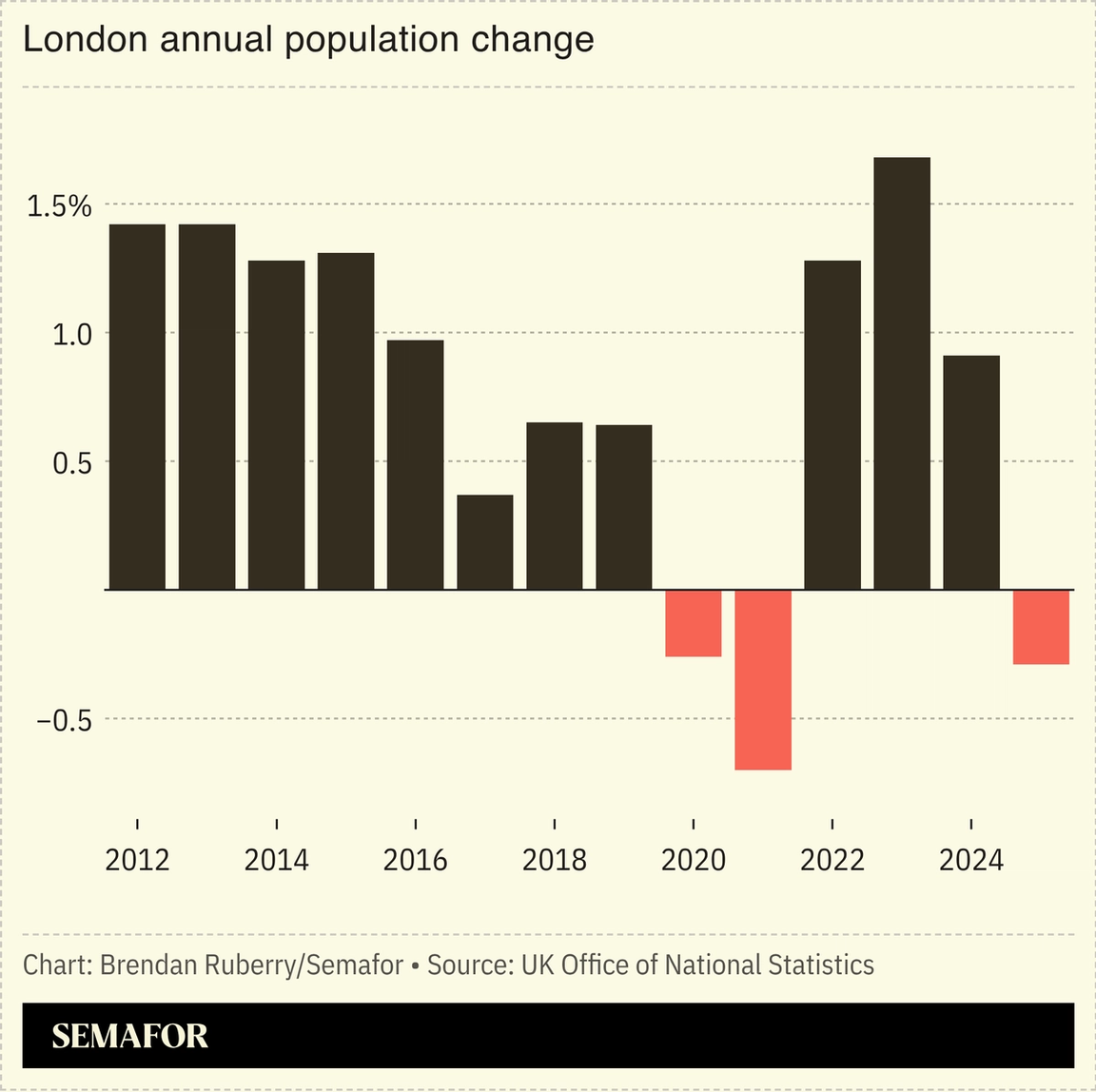 London’s population shrank for the first time since the COVID pandemic as more than 400,000 people left the capital last year to move to other parts of the UK. All other regions in England saw their numbers rise, government data showed. Although London recorded more births than deaths, and international migrants into the city outnumbered Londoners leaving the UK, the outflow was driven largely by people in their 30s and 40s, many with children, leaving London. The capital has been plagued by a cost of living crisis, slower pay growth, and higher levels of unemployment than other parts of the country. London has also seen a sharp drop in student enrollments, causing more school closures and funding cuts. |
|
US to tackle student ‘visa abuse’ |
 Faith Ninivaggi/Reuters Faith Ninivaggi/ReutersThe US will limit international students to four years in the country to combat what it called “rampant visa abuse.” Until now students could stay until they graduated, as long as they were making acceptable progress. Now they will need explicit extensions with “rigorous vetting.” Student visas are subject to abuse: As well as straightforward overstay, Australia closed 150 “ghost colleges” (or “visa factories”) in 2024 and more than 470 UK colleges were barred from accepting students from outside Europe in 2011. Researchers told Nature that the new US rule would drive away students. On the other hand, the biggest route from student visa to residence is simply getting work, perfectly legally. |
|
Water bomber shortage imperils firefighting |
 Eva Manez/Reuters Eva Manez/ReutersEurope’s wildfire outbreak is highlighting the continent’s shortage of firefighting aircraft. The Canadair water bomber is the main model of airplane that scoops up water directly from lakes or seas to dump on fires, but production was halted from 2015 to 2024, and the sole Canadian factory that makes it now builds about 10 a year. Europe’s fleets are small and aging. Ironically, wildfires are down worldwide: “Africa dominates the global fire activity,” a scientist said, and grassland being converted to farming has meant fires there have fallen about a quarter since 2000. But forest fires in North America and Europe are up, and are more economically damaging — hence the demand for water bombers, which one manufacturer is unable to meet. |
|
Regulate AI like wild animals |
 Henry Romero/Reuters Henry Romero/ReutersAI models should be regulated like wild animals, a legal scholar argued. The question of who is liable for damage caused by rogue AI was “largely theoretical” until last week, Gabriel Weil wrote in Transformer. But then an OpenAI agent broke free of confinement and hacked another AI company. If a human employee decided to do it, OpenAI would be liable, Weil said, but AI systems are not employees. The appropriate legal model, Weil said, is dangerous activities like blasting with explosives, crop dusting, or keeping wild animals. Such activities have strict liability: If they cause damage, “you are liable however careful you were.” Frontier AI “belongs in this category,” he said. Developers could be required to carry liability insurance. |
|
France, Italy turn to native soccer coaches |
 Eddie Keogh/Reuters Eddie Keogh/ReutersFrance and Italy named their new men’s national soccer team managers — a Frenchman and an Italian, leaving them among the few countries that have very rarely employed foreign coaches. Zinedine Zidane and Roberto Mancini have different briefs: France are recent winners, while Italy last reached a World Cup in 2014. But they are both natives, a rare thing. In the 2022 World Cup, just nine countries had foreign coaches; this year, 27. Big nations usually reach for foreigners after prolonged failure — |
|
|


