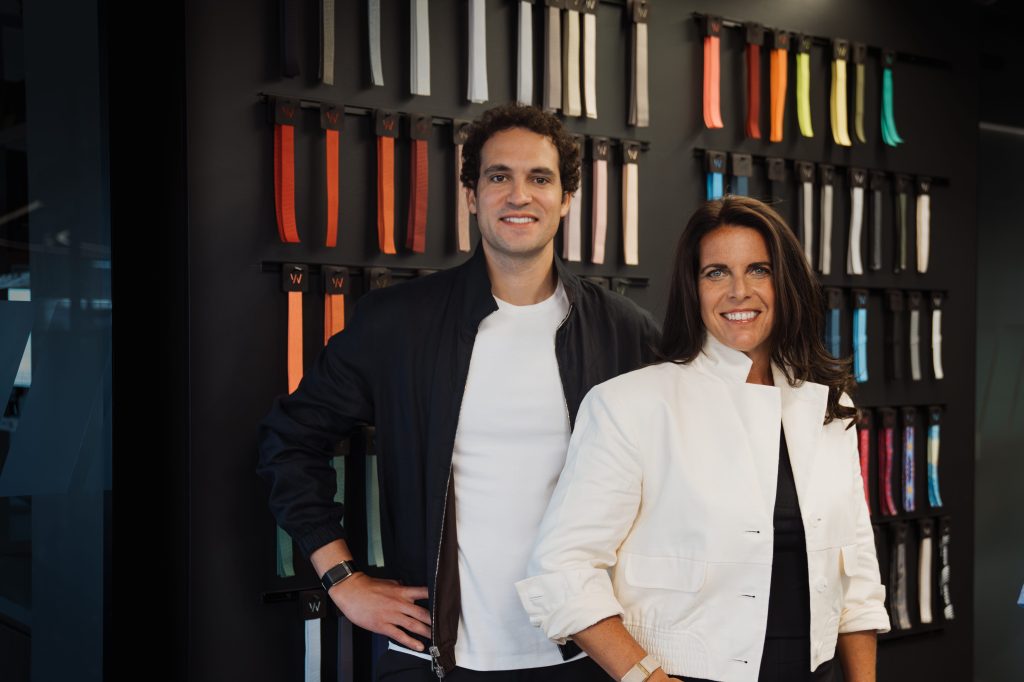
Kyle Leahy joined Glossier in 2021 and
became the beauty brand’s CEO in 2022 as it sought to move beyond its direct-to-consumer roots. Taking over from founder Emily Weiss, she led the brand into Sephora and helped it become a true omnichannel business, but ended up exiting last year as the brand
pursued another reset under new CEO Colin Walsh.
Today, she’s announcing her next move.
Fortune is the first to report that Leahy will take on the fast-growing category of wearables as chief commercial officer at Whoop.
Founded by Will Ahmed 14 years ago, Whoop sells its signature bracelet-style wearable health-tracker, with 3 million members across 56 countries. Its biggest competitors are Oura and Apple. The
WSJ recently
reported that Whoop had 1.9% of the health-tracking wristband or ring market in the first quarter of this year, compared to 52% for Apple and 9.8% for Oura.
After
raising $575 million at a $10.1 billion valuation in March, Whoop has recently been building out its executive team as it prepares to go after more of the wearables market. It
brought on Nike alum Dirk-Jan van Hameren as CMO and Kristen Moss as chief communications officer. Whoop and Glossier share IVP as a mutual investor.
The existing Whoop customer is extremely engaged; they open the app as often as eight times a day. But as chief commercial officer, Leahy will be tasked with getting Whoops on more wrists as she got more products to more people at Glossier. Chief commercial officer was her first title at the beauty brand before she became CEO, and the work is similar to what she did at Cole Haan too. In taking on this kind of role, Leahy looks for “a brand that is at an inflection point to create exceptional business value and enterprise value.” “I certainly see we’re at that moment,” she says.
At Whoop, that will look like building out the health care side of its business, selling through health plans. International expansion is a major priority, with signs of potential in markets including Latin America and Asia.
Leahy’s past experiences in beauty and fashion are becoming more relevant as wearables intersect with those industries. Shoppers can buy health supplements at Sephora, and as health-tracking wearables become more ubiquitous—and reach consumers beyond the early-adopter health-conscious men—consumers are often making choices driven by what that wearable looks like.
“Those worlds will continue to collide,” Leahy predicts.
Like Glossier, Whoop is a brand whose customers feel passionately about it. Both brands “mean something so much more to people emotionally than just the product we offer.”
What might Leahy miss about the beauty industry? “Maybe some product,” she jokes. But it’s not too far away. “How [consumers are] managing how they are the best version of themselves [on the inside] is going to help them show up as the best version on the outside.”
Emma Hinchliffeemma.hinchliffe@fortune.comThe Most Powerful Women Daily newsletter is Fortune’
s daily briefing for and about the women leading the business world. Subscribe here.