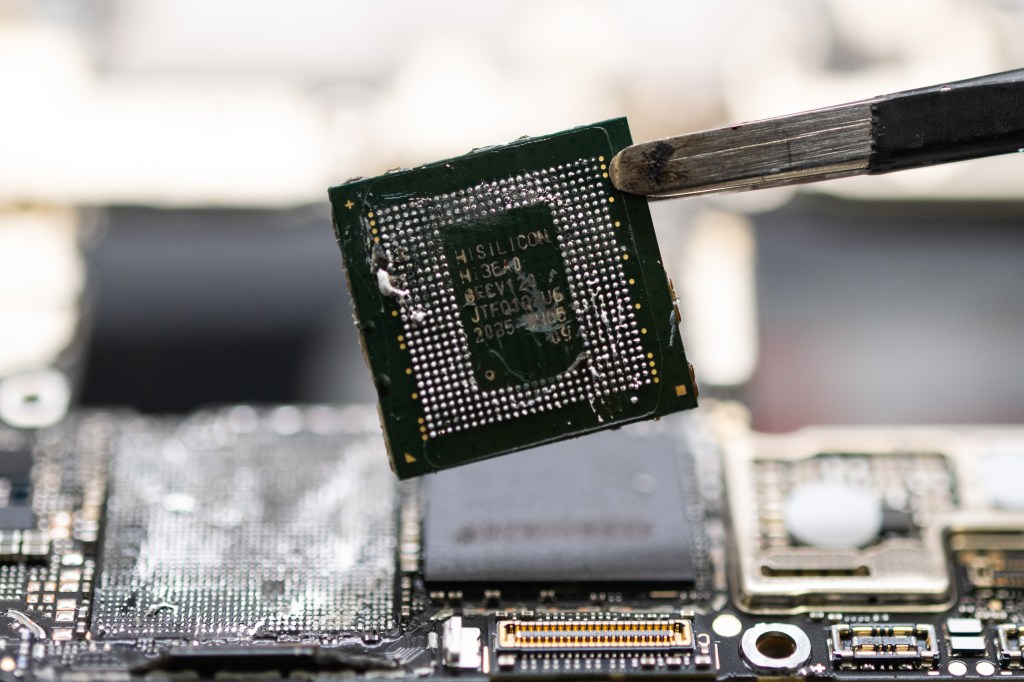
 A Kirin 9000s chip fabricated in China by Semiconductor Manufacturing International Corp. (SMIC), taken from a Huawei Technologies Co. Mate 60 Pro smartphone, photographed on Sept. 3, 2023. James Park/Bloomberg/Getty Images
The AI arms race, in the words of chef Emeril Lagasse, has officially kicked up a notch.
Not content with creating globally competitive AI models (to rival Anthropic and OpenAI) or even AI chips (to take on Nvidia, AMD, and Broadcom), China has reportedly begun manufacturing the astonishingly expensive machines that
make the chips (R.I.P. ASML).
A
new report in The Information says that an unnamed state-backed company has achieved a breakthrough by making the kind of immersion deep ultraviolet lithography machines, or DUVs, used by chipmakers including TSMC.
When I say this is heavy industry, believe it. A DUV lithography machine is about the size of a large truck, weighs upwards of 18 tons, and can cost up to $90 million.
(DUV machines, by the way, aren’t to be confused with EUV machines—the “E” is for “extreme”—which are much more expensive, far more precise, and way heavier, weighing as much as two narrow-body airliners. Cool.)
It was only nine months ago that the editor of an American international relations magazine wrote on social media about a Chinese firm
reverse-engineering an ASML chipmaking machine in an attempt to better learn how they worked and evade U.S. sanctions. (Going so far as to boldly call ASML for technical support, apparently, but I digress.)
That post is now looking more serious by the week, given the precision engineering, parts, and assembly lines necessary to seriously pursue such a project.
No wonder shares of ASML fell 7% in the wake of the new report. For two decades, the Dutch company has controlled the lion’s share of the global DUV market, and now drives about 20% of its total revenue from China.
—AN