Lumina Foundation is working to increase the share of adults in the U.S. labor force with college degrees or other credentials of value leading to economic prosperity.
For months, administrators at Ivy Tech Community College have been feverishly working with Indiana state officials to parse which of their programs might be eligible for Workforce Pell. The policy took effect July 1, and they are eager to start the flow of new federal dollars to low-income students in short-term training programs.
Like Ivy Tech, college and state leaders across the country have been gearing up for Workforce Pell since the long-anticipated policy passed as part of the One Big Beautiful Bill Act last year. The Congressional Budget Office estimates that Congress will invest over $1 billion in the program over the next 10 years and that by 2034, about 100,000 new recipients each year will receive Workforce Pell Grants of about $2,200 each.
A new White House report, Science: The New Golden Age, criticizes the current state of U.S. science and calls for reduced funding for research universities, advocating instead for reallocating that money to individual scientists. The report also calls for increased investment in physical sciences and artificial intelligence, while de-emphasizing life sciences.
Critics, including California Rep. Zoe Lofgren and prominent scientists, warn that the plan could weaken fundamental research, politicize grant awards, marginalize leading universities, and potentially undermine U.S. scientific leadership and innovation.
It’s not unusual for Arne Duncan, the former U.S. Education secretary, to be in a text conversation with Ted Mitchell, his onetime undersecretary, about actions the Trump administration is taking. They’ve even developed their own shorthand: “idkycdt.”
The acronym stands for “I didn’t know you could do that,” Mitchell, now the president of the American Council on Education, said from the main stage of the latest annual meeting of the National Association of College and University Business Officers in Anaheim, California. As he mentioned it, laughter from the more than 1,500 financial officials in attendance gave way to knowing glances and nods of agreement—along with obvious concern for the future.
A new report from Excelencia in Education reveals that while Latinos are projected to make up 91 percent of new U.S. workers by 2031—one in five workers nationwide—only 31 percent of Latino adults currently hold an associate degree or higher, compared to 54 percent of white adults. The report also notes that nearly 75 percent of jobs in the coming decades will require a postsecondary credential.
The report makes several recommendations to improve degree attainment for Latinos, including sustained federal investments in institutions serving the most Latino students and more intentional re-engagement efforts with those who have some college experience but no degree.
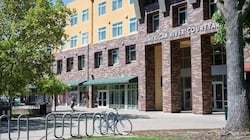
For the first time in its 80-year history, Sacramento State requires first-year students entering campus this fall to live on campus—unless they’re local to the area. Since the new policy was announced last August, it has ignited spirited debate within the school community on affordability, infrastructural capacity, shared governance, and the essential character of the campus.
Sacramento State leaders say the new policy is part of a plan to eliminate student homelessness, boost graduation rates and grades, and shed the school’s reputation as a commuter campus. Officials also cite previous CSU system research showing that students who live on campus for two years experience higher academic achievement, a greater sense of belonging, and stronger personal development outcomes.
At a recent packed Economic Club of Washington event, philanthropist David Rubenstein noted to Harvard University President Alan Garber that many universities had reached settlements with the Trump administration, but “Harvard has famously not settled.” The room burst into applause.
A year and a half into the Trump administration’s attack on higher education—and 15 months after Harvard refused to comply with sweeping federal demands—Garber stands by the decision to fight.





.jpg?width=500&upscale=true&name=istockphoto-1493273878-612x612%20(4).jpg)