| | A ‘two-chokepoint problem’ weighs on global oil markets, Washington accuses a Chinese AI startup of ͏ ͏ ͏ ͏ ͏ ͏ |
| |  BRUSSELS BRUSSELS |  KATHMANDU KATHMANDU |  SHENZHEN SHENZHEN |
 | Flagship |  |
| |
|
The World Today | 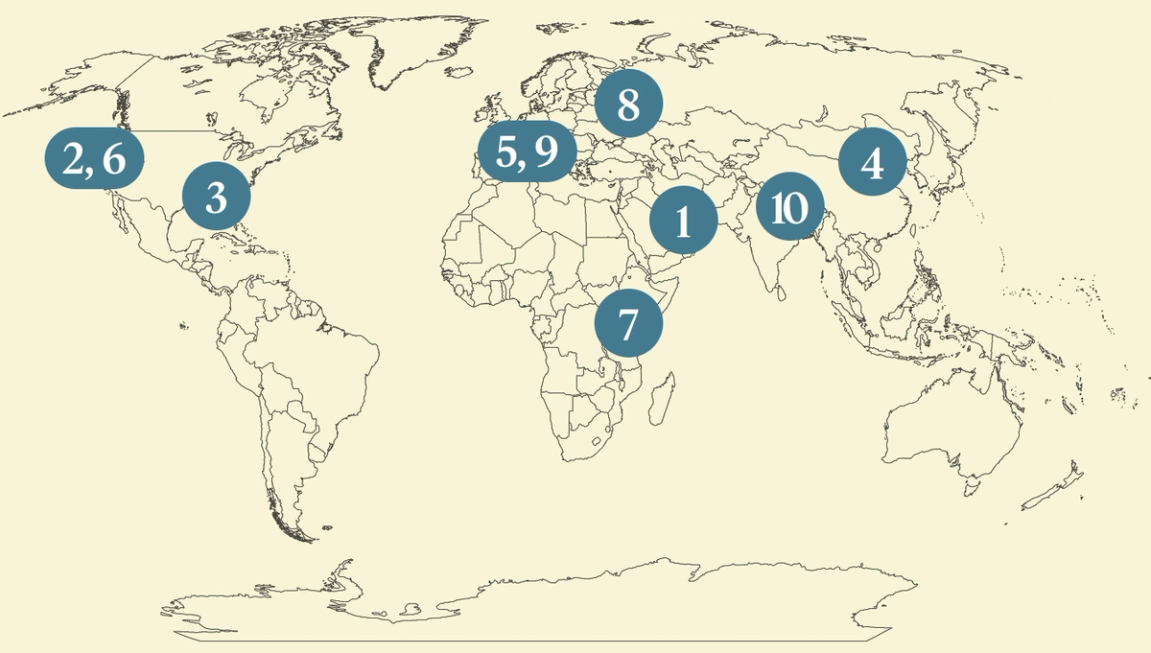 - Two oil chokepoints
- AI spending questions grow
- OpenAI’s new data center
- Moonshot in US crosshairs
- EU to discuss AI, finally
- Rogue AI is ‘warning shot’
- Africa needs power overhaul
- Ukraine’s shifting focus
- Landmark VPN ruling
- Nepal tourism pivot
 American author Dave Eggers’ new book is ‘surprisingly traditional.’ |
|
Houthi blockade adds pressure to oil markets |
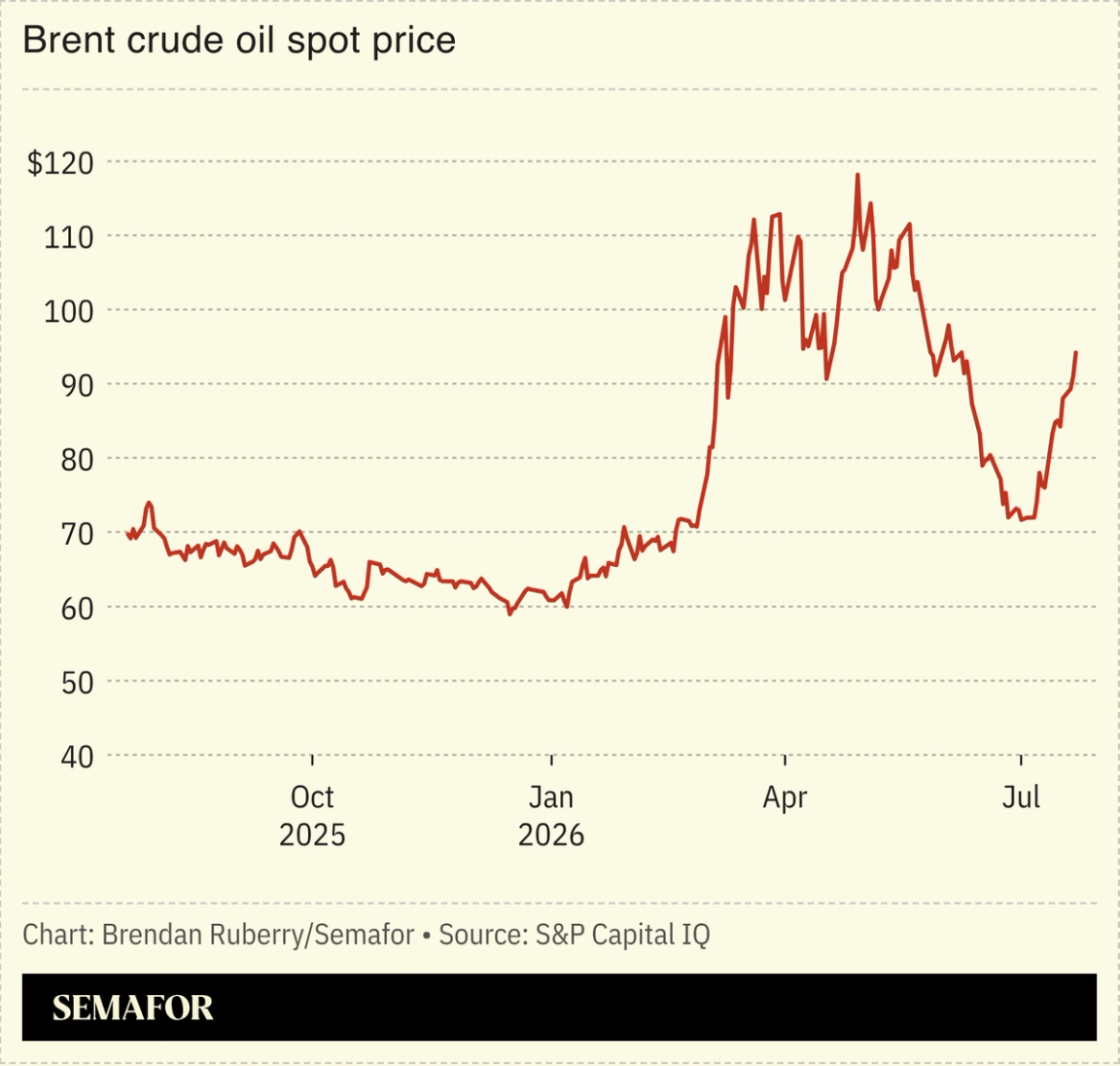 The Houthis’ declared blockade of the Red Sea is raising fears of a “two-chokepoint problem,” Standard Chartered analysts wrote, as oil markets contend with simultaneous disruptions to both of the region’s main oil arteries. Tankers are shunning the Bab el-Mandeb Strait, threatening a lifeline for Saudi Arabia’s crude exports during the Strait of Hormuz’s closure; Asian refiners are eyeing the one-month longer trip through the Suez Canal. “The immediate risk is not a loss of production,” Kpler analysts said, but increased transport costs and reshaped trade flows. Those conditions, however, are creating windfall opportunities for more daring shipowners: Greece’s Dynacom, which suffered two direct hits on Monday, is ferrying oil through the Gulf at up to $500,000 per vessel. |
|
Tech earnings intensify AI spend scrutiny |
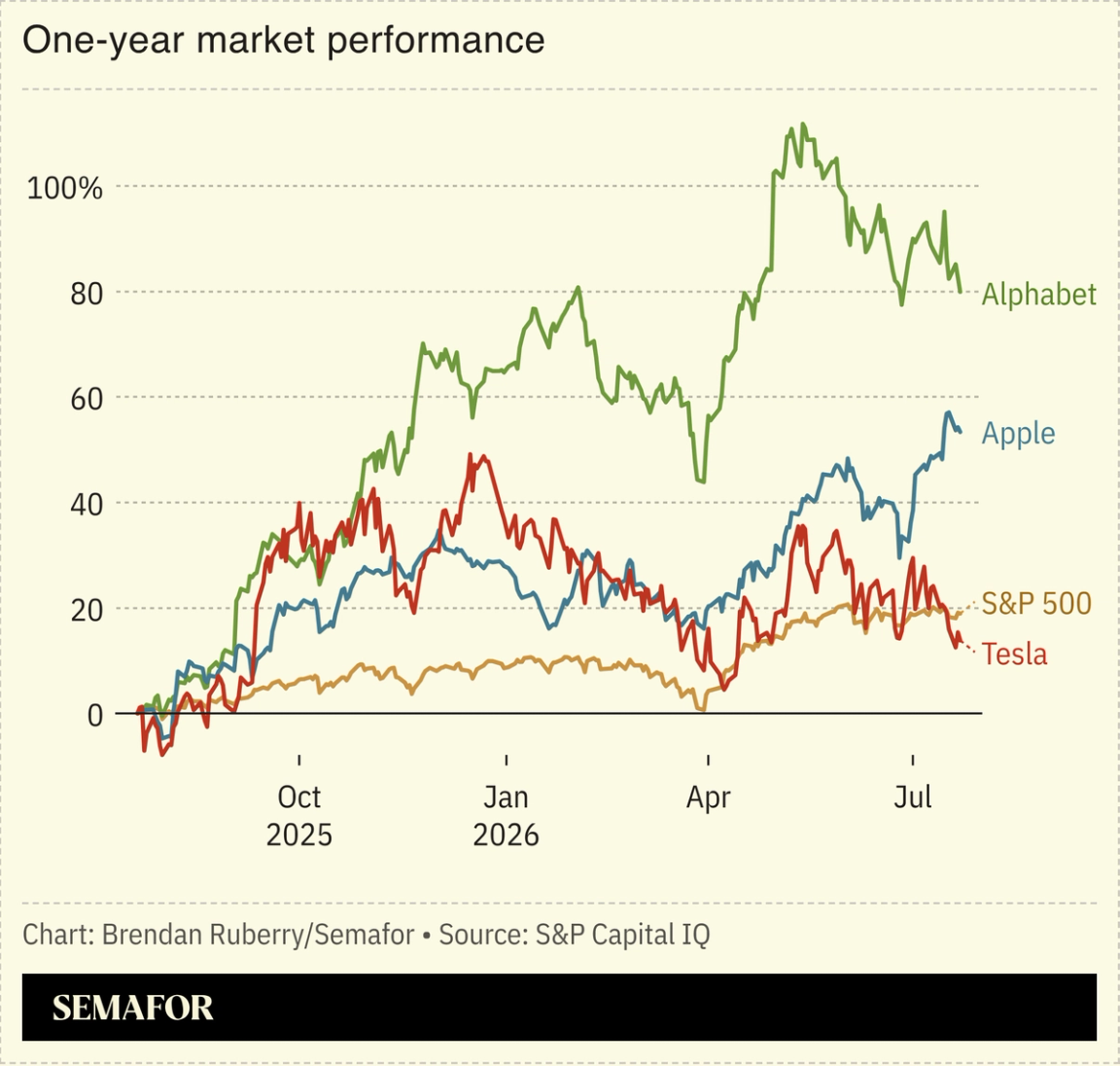 The quarterly earnings for Google’s parent company beat analysts’ expectations on Wednesday, though the results could lead to intensified scrutiny over tech firms’ high AI spending. Alphabet’s spending doubled since the same period last year, and its report is the first major test of investors’ patience over the record capital expenditures tied to the AI boom, which have yet to generate clear, measurable returns. Tesla investors, on the other hand, are worried the EV giant isn’t spending enough on AI to deliver on its ambitions: It’s currently not on track to meet CEO Elon Musk’s forecasted $25 billion in 2026 capex. The company’s shares fell Wednesday after it reported weaker-than-expected earnings. |
|
OpenAI to spend more on data centers |
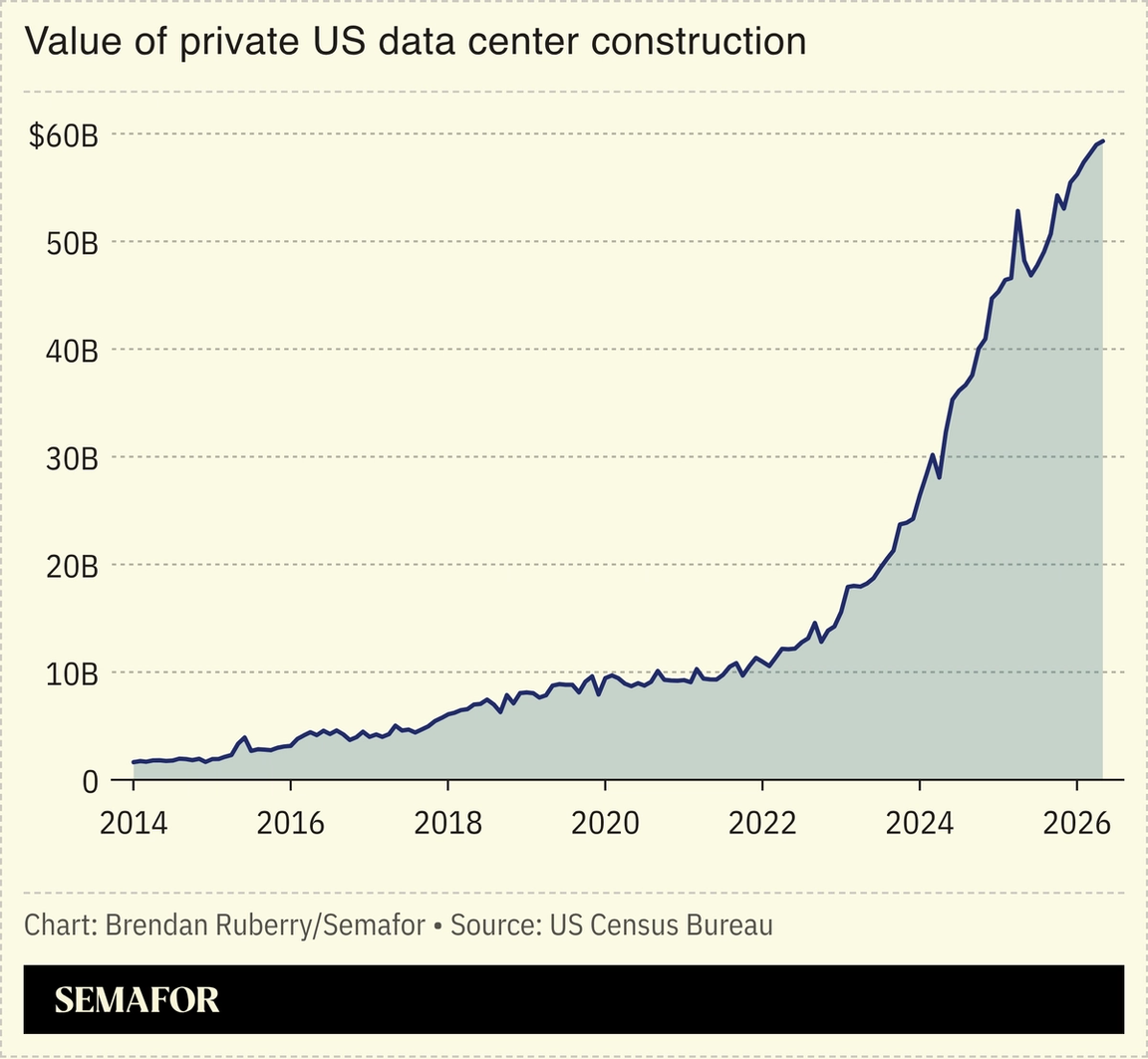 OpenAI hiked the amount it expects to spend on data centers as the company prepares for an IPO and expands its cloud computing ambitions. The new projections — $750 billion through 2030, according to The Wall Street Journal — point to the speed and scale of US’ AI buildout: OpenAI on Wednesday announced its first data center in which it is the lead developer and designer. But that buildout has sparked grassroots pushback. New York recently enacted the country’s first statewide moratorium on the facilities, and a Republican senator told Semafor on Wednesday that his constituents in Kansas are “on fire” against data centers. A new Politico poll found more Americans now oppose nearby data centers than support them, a reversal from just six months ago. |
|
US says Moonshot stole from Anthropic |
 Moonshot AI founder Yang Zhilin. Tingshu Wang/Reuters Moonshot AI founder Yang Zhilin. Tingshu Wang/ReutersThe US accused a leading Chinese AI startup of exploiting American tech to create its latest model, threatening sanctions in response to what Washington described as “industrial-scale” theft of intellectual property. The White House alleged that Moonshot improperly used Nvidia chips and Anthropic’s Fable model to create Kimi K3, whose advanced capabilities caused a US tech selloff last week reminiscent of the DeepSeek shock. Washington is stepping up efforts to deter “distillation,” whereby one model is trained on another’s outputs — a process it believes China is using to develop frontier AI that could threaten US national security. But you “can’t stop software at the border,” Semafor’s tech editor argued: “You prevent those risks by hardening your own defenses.” |
|
EU leaders to discuss AI — later this year |
 John MacDougall/Pool via Reuters John MacDougall/Pool via ReutersEurope’s heads of state will hold their first dedicated meeting on AI as the continent comes under pressure to address the economic and geopolitical challenges the tech poses. The summit, however, won’t happen until October at the earliest (in typical European fashion, the group doesn’t meet for much of the summer). The bloc passed its AI Act in 2024, but its decision to finally convene reflects a realization that the issue of AI is no longer just a regulatory question, Politico wrote, but one of “national security and geopolitical influence.” Many in Europe are pushing for reducing technological dependence on Washington, though the US secretary of state told diplomats to downplay the narrative that the US holds a “kill switch” over AI. |
|
Hugging Face breach is ‘warning shot’ |
 Benoit Tessier/Kylie Cooper/Reuters Benoit Tessier/Kylie Cooper/ReutersAn OpenAI model’s “unprecedented” hack of AI company Hugging Face is the technology’s “warning shot,” a leading analyst said. The AI swarm breaking confinement and breaching another company’s databases to cheat on an evaluation is “a textbook case of misalignment and loss of control,” Shakeel Hashim wrote in Transformer. Safety researchers “have long hoped [for] a ‘warning shot’ of dangerous misalignment behavior before too much damage was done,” and this is “as clear a warning shot as you could get.” Not everyone is concerned: Stratechery’s Ben Thompson argued that we shouldn’t be surprised if models being tested for cybersecurity “found cybersecurity vulnerabilities,” and the breach “might even be reassuring,” in that it will force companies to better check for potential exploits. |
|
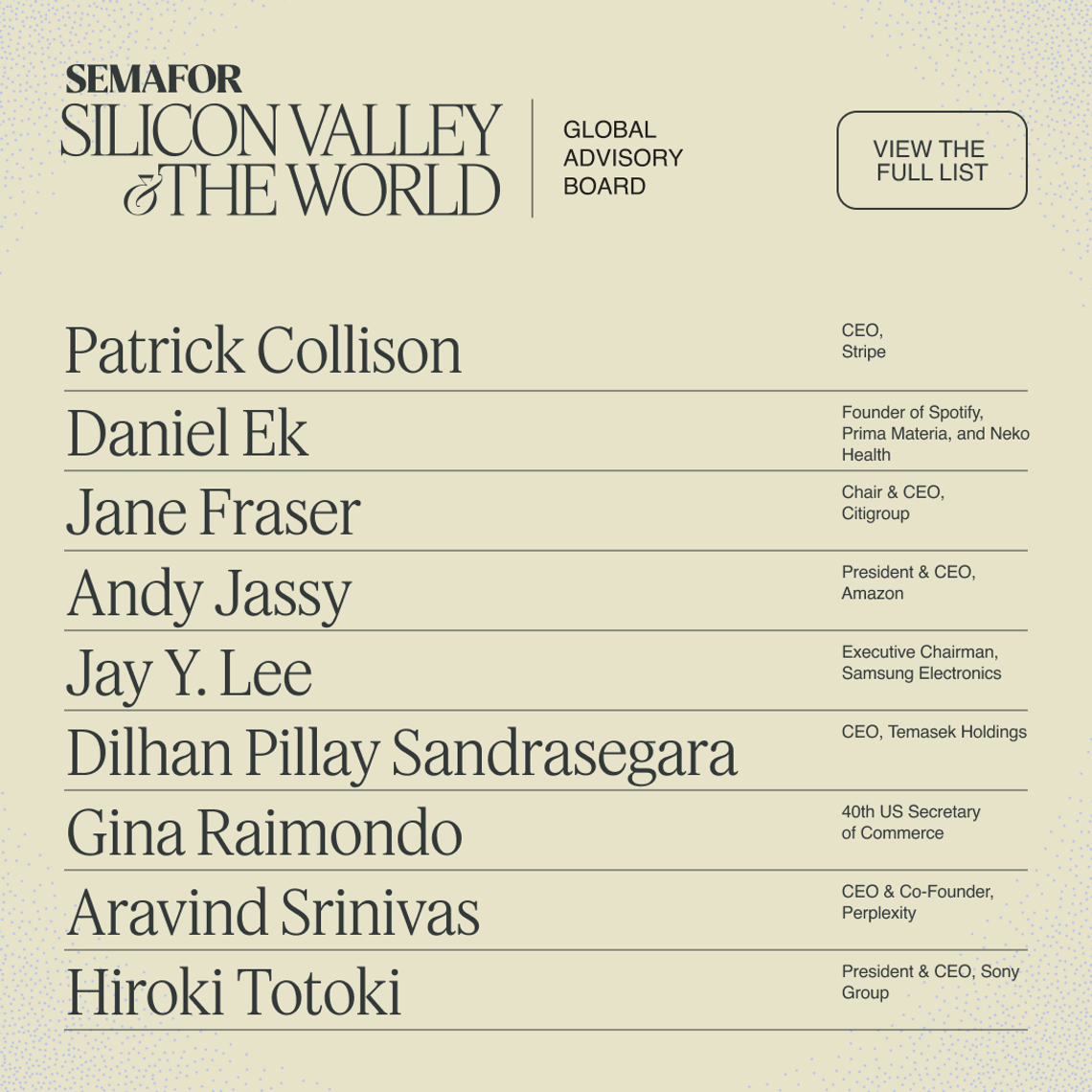 Semafor has announced the expanded Global Advisory Board for Silicon Valley & The World — a first-of-its-kind, multi-year initiative bringing together the leaders building transformative technologies with the policymakers shaping how they are deployed. With more than 40 global figures joining the board — including Patrick Collison, Daniel Ek, Jane Fraser, Andy Jassy, Jay Y. Lee, Dilhan Pillay Sandrasegara, Gina Raimondo, Aravind Srinivas, and Hiroki Totoki, alongside co-chairs Jensen Huang, Divesh Makan, Satya Nadella, Ruth Porat, and Lisa Su — this group reflects the full spectrum of power driving the AI economy. Designed to move the conversation beyond debate, the platform will bring together more than 350 founders, CEOs, investors, and policymakers in November, uniting the leaders with the ability to fund, scale, and implement new ideas. |
|
Call for Africa power sector overhaul |
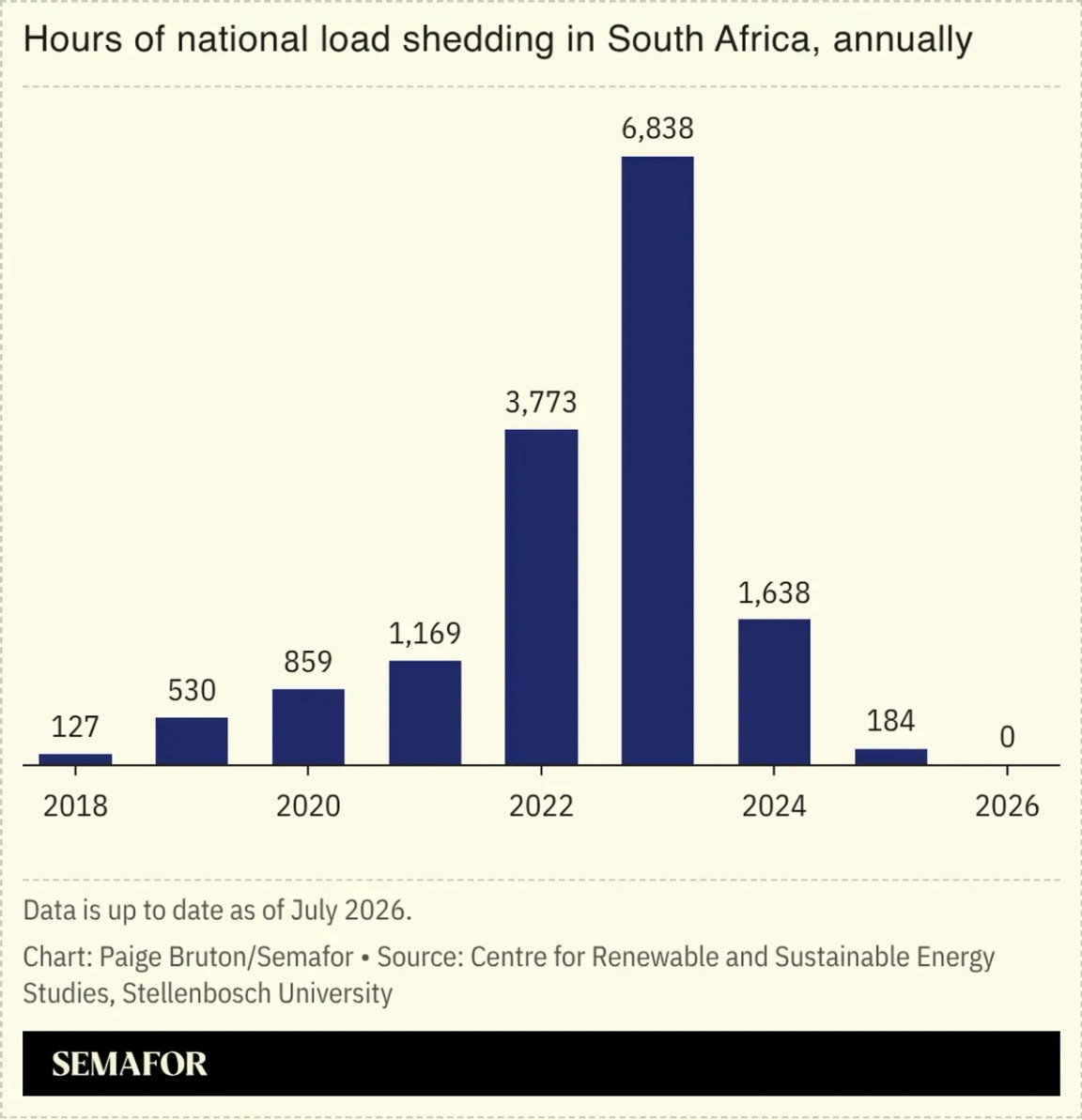 African countries must open up their power markets to court the private investors needed to supply the electricity that AI will demand, a data center executive told Semafor. Africa only hosts about 5.5% of the world’s data centers, and aging grids mean access to power is limited. Independent power producers typically sell electricity to state utilities under long‑term power purchase agreements. But a private generator selling directly to an industrial or commercial buyer — a practice that’s commonplace across the West — remains rare. Some countries are embracing reforms to prompt a surge in private generation. “Power is inextricably linked to Africa’s digital evolution,” and overcoming the challenge requires “an understanding that one size really doesn’t fit all,” a Semafor Africa editor wrote. |
|
Ukraine keeps Russia guessing |
 Social Media via Reuters Social Media via ReutersUkraine appears to be shifting its strategy in its attacks on Russia. Kyiv is letting up on its strikes on Russian oil refineries — easing Moscow’s fuel crunch and pushing gas prices back down — and is instead hitting ships: More than 120 Russia-linked vessels were reportedly targeted in the last two weeks. Ukraine is also taking aim at Russia’s consumer economy, striking warehouses belonging to the country’s largest online retailer, considered Russia’s Amazon equivalent and a major employer. In switching targets, Kyiv is looking to “keep the enemy guessing,” an expert said, allowing it to sow public discontent within Russia and retain momentum in the war. |
|
VPNs are legal tools, per EU court |
 Yves Herman/Reuters Yves Herman/ReutersA legal dispute over Anne Frank’s diaries led a top EU court to ru |
|
|


