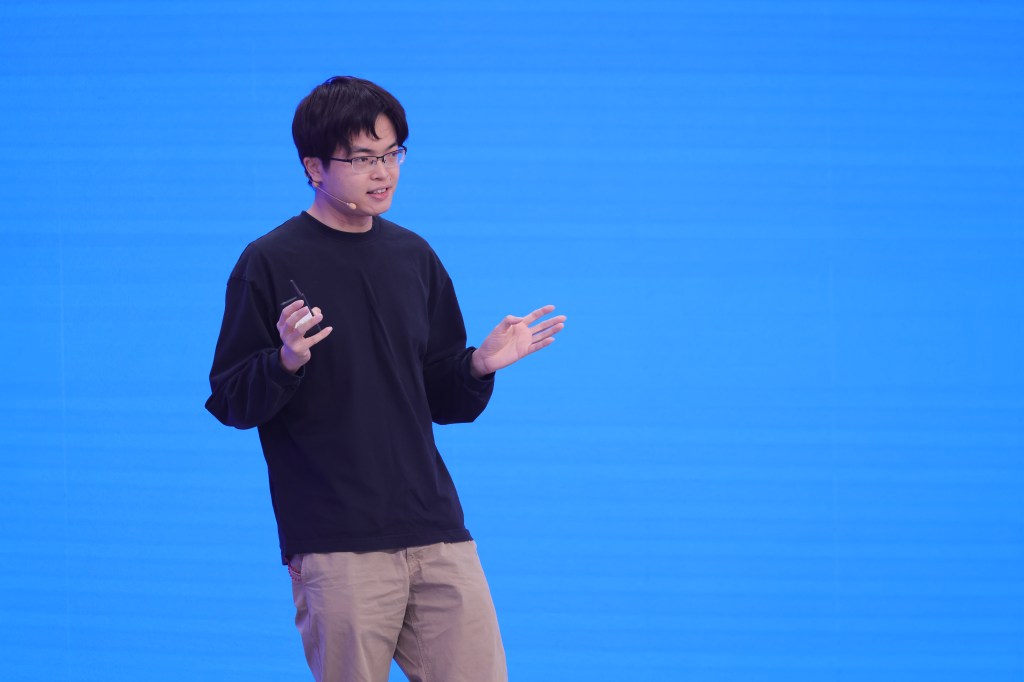
 Yang Zhilin, co-founder of Moonshot AI, in Beijing, China on March 25, 2026.VCG/Getty Images
The recent release of Moonshot’s Kimi K3 flagship AI model—so in demand that the IPO-bound Chinese company
paused subscriptions lest its servers get a lil’ too spicy—has Washington up in arms.
First, a quick primer: Kimi K3
launched on Thursday. It is currently the largest open-weights model ever built, with 2.8 trillion parameters, the internal “tweaks” that help an AI system turn an input into an output. It’s multimodal, it’s efficient, it’s great at coding, it’s great at agentic applications, and it’s cheaper than the U.S. competition—particularly for long context tasks.
The Americans, committed to global AI dominance, have not taken the news well.
Over the weekend, current and former AI advisors to President Donald Trump turned their knives on U.S. AI companies for failing to keep up with China. Call it tech on tech violence: In one corner, Silicon Valley (Bay Area branch); in the other, Silicon Valley (Beltway branch).
On social media, outgoing AI czar David Sacks lamented U.S. companies’ guardrails on their AI systems: “Woke lobotomized models are the enemy of American competitiveness,”
he posted, criticizing Anthropic for
making the U.S. “less competitive.”
Under Secretary of Defense Emil Michael
piled on, calling Dean Ball, OpenAI’s head of strategic futures, a “supreme idiot” for disputing Sacks’ criticisms of the executive’s own Kimi analysis.
Former White House policy advisor Sriram Krishnan notably took a less confrontational stance,
complementing Silicon Valley venture capitalist
Bill Gurley’s take on open weight AI models, which naturally ended with “We need to let the free market work.”
It’s the shock of DeepSeek R1 all over again.
The renewed philosophical divisions among the techies pose a problem for President Trump. His administration has lately advocated for more AI intervention, putting it at odds with Sacks and company. American voters are growing distrustful of AI companies, putting them at odds with free market advocates during an election year.
And: Just how did a Beijing startup manage to produce such a powerful AI model with all those national security restrictions in place? Let the hand-wringing continue.
—AN