| | Semafor’s Compound Interest podcast, hosted by Liz Hoffman and Rohan Goswami, pulls back the curtain͏ ͏ ͏ ͏ ͏ ͏ |
| |  | Business |  |
| |
|
 I’m fresh off the mic, having just recorded the 20th episode of Compound Interest, our show about how business and finance are being rewired. It’s a good one: Why is one of the world’s biggest retailers getting into banking, one of the world’s most annoying pain points? We got into that with Omer Ismail, who’s building OnePay, the financial “super-app” backed by Walmart, and you can listen on Tuesday wherever you get your podcasts. We’ll be taking a break for a few weeks, but I wanted to share some of my favorite recent episodes with you. Compound Interest has been a true journalistic pleasure on this side of the microphone (and camera; everything is television now, Semafor’s media editor, Max Tani, is always telling me, and you can watch us on YouTube). It’s a chance to have wider-ranging conversations with the people revamping business models long held as immutable and financial markets changing by the day. Rohan and I thank you for listening, and if you haven’t yet tuned in, summer Fridays are a great time to catch up. And review us on Spotify, Apple Podcasts, YouTube, etc. — it really does help new listeners find the show! |
|
Silicon Valley’s fixer on AI’s unfixable problem |
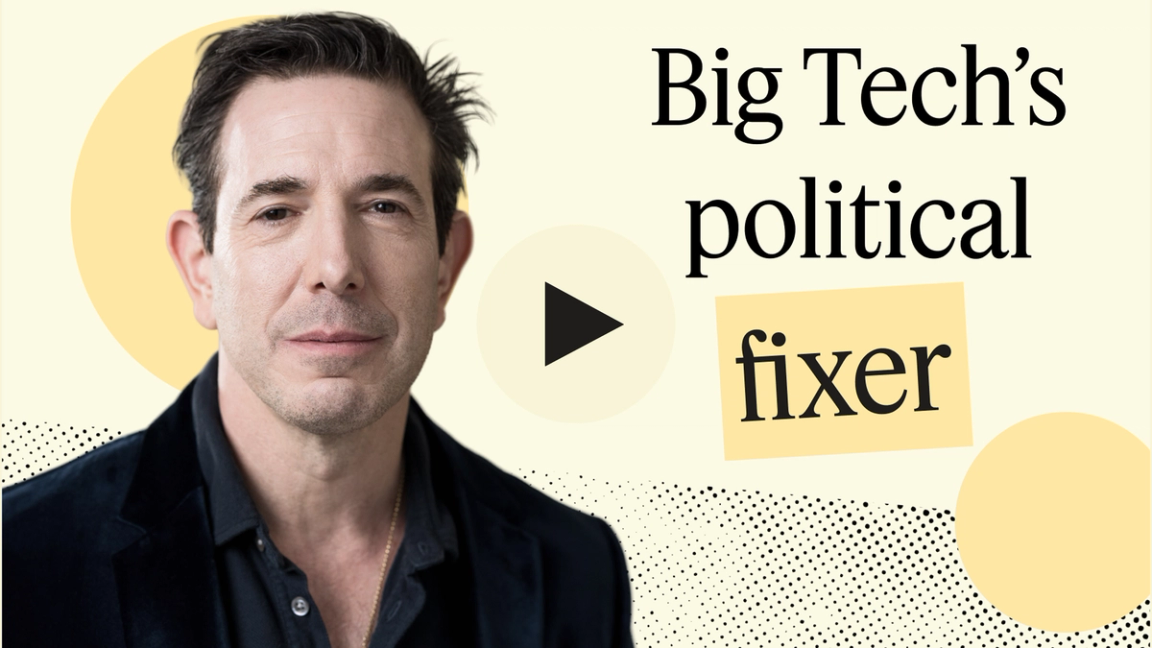 Bradley Tusk built a career as Silicon Valley’s political fixer, helping startups like Uber and FanDuel brawl their way to legitimacy — in his words, “legalize disruptive sh*t.” His message to AI companies: You have no idea what’s coming. “It is quite possible that this is the most permissive it’s ever gonna get for AI regulation,” he said. Tusk says AI is unlike any industry where he’s fought and won. It’s too amorphous, too risky in its doomsday warnings, and too unpopular to run his playbook of mobilizing customers to pressure politicians. “I don’t think it’s inspiring people to say, ‘I must have access to Claude or ChatGPT or Grok, and I will fight to the death to keep it,’” he said. |
|
Is the World Cup worth it for host cities? |
 Reuters/Kai Pfaffenbach/Shannon Stapleton/Bob Donnan-Imagn Images Reuters/Kai Pfaffenbach/Shannon Stapleton/Bob Donnan-Imagn ImagesFIFA is printing money on the World Cup, with an expected $10 billion in revenue and profit margins that would make a tech company blush. Host cities are mostly footing the bill, spending hundreds of millions of dollars on security, transit, and infrastructure. Ask Alex Lasry, who heads the New York — and, ahem, New Jersey — host committee, whether it was worth it, and he counters: Go ask Chicago, which sat out the tournament. “Now that everyone’s having fun and the games are starting, it’s, ‘Oh yeah, this is what we’re missing, and this is what you’re missing out on,’” he said. Lasry took on the skeptic’s argument, supported by academic studies, that big events like the World Cup and Olympics generate more hype than hard dollars for regional economies. “When you’re trying to show that you are the space for business, entertainment, media, et cetera, you need to be hosting these events,” he said. The host committee projects $3 billion in benefits across New York and New Jersey. |
|
AI will turbocharge Big Law’s rank-and-yank |
 The CEO of one of the world’s biggest law firms thinks AI will let the firms figure out who their future rainmakers are years earlier than they can today — and cut loose the associates who aren’t. For most of its history, Big Law has sorted its talent on a slow clock: Associates advance in near-lockstep for years before bosses determine whether they are partner material — whether they can bring in business rather than just execute it — or quietly shunt them off to counsel roles or lower-tier firms. With AI doing much of the execution work, “you could start making those types of determinations earlier,” said Rachel Proffitt, the CEO of Silicon Valley giant Cooley. “I hate to single it out to charisma, but there will need to be an increasing element of value-add,” she said, likening law to the software world, where technical coding skills are becoming less important than business-building and product design. “You need big thinkers… people who can help design strategy and not just do the execution piece,” she said. |
|
Vail’s CEO takes on the weather |
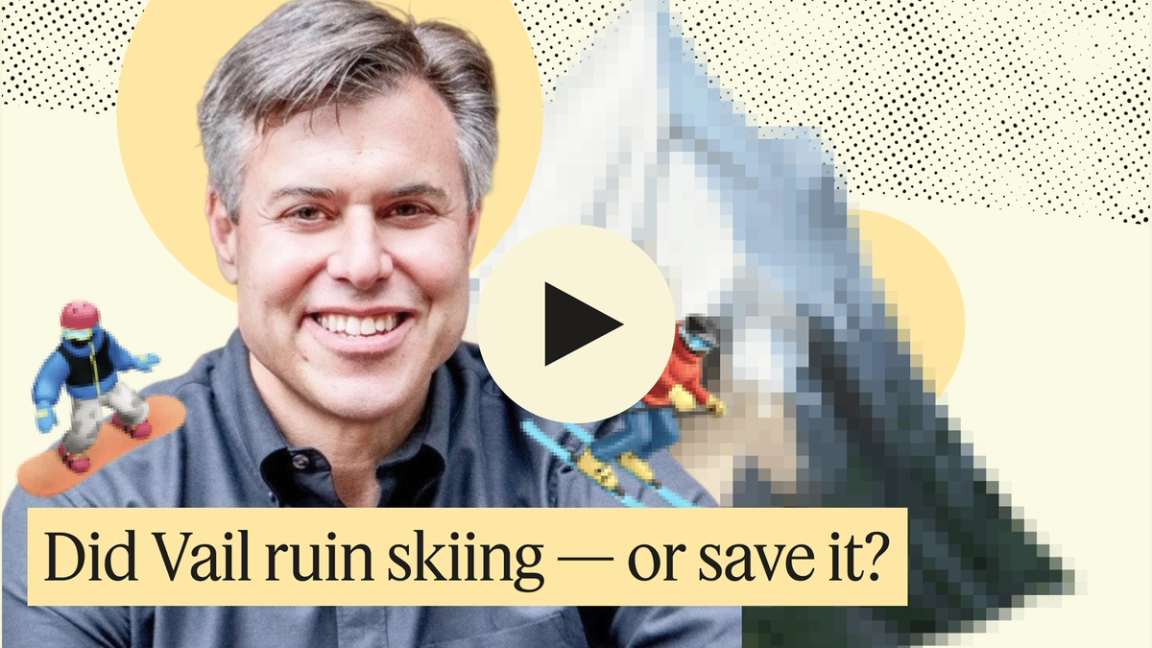 If the biggest risk to Vail Resorts’ business is the weather, you might think it would be an active participant in the prediction markets around snowfall. You’d be wrong. “For us, the storm has to be exactly right,” CEO Rob Katz said. “It’s when the snowfall comes or the temperature before and after the snowfall. Trying to come up with a clear weather pattern that we could truly hedge in the markets is not as simple as it might look.” When CFTC Chairman Michael Selig defended betting sites like Kalshi and Polymarket, he noted their usefulness to big companies looking to protect themselves against specific risks like weather. A dismal snow season in the Rockies resulted in a 15% drop in skier visits at Vail’s mountains this year, and 12% drops in ski-school and dining revenue. But even if companies like Vail decide not to hedge the weather, their customers might. If anything, to make up for losses on their all-you-can-ski passes — a model pioneered by Katz at Vail. This winter, traders bet more than $6 million on Kalshi on a single New York City blizzard. |
|
Klarna CEO on the fight for ‘top of wallet’ |
 The CEO of fintech Klarna said the rise of agentic shopping won’t destroy brand loyalty, an outcome feared by e-commerce players who worry that it will be harder to woo bots than the humans whose errands they are running. “If you have preference, it doesn’t matter that much how many buttons are in the checkout or what happens in the world with new things, because you have that brand affinity,” Sebastian Siemiatkowski said. Swarms of bots fill shopping lists in internet backrooms, armed with some instructions from consumers, posing a challenge to e-commerce companies. Agents are harder to advertise to or reward with better perks or service. They put an abstracting step between end customers and what they choose to buy — and how they choose to pay for it, bringing the “top of wallet” fight into the AI world. |
|
Why private equity pushes insurance to get risky |
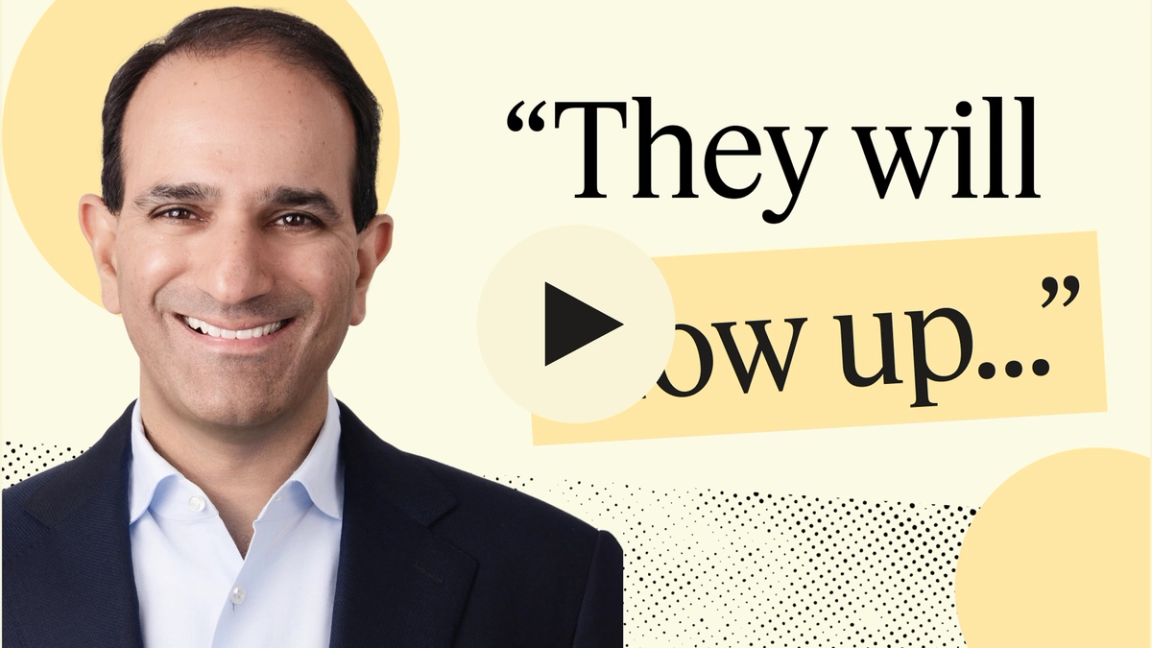 Private equity’s headlong rush into the life insurance industry has misaligned incentives, inflated risky assets, and produced a crop of “zombie insurers” just waiting to blow up, according to one of the few insiders willing to say so out loud. “We know them, we see them, we whisper about them,” said Anant Bhalla, who sold a big life insurer to Brookfield and is building a new one from scratch. “We need to speak more openly about it.” Bhalla warned that private equity’s pressure is “high-octane fuel” pushing what should be the safest assets people own — retirement guarantees and death benefits — into dangerous investment territory. |
|
| |