| | In today’s edition: Iran strikes Kuwait desalination plant, Dubai spars with Reuters, and data cente͏ ͏ ͏ ͏ ͏ ͏ |
| |  | Gulf |  |
| |
|
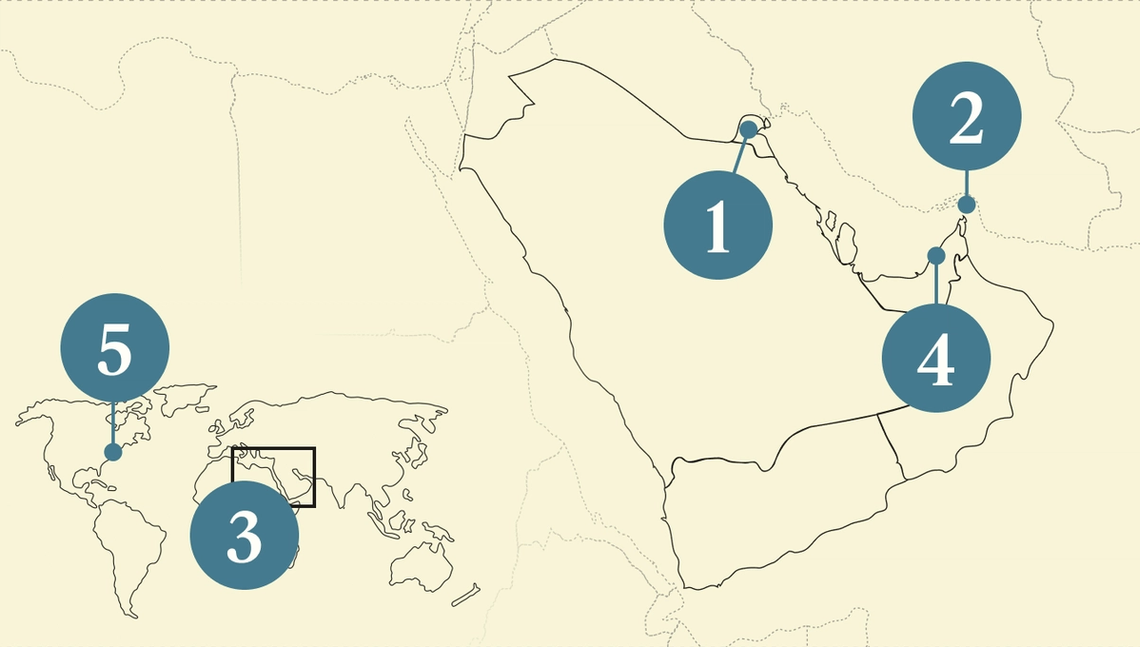 - Kuwait water targeted
- New weapons in war
- The Gulf reloads
- UAE media crackdown
- Yes in my backyard
 The Week Ahead, and a dispatch from the Aspen Security Forum. |
|
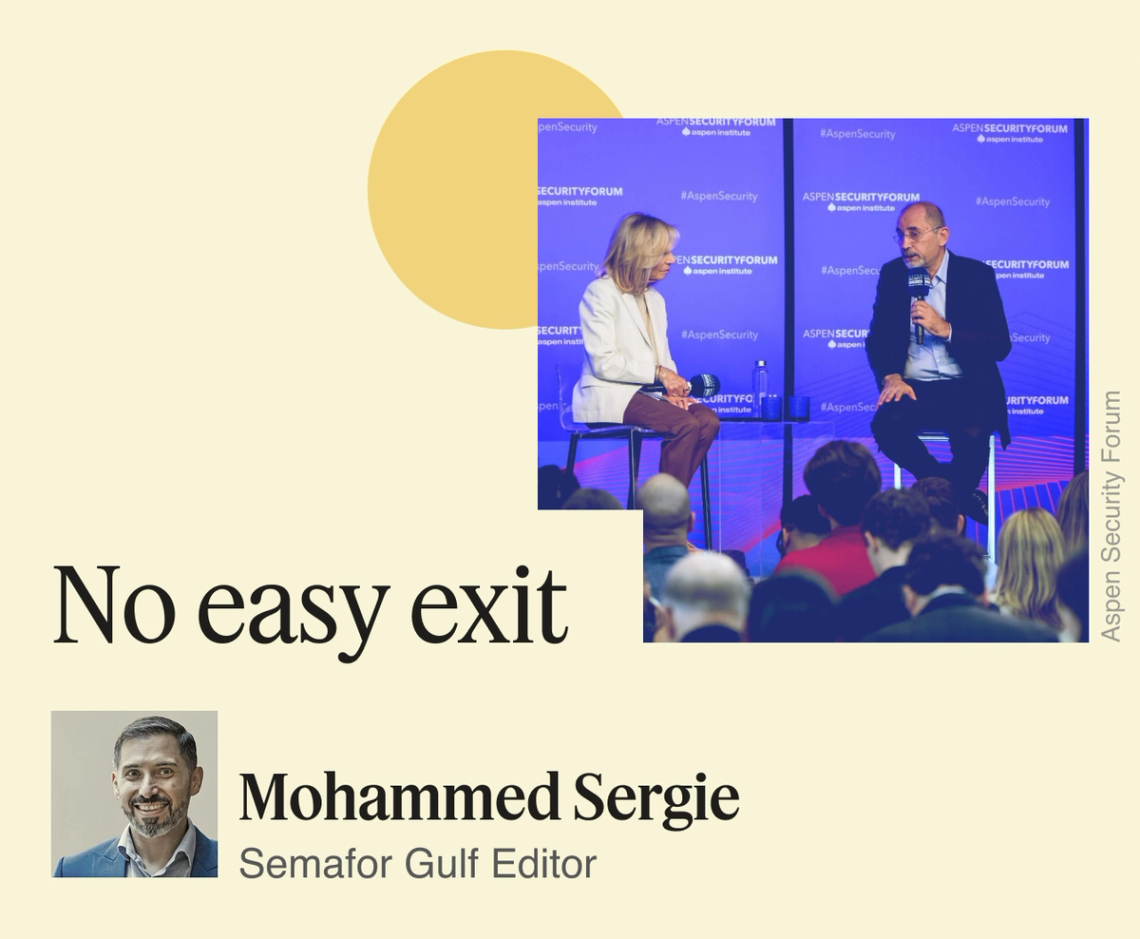 Welcome to our first Friday edition of Semafor Gulf. I’m writing this from the Aspen Security Forum, where officials from across the political spectrum disagreed on the Iran war strategy, but converged on the lack of a quick resolution. There are questions of whether the US is entering another “forever war.” While this conflict doesn’t resemble Afghanistan or Iraq in terms of troop deployments or casualties, it has a feature that is arguably more painful: Iran’s control over the Strait of Hormuz. Sen. Chris Murphy, D-Conn., said the “best end game” is that Iran controls the strait, has more “money than they’ve ever had before, and they are more provocative to our interests.” He warned that the next Democratic president could inherit a waterway effectively controlled by Iran and, to an extent, Oman. Even supporters of Washington’s strategy acknowledge the prolonged timeline. Former Secretary of State Condoleezza Rice and former Defense Secretary Mark Esper both advised maintaining economic pressure, with Esper saying consumers may need to accept higher energy prices to weaken Tehran. For Gulf states, a prolonged conflict forces them to pursue all the options they are already pursuing: strengthening defense ties with Washington, building alternative trade and energy routes, and seeking accommodation with Tehran, where possible. Ayman Safadi, Jordan’s foreign minister, raised the possibility of striking a non-aggression agreement with Iran that would address its broader disputes with its neighbors. He said any deal must be “comprehensive enough to make sure that we don’t want to find ourselves in the same place that we have been in for years where we have to deal with growing tensions.” Getting to such a deal could be a challenge because of the changing nature of Iran’s regime, according to Karim Sadjadpour, senior fellow at the Carnegie Endowment for International Peace. He said Tehran has learned the “wrong lessons of this war, which is that you don’t gain concessions from the US by compromise but by attacking your neighbors and by closing the strait.” |
|
Iran and US go after infrastructure |
 A damaged portion of a bridge in the aftermath of a strike in Iran. Social media via Reuters. A damaged portion of a bridge in the aftermath of a strike in Iran. Social media via Reuters.Water plants and bridges became part of the target list last night, as both Iran and the US widened their strikes to civilian infrastructure after a week of reciprocal threats. Iran hit a Kuwaiti desalination plant hours after the sixth consecutive night of US strikes on Iranian territory. Iran said for the first time that its power grid was attacked, asking people to use less electricity amid blackouts. Iran’s strike caused significant damage to the Kuwaiti plant, the likes of which Kuwait relies on for 90% of its drinking water. Trump reiterated this week that US forces would hit Iranian power stations and bridges if Iran did not release its grip on the waterway; Iran has threatened infrastructure across the Gulf in retaliation. Oil prices rose by almost 12% this week, the biggest weekly gain since April. |
|
 Saronic’s Corsair unmanned surface vessels. Courtesy of Saronic Technologies. Saronic’s Corsair unmanned surface vessels. Courtesy of Saronic Technologies.The US-Iran conflict has become a testbed for the future of warfare, from missile defenses to cyber operations and autonomous drones. The US this week said it had carried out its first offensive combat mission using unmanned surface vessels, sending drone boats to strike Iran’s Bandar Abbas naval base. The 24-foot vessels, which cost less than $1 million each, can travel more than 1,000 miles while carrying payloads of up to 1,000 pounds. A similar vessel, also made by Saronic Technologies, was used to rescue the crew of a downed US Apache helicopter near the Strait of Hormuz last month. Iran has also been deploying technology of its own, and is believed to be targeting US military personnel in the Gulf through their smartphones, according to the Financial Times. Cyberattacks on mobile networks allowed adversaries — likely Iran or its allies — to seek the locations of specific phones. Tehran is also suspected of using commercial ad-targeting software to identify hotels housing US government staff. |
|
Gulf rearmament accelerates |
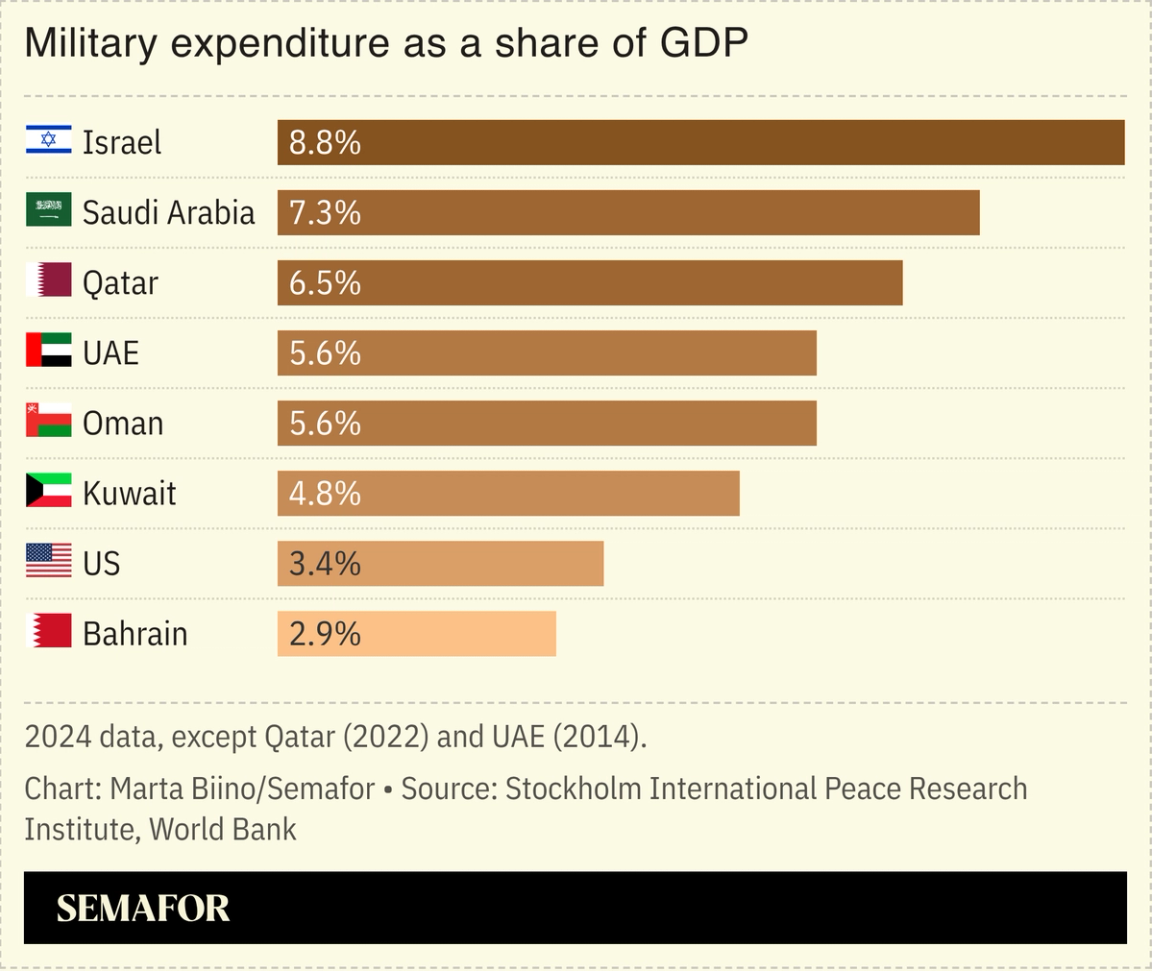 Gulf states, already among the world’s biggest spenders on defense, have been rearming rapidly since March as they seek to deter future attacks. This week, the US approved a $2 billion Saudi order for weapons guidance systems, launchers, warheads, and other equipment, as well as a $484 million package of parts for Kuwait’s fleet of C-17 military transport aircraft. The deals add to at least 20 major defense procurements and deployments since March, according to the Washington-based Gulf International Forum, including Qatar’s purchase of Patriot air defense systems, munitions and upgrades for the UAE’s F-16 fleet, and drone-defense agreements between several Gulf states and Ukraine. The arms race extends beyond imports. The UAE’s biggest defense conglomerate, EDGE Group, is acquiring Brazilian aerospace firm AKAER, which makes drones and optical systems for aircraft, reflecting a broader Gulf push to grow its domestic defense industry. — Mohammed Sergie |
|
Dubai picks a fight with Reuters |
 Raghed Waked/Reuters Raghed Waked/ReutersDubai threatened action against Reuters on Thursday after the news agency reported on explosions in the city, which it later retracted. The exchange highlights the tension between international newswires and the image-conscious emirate, which has cracked down on reporting it sees as misleading since the start of the Iran conflict. In posts on X, the government’s press office said that “the Reuters report regarding explosions in Downtown Dubai is false,” adding that “action will be taken against media outlets that publish false news or unverified information about Dubai.” Semafor reported in April that international press agencies had pulled back on covering Iranian strikes in the UAE, after photojournalists were arrested amid mounting pressure from authorities to control the news leaving the country. Online boosters of the UAE joked that Reuters couldn’t tell the difference between the bang of afterfiring Lamborghini engines and the sound of Iranian missiles. |
|
View / NIMBYism strengthens Gulf case |
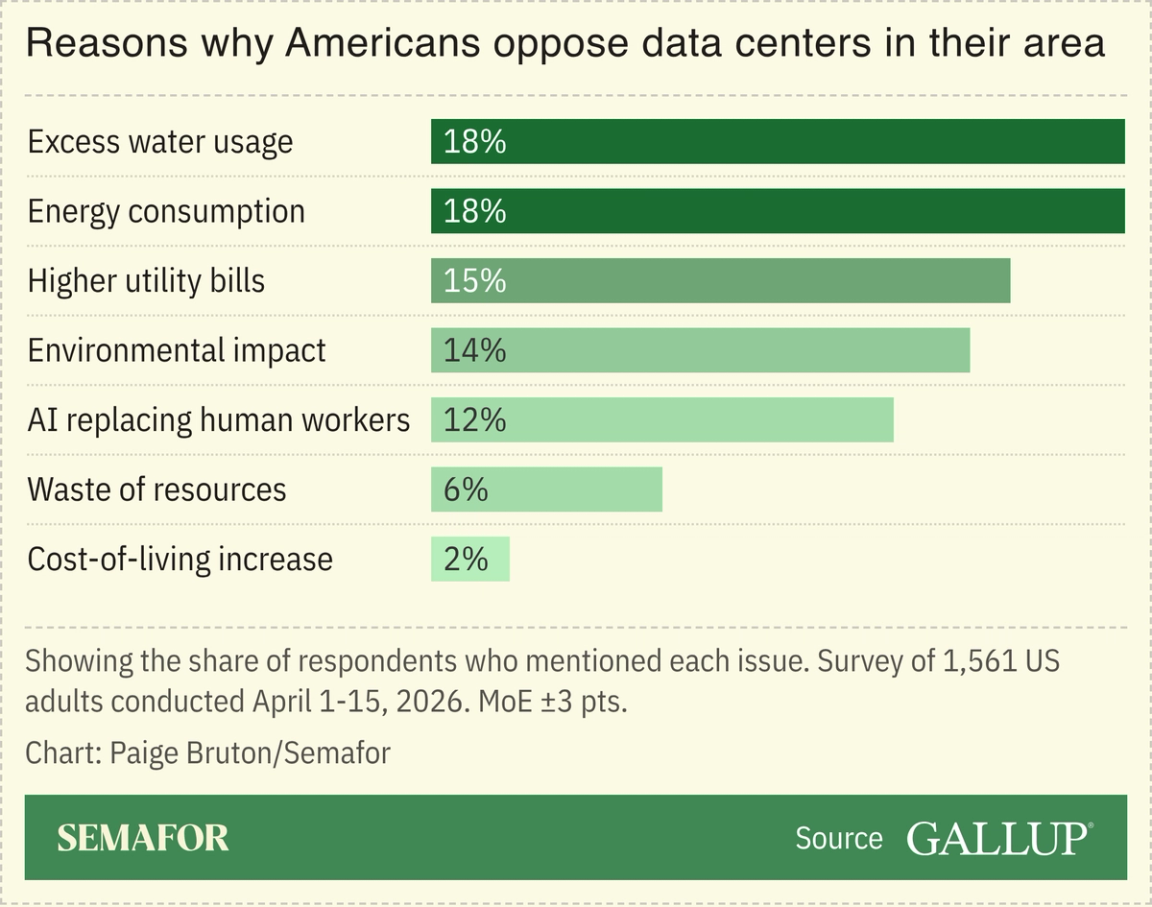 Data center opposition is now politically mainstream in the US, Semafor’s David Weigel writes. See: New York Governor Kathy Hochul pausing permits this week for large facilities in her state while policymakers piece together tighter regulations. This NIMBYism has implications for the Gulf’s AI ambitions, too. Saudi Arabia and the UAE are courting the same technology companies currently facing scrutiny, offering them cheap power, abundant land, and, well, no protests. Meanwhile, last week Washington upgraded the UAE’s export status, clearing the way for far more advanced chips to be shipped to the emirates per year. Abu Dhabi-backed G42 has ambitious plans in the US, too — spanning California, Minnesota, New York, and Texas — but so far sites for its computing power have fallen below the threshold of megabuilds that residents are protesting on environmental and economic grounds. — Kelsey Warner |
|
 - July 6-Aug. 23: The PIF-backed Esports World Cup 2026 is underway in Paris, the first international stop for the annual gaming tournament.
- July 20: Farnborough International Airshow kicks off, typically a dealmaking hotbed for the likes of Emirates, Etihad, and Qatar Airways.
- July 22: The Red Sea Threat to Global Shipping webinar takes place, hosted by the Middle East Institute and featuring the former Commander of the US Navy’s Fifth Fleet as a speaker.
- July 25: UFC Fight Night: Magomed Ankalaev vs. Bogdan Guskov comes to Abu Dhabi.
|
|
|


