| | In this edition: Washington weighs Nigeria aid freeze, DR Congo backs off tax dispute with Glencore,͏ ͏ ͏ ͏ ͏ ͏ |
| |  | Africa |  |
| |
|
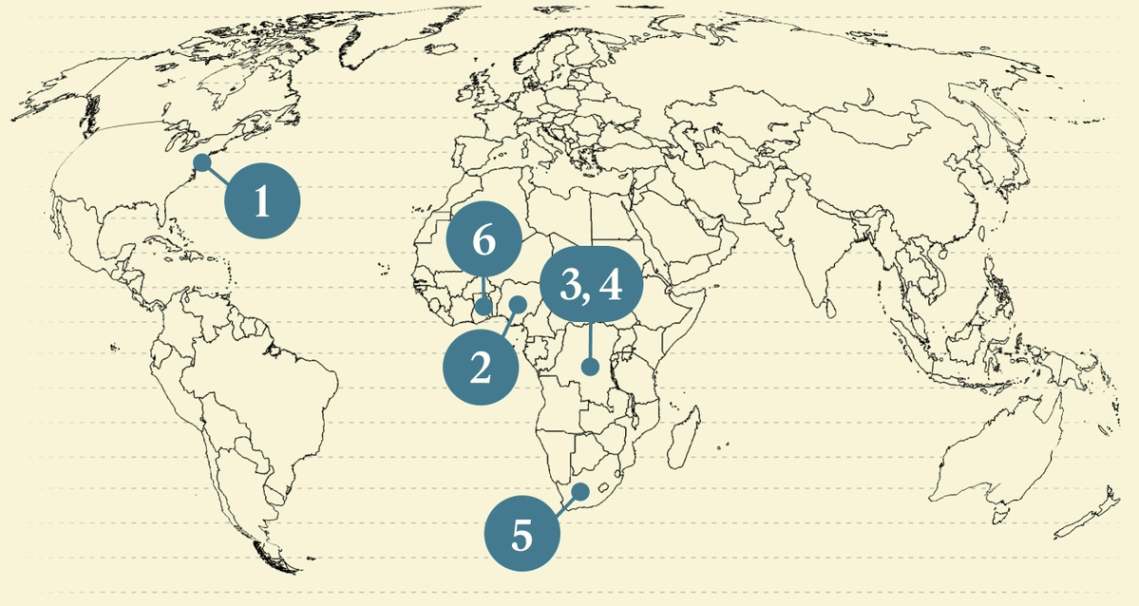 - Abuja faces aid freeze…
- …and starts agriculture fund
- Ebola threatens economy
- DRC eases tax impasse
- Amazon’s internet win
- Ghana courts 5G bids
 South Africa’s rooibos tea heads to space. |
|
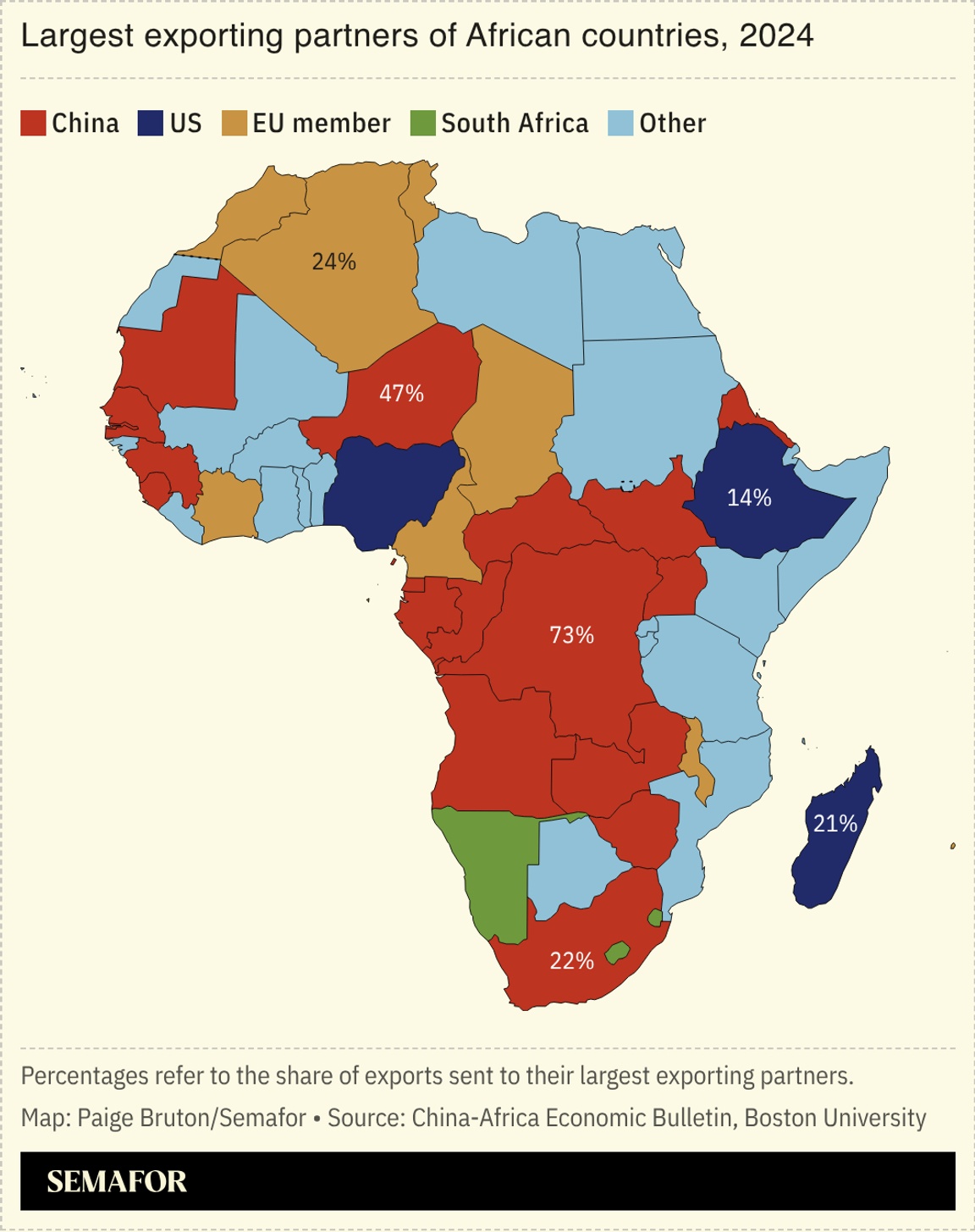
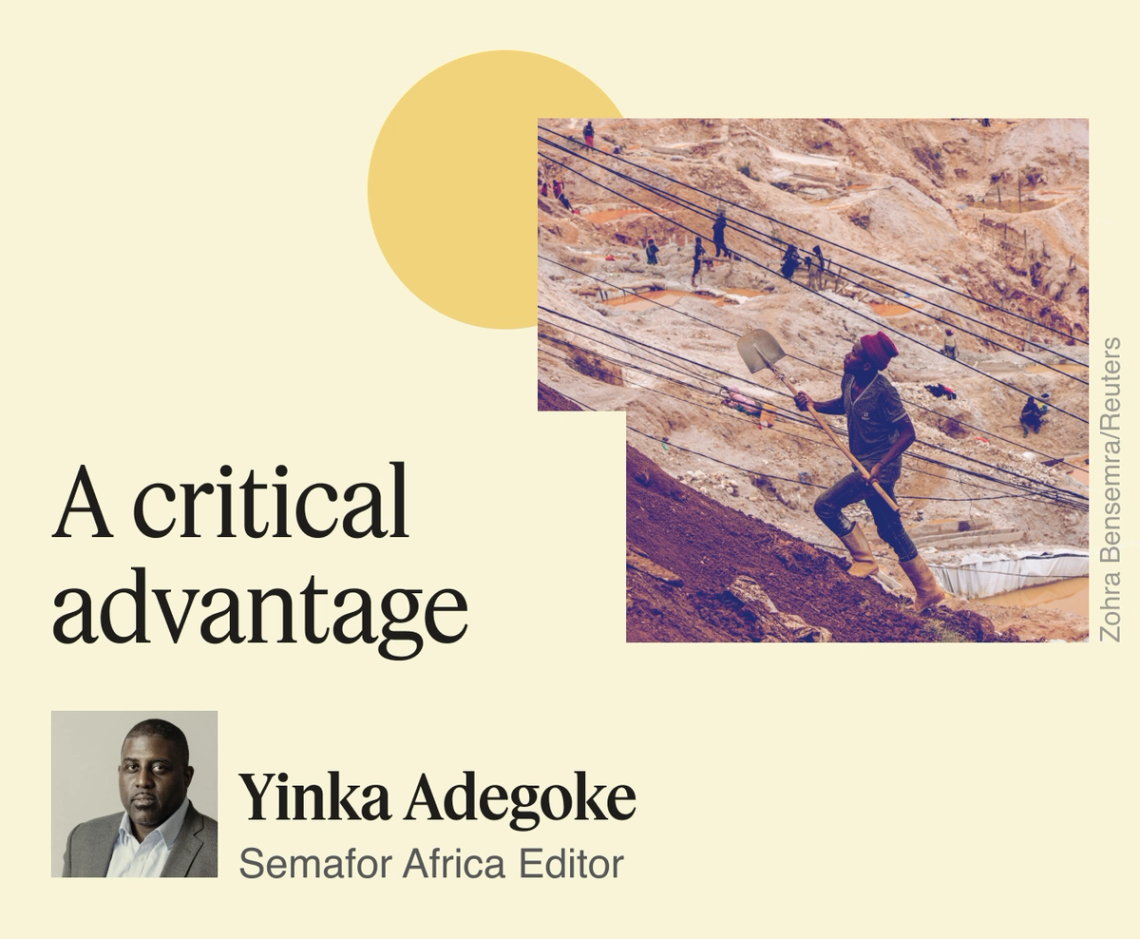 Africa’s biggest advantage in the critical minerals race may not be its minerals. It is the world’s growing determination to rely less on China. As governments and manufacturers scramble to diversify supply chains, African producers possess something they’ve long lacked: bargaining power. The instinct has been to convert that leverage into export bans; the real challenge is converting it into industry. The International Energy Agency’s latest Global Critical Minerals Outlook helps explain why. While mining has gradually diversified geographically, refining remains overwhelmingly concentrated. China controls roughly 72% of processing capacity across key energy minerals globally, giving it far greater leverage than countries that simply produce the ore. That reality has prompted a wave of resource nationalism across Africa as governments try to move up the value chain. DR Congo, the world’s largest producer of cobalt, has restricted exports. Zimbabwe has tightened controls on lithium, Mozambique now requires more graphite to be processed domestically, and Gabon plans to halt raw manganese exports later this decade. The objective — to force more value addition to happen at home — is understandable. The constraint here is not simply a shortage of local refineries, it is the wider industrial ecosystem that makes refining commercially viable: reliable electricity, affordable chemical inputs, transport infrastructure, and engineering expertise. The IEA estimates that building refining capacity outside today’s dominant suppliers costs between 20% and over 150% more than in established hubs, while operating costs are roughly 50% higher. Paradoxically, those higher costs mean governments in North America, Europe, and Asia are increasingly willing to pay a premium to diversify supply chains, while manufacturers are searching for secure, non-Chinese sources of processed minerals. That is leverage African governments have rarely enjoyed. But it may not always be available to them. The mistake would be to treat export bans as the industrial policy itself. The bans allow a negotiating position. Their value lies in using today’s geopolitical scramble to secure investment. The goal should be bigger than producing today’s battery materials: It is building industries that create the skilled jobs and manufacturing base Africa will need long after this critical minerals boom has passed. |
|
Nigeria faces a US aid freeze |
| |  | Adrian Elimian |
| |
 Kent Nishimura/Reuters Kent Nishimura/ReutersNigeria could face a complete freeze on US economic and security assistance under a bill approved by the US House of Representatives, despite Abuja’s recent progress in strengthening ties with the Trump administration. The vote comes days after Frank Garcia, the US assistant secretary of state for African affairs, visited Nigeria on his debut official trip to Africa — a visit he called “successful.” The contrasting signals highlight a divide between the White House’s approach, which has sought to deepen security cooperation with Africa’s most populous nation, and Republican members of the House, who want to take an even harder line over anti-Christian violence. The proposed measure will now head to the Senate. Thousands of Nigerians are killed each year in violent flashpoints ranging from kidnapping for ransom to fighting over arable land and attacks by jihadist insurgents. Abuja has rejected accusations by US lawmakers that it is facilitating attacks against Christians. But a yearslong Washington lobbying campaign focused on Christian deaths has gained traction, upending US relations with one of Africa’s largest economies. |
|
Abuja launches $500M agriculture fund |
 Afolabi Sotunde/Reuters Afolabi Sotunde/ReutersNigeria unveiled a $500 million fund to invest in agriculture in the oil-producing Niger Delta region, where farmlands and waterways have suffered from decades of environmental pollution. The fund will operate as a “commercial, returns-driven vehicle” with a focus on aquaculture, palm oil production, and livestock, Vice President Kashim Shettima said. It has secured commitments from multilateral lenders, including the World Bank and the African Development Bank, he added. Nigeria has relied heavily on oil produced in the Niger Delta since the 1960s, with crude sales making up around 90% of foreign exchange earnings. But regional development has not kept up with the vast economic value of its natural resources. Oil price booms have increased Nigeria’s wealth, but an overdependence on crude has weakened investment in other sectors, while corruption and poor governance remain rampant. Armed groups have sprung up across the Niger Delta in recent decades, alongside criminal networks who steal crude oil to pressure the government to deliver more oil benefits to host communities. — Alexander Onukwue |
|
Ebola threatens DRC economy |
 Discussions about a critical minerals deal between the US and the DR Congo are being upended by the African country’s Ebola outbreak, threatening a potential economic boom in the resource-rich nation. Washington has accelerated its push for increased access to DR Congo’s critical minerals — which include nearly all the world’s reserves of coltan, a key component in electronics — as regional competition with China heats up. However, the recent Ebola outbreak, which threatens to become the worst ever, has delayed progress. The US recently imposed a 21-day quarantine on all Americans returning from DR Congo; seven US aid workers are reportedly quarantining at a Kenyan facility that sparked huge opposition in the country and is the subject of an ongoing court case. The outbreak also threatens to paralyze parts of the DRC’s economy, dealing a further blow to the war-torn country. |
|
Semafor Exclusive DR Congo unseals Glencore offices |
| |  | Ruben Nyanguila |
| |
 A copper mine in DR Congo. Jonny Hogg/Reuters. A copper mine in DR Congo. Jonny Hogg/Reuters.DR Congo’s finance minister ordered the tax authority to remove seals placed on Glencore’s Kamoto Copper Company offices, as talks continue over a multibillion-dollar tax dispute. Congo’s tax authority alleges KCC owes the state billions of dollars — a claim disputed by the Swiss commodities giant, which is one of DR Congo’s largest copper and cobalt producers. Last week, Congolese tax officials sealed off KCC’s offices as part of the dispute. “Discussions have reopened and are continuing,” government spokesman Patrick Muyaya told Semafor, confirming Glencore’s offices had been unsealed. The move comes days after President Félix Tshisekedi warned that heavy-handed measures by tax officials threatened to undermine investor confidence in the mining sector at a time when the country hopes to increase state revenues from its vast mineral wealth. It’s a delicate balancing act for DR Congo, which accounted for an estimated 73% of global cobalt mine output last year and was the world’s second-largest copper producer. Its mining industry includes some of the world’s biggest groups, such as CMOC, Zijin Mining, Huayou Cobalt, and Glencore. |
|
Amazon Leo enters South Africa market |
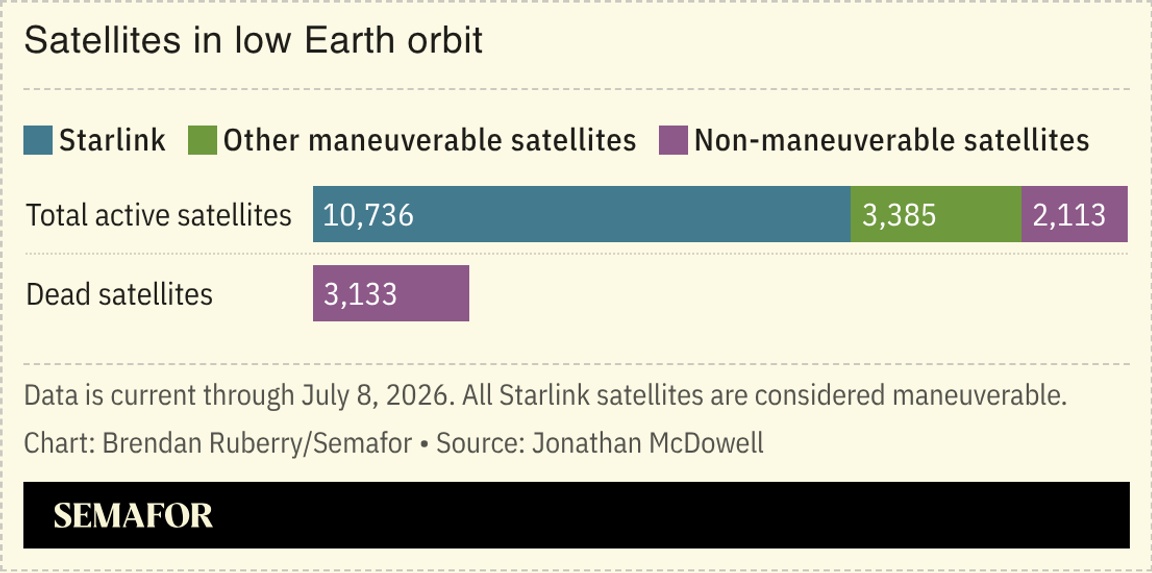 Amazon’s satellite venture signed a distribution deal with a South African fixed internet operator to launch a broadband service. The partnership enables the technology giant to sidestep ownership rules that have stalled the expansion of Starlink into one of Africa’s most valuable telecom markets. Local internet firm Herotel will use Amazon Leo’s low Earth orbit satellite network to sell a new consumer service. Pretoria’s requirement that 30% of any licence holder be owned by Black South Africans does not apply to Amazon because Herotel is the licensed operator. Starlink, founded and led by South Africa-born billionaire Elon Musk, ran into regulatory delays after refusing to dilute its ownership to meet the same equity threshold. Namibia has also prevented Starlink from entering its telecoms markets over local ownership rules that have become a point of contention for multinational firms operating in Africa. Africa’s young population and patchy broadband networks offer global operators an attractive mix of scale and unmet demand. — Tiisetso Motsoeneng |
|
Ghana opens 5G licensing round |
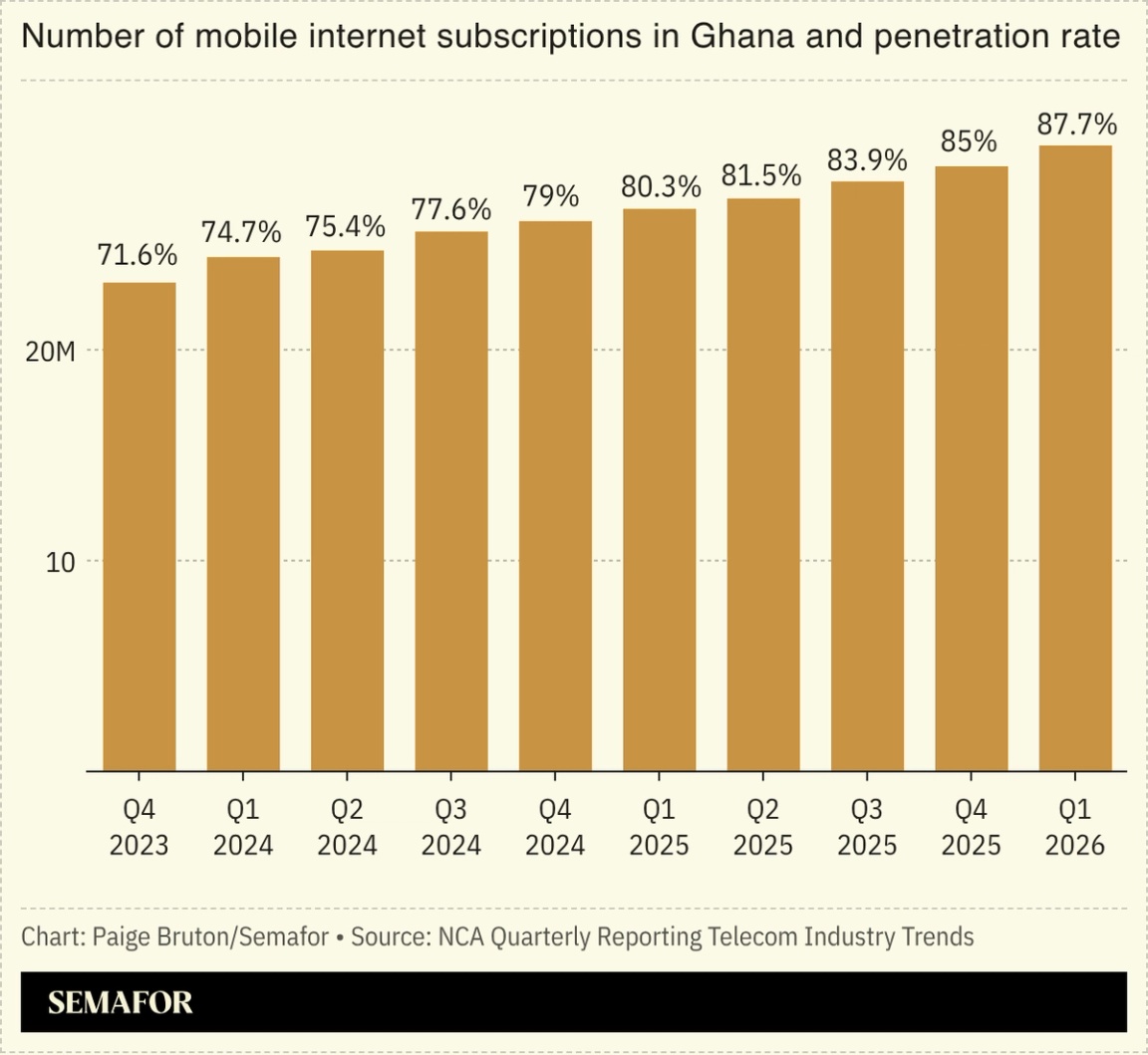 Ghana has opened the bidding and award process for 5G licenses, a move aimed at making the telecommunications sector more competitive. The licenses are split into 11 lots, valued at $230 million in total, with clauses to prevent a single company from owning all the spectrum bands. MTN and Telecel — the two largest providers accounting for 95% of mobile internet users in Ghana — have each indicated interest in acquiring 5G licenses. But Ghana has imposed a 40% premium on prospective bids from MTN as a “competition safeguarding measure” due its “significant market power.” Ghana in 2024 granted exclusive rights to Next Gen Infraco to be the sole provider of 5G capability to internet service providers in the country for 10 years. But, citing a need for competition and consumer choice, Accra amended Next Gen Infraco’s license in March. Mobile internet penetration has risen sharply in Ghana, jumping by more than seven percentage points to nearly 90% over the past year — far above the sub-Saharan African average of about 36%. — Alexander Onukwue |
|
 - Boko Haram has regularly employed AI chatbots to help engineer attacks, one of several tactical uses detailed in a new study by Cambridge terrorism researcher Antonia Juelich, write Dustin Volz and Eric Schmitt for The New York Times. Drawing on interviews with former Boko Haram members, Juelich’s findings show extremists moving toward using chatbots for weapons design, explosives guidance, and operational planning, often coached through dedicated training sessions on evading safety guardrails. The report lands alongside similar findings from other research, and as governments push AI labs toward greater vetting of powerful models.
- Ethiopia has found an important way out of its debt crisis, after it defaulted on a $1 billion international bond. But “it is not yet the exit,” argues Mebratu Kelecha in Africa Is a Country. In June, Addis Ababa announced an agreement in principle with some of the bondholders of the defaulted bond. But Kelecha says there is still much to be hammered out. “Nonfinancial terms, wider creditor acceptance, and the exchange itself remain unfinished,” he writes in this deep dive into the East African nation’s complicated relationship between debt, creditors, international institutions, and social groups.
- Remnants of Russia’s Wagner Group have built a drug empire in the Central African Republic centered on high-dose tramadol, according to Nicholas Bariyo’s Wall Street Journal report. Trafficked from India to Central Africa, the opioid fuels miners and militia fighters while generating profits that fund weapons and consolidate Wagner’s grip on gold and timber resources. The report finds the trade — now largely beyond Moscow’s control — has coincided with rising battlefield deaths and fears of the rump Wagner force’s expansion into Sudan.
|
|
|


