| | In today’s edition: Trump uses a primetime speech to warn on election security, and the business exe͏ ͏ ͏ ͏ ͏ ͏ |
| |  | Washington, DC |  |
| |
|
 - Trump squeezes GOP
- Iran infrastructure hit
- Gas exporters win
- Air quality push
- Execs spend big on PACs
- Filling Graham’s shoes
- China leans in on AI
PDB: New Russia sanctions bill continues Graham’s legacy  Trump to attend World Cup final on Sunday … Mike Johnson speaks at Family Leadership Summit in Iowa … Burnham to become UK Labour Party leader |
|
Trump’s election warnings prod GOP |
 Saul Loeb/Pool via Reuters Saul Loeb/Pool via ReutersThe documents President Donald Trump teased last night in a speech warning of massive risks to election security shed little light on any meaningful new threats. But if his speech was meant to squeeze Republicans to back his voter ID bill, there’s no sign that ploy will work, Shelby Talcott, Burgess Everett, and Nicholas Wu write. In his nearly half-hour-long remarks, Trump argued that the only rationale for lawmakers resisting passing the SAVE Act would be if “your candidates are so pathetic that you can’t get … elected any other way.” Most House Republicans have embraced Trump’s call, and GOP leaders have moved to attach a form of the legislation to other bills moving through the chamber. But the SAVE Act has no path to passage in the Senate, and with the midterms looming, many Republicans would prefer Trump talk about cost-of-living issues instead of relitigating 2020. |
|
US hits civilian infrastructure, Iran says |
 People walk around Tehran. Majid Asgaripour/WANA/Reuters. People walk around Tehran. Majid Asgaripour/WANA/Reuters.US air strikes hit civilian infrastructure including an airport, bridges, and a train station, Iranian state media reported. Tehran said it retaliated with attacks on US targets in Bahrain, Kuwait, Oman, and Syria. Six consecutive nights of fighting have cut off oil shipments through the Strait of Hormuz after a month-long ceasefire, driving the price of Brent crude up 11% in a week. The International Energy Agency chief said he was “worried” about global fuel supplies, while traders warned of a supply crunch. After years of wrangling over Iran’s nuclear program, the strait is now the focus of the US-Iran conflict. Tehran believes control of the waterway represents its greatest leverage, and is willing to suffer to maintain it, the Financial Times reported. |
|
Gas exporters win from Iran conflict |
| |  | Tim McDonnell |
| |
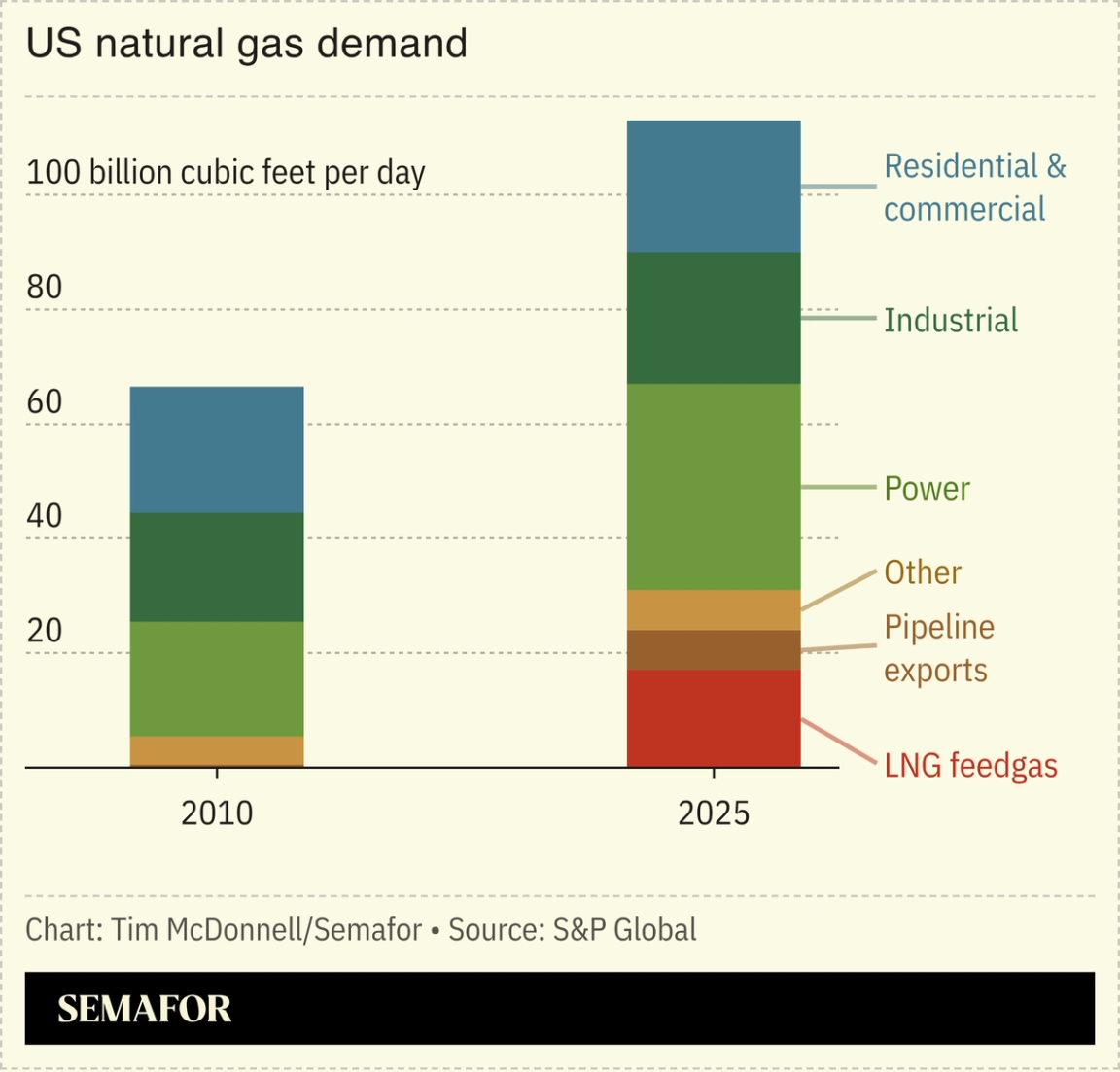 US gas exporters are one of the biggest winners from the war in Iran. Since the first major US liquefied natural gas shipments sailed a decade ago, the industry has seen Qatar as its chief competitor. Drone attacks on that country’s export hub, and chaos in the Strait of Hormuz — plus the aggressively pro-gas Trump administration — have fundamentally changed the equation. LNG is now set to become the second-most valuable net export from the US (after civilian aircraft) within five years, capturing at least 30% of the global LNG market, according to a study from S&P Global. It’s expanding at remarkable speed: Since the last time S&P took a deep dive on the industry 18 months ago, the near-term production forecast has spiked 25%. “We’re a little breathless at how fast this is growing,” S&P Vice Chairman Dan Yergin said. |
|
Semafor Exclusive Moreno goes after Canada over wildfires |
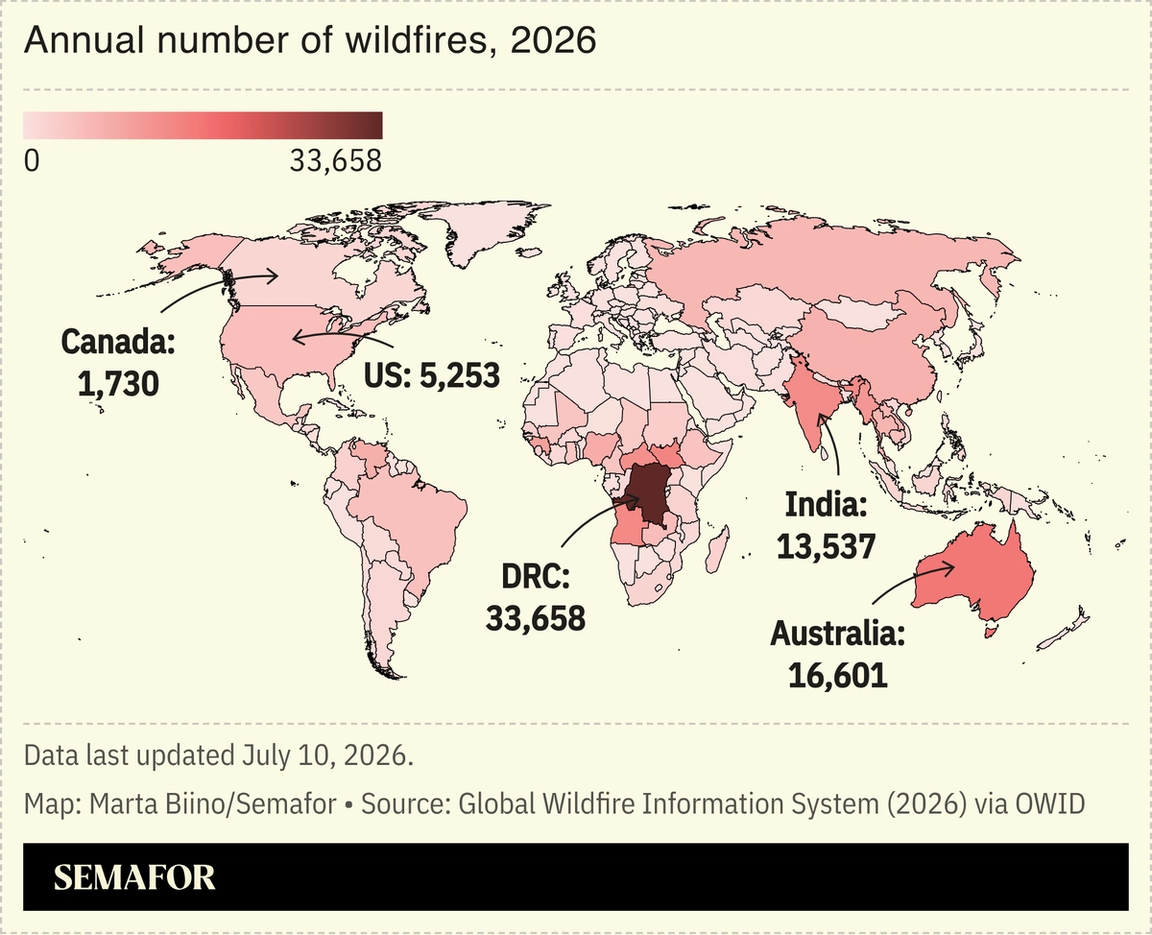 Much of the country is waking up to terrible air quality from wildfires — including DC — and Sen. Bernie Moreno, R-Ohio, wants to see Canada punished for the “atrocity,” according to details first shared with Semafor. The Ohio senator is introducing a new bill that would require Trump to determine if Canadian wildfires harmed US air quality and would sanction those responsible, including by blocking assets and imposing financial restrictions. The legislation would also revoke visas for individuals sanctioned under the bill and express a sense of Congress that the Canadian ambassador is “persona non grata” until the smoke no longer affects the US. The sanctions would be removed after the president determines that the effects of the smoke are over and Canada has taken action to stop the wildfire smoke. The measure includes some exceptions and waivers for diplomacy, safety, and national security. — Burgess Everett |
|
Business executives spend big on politics |
 Brendan McDermid/Reuters Brendan McDermid/ReutersWealthy business leaders poured millions into political committees in the first half of the year, most of it to the benefit of Republicans. After abandoning talk of challenging the GOP with a new party, Elon Musk gave $5 million to a super PAC backing Vivek Ramaswamy, who’s running for governor of Ohio after not taking a role with DOGE last year. Diane Hendricks, a GOP megadonor from Wisconsin, gave her largest single contribution ever to Trump’s super PAC, MAGA Inc. — $25 million. The single biggest Democratic donation in new FEC filings came from Reid Hoffman, with the LinkedIn co-founder giving $10 million to a super PAC backing Texas state Rep. James Talarico in his Senate bid. New PACs advocating for the AI industry raked in money, too: Anthropic’s Dario Amodei gave $1 million to the Public First super PAC, his largest donation ever, and his first that wasn’t to a Democratic politician. — David Weigel |
|
Semafor Exclusive The mark Graham left on foreign aid |
 Jonathan Ernst/Reuters Jonathan Ernst/ReutersThe sudden death of Lindsey Graham last weekend robbed foreign aid advocates of one of their most effective GOP champions in Washington, according to lawmakers and advocates who worked with the South Carolina Republican. As chair of the Senate Appropriations subcommittee overseeing State Department funding, Graham blocked steep foreign aid cuts proposed during the first Trump administration, and after Elon Musk’s DOGE effort gutted USAID last year, Graham worked behind the scenes to restore much of the funding passed in February. Graham “often didn’t seek or claim credit for that work” and used his relationship with Trump as cover to occasionally broker bipartisan deals, said former Rep. Tom Malinowski, D-N.J., in an interview with Semafor. — Adrian Elimian |
|
AI fight complicates US-China competition |
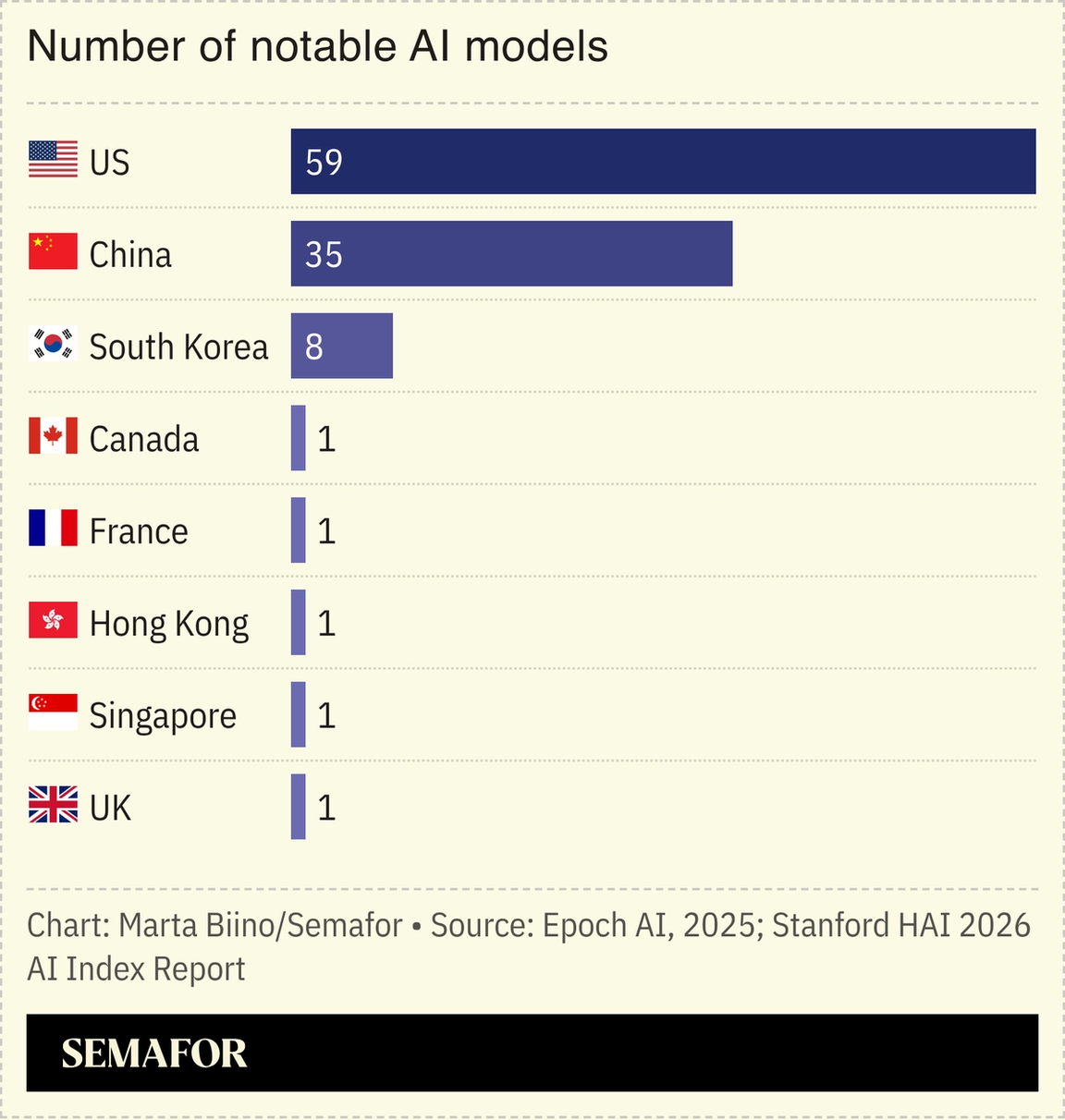 China is leaning into the fight with the US over artificial intelligence as the technology’s ramifications cleave the American public. Chinese leader Xi Jinping spoke for the first time at Shanghai’s AI conference today, telling the crowd that AI development should be a “symphony of international cooperation,” as the arms race intensifies. The US is widely viewed as leading China on advanced models, but domestic backlash to data centers and labor market shifts could threaten that edge. New York imposed the nation’s first moratorium on data centers this week, and a group chaired by a former tea party activist is planning a nationwide day of protest against data centers tomorrow. Asked about the protests, the White House referred Semafor to a post in which Trump called New York’s move a “terrible decision” and data centers the “biggest Driving Forces in the Future for Jobs.” — Morgan Chalfant |
|
Debatable: Permanent daylight saving time |
 There’s bipartisan momentum in Congress behind ending the twice-a-year change of clocks in much of the US. The problem is, lawmakers can’t quite agree on the right solution. The House this week passed a bill to make daylight saving time permanent, with advocates arguing the move would increase economic activity and improve safety by adding more sunlight in the evening. The measure faces roadblocks in the Senate, however, due to concerns about the effect of cutting down on morning sunlight. And some health experts caution against a permanent switch to daylight saving time, arguing it would disrupt the body’s internal clock, or circadian rhythm. “I think it’s great that we’re having this conversation, but I wish they weren’t trying to push a bill through without the data,” Dr. Jamie Zeitzer, a circadian physiologist at Stanford who studied the issue, told Semafor’s Morgan Chalfant. |
|
 Manuel Orbegozo/Reuters Manuel Orbegozo/ReutersSteve Hilton has lived many lives. He’s been a key strategist to former British Prime Minister David Cameron, a populist Fox News host, and now — after renouncing his UK citizenship — he’s become the Republican nominee in California’s gubernatorial race. On this week’s episode of Mixed Signals, Max and Ben ask him about a career that has intertwined politics and media at every turn, why he succeeded in a primary where Spencer Pratt failed, and how he balances conservative media’s portrayal of California with his campaign to lead the state. Plus, they ask whether David Ellison’s Paramount would really flee Hollywood, what people get wrong about the Murdochs, and what he really thinks about the character he inspired on The Thick of It. Listen to the latest episode of Mixed Signals now. |
|
 Beltway NewslettersPunchbowl News: “Numbers don’t lie, and they are all saying one thing: Democrats are poised to take back the majority,” DCCC Chair Suzan DelBene said, after campaign finance documents showed Democratic candidates outraising their GOP counterparts in several battleground states. Playbook: Progressive consulting firm FIGHT Agency, which helped clinch Zohran Mamdani’s landmark win, is facing internal turmoil as staff members revolt and Democrats publicly criticize the firm. Axios: “It’s a stupid, stupid move,” one Republican pollster said of the “stolen election” narrative. “Even swing voters who think something wasn’t good about the election, when they listen to Trump, just have an eyeroll.” White House- The IRS’ acting chief counsel was forced out after warning that the White House was “at risk of violating a federal law prohibiting senior officials’ involvement in IRS audits.” — WSJ
- President Trump is taking
|
|
|


