July 16, 2026
admin-ajax
Morning Rounds Writer and Reporter

Good morning. Who are you rooting for in the World Cup final? Personally, Im hoping for more drama and heartbreak, plus a good seat wherever Im watching. 

the drama

Trump health nominees face fire at Senate hearing

Mark Schiefelbein/AP

The Senate health committee held a hearing yesterday, and STAT’s Chelsea Cirruzzo was there in person following along:

  • In the morning, committee leader and lame duck senator Bill Cassidy (R-La.) grilled a Trump nominee for a key pandemic preparedness role over past comments questioning vaccines. “Why would you repeat those damn lies? Because that destroys trust,” Cassidy said to the nominee, Sean Kaufman, about a now-deleted LinkedIn post that was first reported by Chelsea. Read more about the heated exchange.
  • Later, senators pressed the Trump administration’s latest pick to run the CDC on how she’d deal with what many characterized as health secretary Robert F. Kennedy Jr.’s political interference in the agency. The previous agency leader, Susan Monarez, was ousted nearly a year ago after resisting such pressure. Read more on how the nominee, Erica Schwartz, responded.

careful what you wish for

Spring forward forever? 

This week the House overwhelmingly passed a bill to stop twice-a-year time changes and keep the U.S. permanently on daylight saving time. (That’s the “spring forward” one, meaning winter sunrises and sunsets would occur about an hour later than usual.) It’s not law yet, and it may never be: The bill’s prospects in the Senate are “uncertain” per the Washington Post, even though a similar law passed the Senate unanimously (accidentally) a few years ago.

“Not this nonsense again!” STAT’s Brittany Trang wrote to me upon seeing the news. The American Medical Association and the American Academy of Sleep Medicine have called for a change to permanent standard time, arguing that more light in the morning is better for our circadian biology. Research is limited, but it’s worth noting that we did already try permanent daylight saving time before, in 1974. The move was so unpopular that the country gave up on it in a matter of months. 


heart health

We’re doing well on coronary artery disease — but could be doing even better

Deaths due to ischemic heart disease (when blood vessels in the heart are blocked) fell by more than half from 1990 to 2023, according to a study published yesterday in JAMA Cardiology. But it’s important to note: Almost 9 out of 10 of the most recent deaths could have been prevented by better managing risk factors.

“We can celebrate the success we’ve had without saying the job is done,” cardiovascular epidemiology professor Sadiya Khan told STAT’s Elizabeth Cooney. “These data are critical to help drive where we prioritize our attention.” Read more on what strategies brought down death rates and what can be done to continue improving heart health.


research

New research could inspire targeted MS treatment
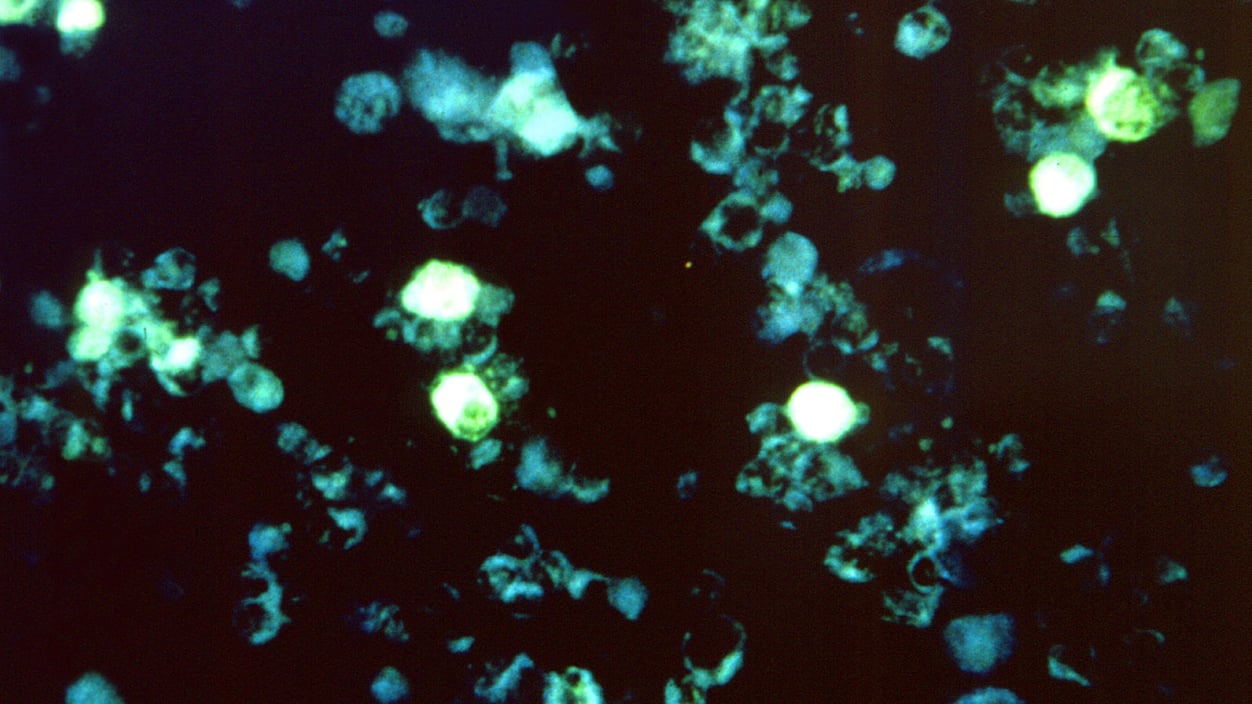
CDC 

For decades, researchers and clinicians have speculated that Epstein-Barr virus plays a role in the development of multiple sclerosis. And for the last few years, evidence has begun to emerge supporting that idea. Yesterday, researchers published a study they say uncovers how the virus launches immune responses that lead to the inflammation and nervous system damage seen in people with MS.

“When you’re developing drugs, targeted drugs, every little step, every little molecule, every little antigen is a game changer,” neurologist Syed Rizvi, who was not involved in the study, told STAT’s Lauren Chan. Read more on the findings and how they might lead to more precise approaches to treating MS.


politics

Voters split on the importance of health care fraud

The Trump administration has made cracking down on health care fraud a major priority. Last week, CMS administrator Mehmet Oz compared himself to Johnny Cash as he travels around the country for his “War on Fraud.” But new data from KFF Health Tracking Poll shows that health care fraud isn’t necessarily as high a priority for voters ahead of the midterm elections.

While 51% of poll respondents identified health care costs as “extremely important” for midterm candidates to talk about, 43% said the same about fraud in government health programs. Of course, there’s a partisan divide there: Only 34% of Democrats wanted to hear about fraud but 55% of Republicans did. Most respondents believed that there was more fraud in the federal tax system, military and defense contracts, and foreign aid programs than in health programs.

In the meantime, states are following the Trump administration’s fraud playbook, and as my colleague O. Rose Broderick has reported in depth, people with disabilities are already feeling the effects.


first opinion

What drug will animal venom bring next? 

As GLP-1 medications continue to revolutionize weight loss and dominate American culture, it’s easy to forget that venom from an infamous, gargantuan lizard called the Gila monster was an instrumental part of the drug development. A new First Opinion essay argues that these are just the latest breakthrough drugs to come out of a growing “fang-to-pharmacy pipeline.”

Venoms are scary and dangerous, “but to a growing number of scientists and pharmaceutical companies, they represent something else entirely: a hidden medicine cabinet,” writes ecology professor Steve Midway. “The success stories may be circulating in your body.” Read more on the science. (And for fun afterward, revisit this STAT story from over a decade ago: “7 creepy crawlies that could be the future of medicine.”)


More around STAT

What we're reading