| | In this edition: Dangote switches to dollar pricing in Nigeria, De Beers to close its biggest diamon͏ ͏ ͏ ͏ ͏ ͏ |
| |  | Africa |  |
| |
|
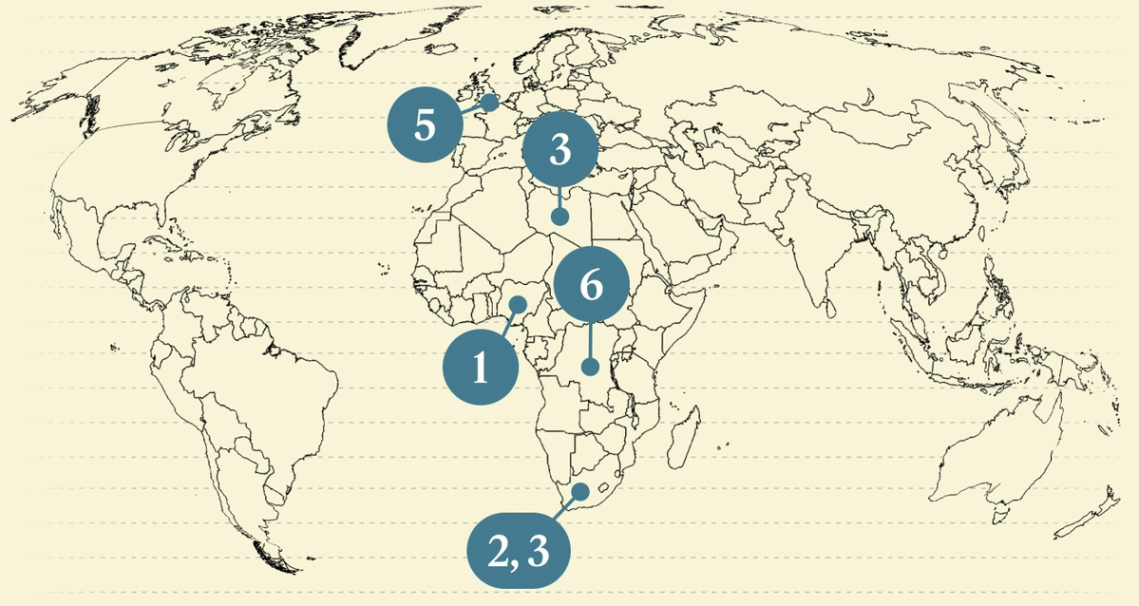 - Dangote ends naira pricing
- Pretoria mulls fuel stockpile
- De Beers to close mine
- Trump’s Libya push
- Ebola vaccine trials start
- Mining harms forests
 A photography project helps coastal communities adapt to climate change. |
|
Dangote switches to dollar pricing |
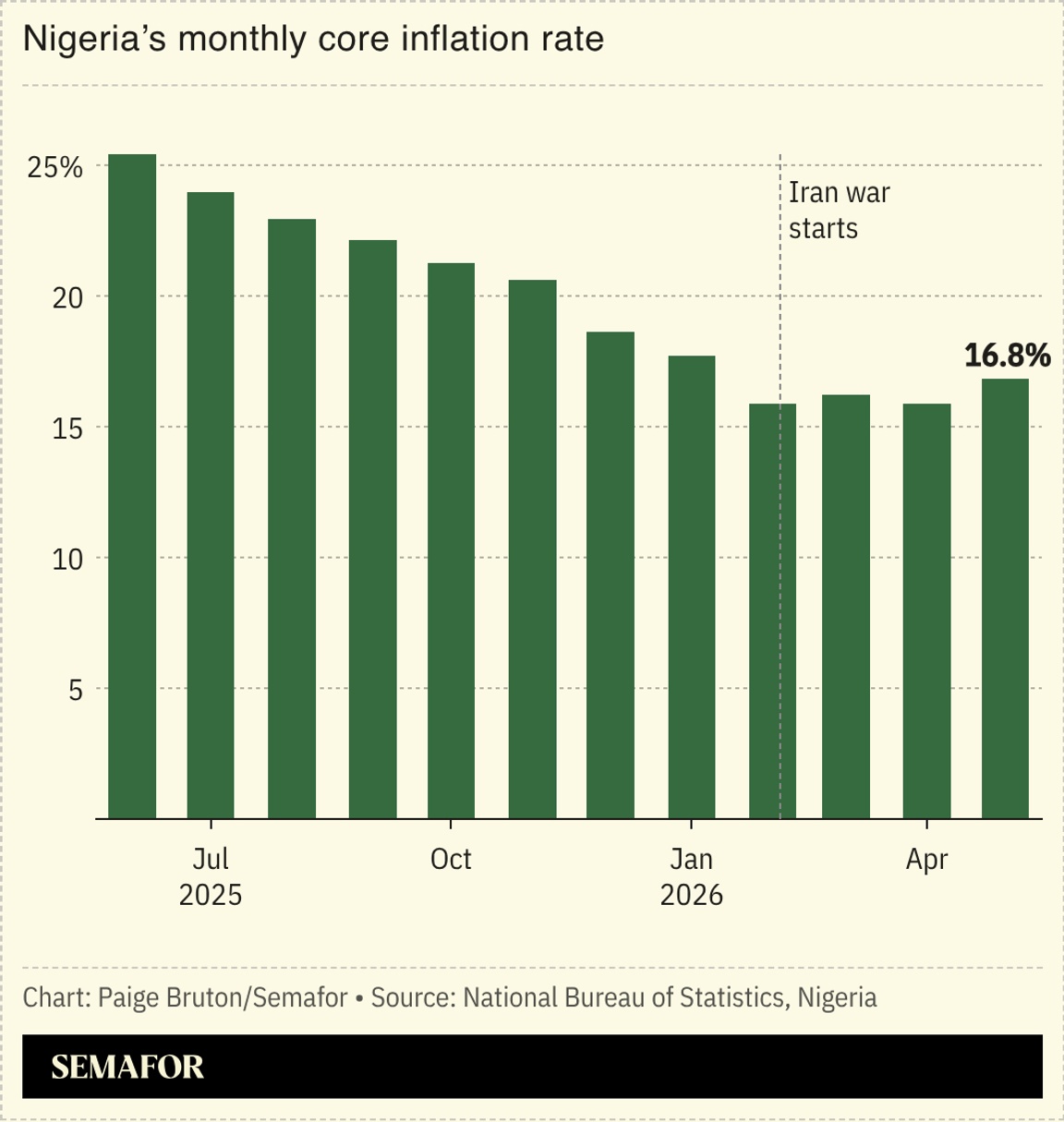 Africa’s largest oil refinery has moved to price its products in Nigeria in US dollars, which could increase inflationary pressures ahead of presidential elections in January. The Dangote Refinery in Lagos agreed in 2024 to set depot prices in the local currency following a government deal that involved sourcing crude oil domestically, which the plant would purchase in naira. But the company continues to buy foreign crude in dollars for a significant portion of its feedstock. With the refinery planning an initial public offering later this year, the move to dollar pricing for local sales aims to shield it from foreign exchange risks. The 650,000 barrels-a-day Dangote plant produces enough fuel for domestic consumption in Nigeria, Africa’s most populous nation, and is the most influential determinant of pump prices. Its move to sell in dollars could increase local demand for the US currency, weakening the naira and driving up inflation, which has risen in recent months. A cost of living crisis, driven by higher fuel prices since the removal of a fuel subsidy by President Bola Tinubu in 2023, is the top issue for voters heading into January’s election. — Alexander Onukwue |
|
South Africa mulls fuel safety net |
 Esa Alexander/Reuters Esa Alexander/ReutersSouth Africa is planning its biggest buildup of strategic oil reserves since the apartheid era, in a bid to shield its economy from global energy shocks. Africa’s largest economy once refined its own fuel, but is now wholly dependent on imported petrol, diesel, and jet fuel, leaving it vulnerable to major disruptions. Under new draft fuel security rules, the government would require the state and private fuel companies to stockpile a combined buffer of up to 81 days of national consumption, reviving a massive storage network that was built in the 1970s to protect against international sanctions. The proposal, which is out for public comment before it becomes law, comes as the US war with Iran ramps up again, disrupting fuel shipments through the Strait of Hormuz that African countries, including South Africa, rely on for energy imports. “This vulnerability is compounded by the closure of domestic refineries,” the draft document reads. South Africa closed its two major refineries in 2022 after new fuel regulations undermined their commercial logic. The Middle East crisis has prompted renewed calls for African nations to increase energy autonomy, and Nigeria’s Aliko Dangote has announced plans to expand his refining business to East Africa. — Tiisetso Motsoeneng |
|
De Beers to close South African mine |
 Sumaya Hisham/Reuters Sumaya Hisham/ReutersDe Beers is halting production at South Africa’s biggest diamond mine, as global gemstone prices fall due to slowing demand and increased competition from cheaper lab-grown gems. The firm, citing “protracted challenging conditions” in the diamond industry, said it would close its Venetia mine for two years. The site produces 40% of South Africa’s diamonds and employs about 4,400 people. South Africa’s National Union of Mine Workers said the livelihoods of more than 1,200 people were threatened, saying “workers cannot be treated as disposable tools.” De Beers’ parent company Anglo American is seeking to sell the firm — after three asset write downs — as the mining major eyes a pivot toward copper, which is in demand for the energy transition and use in AI data centers. The $80 billion diamond industry has been hit by a post-pandemic slowdown, especially in China where demand for luxury goods has collapsed. Globally, the cost of real diamonds has fallen 50% since 2022. De Beers’ also operates in Angola, Botswana and Namibia, along with Canada. — Jenny Vaughan |
|
Semafor Exclusive Trump takes resource diplomacy to Libya |
| | Lauren Morganbesser and Adrian Elimian |
| |
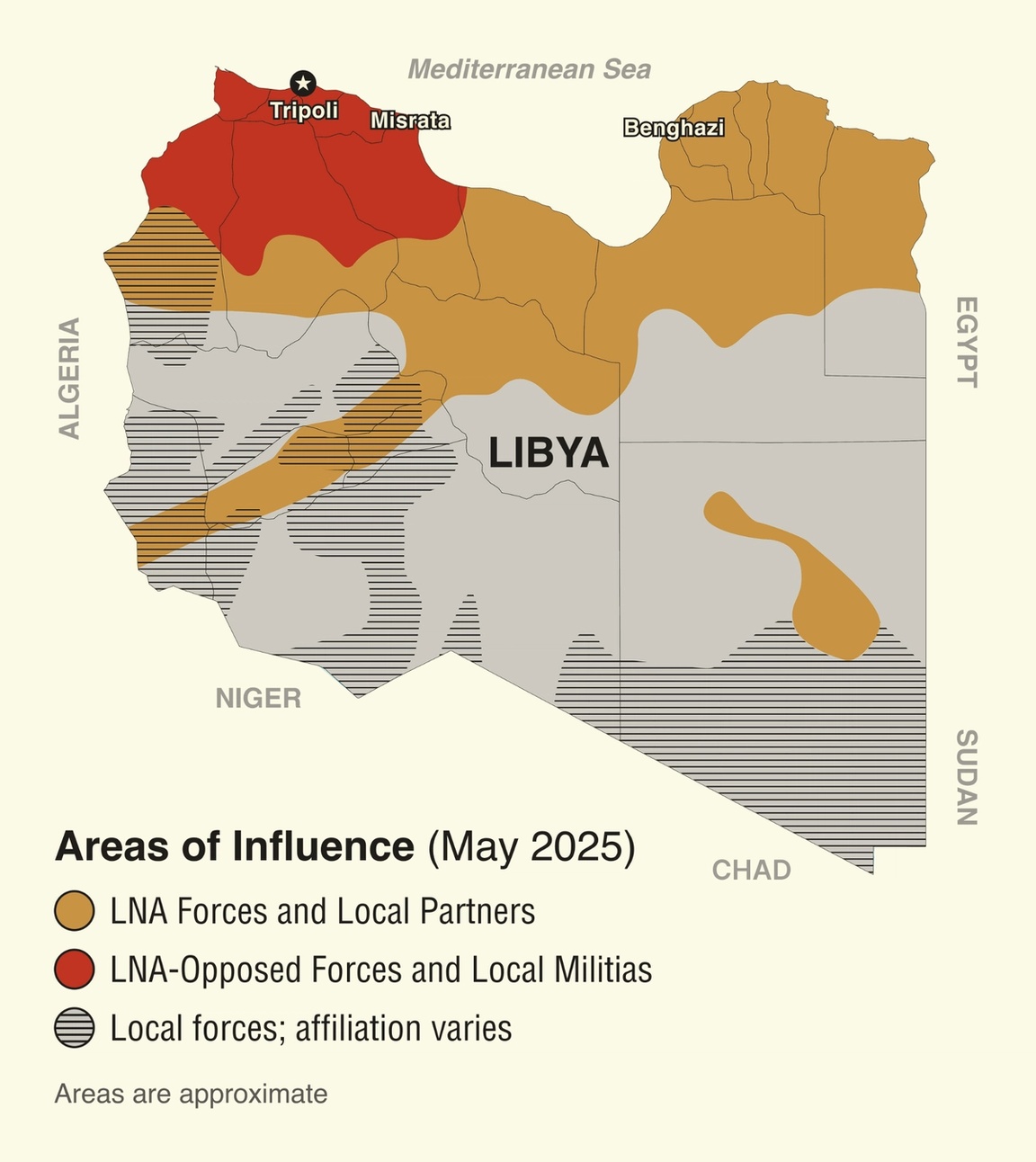 The Trump administration is intensifying efforts to broker a deal to end Libya’s 15-year conflict — but critics warn it could backfire by undermining a UN road map to elections and cement the dominance of rival strongmen at the heart of Libya’s political crisis. Libya’s economic potential is a major driver of the deal, analysts say: It holds Africa’s largest proven oil reserves and US energy companies have been steadily expanding their footprint in the country. The US initiative aims to end more than a decade of political division by striking an agreement between Libya’s two rival centers of power. The proposed agreement is being brokered by Massad Boulos, US President Donald Trump’s senior adviser on Africa and Tiffany Trump’s father-in-law. His deal could further open the door to American energy companies interested in the country, mirroring other Trump administration strategies in conflict zones. “This has the hallmarks of a Trump transaction,” one Bush administration Africa official said. |
|
Human Ebola vaccine trials begin |
 Eddie Keogh/Reuters Eddie Keogh/ReutersThe University of Oxford began human trials of an Ebola vaccine, as the virus spread to two new provinces in the DR Congo, fueling fears the fast-moving outbreak is becoming harder to contain. The trial will be carried out on 50 healthy adults in Oxford, UK, against the new Bundibugyo strain, which spread undetected in the DR Congo for weeks and for which there is no known vaccine or treatment. The news comes as Congolese health officials confirmed new cases and one death in two more northeastern provinces. Health workers are racing to contain the disease, though efforts have been hampered by misinformation, ongoing conflict near virus-hit communities, and shortages caused by Western aid cuts. Nearly 2,000 people have been infected and more than 700 have died in DR Congo and parts of Uganda since mid-May, in what experts fear could be the biggest Ebola outbreak on record. The World Health Organization warned last week that the true scale of the outbreak could be two to four times higher than official data suggests. |
|
Mining erodes Africa’s forests |
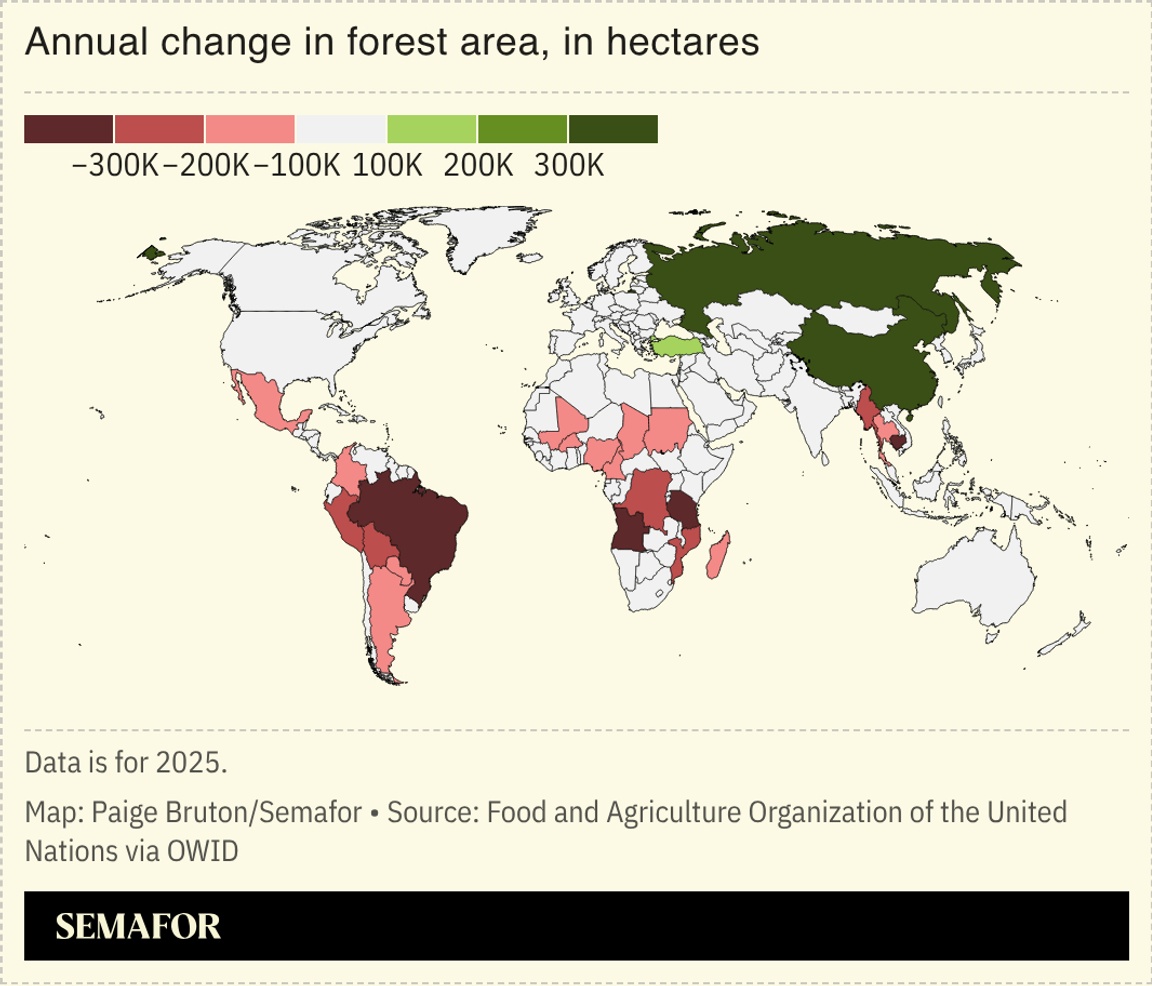 Africa’s forests are gradually disappearing due to mine development, a new study suggests. Nearly 190,000 hectares of forest were converted to mines in Africa between 2001 and 2020, according to researchers at the universities of Cambridge and Sheffield. While that area — roughly the size of Comoros — is only a fraction of the size of the continent, the study found that every hectare deforested within a mine’s immediate footprint led to an additional 34 hectares of forest loss, usually to create roads or new urban settlements to service the mine. In DR Congo, which holds more than half of the world’s cobalt, used for lithium batteries in electric vehicles, this multiplier jumps as high as 58 hectares of deforestation for every hectare lost to a mine. “Healthy forests are carbon sinks,” the researchers wrote in The Conversation. “The minerals needed for the technologies meant to save the planet from climate change ... could speed up ecological collapse in biodiversity hotspots.” |
|
 Business & Macro |
|
|


