- In today’s CEO Daily: FedEx CEO Raj Subramaniam is leading through a moment of “re-globalization.”
- The big leadership story: New York bans new AI data centers for now.
- The markets: Mostly up after softer-than-expected U.S. inflation data
- Plus: All the news and watercooler chat from Fortune.
Good morning. Fortune Editor-in-Chief Alyson Shontell writing from New York this morning.
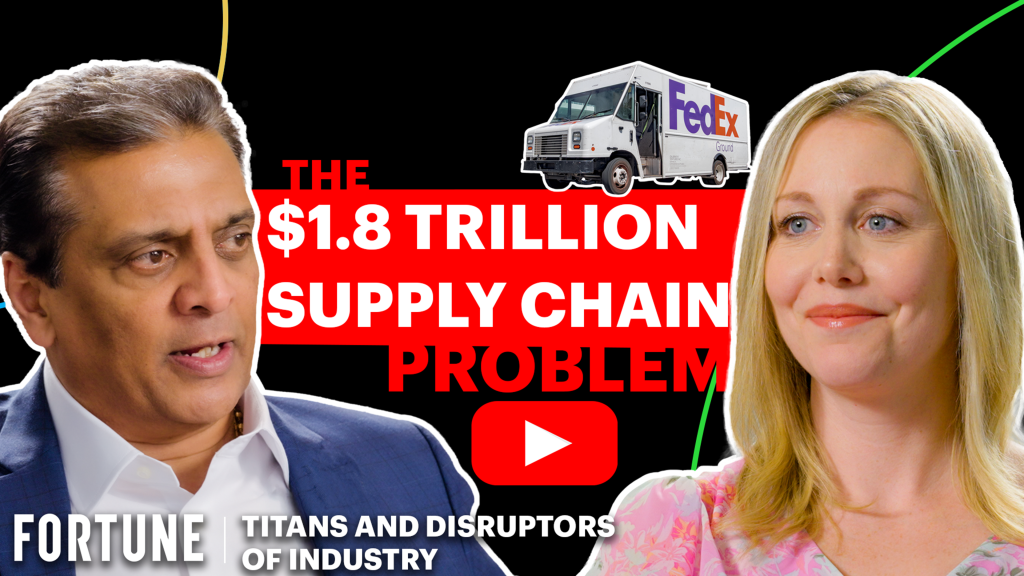
“If you don’t like change, you’re going to hate extinction.” That’s the framing FedEx CEO Raj Subramaniam uses to motivate his troops, particularly in unpredictable times. Subramaniam has dubbed the recent supply chain disruption brought on by geopolitical conflict, tariffs, and more as a moment of “re-globalization.” And, as a company that moves almost 19 million packages per day, FedEx is on the front lines of it.
I spoke to Subramaniam in June at FedEx’s Memphis headquarters for
Fortune’s
Titans and Disruptors podcast to learn how he’s leading through it and what he’s seeing around the corner. We also spoke about his transition to the top job after a multi-decade ascent from an entry-level FedEx position.
Subramaniam, the second CEO in the company’s 53-year history, is operating for the first time without his mentor and sounding board. One year ago, FedEx’s founder, Fred Smith, died at the age of 80. Taking the reins from a legendary founder—as Subramaniam did in 2022—is a great privilege, he told me. “I always say that I can see far because I’m standing on the shoulders of a giant,” he said. That giant had groomed Subramaniam for the top job for years, as he rose through the ranks and served stints as FedEx’s president and chief operating officer.
But as any CEO will tell you, even the most carefully planned leadership transition isn’t easy. “When the time came, I said, ‘I can do this,’” Subramaniam recalled. “But no, the whole thing changed … This is a whole different level.” As requests and demands came in from all sides, Subramaniam found himself having to say no—a lot. To stay focused on what mattered most, he set aside time to create his own CEO job description and KPIs. One of those was to be a guardian of the culture that the company’s founder built.
He recounted a conversation with Smith when he stepped into the CEO role: “I told him that a lot of things might change—whether we have new technology, [we] may have new people, we may buy new companies,” he recalled. “But one thing that is not going to change is the FedEx culture, and that’s why I came to work here in the first place.
You can listen to our full conversation—including the unlikely origins of FedEx’s AI-powered data business, which came from a young employee directly to the CEO—
here.
Contact CEO Daily via Diane Brady at diane.brady@fortune.com