| | China’s growth slows to its lowest rate since 2022, Trump threatens to bomb Iranian civilian infrast͏ ͏ ͏ ͏ ͏ ͏ |
| |  Khartoum Khartoum |  San Salvador San Salvador |  Veldhoven Veldhoven |
 | Flagship |  |
| |
|
The World Today | 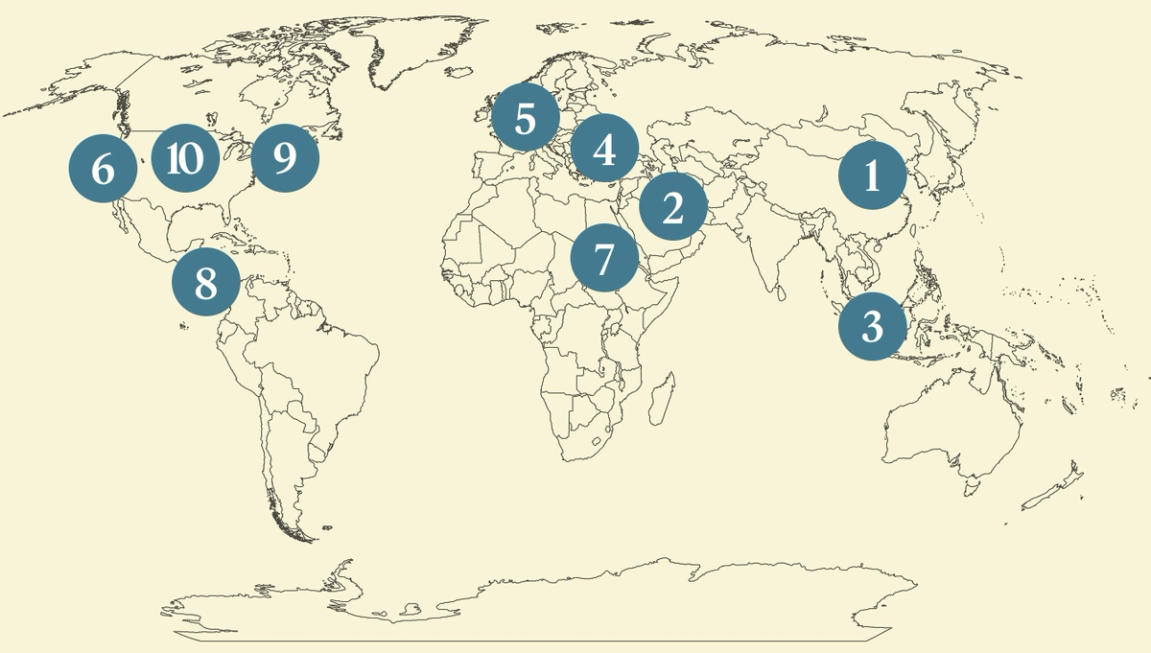 - China’s slowing growth
- Trump threatens Iran…
- …and challenges Beijing
- Kyiv strikes Sea of Azov
- ASML bets on AI boom
- Stripe’s $53B PayPal bid
- The return to Khartoum
- Bukele seeks third term
- US science under threat
- Most expensive dinosaur
 A book about the Anglo-Argentinian identity, ahead of those two countries clashing in the World Cup today.
|
|
China’s Q2 growth stumbles |
 Maxim Shemetov/Reuters Maxim Shemetov/ReutersChina’s economy expanded 4.3% year-on-year in Q2, the lowest rate since the end of 2022, as the Iran war, lackluster domestic demand, and a lingering real estate slump weighed on growth. Though the country’s exports have been churning along at an extraordinary pace — China shipped a record $412 billion of goods last month — domestic consumption has sagged, leading some analysts to warn of a potential deflationary spiral. Meanwhile, industrial and real estate investment plunged in the first half of the year, a bad omen for the world’s second-biggest economy. “No domestic demand, all about exports — it’s really quite unsustainable,” the chief economist for Asia Pacific at Natixis told CNN. |
|
Trump threatens Iran’s infrastructure |
 Majid Asgaripour/WANA/Reuters Majid Asgaripour/WANA/ReutersUS President Donald Trump threatened to attack Iranian civil infrastructure, including bridges and power stations, unless Tehran resumes peace talks. A month-long ceasefire has effectively collapsed, with the two countries exchanging fire for four consecutive days. The renewed fighting has driven oil prices to four-week highs as producers scramble to find alternatives to transporting oil through the Strait of Hormuz: The UAE is reportedly looking to build a new port on its east coast, beyond the pinch point of the strait, while both the emirates and Saudi Arabia are racing to build new overland pipelines. The crisis has also pushed up worldwide demand for alternative energy sources and electric vehicles. |
|
US challenges China in Pacific |
 Marco Bello/Reuters Marco Bello/ReutersUS Coast Guard ships that previously operated in the Middle East have been deployed to Singapore and the Philippines, as Washington looks to challenge China’s assertion of power in the Pacific Ocean. Tensions have risen in the region as Beijing has sought to expand its maritime and territorial claims, pushing Asian leaders to strengthen security alliances: Defense spending in Asia and Oceania rose by more than 8% last year, the biggest leap in almost two decades. The US too is ramping up its security apparatus in the Pacific, upgrading airfields, testing advanced missile systems, and training with other allied nations. However, deterring Beijing in its backyard “will remain a challenge” for Washington, The Wall Street Journal reported. |
|
Ukraine targets key maritime corridor |
 Commander of Unmanned Aerial Systems Force/Handout via Reuters Commander of Unmanned Aerial Systems Force/Handout via ReutersUkraine said it had struck 11 Russian vessels on the Sea of Azov, choking off a waterway that has become vital for Moscow. Russia ships vast amounts of oil, steel, and grain through the Kerch Strait to the Black Sea, but traffic has slowed to a trickle in recent days after Ukraine claimed to have hit more than 100 vessels. The attacks have heaped pressure on Russia’s economy, which is already grappling with the worst fuel shortages since the fall of the Soviet Union. Some fear that, as Russia’s battlefield progress in Ukraine stalls and domestic pressure rises, President Vladimir Putin may try to escalate his war as he looks for a breakthrough to sell as a victory. |
|
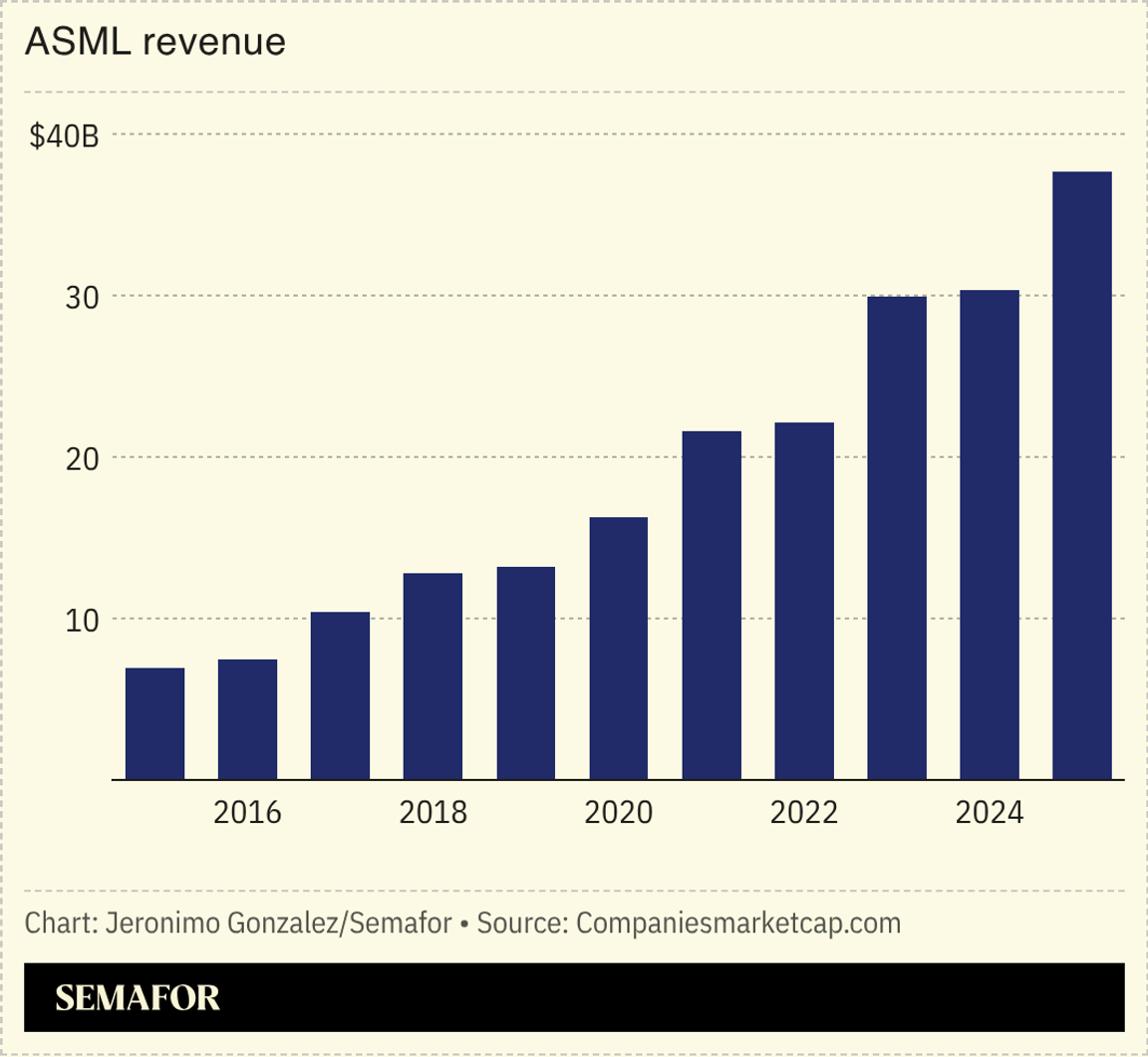 ASML raised its sales outlook, forecasting that AI-driven demand for computing power will continue to surge. The Dutch technology giant makes “extreme ultraviolet” lithography machines used to produce the world’s most advanced semiconductors, perhaps the most complicated objects made by man. The company reported 21% year-on-year sales growth in Q2, and expects more: Strong results from two major customers, Intel and TSMC, indicated further demand, the Financial Times reported. ASML’s output is a major bottleneck in the AI industry — no other company produces eUV machines and it can only make a few dozen a year. In a major bet that AI-led demand will continue, it announced plans to boost capacity by 30% next year and a similar amount in 2028. |
|
Stripe and Advent bid $53B for PayPal |
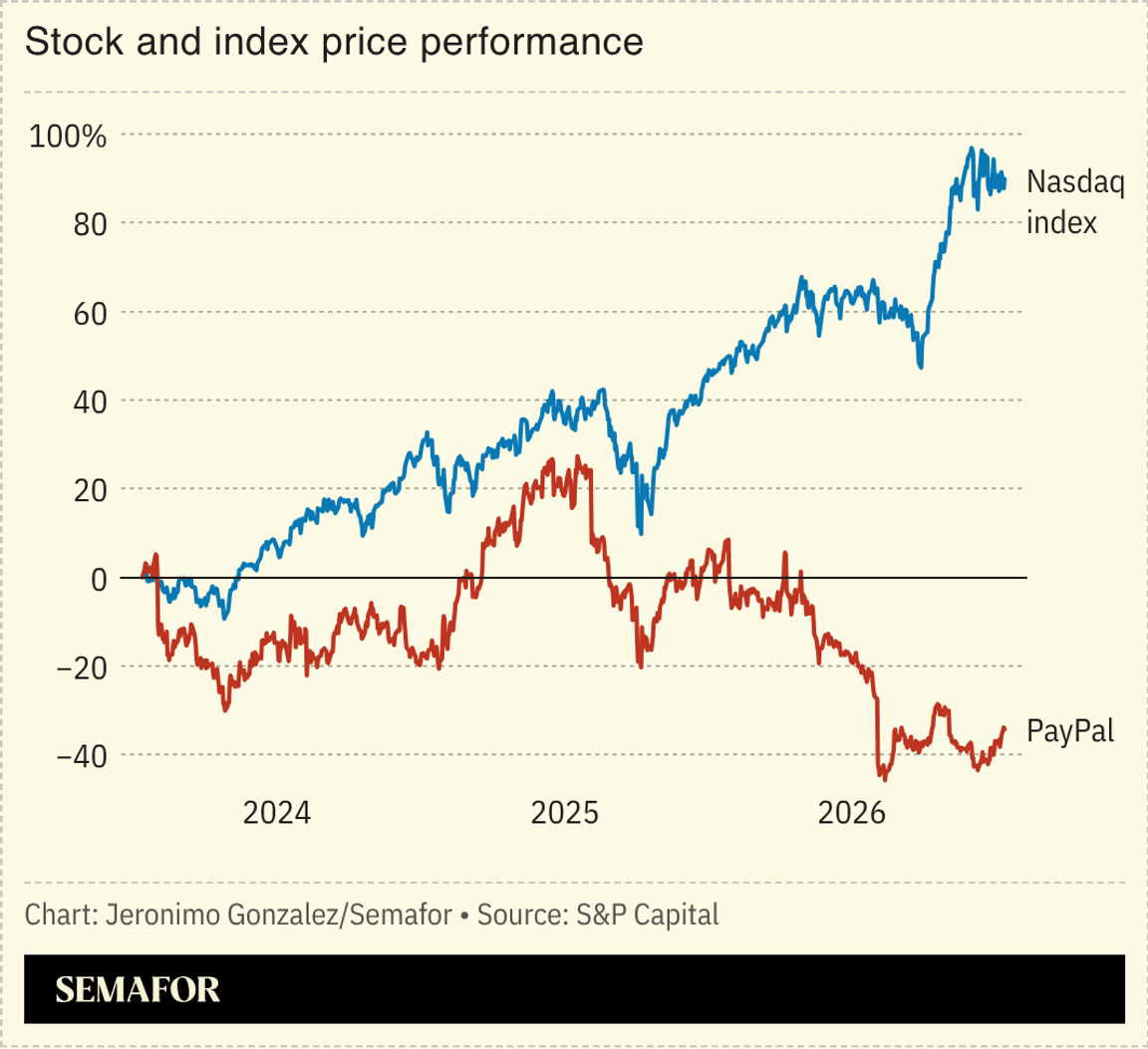 Stripe and Advent made a $53 billion bid to buy PayPal. PayPal was valued at $360 billion in 2021, but that has now fallen to just $36 billion due to competition from Apple Pay and other rivals. Stripe is making ambitious moves: Its subsidiary Bridge, which issues stablecoins, this year won conditional approval for a national trust bank charter, something the traditional banking industry has strenuously opposed, arguing it lets Stripe hold deposits in all but name without insurance or Fed oversight. Buying PayPal would give the payment-processing firm access to its 400 million customers and their online wallets, useful infrastructure for the stablecoin plan. But, so far, PayPal has not acknowledged the offer. |
|
Sudanese return to crippled capital |
 El Tayeb Siddig/File Photo/Reuters El Tayeb Siddig/File Photo/ReutersMillions of people have returned to Sudan’s capital a year after government forces recaptured it from paramilitaries, though life there remains far from pre-war normality. The government has tried to restore some sense of security for Khartoum’s citizens, but widespread power cuts and the fear of unexploded mines mean that remains a distant prospect for most. Sudan’s economy remains largely paralyzed too. Analysts say the civil war — which has caused the world’s gravest humanitarian crisis — will only end once the UAE cuts off its backing to the paramilitary Rapid Support Forces, which have been accused of genocide. “This war could end in two weeks if… the Emirates decided it was no longer worth it,” an expert said. |
|
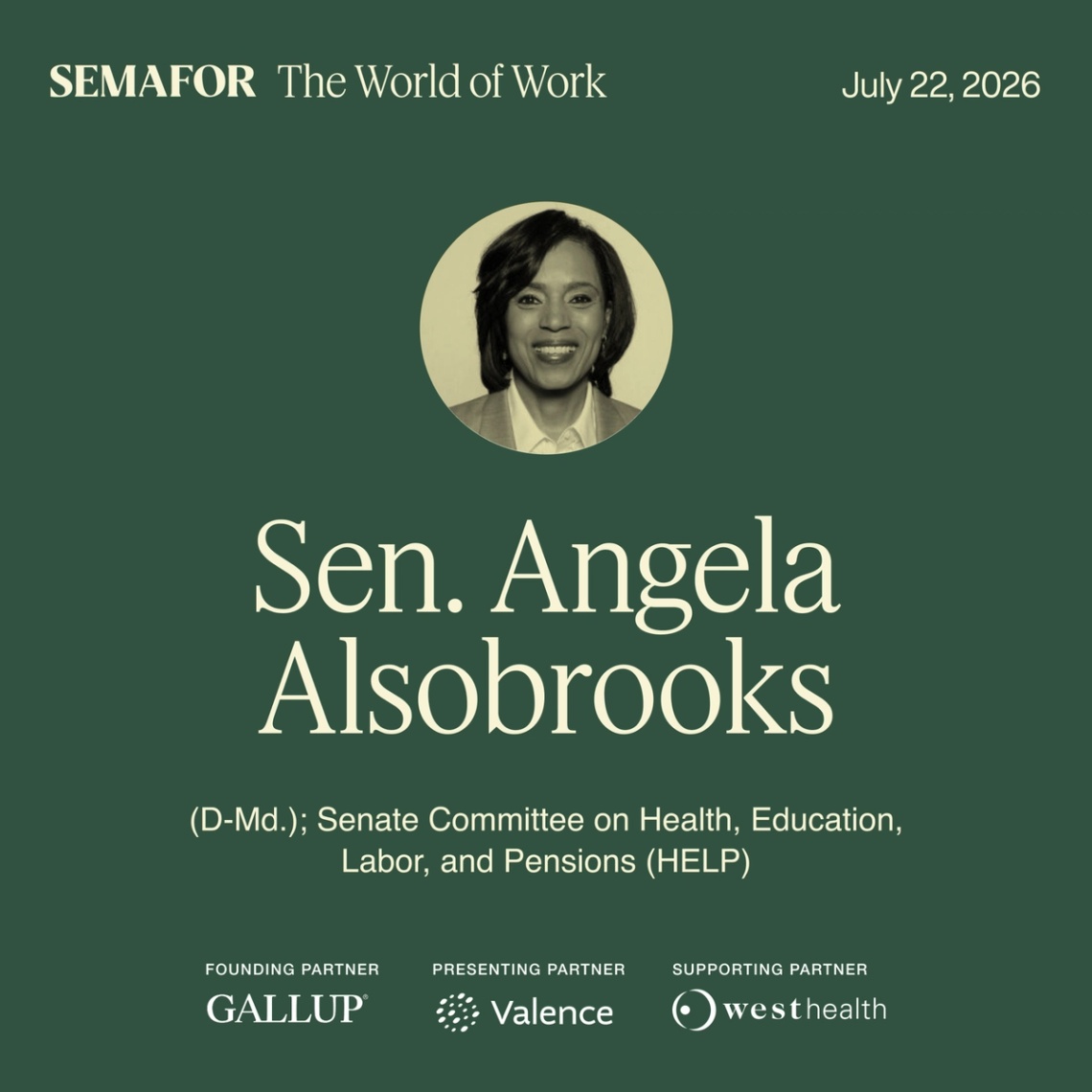 On Wednesday, July 22, Sen. Angela Alsobrooks, D-Md., Senate Committee on Health, Education, Labor, and Pensions (HELP), will join Semafor’s The World of Work in Washington, DC to unpack how institutions are adapting and thriving in an increasingly fragmented economy. As companies face rapid technological change, economic uncertainty, and shifting workforce expectations, leaders are rethinking performance, trust, and long-term success. To explore how AI adoption, workforce transformation, and evolving leadership demands are reshaping the future of work, Semafor editors will sit down with policymakers, business executives, and workplace innovators including Sen. Roger Marshall, R-Kan., HELP; Katy George, Corporate Vice President of Workforce Transformation, Microsoft; Claire MacIntyre, Chief People Officer, Sam’s Club; Mary Moreland, Executive Vice President, Human Resources, Abbott; Allison Peek Bebo, Chief Human Resources Officer, Pearson; and more. July 22 | Washington, DC | Request Invite |
|
El Salvador’s Bukele seeks third term |
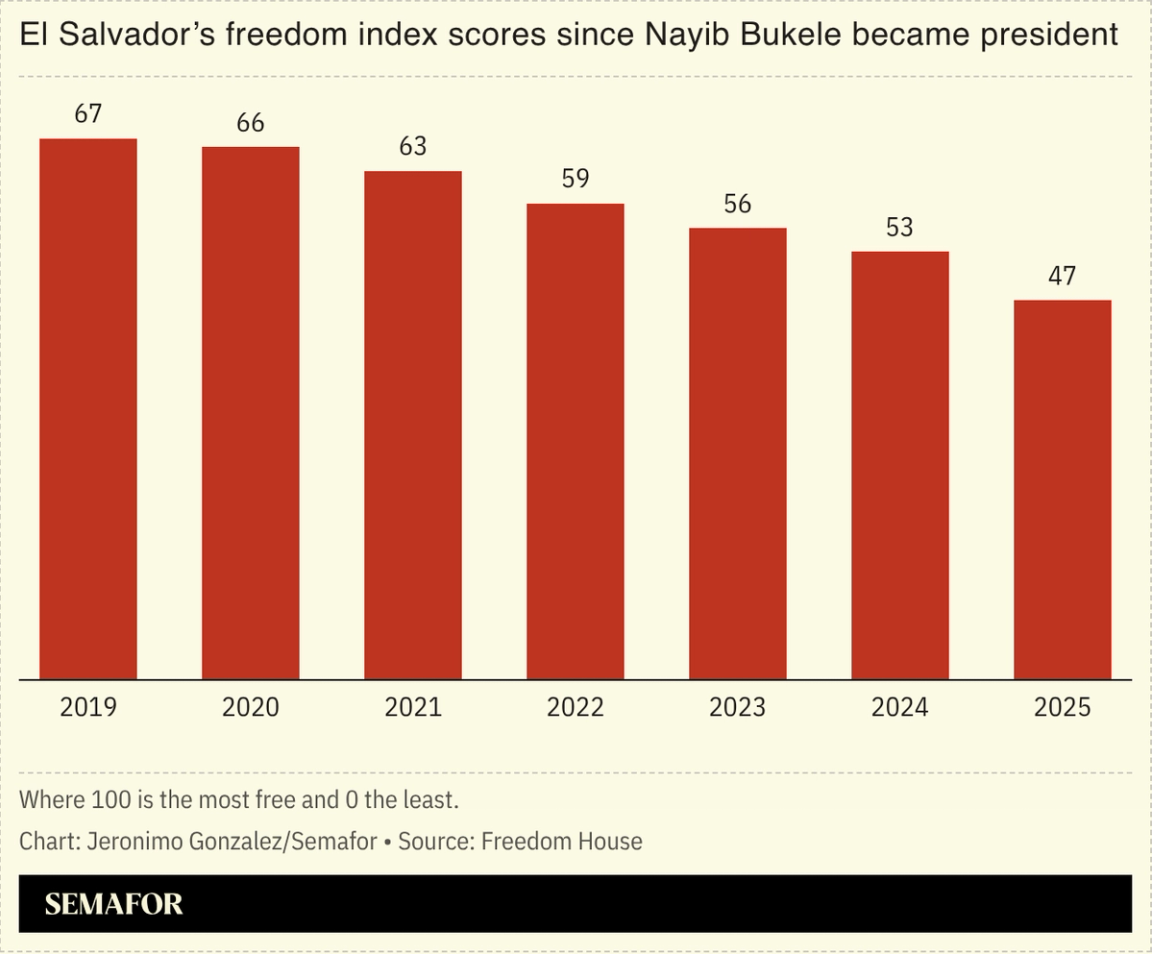 Salvadoran President Nayib Bukele will stand for a third consecutive term despite a constitutional ban against it, underscoring the rapid erosion of democracy in the Central American nation. Since becoming El Salvador’s leader in 2019, the self-styled “world’s coolest dictator” has overseen a successful — if draconian — crackdown on crime that has made him Latin America’s most popular leader. However, critics say Bukele has used his popularity to entrench himself in power: His New Ideas party now controls 54 of 60 seats in Congress, and he has illegally replaced the country’s top court and the attorney general. Meanwhile, his family’s wealth has exploded. “Democracy in El Salvador has died,” an opposition politician said after presidential term limits were scrapped last year. |
|
Future of US science under threat |
 Kevin Lamarque/File Photo/Reuters Kevin Lamarque/File Photo/ReutersA proposed change to federal research funding could be “the last nail [in] the coffin” for US science, a commentator argued. The Regulation for Federal Financial Assistance, due to come into force in October, will give political appointees power to terminate trials that do not “advance the President’s priorities.” The move replaces “curiosity-driven” research with “ideological swerves,” science writer Anjana Ahuja argued in the Financial Times. The Trump administration has been unusually interventionist in science: Health Secretary Robert F. Kennedy Jr has reduced funding for vaccines, attempted to stop nearly a third of routine childhood shots, and moved to wind down research into mRNA inoculations, while pushing federal researchers to examine |
|
|


