| | Donald Trump backs off his plan to charge a Hormuz toll, New York enacts a data center moratorium, a͏ ͏ ͏ ͏ ͏ ͏ |
| |  NEW YORK CITY NEW YORK CITY | ÜRÜMQI |  BANDAR SERI BEGAWAN BANDAR SERI BEGAWAN |
 | Flagship |  |
| |
|
The World Today | 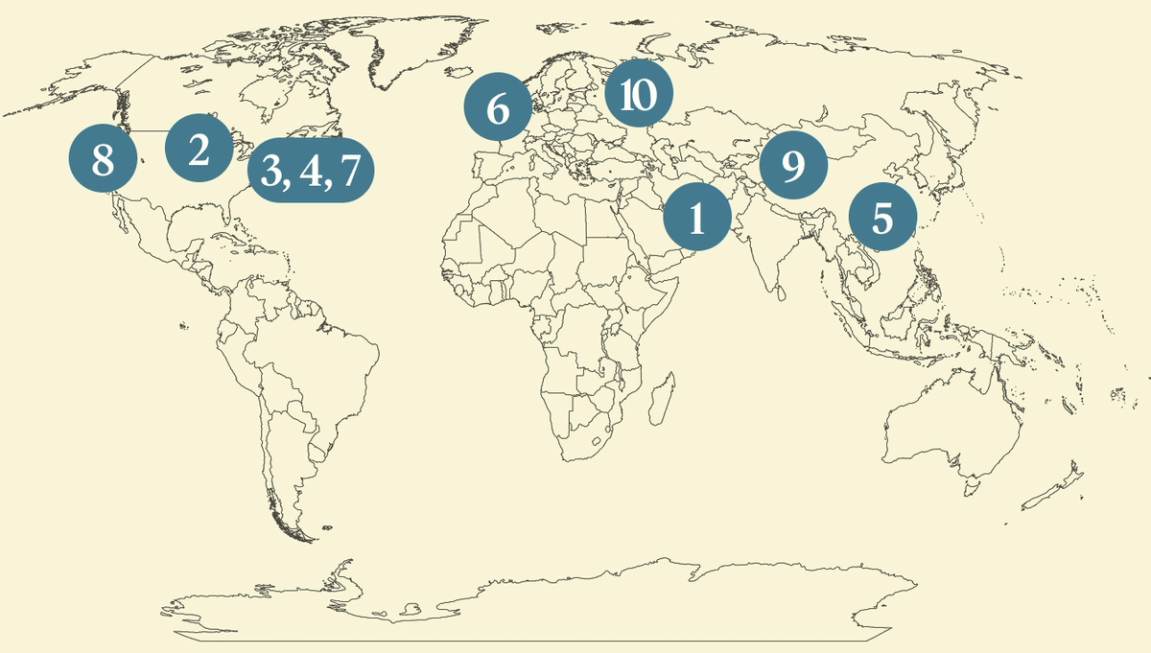 - Trump drops Hormuz toll
- Fed chief’s inflation fight
- Banks post record earnings
- IBM’s profit warning
- DeepSeek eyes an IPO
- Calls for AI oversight
- Data center moratorium
- Voters turn to chatbots
- Xi purges top official
- Nukes in space
 Why a writer watched a 1968 zombie movie 400 times. |
|
Trump abandons Hormuz toll plan |
 Stringer/Reuters Stringer/ReutersUS President Donald Trump backed off a plan to charge a 20% toll in the Strait of Hormuz, a day after a White House official told Semafor that Trump was “very serious” about the fee. Analysts were skeptical about the proposal, as it would double the cost of moving oil through the strait. Hours after Trump’s retreat, Washington restarted its naval blockade of Iranian ports and launched fresh strikes against Iran. The moves are part of Trump’s efforts to wrest control of Hormuz, his latest “shift in military strategy” after aerial attacks, the original blockade, and a ceasefire haven’t forced Tehran into surrendering, The Wall Street Journal wrote. “Coercive wars can go on and on,” a former CIA analyst said. |
|
US Fed chair says inflation fight not over |
 Jonathan Ernst/Reuters Jonathan Ernst/ReutersThe US Federal Reserve chair on Tuesday committed to tackling stubborn inflation in hawkish comments that investors took as a signal borrowing costs are likely to stay higher for longer. Kevin Warsh’s remarks to lawmakers came as new data showed US inflation cooled in June, providing some relief to consumers. But renewed fighting between the US and Iran pushed up the cost of oil, creating fresh inflation risks. “There might be some that look at this morning’s data and say, ‘Oh, mission accomplished, everything is swell,’” Warsh said. “That is not my view.” Investors have begun to bake in future interest rate hikes, something US President Donald Trump has long advocated against. |
|
US banks smash profit records |
 Lucas Jackson/Reuters Lucas Jackson/ReutersThe five largest US banks reported blockbuster earnings on Tuesday, owing to geopolitical uncertainty and technological upheaval that caused a trading frenzy. SpaceX’s historic IPO last month contributed to their collective $49 billion in profits, which shattered records. Market volatility often benefits trading divisions on Wall Street, but unlike in past bouts of turbulence, the IPO environment is also hot. “It’s getting close to as good as it gets. We just don’t know how long it’s going to last,” JPMorgan CEO Jamie Dimon said. The banks are also spending more; some of that money is going to new AI tools. JPMorgan cautioned against using “incredibly expensive” AI models, but noted that spending on tokens remains “trivial.” |
|
IBM warning compounds tech jitters |
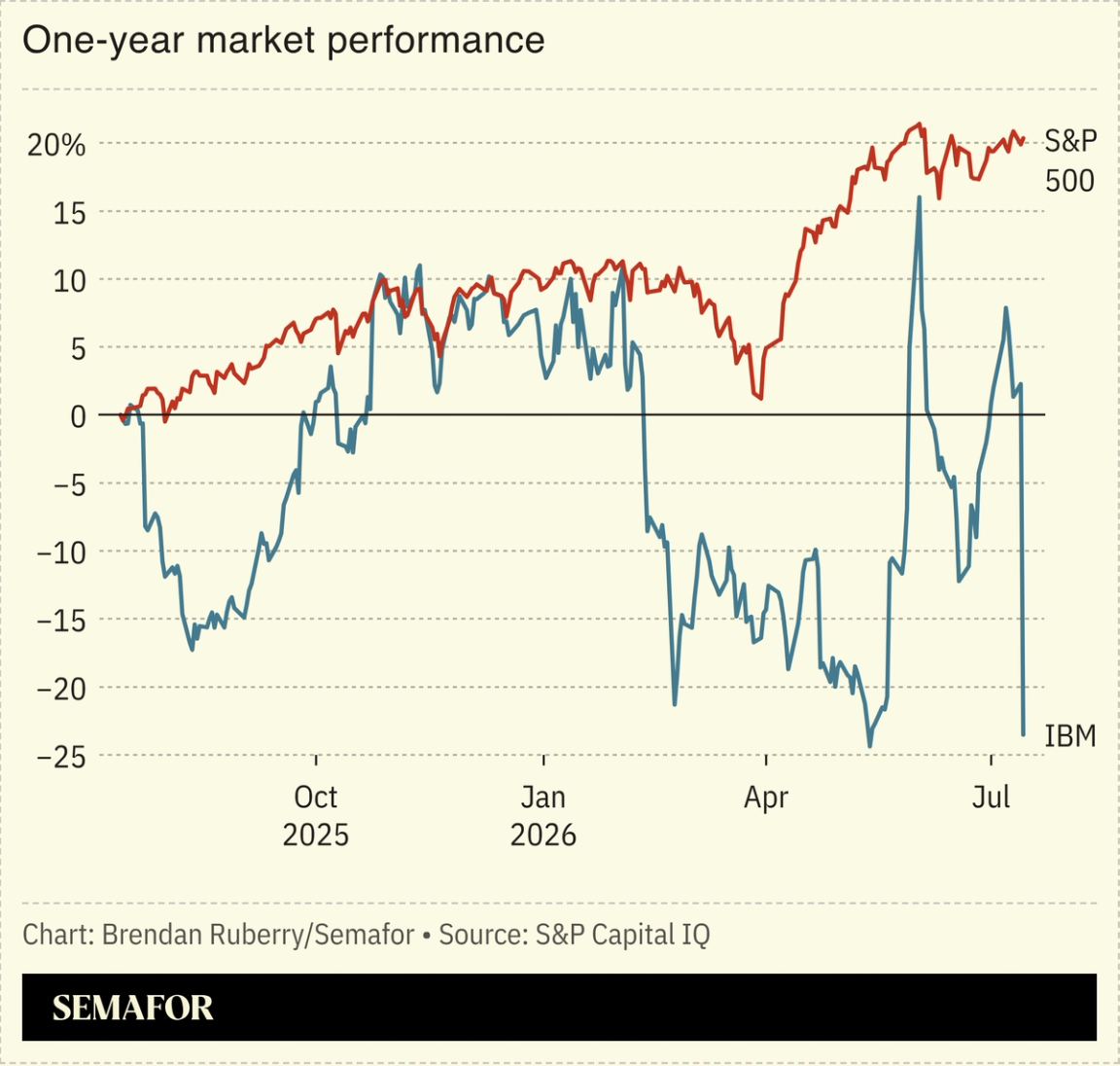 IBM’s stock cratered on Tuesday after the company issued an early profit warning, its first since the early 2000s, stemming from a shift in client spending from software to AI hardware. The company said firms pulled money out of their software and IT services budgets — funds that would ordinarily go to IBM — and threw it at buying servers, memory chips, and other hardware ahead of an expected price spike due to shortages. It’s particularly notable that the warning came from IBM, “a notoriously conservative company that guards its no-surprises reputation with investors,” Semafor’s Rohan Goswami wrote. The firm’s alert signaled wider jitters among investors; other software stocks fell Tuesday alongside IBM, which suffered its worst day ever. |
|
DeepSeek reportedly weighs IPO |
 Florence Lo/Reuters Florence Lo/ReutersDeepSeek could reportedly file for an IPO as soon as this year, joining its rivals in capitalizing on investor enthusiasm for low-cost Chinese tech. The AI powerhouse is also considering raising new funds, weeks after completing its first financing round that valued the company at $52 billion. Other Chinese AI labs, including Zhipu AI and MiniMax, have gone public in recent months, and American competitors OpenAI and Anthropic are planning a similar move. DeepSeek upended the industry last year with its cheap and effective open-source model, but Chinese AI is moving from the “DeepSeek moment” to the “Zhipu moment,” Goldman Sachs analysts wrote, as Zhipu focuses on building artificial general intelligence instead of “short-term monetization from AI applications.” |
|
DeepMind CEO calls for AI oversight |
 Denis Balibouse/Reuters Denis Balibouse/ReutersGoogle DeepMind CEO Demis Hassabis called for a US-led standards body to oversee frontier AI, warning that an intense commercial and geopolitical race is exacerbating the technology’s risks. AI could usher in “a new age for humanity” greater than the Industrial Revolution, Hassabis wrote, but only if deployed responsibly. As it stands, we are not “[giving] ourselves the time and space” to get it right. Hassabis proposed that frontier AI labs should share new models with the self-regulatory organization 30 days before launch, and if major risks are uncovered, it could coordinate a slowdown in development. His proposal follows some influential researchers’ blueprint for safe AI, “Plan A,” which calls for international coordination to delay the development of superintelligence. |
|
NY enacts data center moratorium |
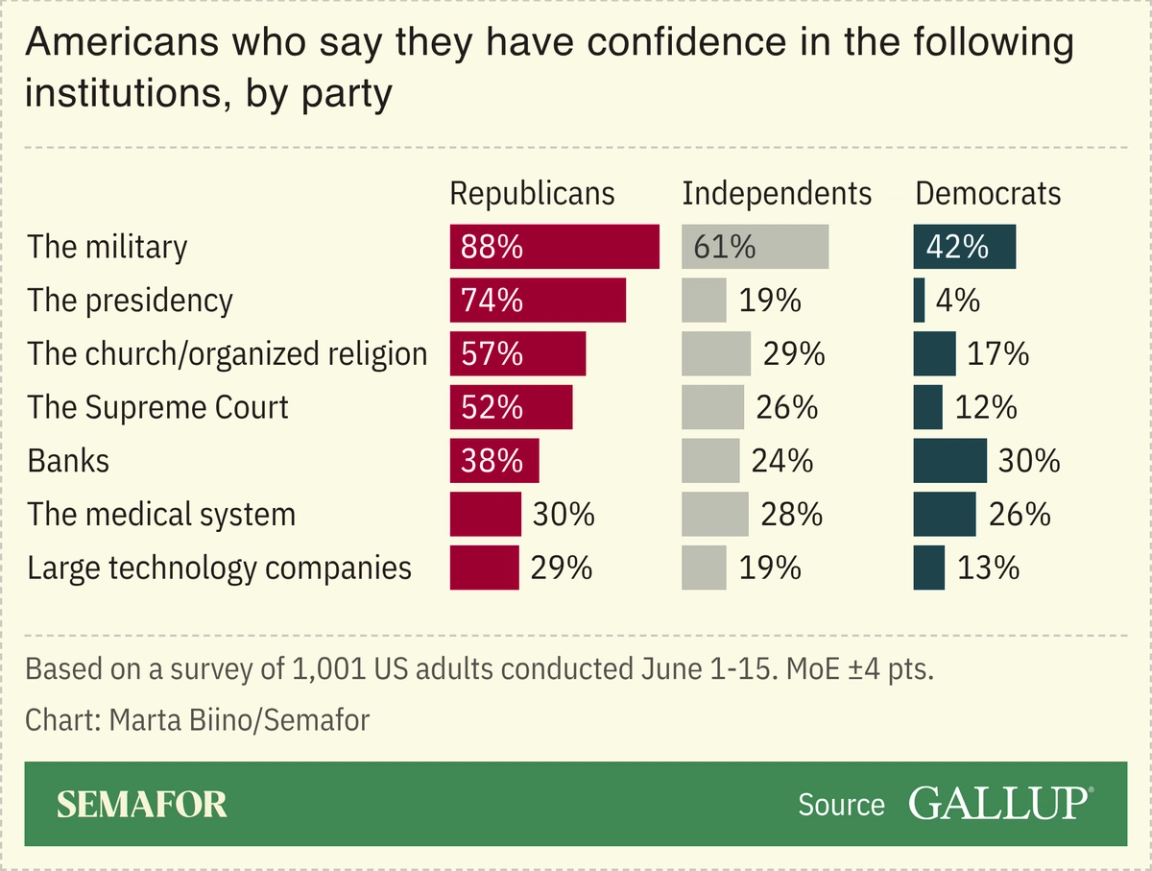 New York’s data center moratorium, announced Tuesday, signals growing mainstream political pushback to unchecked AI growth in the US. The move puts a one-year suspension on construction of large-scale facilities in the state and is the first of its kind in the US, which is seeing a rapid AI infrastructure buildout to meet relentless demand for compute. Progressive candidates have capitalized on local opposition to data centers to win recent elections, “making the AI industry into a new bogeyman,” akin to how left-leaning activists made pro-Israel groups toxic in Democratic politics, Semafor’s Dave Weigel wrote. Americans’ confidence in Big Tech is at a new low, a Gallup poll showed, underscoring the challenge tech companies face. |
|
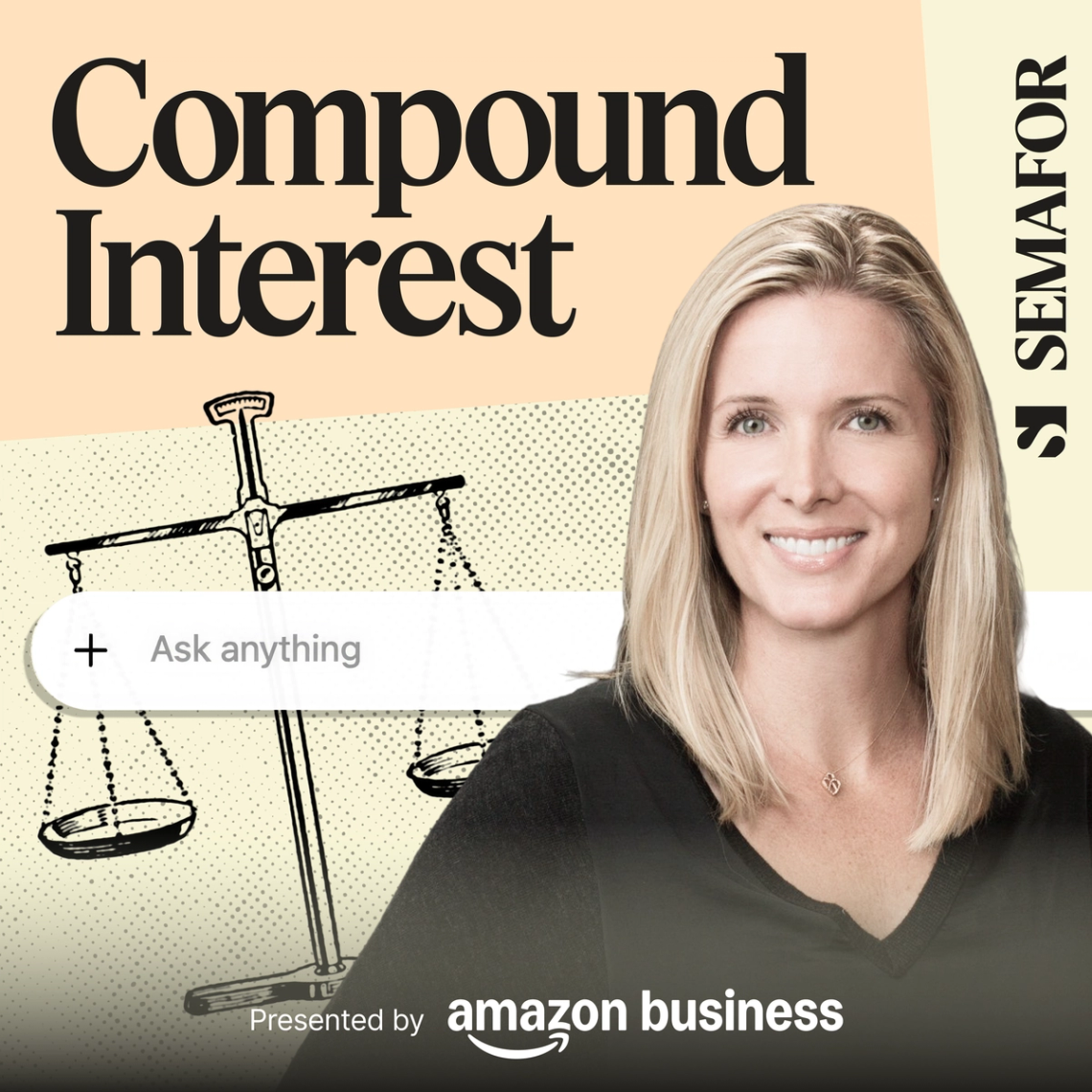 Big law firms have run the same playbook for 50 years: hire armies of young lawyers, bill their hours at steep rates, and funnel the money up to the partners. AI is about to upend that model. On this week’s Compound Interest, presented by Amazon Business, Cooley partner and CEO Rachel Proffitt joins Liz and Rohan to discuss how AI could disrupt Big Law’s sacred cow — the billable hour — by taking over the grunt work that most associates cut their teeth on. Plus, what the rainmakers of the future look like, the rise of AI-native law firms, and the paranoia sweeping the industry. |
|
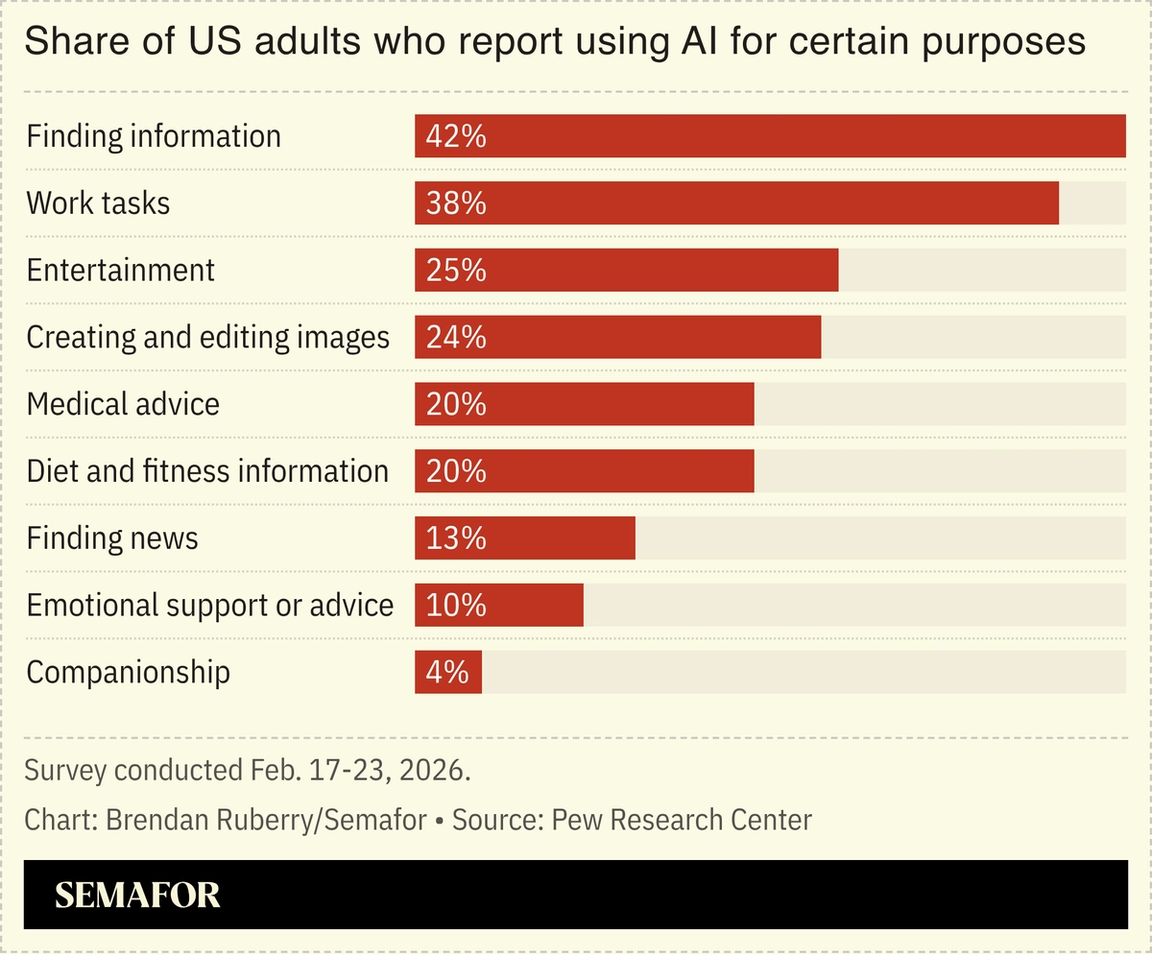 Some US voters are using AI to guide their choices ahead of November’s midterm elections. The models rarely give direct political advice, but can point users toward politicians’ beliefs: One man asked ChatGPT to find those with more libertarian voting habits, while a woman sought Claude’s help on how to stop a Republican contender in a mayoral primary. The results can be “marred by factual errors or shaped by flawed assumptions,” The New York Times wrote, but then, so can human-made inputs like newspaper endorsements. AI-fascinated writer Scott Alexander spent two hours using Claude to compare local California candidates with his own political beliefs, and ended up “about 50% happier with my choices than I would have been without AI.” |
|
Xi steps up corruption purge |
 Ma Xingrui. Tingshu Wang/Reuters Ma Xingrui. Tingshu Wang/ReutersThe Chinese Communist Party purged another top official Tuesday, as Xi Jinping intensifies his anti-corruption drive. Ma Xingrui is the third Politburo member expelled since 2025 from the party’s top echelon, whose members previously enjoyed some impunity but now “drop like bowling pins,” a China-focused academic told The New York Times. Beginning in 2012, Xi’s crackdown on corruption has seen millions of officials disciplined, but graft has become ever more “shameless” and “pervasive,” Semafor’s China columnist argued, “undermining Xi’s entire industrial agenda.” Illicit riches are now being acquired in technology, where Xi is directing the country’s wealth: A rocket scientist-turned-bureaucrat, Ma was purged amid Beijing’s growing scrutiny of state aerospace and defense efforts. |
|
|


