| | Tit-for-tat US-Iran strikes put Trump’s affordability agenda in jeopardy, OPEC’s flagging oil demand͏ ͏ ͏ ͏ ͏ ͏ |
| |  | Energy |  |
| |
|
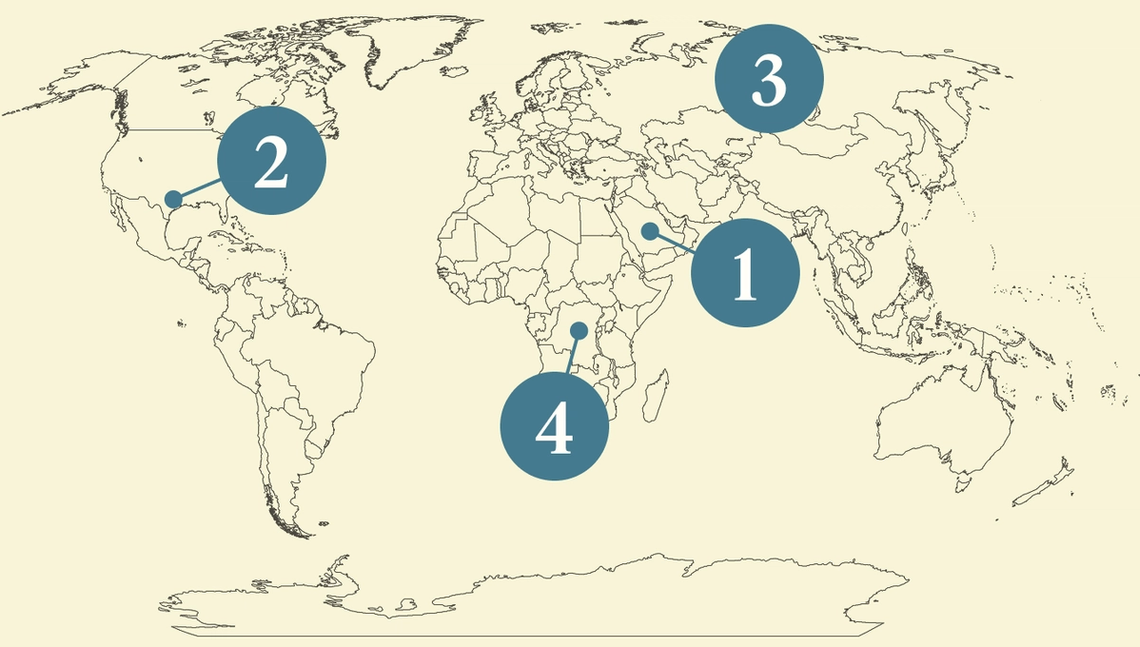 - Optimistic OPEC
- LNG gluts and shortfalls
- Graham’s Russian legacy
- DRC mining gambit
 The death toll of Europe’s heat waves, and the economic toll of Trump’s clean energy cuts. |
|
 The resumption of tit-for-tat strikes between Iran and the US puts President Donald Trump’s goal to slash retail fuel prices ahead of the midterm elections further out of reach. US crude prices ticked to a four-week high above $80 per barrel on Tuesday, after Trump said the US would reinstate a blockade on Iran and begin charging its own fees on commercial shipping for safe passage through the Strait of Hormuz — a plan that my colleague Shelby Talcott reported Trump is “very serious” about. The tentative peace deal that came together only a few weeks ago “has effectively collapsed,” Eurasia Group analysts wrote on Monday, adding that they expect the rate of ships traversing the strait to tumble back to just 5-15% of prewar levels, and for crude oil to remain in an elevated range of $75-95 for the foreseeable future. That’s still much lower than earlier in the war. But for Trump, the more politically salient figure is the price of gasoline, and there the outlook remains fairly bleak. The average US gas price is down about 70 cents per gallon from its wartime peak, but is still about a dollar more expensive than before the war, and rising. The International Energy Agency warned on Friday that the market for refined petroleum products will continue to tighten, largely for reasons outside Trump’s control. Ukraine’s ongoing string of drone attacks on refineries in Russia has slashed the latter’s refining capacity by 30% and forced Moscow to ban diesel exports. China has also restricted exports, and refineries in the Gulf are still running far below their norm. Altogether, at least 10% of global refining capacity is offline, Bloomberg reported. Those dynamics pushed the so-called “crack spread” — the gap between crude and product prices — to a record high this month, which should incentivize the remaining refiners to operate at full steam. And when the oil majors report their second-quarter earnings in the coming weeks, it’s a safe bet to expect luscious refining profits — and a correlated string of threatening Truth Social posts about price gouging. Yet those margins will be short-lived if crude prices continue to rise. With the world’s fossil fuel stockpiles significantly drained, it will take time to subdue retail prices even in the best military circumstances in the strait. And if the war escalates further, there will be fewer buffers available to stave off another big spike. |
|
OPEC cuts oil demand outlook, again |
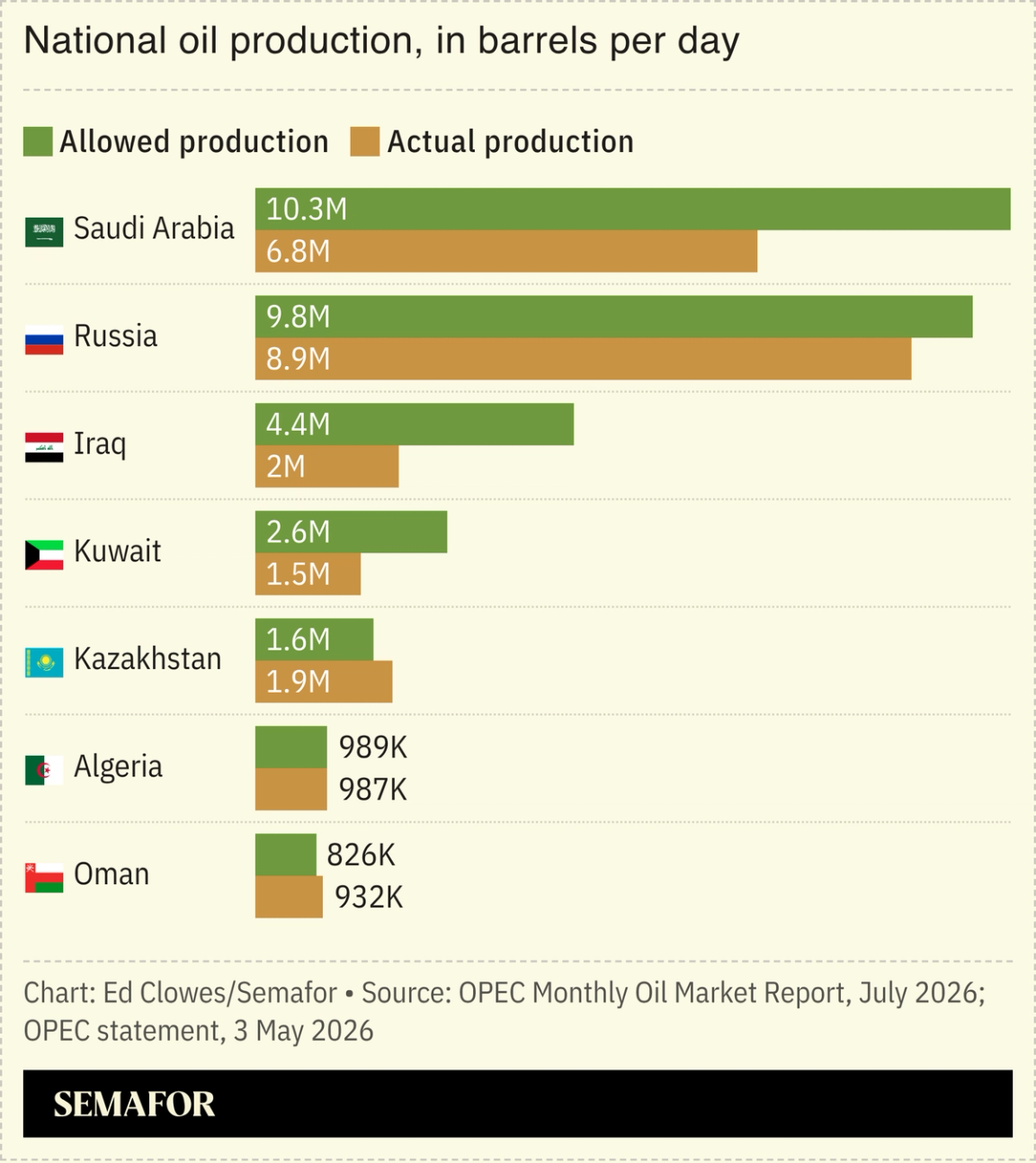 OPEC cut its outlook for global oil demand in 2026 for the third consecutive time, but still sees a rosier forecast than the International Energy Agency. The two organizations rarely see eye to eye when it comes to projections: Whereas the IEA said Friday it expects demand to fall in 2026 for the first full year since the pandemic, OPEC said Tuesday it still expects to see growth, albeit at a slower rate, and raised its demand forecast for next year, too. Despite ongoing threats around Iran, the Gulf’s oil output is recovering — OPEC pumped 36.28 million bpd in June, roughly 3 million more than in May, as producers restarted halted fields. The UAE, which quit OPEC in May, opened the spigots last month, boosting crude output by 80% as it unshackled itself from production quotas. But meeting the Gulf’s full targets will remain impossible as long as the Strait remains largely impassable — at least until longer-term workarounds can come to fruition. |
|
Global market faces LNG glut |
 Ann Wang/Reuters Ann Wang/ReutersThe global market is staring down a glut of natural gas, while the US itself faces a shortfall, according to two new BloombergNEF reports. As more liquefied natural gas import and export terminals come online in the next few years, the world is building up to an LNG oversupply of more than 100 million tons by 2031, one report forecast. Falling prices will induce some lower-income countries, especially in Asia, to ramp up their buying. But on the other end of those transactions will very often be the US: According to the second report, provisioning LNG export terminals is now the fastest-growing source of demand for US gas producers — moving so quickly that US gas supply will be in deficit by 2028. This is a reversal in the established roles that have defined the global gas market in recent years, in which a gas-rich US has been able to shower abundance on an eager world. But it could flip back in the 2030s, the reports conclude, if US gas drilling can increase substantially and LNG adoption in Asia accelerates. |
|
Russian LNG sales to Europe reach high |
 Purchases by European countries of LNG from Russia’s main export terminal reached a record high of 9.9 million metric tons in the first half of 2026, with only a few months remaining before a full EU ban on Russian LNG imports is meant to take effect. Although the sales underscore that Russia continues to fill a critical role in the global energy market, its domestic oil and gas industry is suffering: The “intensity, geographical extent, and accuracy” of Ukrainian attacks on Russian oil infrastructure are increasing, Oxford University researchers reported. And the surprising death of US Sen. Lindsay Graham over the weekend is fueling bipartisan momentum in Congress to finally pass a new package of sanctions on Russia’s energy industry, a cause Graham had long championed. But passing that bill still isn’t a “slam dunk,” my colleague Burgess Everett reported. |
|
US mine mapping makes push into DRC |
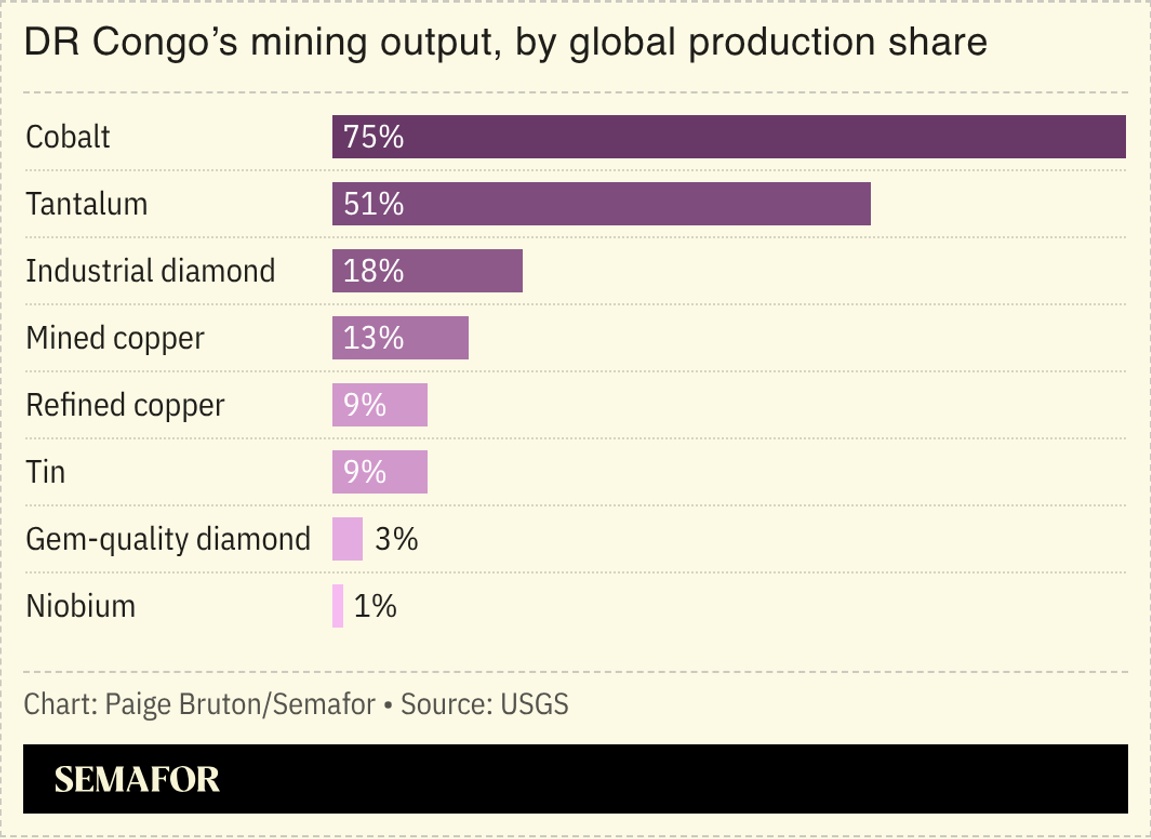 A US aviation firm is readying a proposal to collect geological data in the DR Congo, joining several foreign companies that are mapping key mining information in a bid to unlock what could be trillions of dollars in precious minerals in the central African nation. The plan comes as foreign competition heats up, especially among US and Chinese firms, for mineral resources in DR Congo — the world’s biggest source of mined cobalt, which is key for the renewable energy transition. Though China has long been dominant in DR Congo’s extractive sector, the US is looking to expand its footprint: In December, Washington and Kinshasa signed a deal to grant US companies preferential access to critical minerals. As part of that push, US-based Dynamic Aviation is preparing a technical and financial proposal to collect, integrate, and analyze DR Congo’s geological data, after the company’s CEO pitched the plan to DR Congo President Félix Tshisekedi in Houston in June. |
|
 Big law firms have run the same playbook for 50 years: hire armies of young lawyers, bill their hours at steep rates, and funnel the money up to the partners. AI is about to upend that model. On this week’s Compound Interest, presented by Amazon Business, Cooley partner and CEO Rachel Proffitt joins Liz and Rohan to discuss how AI could disrupt Big Law’s sacred cow — the billable hour — by taking over the grunt work that most associates cut their teeth on. Plus, what the rainmakers of the future look like, the rise of AI-native law firms, and the paranoia sweeping the industry. Listen to the latest Compound Interest now. |
|
 New Energy- Trump’s policies scaling back support for US clean energy projects resulted in the cancellation or delay of $83 billion in investment across hundreds of projects, according to a new report.
- Europe’s failure to respond adequately to the 2022 energy crunch and reduce its dependence on fossil fuel imports has been a “major mistake,” Fatih Birol, head of the IEA, warned in an interview with the Financial Times.
- The cost of building solar power projects in the US has jumped 18% year-on-year, largely due to tariffs and elevated interest rates, according to new data by financial advisory firm Lazard. However, it remains the cheapest form of new electricity generation to build, the report noted.
- Energy giant Shell announced it is selling its Indian wind and solar business to Mumbai-based Aditya Birla Renewables for $1.8 billion, as it continues to move away from renewables and refocus on the core aspects of its business.
Fossil Fuels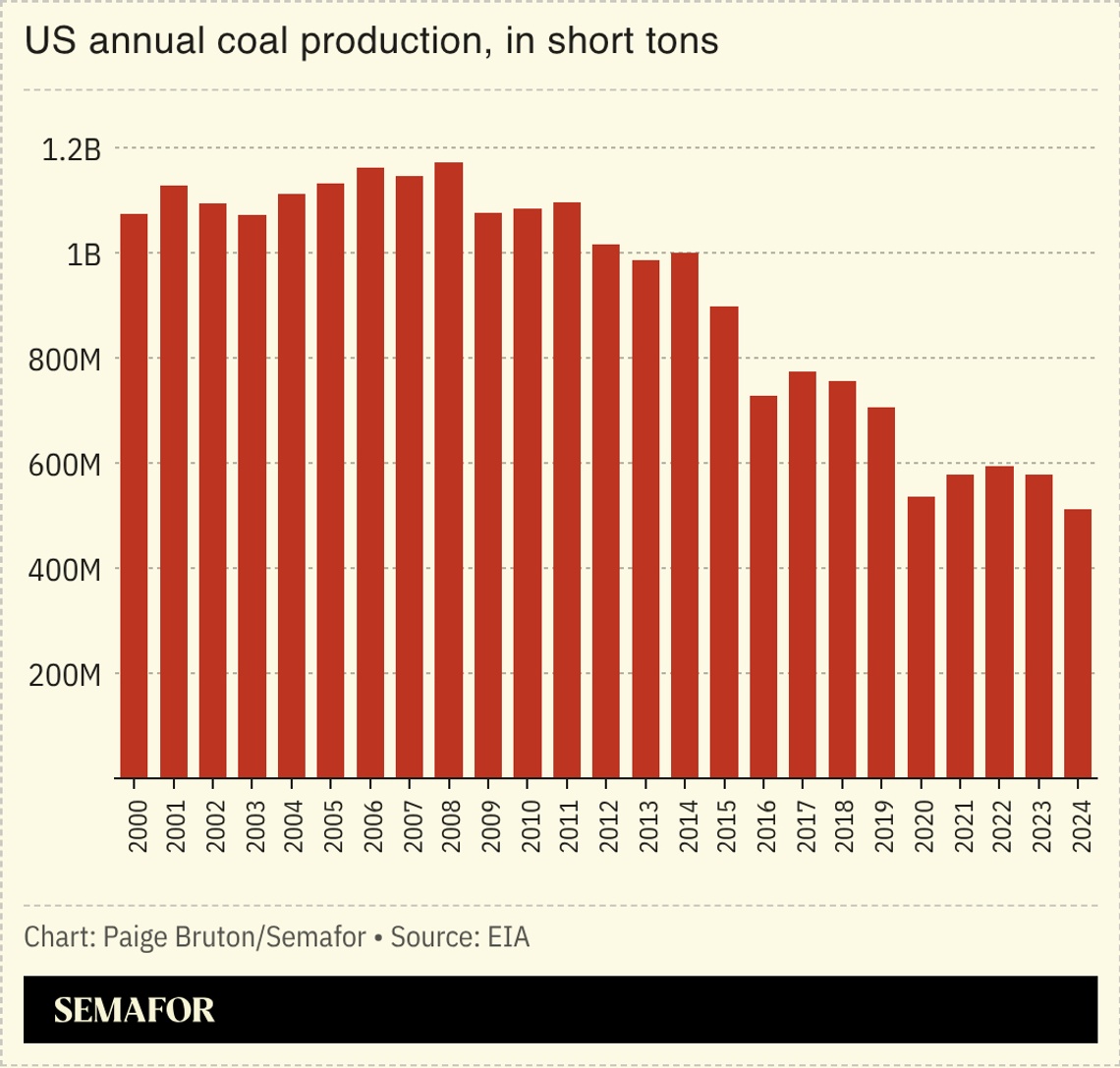 - Trump’s plans for two new coal-fired power plants in the US could cost more than $20 billion to construct, in part due to the proposed addition of carbon capture technology.
Finance- The UN’s new Fund for Responding to Loss and Damage has delayed the allocation of financial support and decided to release another $100 million due to overwhelming demand.
Tech- China’s nationwide electricity load reached a record high for the first time this year on July 10, hitting 1.518 kilowatts compared to 1.508 kilowatts on July 17 a year earlier. The increase is largely on account of growing demand for internet data services and electric vehicles, according to the country’s National Energy Administration.
Politics & PolicyEVsPersonnel- Vijay Vaitheeswaran, who covered energy and climate for The Economist, has a new role as Director of Energy Security & Climate Change at the Council on Foreign Relations. Best of luck Vijay!
|
|
|


