| | Oil prices jump 10% as the Iran-US ceasefire effectively ends, human Ebola vaccine trials begin in D͏ ͏ ͏ ͏ ͏ ͏ |
| |  | Flagship |  |
| |
|
The World Today | 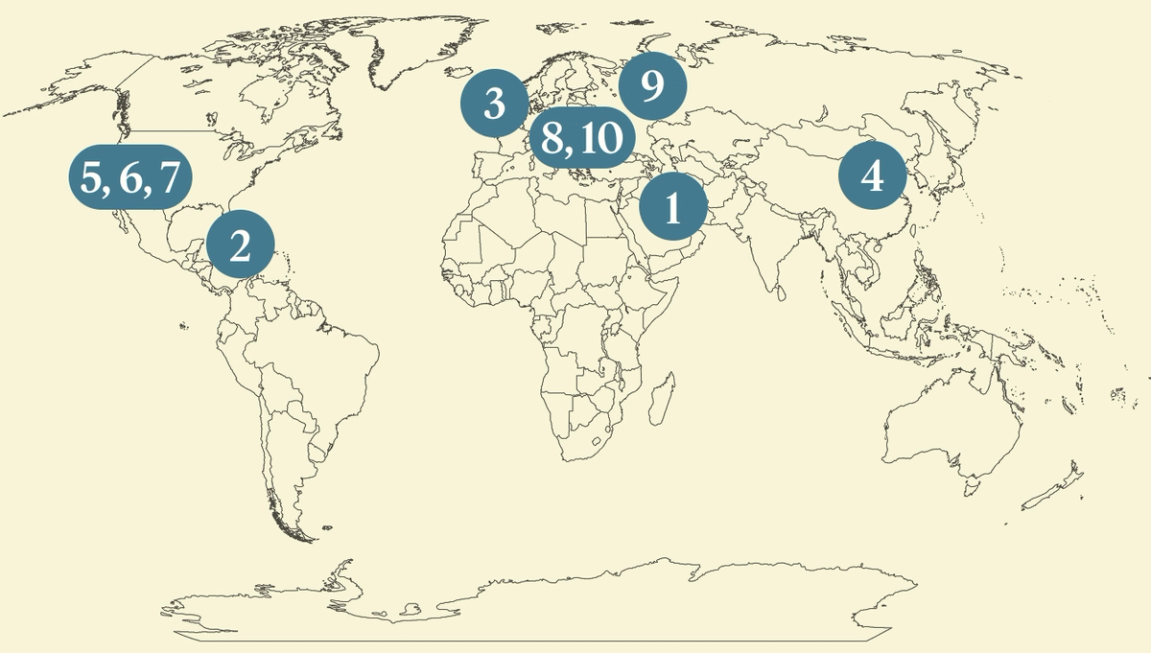 - Oil up as ceasefire ends
- Trump threatens Cuba
- Ebola vaccine trials begin
- China exports hit record
- Smartphone sales slump
- Nvidia limits Asian buyers
- Claude’s language values
- Hungary’s de-Orbánization
- Ukraine’s cognitive warfare
- Germany to remake bunkers
 A thousand years of Franco-Spanish rivalry.
|
|
 Amr Alfiky/Reuters Amr Alfiky/ReutersOil prices jumped 10% Monday, the biggest single-day rise since 2020, signaling that markets do not expect a return to pre-war norms as conflict between the US and Iran reignited. US President Donald Trump said he would re-impose a blockade and start charging tolls on the Strait of Hormuz, effectively ending a month-long ceasefire. Trump has few good options, The New York Times reported: Neither warfare nor diplomacy has achieved his goals, and he is under political pressure to focus on domestic issues. In Tehran, anti-US nationalist fervor is strengthening hardliners and undermining mediators’ efforts to reach a deal. “The chance of… going back to the old normal is effectively zero,” an analyst told The Wall Street Journal. |
|
US fears Cuba has Iranian drones |
 Norlys Perez/Reuters Norlys Perez/ReutersPresident Donald Trump said the US was investigating whether Iran is storing drones in Cuba, potentially giving Washington an excuse to attack the island nation after months of impasse. “If they do have that… we’ll take care of it in short order,” Trump said. His comments came shortly after Washington’s ambassador to the UN said Cuba represented “a national security threat,” accusing China and Russia of using the country as a platform to spy on the US. The White House has repeatedly threatened to oust Cuba’s communist regime, sanctioning key figures and state entities, and tightening a trade embargo that has led to a humanitarian crisis in the Caribbean nation. |
|
Human Ebola vaccine trials begin |
 Stringer/File Photo/Reuters Stringer/File Photo/ReutersThe University of Oxford began human trials of its Ebola vaccine, raising hopes that the spread of the Bundibugyo strain may be halted before it becomes the biggest-ever outbreak. The virus has spread across much of the Democratic Republic of Congo, with officials there saying it had reached two new provinces. The US said it would block American citizens in the DRC from traveling back home until they have spent 21 days in a third country, leaving dozens stranded. The spread of the disease, which has led to more than 700 deaths in the DRC and parts of Uganda, has been aided by rampant misinformation and a major deficit in health supplies. |
|
China exports reach record highs |
|
Smartphone sales hit 13-year low |
 Luc Gnago/Reuters Luc Gnago/ReutersSmartphone shipments dropped 11% year-on-year in Q2 to their lowest level since 2013, as AI-driven memory shortages pushed prices higher. The biggest fall was in China, where three of the biggest five suppliers saw sales slump, the fifth straight quarterly decline. Entry-level smartphone prices are up more than 50% this year, a report found last month. In cheaper phones, memory often accounts for half the total manufacturing cost: DRAM and NAND memory prices have soared recently as AI scoops up supply, with 32GB kits that sold for $100 in October now going for $350 “if it’s even in stock,” Tom’s Hardware reported. However, Apple and Samsung, which kept consumer prices steady, saw sales grow slightly last quarter. |
|
Nvidia halves Asian buyers |
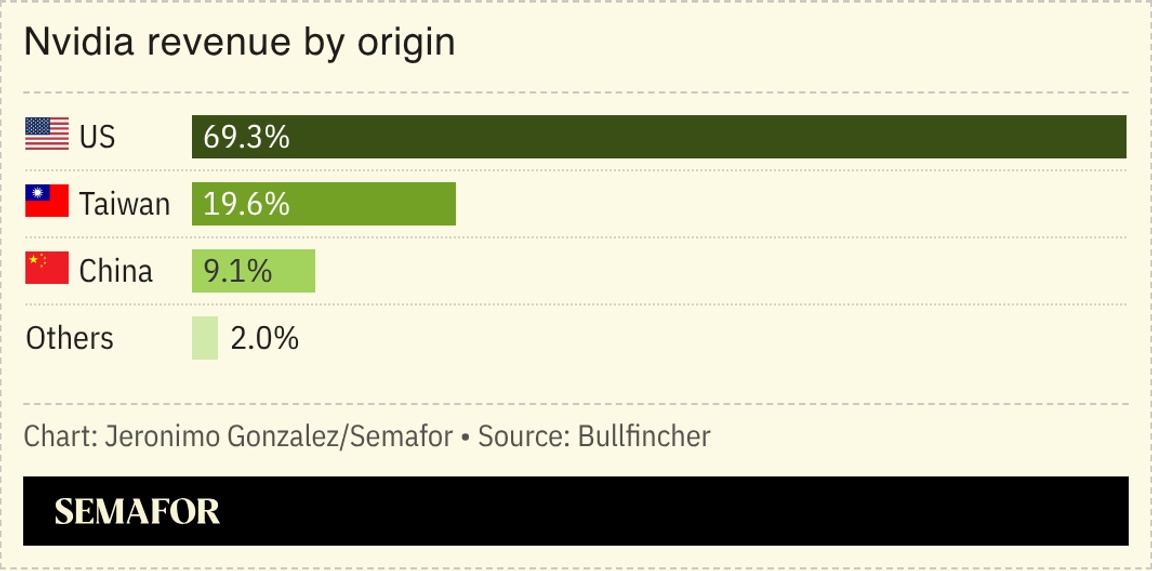 Nvidia cut the number of Asian customers authorized to buy its AI chips by more than half, as part of US efforts to close loopholes and stop advanced semiconductors from reaching China. Under pressure from the White House, the tech giant has created a whitelist of companies that passed compliance checks against smuggling, intensifying due diligence in Japan, Malaysia, and Singapore, the Financial Times reported. Washington has long banned exports of advanced processors to China, fearing that it will catch up in the AI race. Beijing has the opposite idea: In May it banned the imports of some Nvidia products, hoping to encourage domestic Chinese companies to make their own cutting-edge chips. |
|
Claude’s answers vary by language |
 Dado Ruvic/Illustration/Reuters Dado Ruvic/Illustration/ReutersAnthropic’s Claude chatbot expresses different values depending on what language it speaks, backing up those analysts who argue that AI models are more grown than made. Anthropic’s research found that Claude tended to show more deference in Arabic than English, but with a tendency to answer in less depth; it was more candid in Dutch, and warmest in Hindi. The effect was modest but real. Researchers keep finding unexpected traits in models: Recently, OpenAI had to intervene when ChatGPT became obsessed with goblins. Though sometimes funny, these unintended properties may become more serious as AI becomes more powerful and is given more responsibilities. “We [aren’t] sure how much of this variation is desirable,” Anthropic noted. |
|
 Big law firms have run the same playbook for 50 years: Hire armies of young lawyers, bill their hours at steep rates, and funnel the money up to the partners. AI is about to upend that model. On this week’s Compound Interest, presented by Amazon Business, Cooley partner and CEO Rachel Proffitt joins Liz and Rohan to discuss how AI could disrupt Big Law’s sacred cow — the billable hour — by taking over the grunt work that most associates cut their teeth on. Plus, what the rainmakers of the future look like, the rise of AI-native law firms, and the paranoia sweeping the industry. Listen to the latest Compound Interest now. |
|
Hungary fires pro-Orbán president |
 Hungarian PM Prime Minister Péter Magyar. Marton Monus/Reuters Hungarian PM Prime Minister Péter Magyar. Marton Monus/ReutersHungary’s parliament ousted the country’s president, strengthening new Prime Minister Péter Magyar’s hand and dealing a blow to Washington’s transatlantic ambitions. The dismissal of Tamás Sulyok — a supporter of former prime minister and close White House ally Viktor Orbán — is part of Magyar’s bid “to turn the page on over a decade of rule” by Orbán’s Fidesz party, Politico reported. The Trump administration is watching its standing in Europe collapse, including alienating potential allies in France, Germany, Italy, and the UK, where the US president remains vastly unpopular. However, Washington is having “much more success finding ideological partners in Latin America” where “rampant crime, poverty, and weak institutions make [the region] susceptible to Trumpism,” the Financial Times’ Gideon Rachman wrote. |
|
Ukraine battles for Russian opinion |
|
|


