| | The US launches new strikes against Iran, the IMF warns of a slowdown in the global economy, and Jef͏ ͏ ͏ ͏ ͏ ͏ |
| |  | Flagship |  |
| |
|
The World Today | 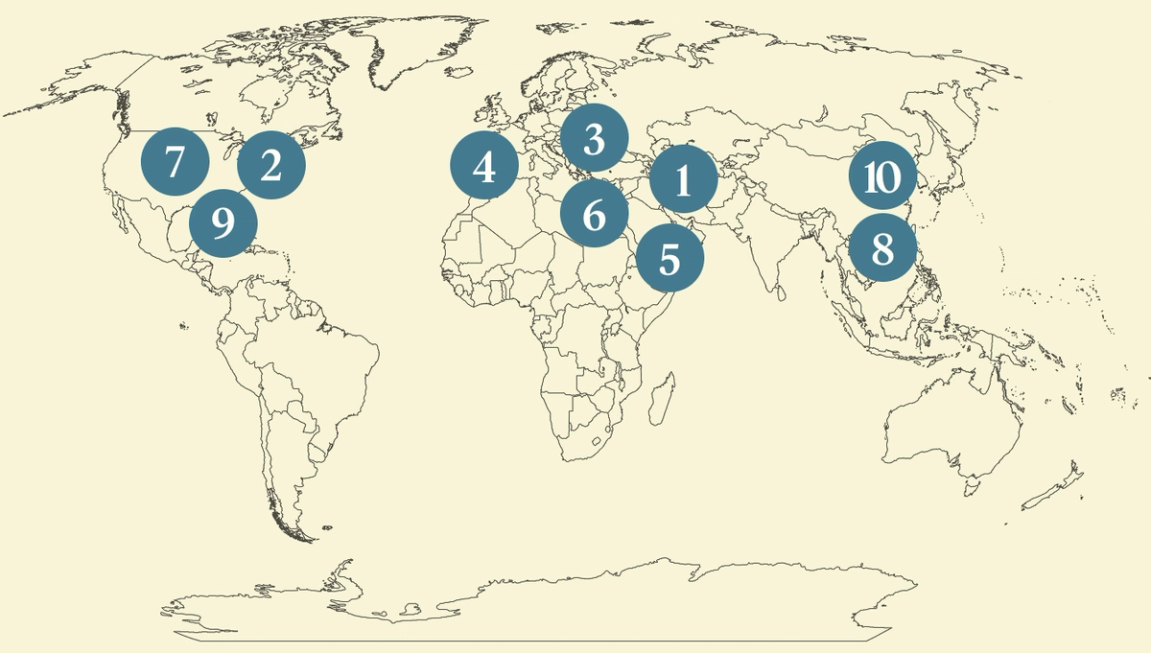 - New US strikes on Iran
- IMF warns of slowdown
- Ukraine’s Patriot win
- Trump touts NATO unity
- Saudi-UAE tensions
- MidEast tourism deals
- US’ GLP-1 use rises
- Commercial space funding
- Orbital cat-and-mouse
- AI in commercial writing
 The rise and fall of the Oxford don. |
|
US launches new Iran strikes |
 Stringer/Reuters Stringer/ReutersThe US launched more strikes against Iran on Wednesday, hours after President Donald Trump suggested the ceasefire between the two countries was “over.” The strikes were in response to Tuesday’s attacks on commercial ships in the Strait of Hormuz, sparking the latest exchange of fire from both sides. Trump threatened to reimpose a military blockade in the waterway and raised doubts about his commitment to making a deal with Iran. Oil prices surged and stocks slumped, as shipping traffic in Hormuz again came to a halt. The longer the parties go without establishing a “mutually acceptable protocol for the strait,” a European Council on Foreign Relations expert said, “the more likely that Washington and Tehran return to full-blown war.” |
|
IMF slashes growth outlook on Iran war |
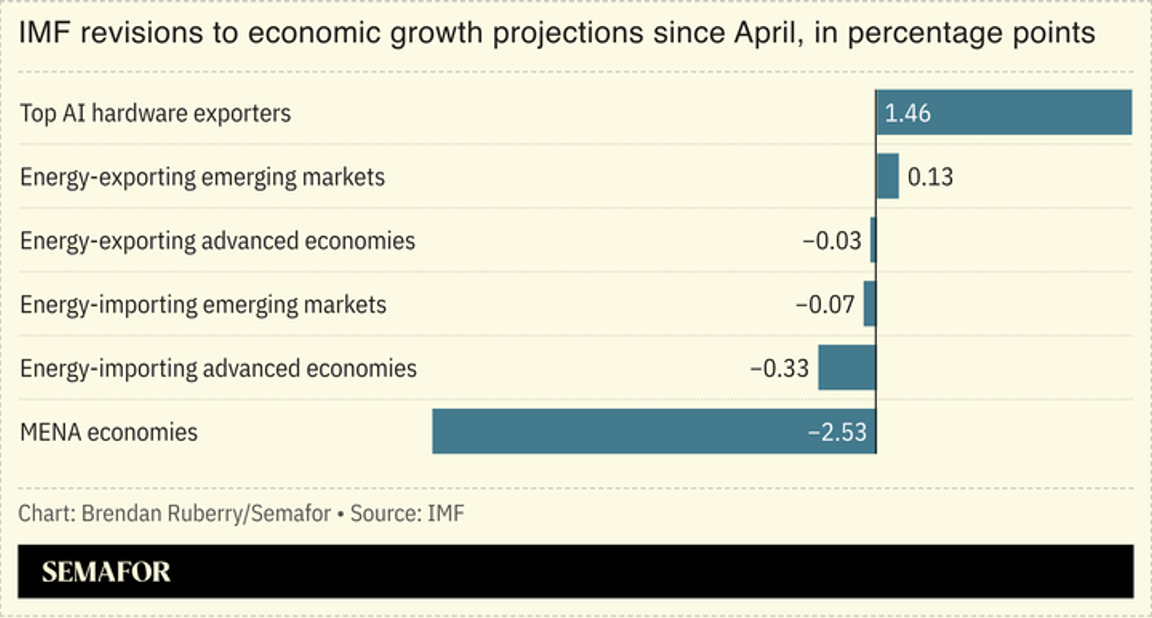 The global economy will grow at a slower rate in 2026, the IMF said Wednesday, as high energy prices resulting from the Iran conflict drag on growth and drive inflation. The fund lowered its global forecast to 3%, down from April and below the last two years’ averages, but noted that the global economy avoided a sharper downturn, in part due to increased demand for AI, and projected growth would rebound in 2027. The US Federal Reserve’s June meeting minutes showed officials were divided over the economy’s direction and where to take interest rates, reflecting uncertainty over how long energy prices from the Iran conflict will keep inflation elevated. “Cheaper oil alone won’t open the door to cuts,” Apollo’s chief economist wrote. |
|
US to help Kyiv build Patriots |
 Kyiv. Gleb Garanich/Reuters Kyiv. Gleb Garanich/ReutersUS President Donald Trump agreed to grant Ukraine a license to build Patriot missile interceptors during his meeting Wednesday with Ukrainian President Volodymyr Zelenskyy at the NATO summit. In stark contrast to some of his past contentious conversations with Zelenskyy, Trump praised Kyiv’s military strategy and backed Ukrainian strikes deep inside Russian territory, saying, “It’s an escalation… that could help lead to an end.” While Trump stopped short of greenlighting the immediate transfer of interceptors Kyiv wants to defend against Russian ballistic missiles, his comments were welcome news for Ukraine and European allies hoping for more US aid. “We want weapons. Nobody produces enough. Whatever helps,” one European diplomat told Semafor. |
|
Trump’s shifting tone on NATO |
 Stoyan Nenov/Reuters Stoyan Nenov/ReutersPresident Donald Trump offered both sticks and carrots to NATO, threatening to cut off trade with Spain before offering rare praise for the alliance. At the summit on Wednesday, Trump reignited his feud with Madrid over the Iran war, made renewed claims on Greenland, and rehashed his grievances with NATO. Hours later, he touted the “love” and “tremendous unity” among NATO leaders, assuring them in a closed-door meeting — Politico reported — that “we want to remain with you.” While Trump’s saber-rattling unnerved NATO allies who strove to placate him with deals and flattery‚ his shift in tone — including signaling more support for Ukraine — “will be hailed as a victory for the alliance whose stability [has] been called into question,” The Guardian wrote. |
|
Saudi-UAE tensions hit money flows |
 Sheikh Mohamed bin Zayed and Mohammed bin Salman. Abdulla Al Bedwawi/UAE Presidential Court/Handout via Reuters Sheikh Mohamed bin Zayed and Mohammed bin Salman. Abdulla Al Bedwawi/UAE Presidential Court/Handout via ReutersMoney transfers between Saudi Arabia and the UAE are being delayed or canceled, forcing some businesses to route payments through other countries. Saudi Arabia may be blocking the transactions, the Financial Times reported, as relations between Abu Dhabi and Riyadh sour over differing approaches to the wars in Sudan and Yemen, relations with Israel, and management of oil prices (the UAE left OPEC in May). Both countries are competing to be the region’s primary commercial hub, and it’s not the first time their rivalry has disrupted business in the region: Saudi Arabia imposed import restrictions on the UAE in 2021, snarling customs queues, and has instituted rules forcing companies competing for government contracts to relocate from Dubai. |
|
MidEast vacation prices fall |
 Amr Alfiky/Reuters Amr Alfiky/ReutersIt’s become cheaper to vacation in Dubai, Egypt, and other Middle Eastern destinations as the Iran conflict dents demand. Vacationers are wary of visiting countries near the hostilities, driving costs up elsewhere. Terrorism, war, or other disasters usually lead to a collapse in tourism demand — New York City hotel occupancies were down for three years after 9/11, and a 2015 terror attack in Tunisia led to a long-term decline in visitors. But for some risk-tolerant travelers, the reduced costs and smaller crowds are a draw. One widely shared 2019 essay argued that hardier tourists help revive the economy of countries reeling from tragedies, perhaps discouraging governments from spending on extra security measures; a bonus is “not letting the terrorists win.” |
|
GLP-1 use reaches new high in US |
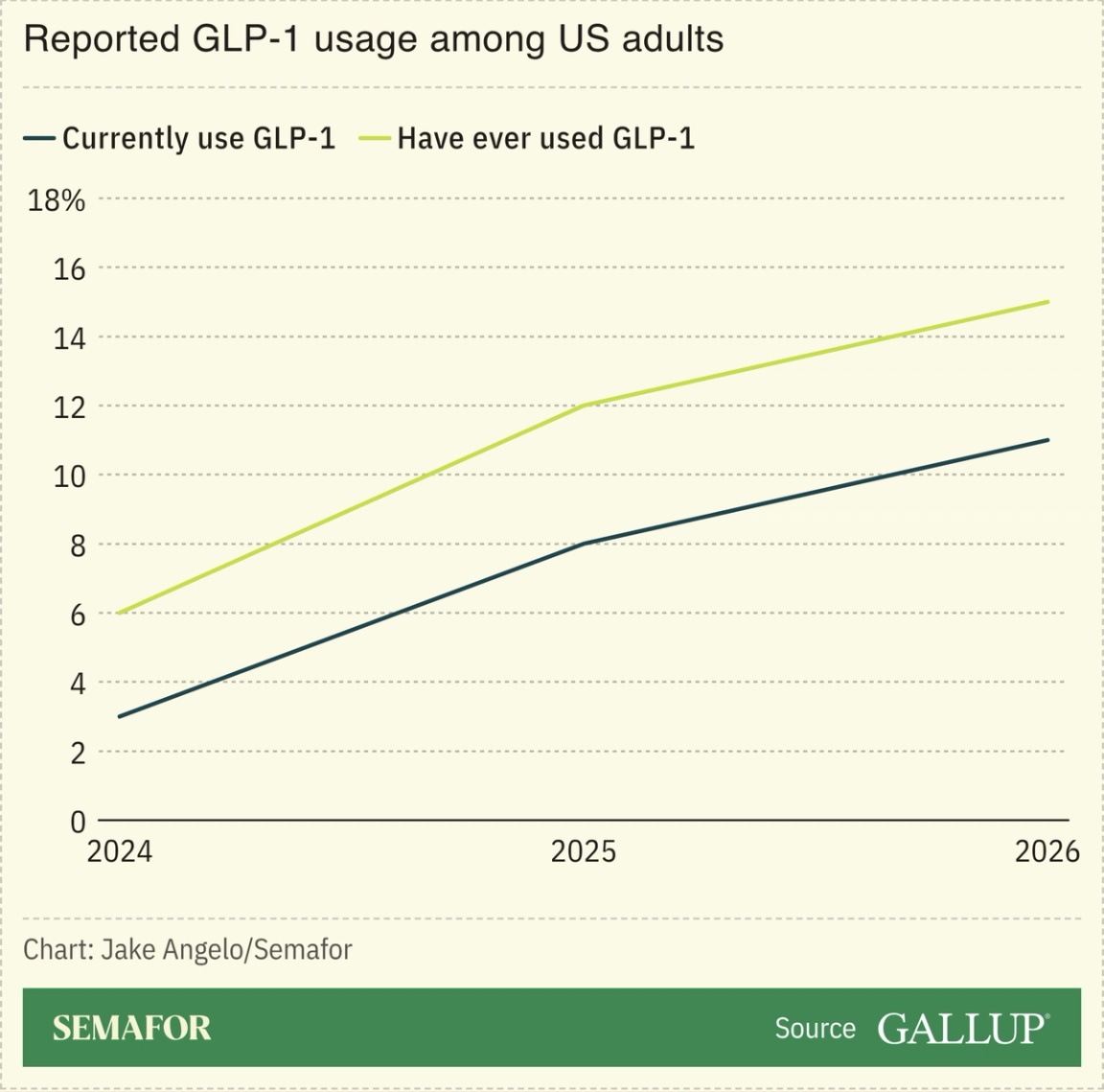 The percentage of US citizens currently taking GLP-1 drugs such as Wegovy for weight loss has almost quadrupled to 11% from 3% in 2024. A further 4% of Americans say they’ve used the drugs in the past, Gallup polling found. Meanwhile, US obesity rates, which peaked in 2022 at 39.9%, fell further to 36.4%, suggesting, although not proving, a causal link. Early research hints at other benefits of the drugs, which were originally used for diabetes: A small trial this year found they can help treat alcohol abuse, while also appearing to reduce coronary disease risk over and above the benefits caused by losing weight. |
|
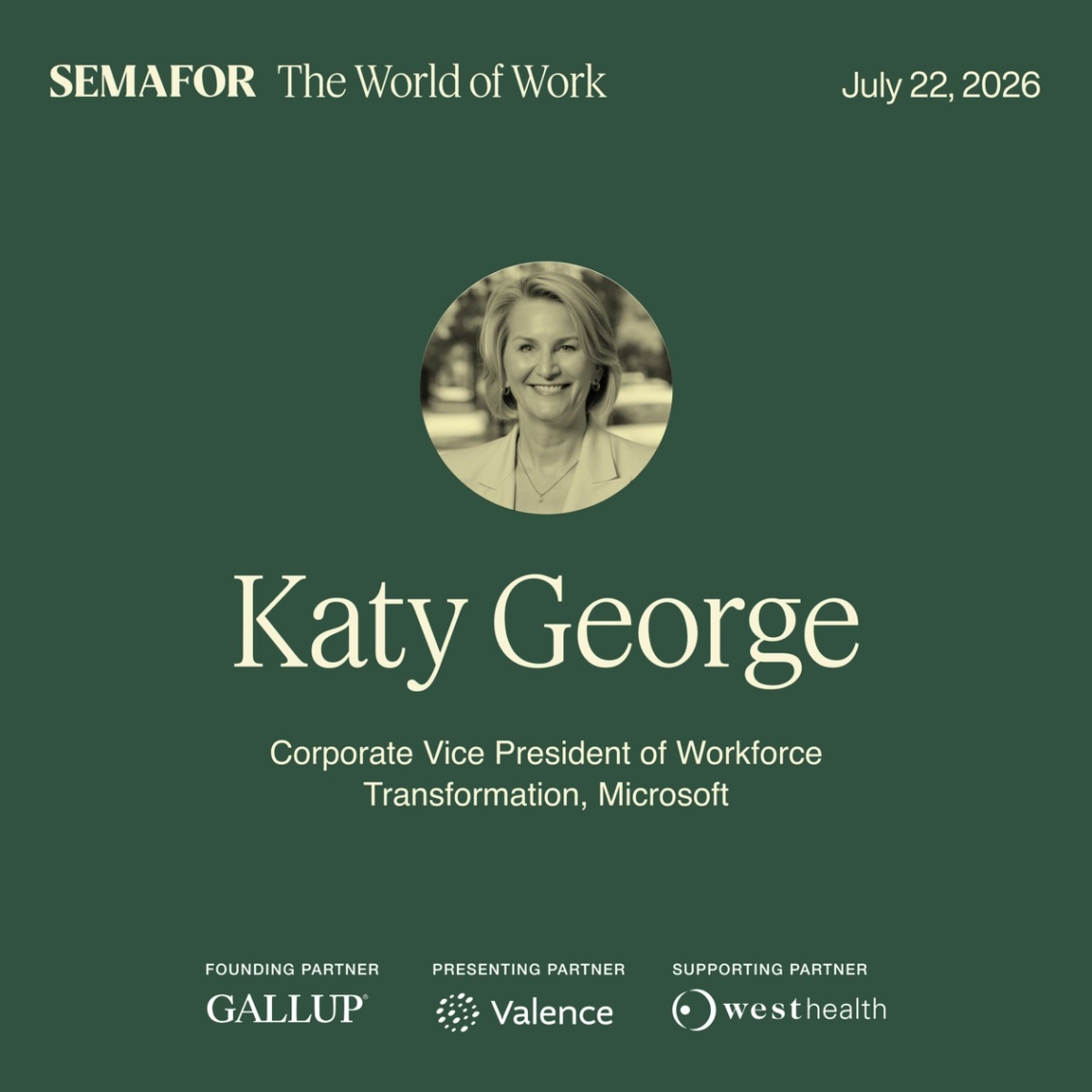 On Wednesday, July 22, Katy George, Corporate Vice President of Workforce Transformation at Microsoft, will join Semafor’s The World of Work in Washington, DC to unpack how institutions are adapting and thriving in an increasingly fragmented economy. As companies face rapid technological change, economic uncertainty, and shifting workforce expectations, leaders are rethinking performance, trust, and long-term success. To explore how AI adoption, workforce transformation, and evolving leadership demands are reshaping the future of work, Semafor editors will sit down with policymakers, business executives, and workplace innovators including Sen. Roger Marshall, R-Kan., Senate Committee on Health, Education, Labor, and Pensions (HELP); Claire MacIntyre, Chief People Officer, Sam’s Club; Mary Moreland, Executive Vice President, Human Resources, Abbott; Allison Peek Bebo, Chief Human Resources Officer, Pearson; and more.
|
|
US, China space ventures raise capital |
 Maxim Shemetov/Reuters Maxim Shemetov/ReutersCommercial space ventures in the US and China are tapping broader pools of capital as the superpowers vie for dominance in a fierce space race. Jeff Bezos’ Blue Origin is seeking its first outside capital, aiming to raise $10 billion at a valuation of about $130 billion, The New York Times reported. The rocket company’s fundraising comes after rival SpaceX’s record $86 billion IPO, which made Elon Musk a trillionaire. In China, banks are stepping up lending to the country’s commercial space sector, Caixin reported; one pledged $1.5 billion in credit support for aerospace enterprises over the next three years. The US still has “the strongest commercial space industry,” a US lobbyist said, but “China is moving very quickly to catch up.” |
|
Advances in satellite rescue tech |
 Steve Nesius/Reuters Steve Nesius/ReutersImproved sensor capabilities are enabling satellite-to-satellite rescue — and potential combat. When spacecraft dock, both participants usually have to cooperate. Approaching a satellite that is not under your control, whether because it is not responding, or because it is hostile, was until recently prohibitively difficult: It involves sensing the fast-moving object’s exact position and orientation before closing in. Cheap sensors and powerful onboard computing have changed that. One satellite is currently maneuvering to catch another that is slowly falling to Earth, attempting the first-ever rescue of an uncooperative spacecraft, while the US Space Force has launched two satellites to test them in a game of orbital cat-and-mouse. Bot |
|
|


