| | In this edition: World Bank approves $1.25B Nigeria financing, DR Congo plans stock exchange launch,͏ ͏ ͏ ͏ ͏ ͏ |
| |  | Africa |  |
| |
|
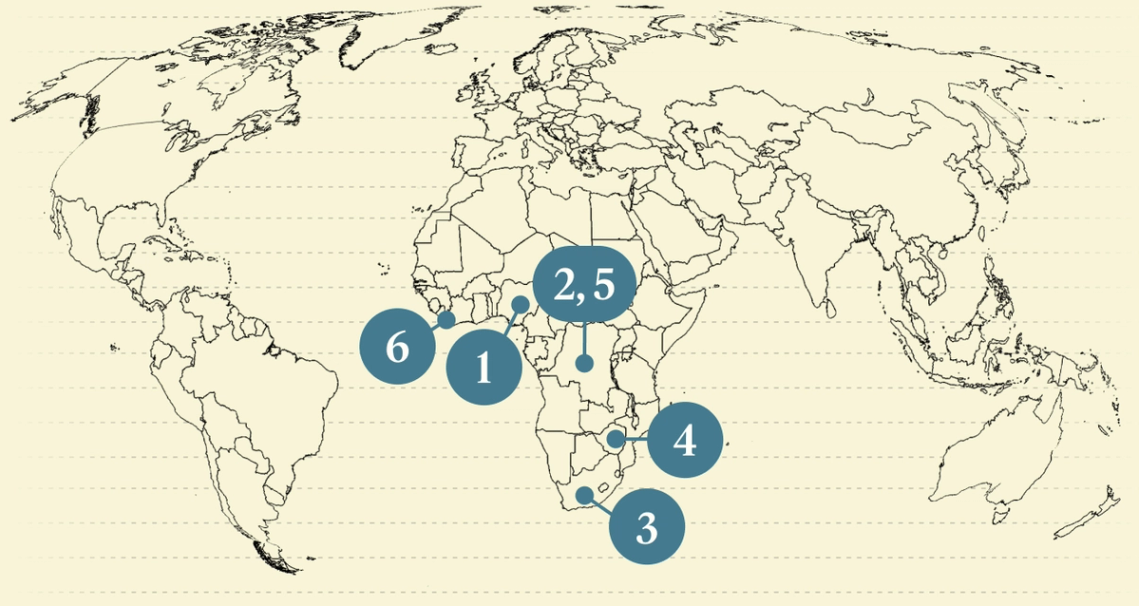 - World Bank backs Nigeria
- DRC plans bourse launch
- Billionaire’s sugar bet
- Zimbabwe pressure
- Building vaccine industry
- Africa’s aid dependency
 Weekend Reads and The Polygamist takes Netflix by storm. |
|
World Bank OKs $1.25B for Nigeria |
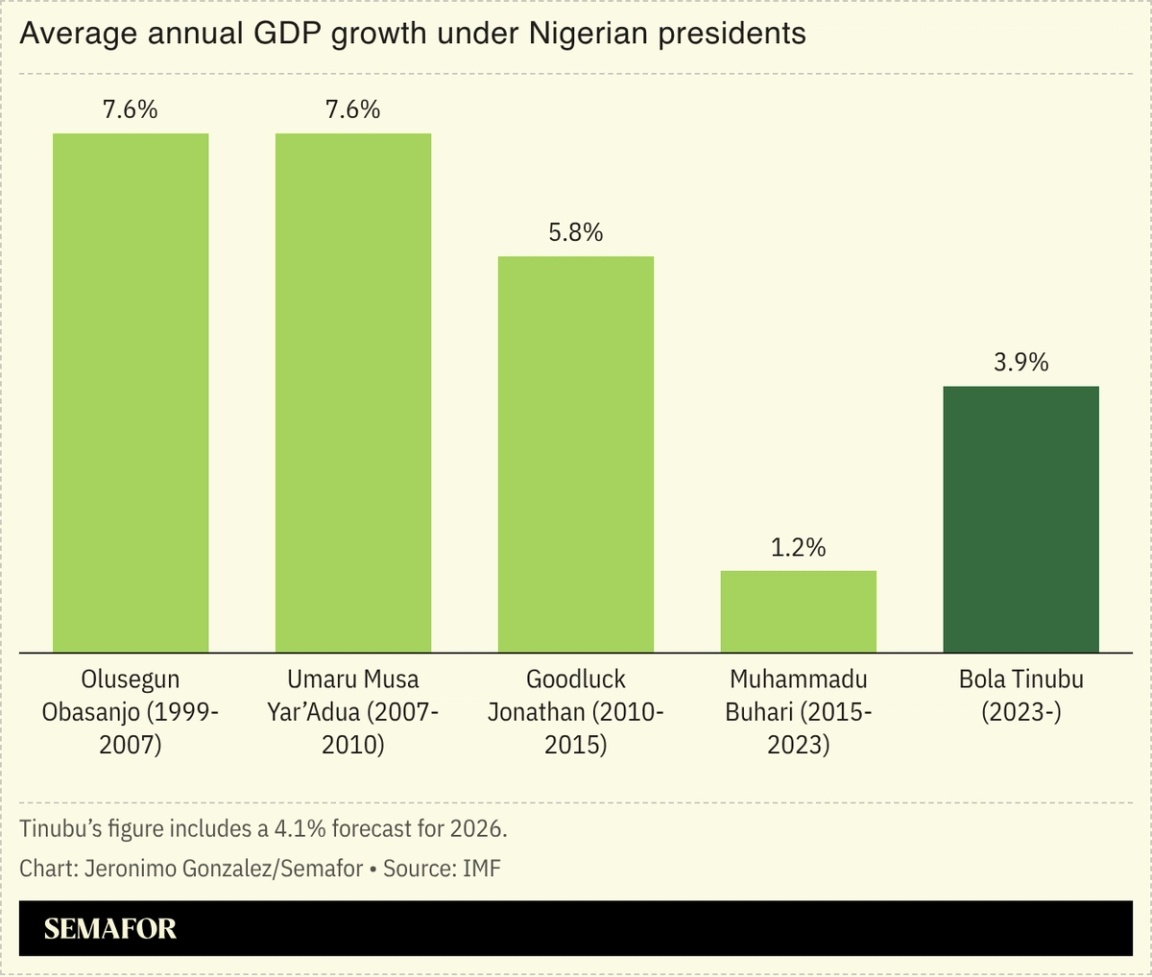 The World Bank approved $1.25 billion in financing for Nigeria, backing a series of economic reforms that are becoming increasingly unpopular domestically. Since becoming president in 2023, Bola Tinubu has reshaped Africa’s third-biggest economy, scrapping a costly fuel subsidy and floating the naira. But while the reforms have proved popular with investors — the Nigerian stock exchange index has been been on a hot streak this year — they have been much less welcome at home; millions are grappling with a cost-of-living crisis that has been exacerbated by higher fuel prices, tied to Iran war disruption. The UN on Thursday said more than 17 million people across nine northern states face severe hunger, warning that violence and aid cuts are driving food insecurity to its worst level in nearly a decade. The cost of living is shaping up to be a key campaign issue in January presidential elections. |
|
DRC plans stock exchange launch |
 Mopepe243, CC BY-SA 4.0, via Wikimedia Commons Mopepe243, CC BY-SA 4.0, via Wikimedia CommonsDR Congo plans to launch its first stock exchange, its finance minister told Bloomberg. Kinshasa hopes the bourse, which will list securities in both the local currency and the US dollar, will tap into global interest in its mineral endowments. The move follows the strong performance of African equities over the past year. The Central African country is the world’s largest producer of cobalt and controls vast stores of copper, gold, and lithium; its mining sector is estimated to hold $24 trillion of mineral value. Some of the world’s largest miners, such as China’s CMOC Group and Anglo-Swiss giant Glencore, own extensive multibillion-dollar assets in the country. The plan for a stock exchange builds on DR Congo’s push to make the mining sector more attractive to investors through a $100 million partnership with the US and the UAE. |
|
South Africa’s agri-energy gambit |
| |  | Tiisetso Motsoeneng |
| |
 Sisipho Skweyiya/Reuters Sisipho Skweyiya/ReutersSouth African billionaire Robert Gumede plans to almost double the number of growers and jobs tied to the sugar value chain as part of a politically charged turnaround plan for Tongaat Hulett, a century-old sugar producer that collapsed under an accounting scandal. Gumede bought the firm, which was near liquidation, this year, taking control of a business whose mills and farmer networks anchor rural economies across Mozambique, South Africa, and Zimbabwe, and grabbing the attention of regional policymakers. In an interview, Gumede said he would turn one crop into three additional revenue streams: By burning stalks and fiber to produce electricity, capturing gases to sell as medical oxygen or beverage-grade CO2, and turning sugarcane into ethanol for fuel blending. “Sugar is a … cherry on top,” Gumede told Semafor. |
|
Zimbabwe power grab called out in DC |
 Zimbabwe’s President Emmerson Mnangagwa. Monicah Mwangi/File Photo/Reuters. Zimbabwe’s President Emmerson Mnangagwa. Monicah Mwangi/File Photo/Reuters.Zimbabwe’s leadership is facing fresh scrutiny in Washington, as the country moves to finalize a constitutional amendment extending the serving president’s term until 2030. Both chambers of Zimbabwe’s parliament have now approved the proposal, clearing the way for President Emmerson Mnangagwa to sign the bill into law. That’s not sitting well with Sen. Jim Risch, the Republican chairman of the US Senate Foreign Relations Committee, who told Semafor that “Mnangagwa has consistently signaled his intent to hold on to power beyond any legal or constitutional limits.” Risch added: “No one is blind to what is going on here, nor the corruption and abuse taking place in Zimbabwe.” Rep. Gregory Meeks, the top Democrat on the House Foreign Affairs Committee, urged Mnangagwa not to repeat the mistakes of his predecessor Robert Mugabe, who clung to power for 37 years. — Adrian Elimian |
|
Africa’s vaccine sovereignty push |
| |  | Paul Adepoju |
| |
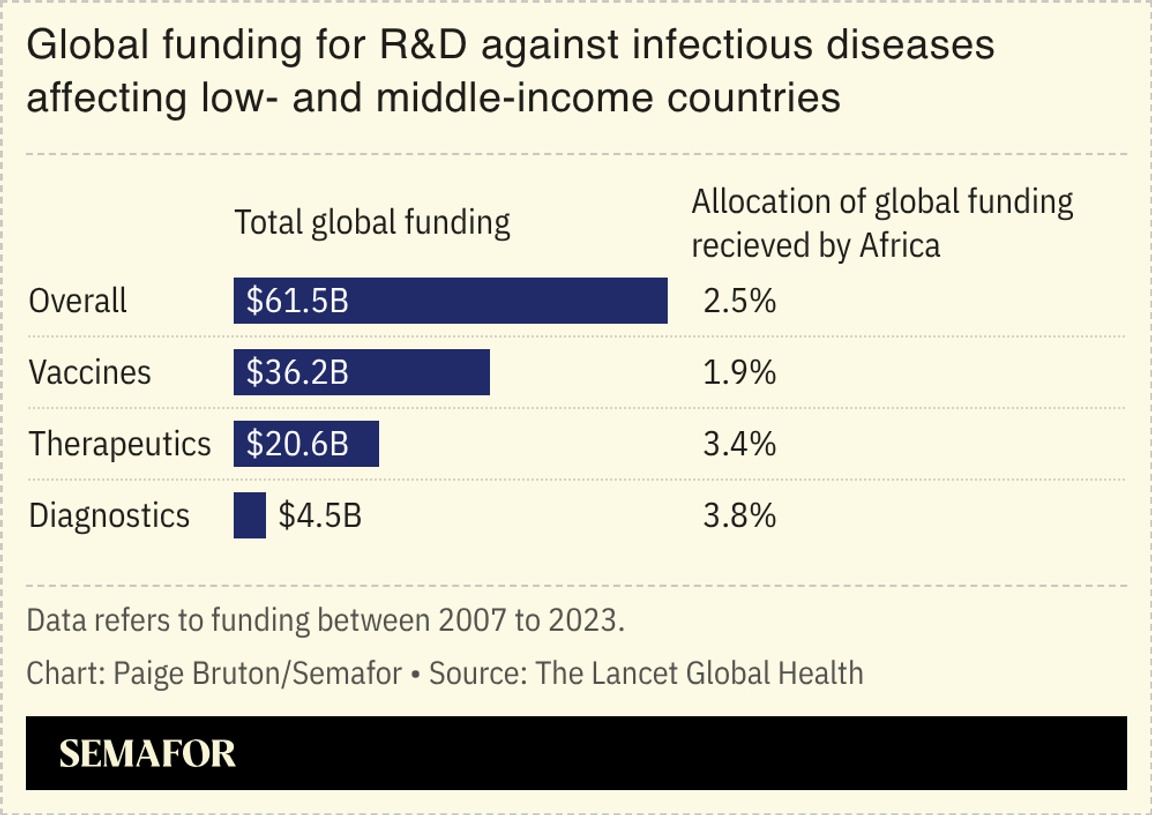 The global vaccine alliance Gavi is preparing its first cash disbursements to a manufacturer in Africa as part of a 10-year initiative aimed at spurring production on the continent through demand-linked incentives to make 60% of Africa’s vaccines locally by 2040. The news comes as central Africa grapples with a fast-moving Ebola outbreak that has killed more than 430 people in DR Congo; the World Health Organization said this week a trial of potential treatments for the current strain has started in the country. Such outbreaks are part of the impetus behind the Gavi initiative, with African nations seeking greater healthcare autonomy by reducing dependence on imported supplies and donor-led emergency responses. |
|
View: Aid cut vulnerabilities |
  Sodiq Adelakun/Reuters Sodiq Adelakun/ReutersAfrica’s aid challenges have exposed not just the risks of relying on foreign donors, but also governments’ failure to build institutions capable of funding and delivering essential services themselves, a former Liberian minister argues in a Semafor column. Aid can strengthen state capacity, but cannot replace it, writes W. Gyude Moore, who says the current moment should spur African leaders to improve tax collection, manage natural resource revenues more transparently, and invest in healthcare and education, rather than rely on shifting political winds in Washington. “Aid should help nations stand on their own, not become the foundation on which they stand,” he says. |
|
 - The 2026 World Cup has proven that African football is more than just a colonial import, and reveals a widening gap between international commercial success and grassroots decay, writes Gerard Akindes in Africa Is a Country. The Africa Cup of Nations now draws billions in sponsorship and a high viewership, yet domestic leagues face near-empty stadiums, unpaid players, and fans glued to European broadcasts. Private academies funnel talent abroad, while dual nationals increasingly fill European squads. Akindes argues the result of this system is growing African footballing prowess contrasted with domestic infrastructure too weak for players to become stars at home.
- Landing in Accra can explain both Ghana’s role as a diasporic gateway and the stubborn dysfunction of African air travel, writes Bilal Qureshi for Bloomberg. Despite regular flights from Europe and North America, intra-continental routes remain scarce, costly, and slow in a legacy of colonial-era hub design and post-independence airline collapse. High costs, thin margins, and political distrust between nations sustain an “Africa tax” in the industry. Qureshi sees new airport projects and the proposed Single African Air Transport Market as signs of ambition, but true intra-African connectivity remains unrealized decades after independence.
- Gold mined in conflict zones across the Sahel is being laundered through regional trading networks and sold into global supply chains, finds a new investigation. The reporting traces routes linking mining areas in northwest Nigeria and towns in northern Niger to Libya and ultimately Dubai, where the metal is channeled into global supply chains, its origins obscured before reaching international markets. The findings by ActuNiger, The Liberalist, and the Pulitzer Center underscore how illicit gold exports have become a major source of financing for armed groups, complicating efforts to restore security in resource-rich territories.
- During decades of civil conflicts, Sudan’s agriculture sector has been the subject of “quick fix” solutions — proposals that promise to generate international investment and drive export revenues. However, government support for the sector is shaped by politics, with a focus on capital-intensive schemes near the political center of the country, while neglecting rain-fed models dominant in Darfur, Kordofan, and the Blue Nile region. The result is deeply entrenched spatial inequality and grievances among disenfranchised communities. Securing long-term peace in Sudan, Hassan Ali Sanhori writes in African Arguments, requires supporting marginalized communities in rural regions.
|
|
 Business & Macro |
|
|


