| | Tesla’s Europe sales rebound, Japan and India deepen business ties, and Donald Trump and Taylor Swif͏ ͏ ͏ ͏ ͏ ͏ |
| |  LA SERENA LA SERENA |  VATICAN CITY VATICAN CITY |  NEW DELHI NEW DELHI |
 | Flagship |  |
| |
|
The World Today | 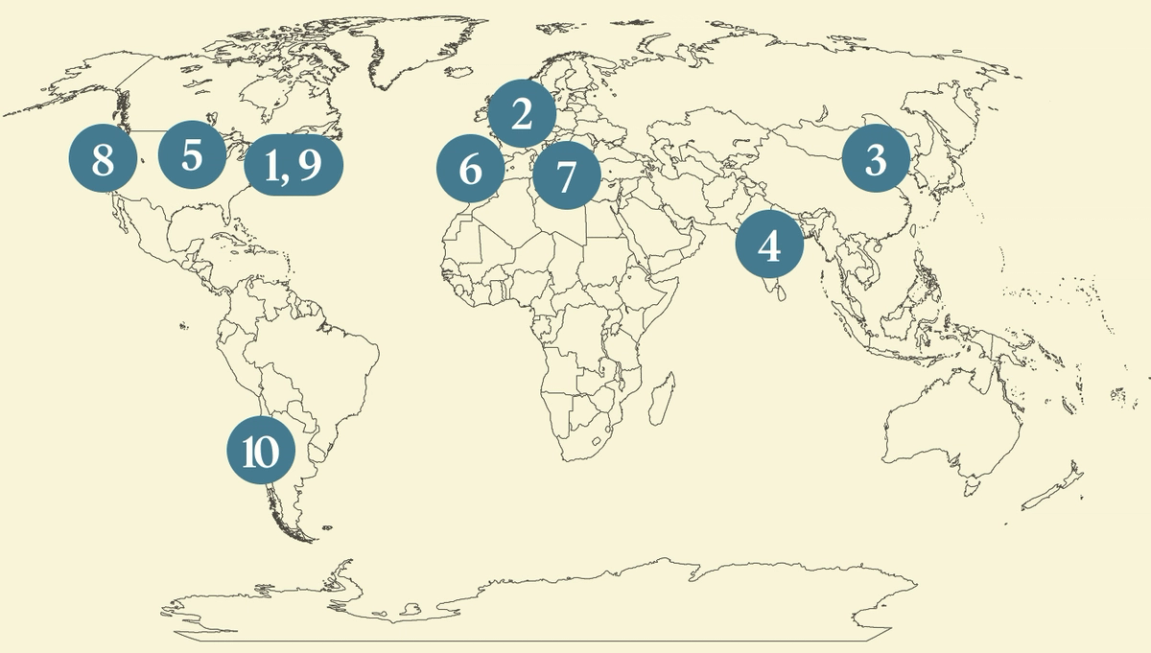 - US jobs growth slows
- Tesla’s Europe recovery
- US-China trade stability
- India-Japan biz ties grow
- Power grids strained
- Spain immigration amnesty
- Pope’s excommunications
- Spotify streaming fraud
- Trump vs. Taylor
- Census of the stars
 A history of energy that begins with Shakespeare. |
|
US jobs slowdown adds to Fed puzzle |
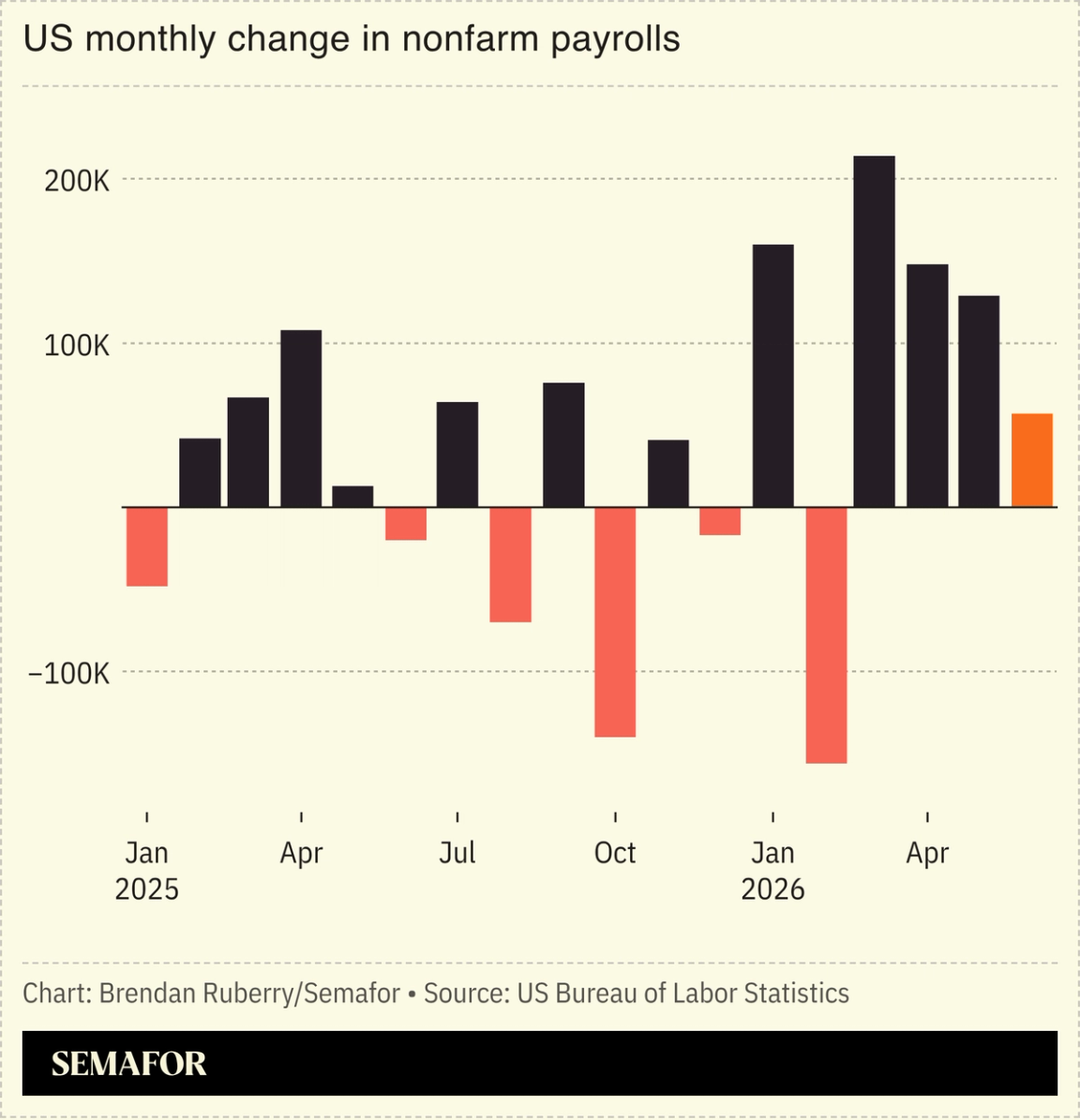 The US added fewer jobs in June than economists had expected, complicating the Federal Reserve’s path forward on interest rates. The new head of the central bank, Kevin Warsh, will be forced to consider whether a slowdown in jobs or an uptick in inflation is the bigger risk to the economy. Warsh has hinted that he sees bringing down inflation as the priority — which would favor keeping interest rates high, or even raising them — but protecting a weaker jobs market generally requires a cut. AI complicates the Fed’s playbook even further: Business growth once meant hiring more people; now it might just mean buying more tokens. |
|
Tesla’s Europe sales rebound |
 Tingshu Wang/Reuters Tingshu Wang/ReutersTesla’s European sales have recovered as rising fuel prices outweigh consumers’ dislike for CEO Elon Musk. The US carmaker was overtaken by BYD last year as the world’s biggest EV manufacturer. Musk’s closeness to the Trump administration, deeply unpopular in Europe, was a significant factor: An effigy of Musk was hung upside down in Milan. But oil price increases caused by the Iran war have driven up EV sales in Europe, and Tesla has benefited. Germany saw a 300% rise in sales in May, and Europe-and-UK-wide sales were up 57% year-on-year in the first five months of 2026. The growing European demand offset the firm’s weak performance in the US, driven by the end of EV tax credits and weakened anti-emission regulations. |
|
US, China trade dynamic stabilizes |
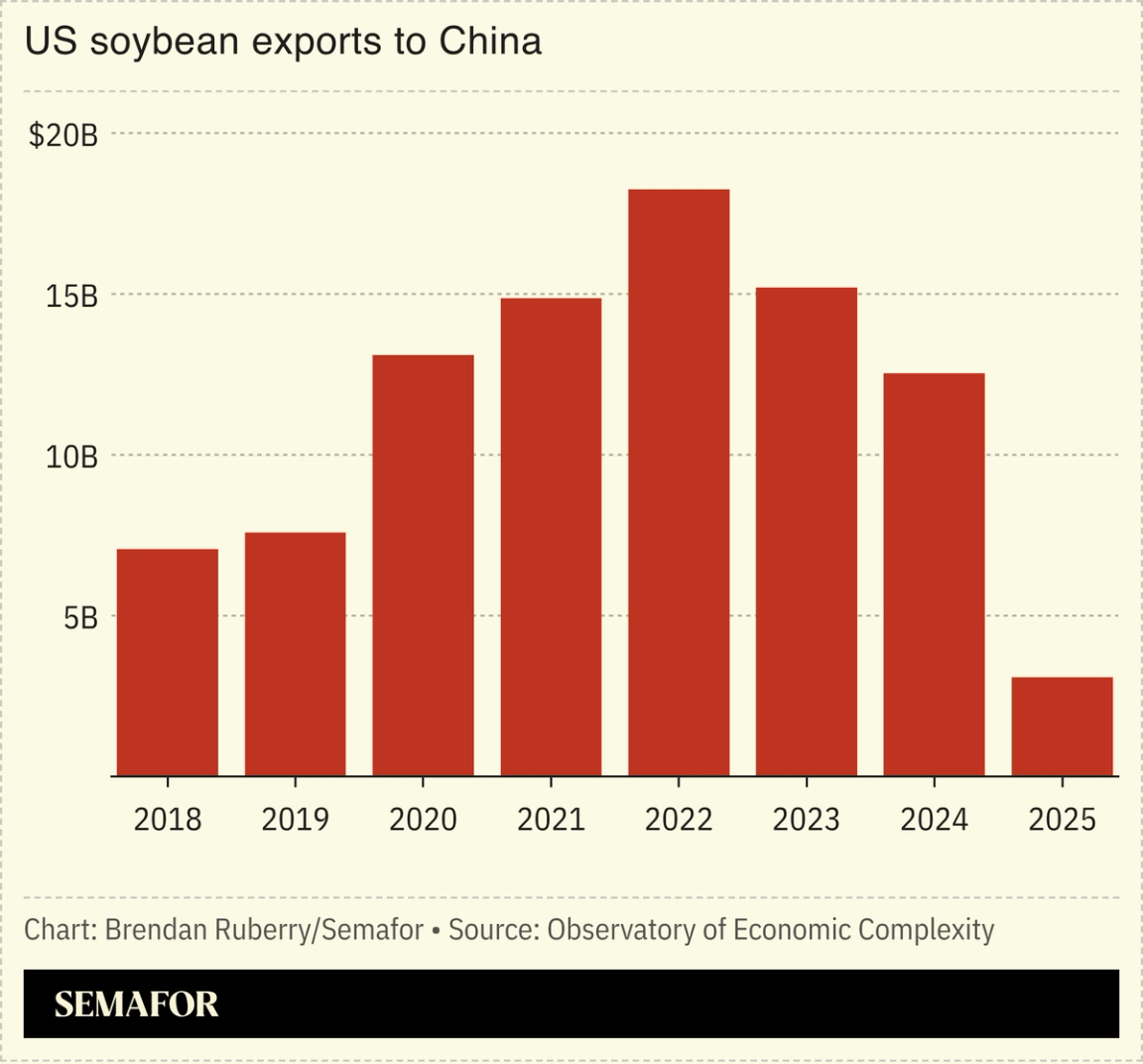 The US and China are moving toward reducing tariffs on each other’s agricultural products, officials said Thursday, as the superpowers’ trade relationship settles into a phase of relative stability. The reduction in duties could open the door for China to ramp up purchases of American soybeans, by pushing their cost below that of Brazilian supplies. The US-China dynamic is “oddly calm,” historian Adam Tooze wrote, as Beijing and Washington maintain their trade truce. Instead, the debate around China’s export surge largely centers on Europe, as the continent struggles to cohesively tackle the influx of cheap Chinese goods. “That is painful for the Europeans, but less explosive for the world economy, so far at least,” Tooze argued. |
|
India, Japan deepen business ties |
 Bhawika Chhabra/Reuters Bhawika Chhabra/ReutersThe leaders of India and Japan pledged Thursday to strengthen economic ties, as cross-border dealmaking picks up between the two Asian nations. Indian Prime Minister Narendra Modi said the two sides have reached nearly 120 business agreements over the past year, bringing more than $10 billion in Japanese investment to India. Both Japanese and Indian companies took out newspaper advertisements welcoming Japanese Prime Minister Sanae Takaichi to New Delhi and hailing the countries’ business ties. Japanese megabanks are also making an “unprecedented push” into India, Bloomberg wrote, bolstered by Modi’s strong personal affinity for Japan; he referred to Takaichi as his “younger sister.” Both countries are also hunting for ways to reduce dependencies on China. |
|
US heat wave strains grid |
 Jordan Tovin/Reuters Jordan Tovin/ReutersA heat wave gripping the US this week is putting pressure on an already-strained energy grid. As Americans crank up their air conditioners, the country’s largest grid operator forecast that electricity demand could break records, raising the risk of blackouts. The situation is a “five-alarm fire,” said the head of an energy-focused nonprofit, given that the sector is also grappling with depleted reservoirs, wildfires, and a spike in energy demand stemming from the AI boom. The US energy department this week ordered data centers to use backup generators to ease strain on the system. Europe’s grid, too, felt the pain of heat waves last week, while the high temperatures also forced several power plants to reduce output. |
|
1.2M migrants apply for Spain amnesty |
 Albert Gea/Reuters Albert Gea/ReutersA Spanish immigration amnesty drew 1.2 million applicants, double the expected number. Madrid is unusual in Europe in maintaining an open immigration policy; elsewhere, governments, under pressure from populist anti-migrant parties, are closing borders. Spain’s incumbent socialist government is facing challenges, but Prime Minister Pedro Sánchez argues that migration is economically necessary given the country’s aging population. The largest group of undocumented migrants is Latin American, but the single largest foreign-born population is Moroccan, which has largely been the target of the backlash against migration in Spain. The hard-right Vox party at one stage even reached out to Latinos, now a sizable voting bloc, assuming that Catholic, Evangelical, and anti-Communist members of those communities would share right-wing values. |
|
Pope cuts off conservative group |
|
Prediction market fraud fears grow |
 Kalshi KalshiSpotify asked Kalshi and Polymarket to remove its logo from their sites after users allegedly manipulated data on the streaming platform to cash out on prediction markets. The music giant deleted half a million streams from Malcolm Todd’s song Earrings after discovering that the surge in listens coincided with suspicious wagers on Kalshi that the song would hit No. 1 on Spotify. The episode compounds concerns that the prediction sites create avenues for manipulation, either through insider information or other tactics, like engineering the outcomes being bet on. French authorities investigated whether someone tampered with a weather device at Paris’ airport to win a Polymarket bet on the temperature. |
|
Swift, Trump draw US holiday attention |
 Christian Monterrosa/Cheney Orr/Reuters Christian Monterrosa/Cheney Orr/ReutersDual mega-events in the US this weekend create a cultural split-screen as the country celebrates its 250th birthday. In Washington, President Donald Trump is overseeing a July 4th rally, the culmination of an “America 250” celebration that has drawn sparse crowds amid a 25-year low in American pride. In New York, meanwhile, pop star Taylor Swift — whom Trump has attacked over the years — is widely rumored to wed football player Travis Kelce at Madison Square Garden, nuptials seen as the American equivalent of a royal wedding. “The two events represent a nearly simultaneous flex by two supersize constants in American culture… with nothing more at stake than the attention — and potential adoration — of a nation,” The New York Times wrote. |
|
A survey of the night sky begins |
 NASA/Handout via Reuters NASA/Handout via ReutersThe Vera C. Rubin Observatory, a telescope attached to the largest camera ever constructed, began its survey of the night sky. The observatory is on a mountain peak in the Atacama Desert, Chile, where skies are dark and clear. The astronomer Rubin herself noticed in the 1970s that galaxies rotate faster than gravity should allow, implying unseen mass, which we now call dark matter; the telescope’s mission is to watch how light bends and how galaxies cluster, to see how the universe’s hidden stuff is distributed. This Legacy Survey of Space and Time, which will also look out for anomalous phenomena, is designed to see “even the things we don’t know what we’re looking for yet,” a scientist said. |
|
|


