| | In today’s edition: Sovereign wealth funds poised for a banner year, IHC’s big bet in India, and Tru͏ ͏ ͏ ͏ ͏ ͏ |
| |  | Gulf |  |
| |
|
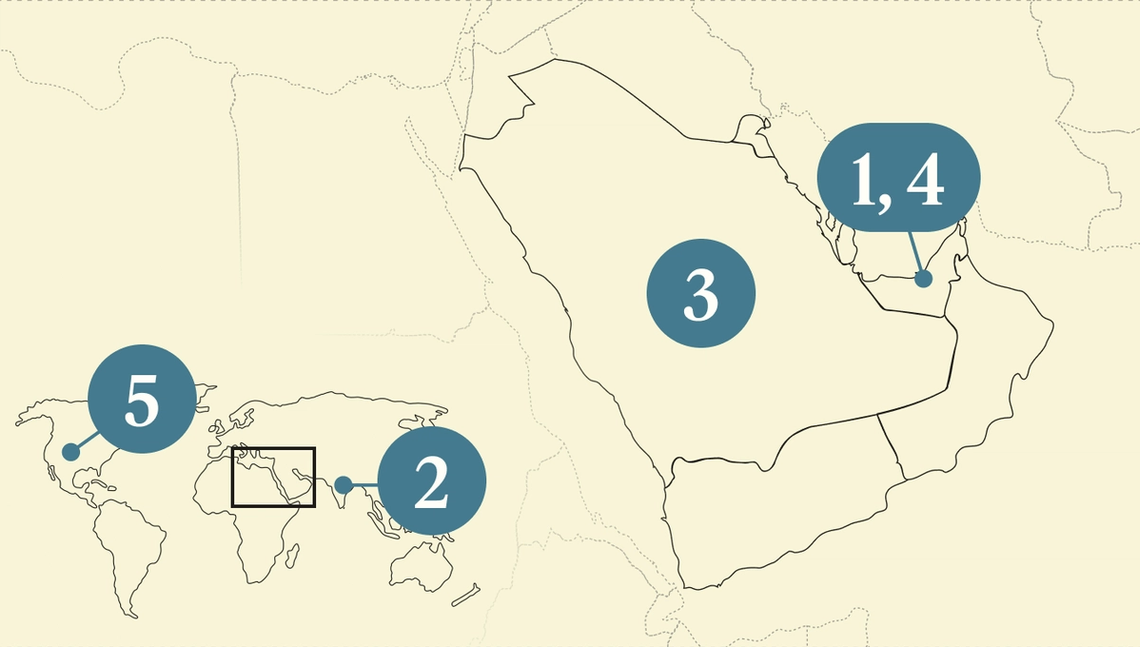 - SWFs poised for record 2026
- IHC’s Indian aluminum deal
- Sharia private credit fund
- World Cup gambling flop
- Trump flies Qatar-gifted plane
 How naval minehunters work, and other weekend reads. |
|
Gulf SWFs spend more than ever |
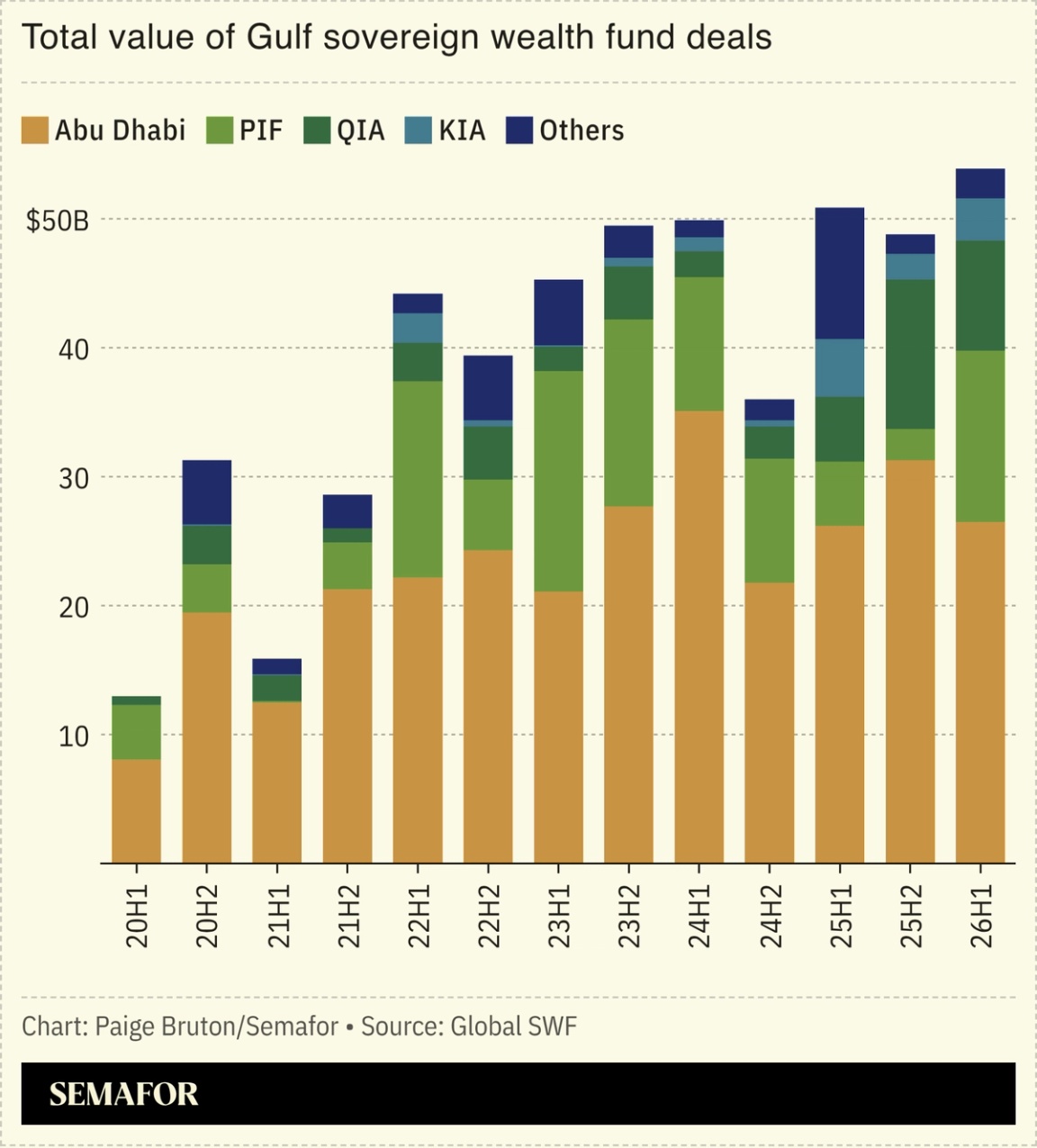 Gulf sovereign wealth funds are on track for one of their busiest years on record, despite the economic disruptions caused by the Iran war. In the first half of 2026, Gulf funds invested $53.9 billion across 108 transactions, an all time high, according to data compiled by Global SWF. Almost half of that went into the US, including funding rounds for Anthropic and xAI (prior to its merger with SpaceX), showing that, even as the Iran conflict led to questions about the future of Gulf-US ties, it remains the main destination to recycle petrodollars. China was a distant second, receiving 17% of Gulf investments. Overall, half of the world’s largest deals so far this year involved Gulf sovereign capital. Abu Dhabi’s Mubadala, with $15.2 billion deployed so far this year, was the world’s most active sovereign fund in the first half. Alongside other UAE funds like Abu Dhabi Investment Authority and L’IMAD Holding, it meant the emirate accounted for about half of all deals involving Gulf state-controlled funds. — Matthew Martin |
|
IHC backs India’s aluminum push |
 Amit Dave/Reuters Amit Dave/ReutersAbu Dhabi’s International Holding Company and India’s Adani Group agreed to invest $11.5 billion to build an aluminum complex in the eastern Indian state of Odisha, the latest sign of growing ties between the two countries. The UAE and India have been steadily strengthening their commercial, diplomatic, and security links in recent years, striking a free trade deal in 2022 and a defense pact earlier this year. The two countries’ leaders, Indian Prime Minister Narendra Modi and UAE President Mohamed bin Zayed, regularly meet, including when Modi traveled to Abu Dhabi in May. All that has been happening in parallel with a similar trend between Saudi Arabia and Pakistan. The aluminum venture also deepens the relationship between IHC — chaired by Abu Dhabi’s deputy ruler Sheikh Tahnoon bin Zayed — and billionaire Gautam Adani’s conglomerate, following IHC’s $2 billion investment in Adani companies in 2022. |
|
US-Saudi tie up for Sharia private credit |
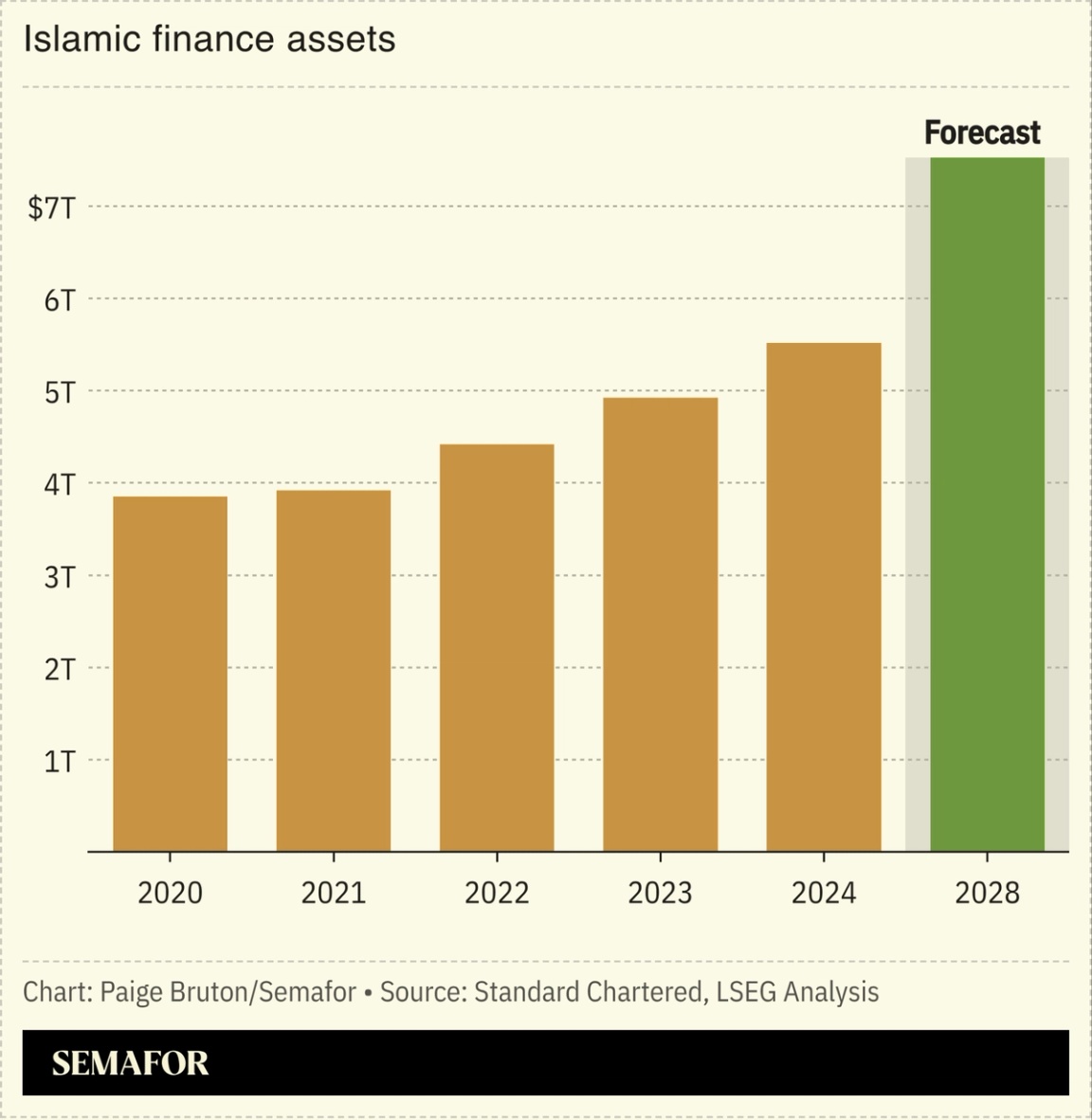 Principal Asset Management, an Iowa-based firm that manages more than $590 billion, is aiming to tap a new pool of capital for its latest private credit fund: Gulf investors that adhere to Islamic finance rules. The firm is working with a Saudi institution — it did not say which — and aims to start fundraising later this year, Matt Darrah, the firm’s head of credit, told Semafor. While Gulf sovereign wealth funds have been pouring money into private credit in recent years, Principal aims to tap banks, insurers, and family offices in the region that only invest in Sharia-compliant funds — which can’t own interest-bearing assets — but still want exposure to the higher yields on offer from US private credit. It will also target investors in other predominantly Muslim countries in Asia. — Matthew Martin |
|
 Blake Dahlin/IMAGN IMAGES via Reuters Blake Dahlin/IMAGN IMAGES via ReutersADI Predictstreet, the prediction market backed by Abu Dhabi’s International Holding Co., has struggled to turn its sponsorship of the 2026 men’s soccer World Cup into trading activity. The company brought in US rival Kalshi as a co-branding partner in the knockout stages to partially salvage sponsorship costs that FIFA advertised at $150 million, Bloomberg reported. Kalshi has handled nearly $590 million in World Cup trades so far in the tournament, while ADI Predictstreet has attracted just $58,000 in bets on the winner, with some matches generating less than $100 in trading, according to the outlet. For ADI Predictstreet, which launched shortly before the tournament, the partnership could give it additional credibility via proximity to Kalshi’s user base. Kalshi is also reportedly considering investing in a cryptocurrency developed by ADI, which could help deepen ties to Abu Dhabi capital.
|
|
Qatar-gifted Air Force One takes flight |
 Kylie Cooper/Reuters Kylie Cooper/ReutersUS President Donald Trump took to the skies in the $400 million Boeing 747 gifted to him by the Qatari government for the first time, flying to North Dakota yesterday. The new-look Air Force One, which experts estimate cost hundreds of millions of dollars to retrofit, does not appear to have some of the missile detection and defense systems featured on the previous presidential jet, according to the Associated Press. Beyond the plane, the Gulf has been a lucrative region for the Trump family. In the past year alone, regional entities paid $300 million to companies linked to the president, according to recent financial disclosures. Most of that came from the $263 million sale of a stake in a cryptocurrency company to a firm controlled by Abu Dhabi’s deputy ruler — the rest came from licensing deals for Trump-branded golf courses, hotels, and towers. — Ed Clowes |
|
 Corruption- Omani officials who accept bribes face up to five years in jail, under tougher anti-graft laws announced this week; a new offence of attempted bribery has also been introduced, punishable by up to a year behind bars — AGBI
DefenseGambling- US sports collectibles and gambling company Fanatics is partnering with the UAE’s Momentum Group, operator of the country’s lottery, to expand sports betting and other gambling businesses in the emirates.
Investment- Foreign direct investment into new projects in Qatar hit $3.4 billion last year, with the UAE, US and UK top investors, according to official figures.
- More than $12 billion in orders came in for Oman India Fertiliser Co.’s initial public offering, an oversubscription of around 18 times, in what will be the Middle East’s largest listing since the Iran war began. — Bloomberg
Finance- Franklin Templeton opened a new office in Qatar, adding to a regional footprint that also includes Abu Dhabi, Dubai, Kuwait City, and Riyadh. The US asset manager partnered with Qatar Investment Authority in February to launch a $200 million local equity fund aimed at attracting more foreign investment and boosting liquidity on the local bourse.
|
|
 - Italy is sending two minehunters to clear the Strait of Hormuz, a mission whose slow, intelligence-driven timeline underscores how much easier it is for Iran to close the chokepoint than for anyone to reopen it, Mohamad Ali Harisi reports for The National.
- The Iran war has exposed a key weakness of Bahrain’s economy: while it may be relatively diversified, it lacks resilience. The regional environment presents the country with significant external pressures, but the main economic challenge for policymakers comes from within, write Said Bakr and Robert Mogielnicki for the Arab Gulf States Institute.
- Hedge funds, banks, and other financial services firms are driving demand for prime Dubai real estate, providing the emirate’s government with cash at a time when residential property and tourism have slowed during the war, Bloomberg’s Zainab Fattah reports.
|
|
|


