| | In today’s edition: Abu Dhabi invests in South American gas exports, and US investors back a Gulf in͏ ͏ ͏ ͏ ͏ ͏ |
| |  | Gulf |  |
| |
|
 - XRG’s Argentina gas deal
- Oil market oversupply risks
- US VCs back Gulf AI startup
- UAE-Iraq-Syria trade route
 Iraq’s corruption crackdown uncovers piles of cash. |
|
Abu Dhabi buys into Argentina LNG |
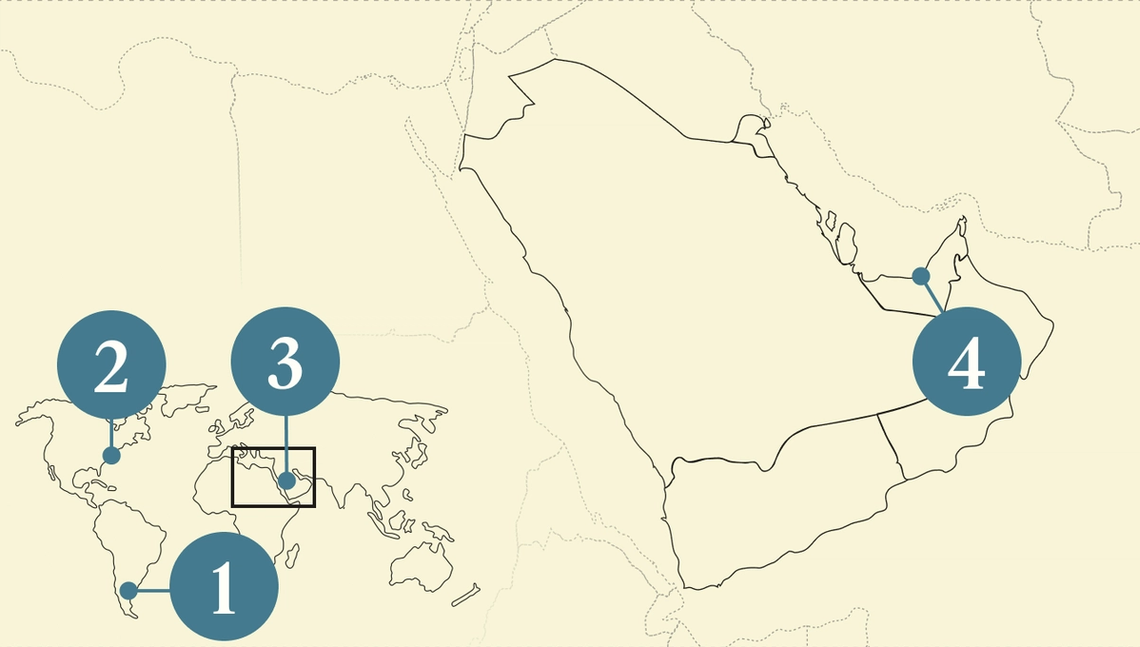
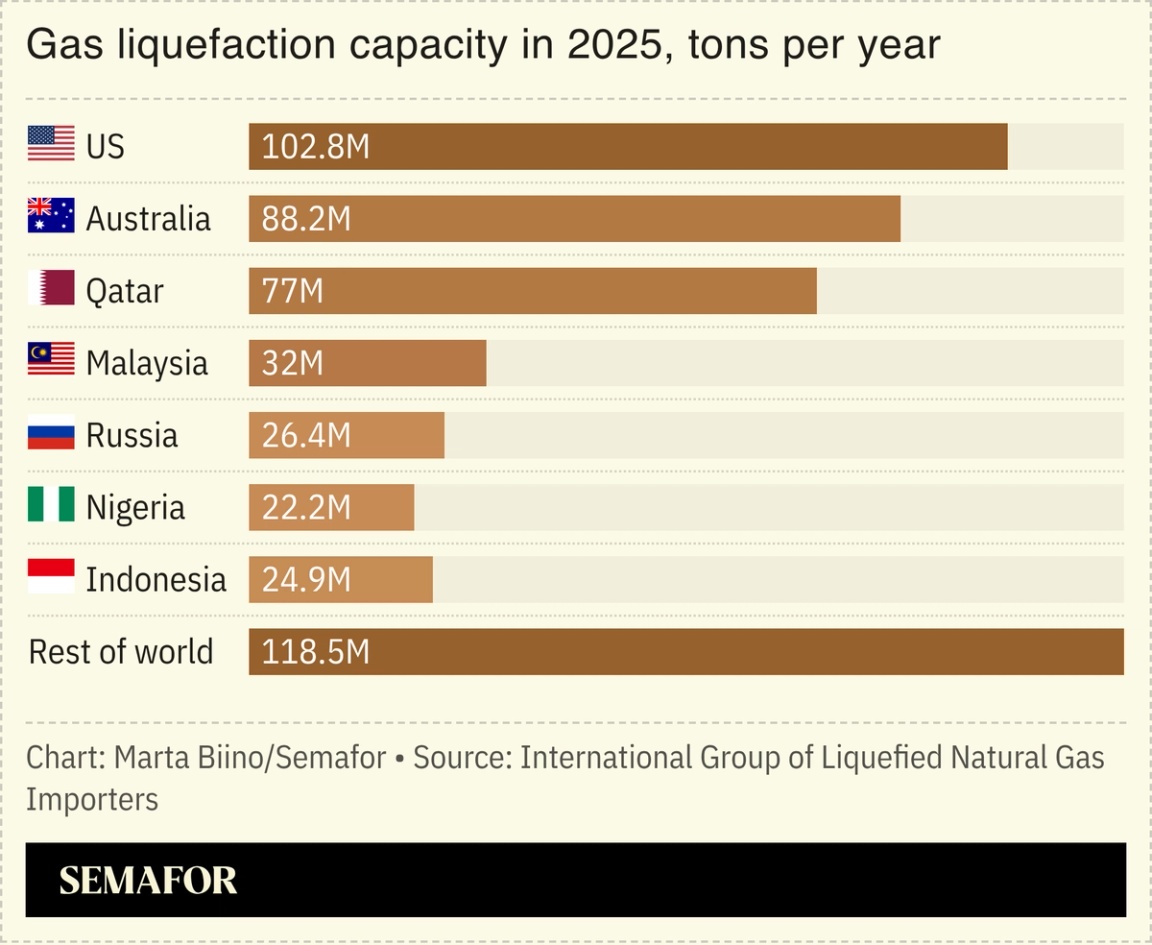 XRG, the international investment arm of Abu Dhabi oil company ADNOC, has agreed to take a 32% stake in three upstream blocks in Argentina that will supply gas to the country’s first LNG export terminal — adding to the growing list of overseas LNG deals by Gulf energy majors. XRG, which is partnering with Italian major Eni and Argentina’s YPF, has not said how much the investment is worth. It sits in a portfolio that already includes the Rio Grande LNG project in the US, Azerbaijan’s Southern Gas Corridor, and the Rovuma LNG development in Mozambique. Other Gulf energy majors have made similar bets: QatarEnergy has a stake in Golden Pass LNG in Texas, while Saudi Aramco has an interest in the nearby Port Arthur LNG terminal. At a time when exports from their home markets have been severely constrained, such international investments are only rising in importance. There have been some LNG shipments from the Gulf in recent days — vessels loaded with gas from ADNOC and QatarEnergy passed through the Strait of Hormuz, heading to India and China respectively — but the flows remain below prewar levels, amid sporadic Iranian attacks on ships. |
|
Oil market heading toward a glut |
 Essam Al-Sudani/File Photo/Reuters Essam Al-Sudani/File Photo/ReutersThe oil market is coming full circle as millions of barrels that were stranded in the Gulf head to global markets, creating a sudden oversupply that has pushed prices to their lowest level since the US-Iran war began. Morgan Stanley analysts said in a note to clients that they counted 35 oil tankers exiting the Strait of Hormuz on Thursday, close to the typical daily average seen before the war. “Yet the ‘twin solvers’ of high US exports and low Chinese imports remain in place,” raising the risk of a return to structural oversupply. To balance the market next year, flows through the strait need only recover to 65% of their pre-conflict level. With the market suddenly awash with oil, price estimates are being pared across the board. Goldman Sachs lowered its Brent crude forecasts, cutting its fourth-quarter 2026 and its 2027 average. Morgan Stanley sees prices going even lower. “Strip away the narrative for a moment and read only the prices,” the latter wrote. “They describe a market that has weakened across the board.” |
|
Gulf AI startup 1001 taps US investors |
 Bilal Abu-Ghazaleh (right) with 1001 CTO Mohammed Fituri. Courtesy of 1001. Bilal Abu-Ghazaleh (right) with 1001 CTO Mohammed Fituri. Courtesy of 1001.Gulf AI startup 1001 has raised $30 million from investors, including US venture firm Lux Capital and Saudi sovereign wealth fund unit Sanabil. The deal is the latest sign that investment activity across the region has continued despite the disruption of the Iran conflict and attacks on Gulf countries. The war had “zero impact” on fundraising discussions, Bilal Abu-Ghazaleh, founder and CEO of 1001, told Semafor. Indeed, the war appears to have prompted greater interest in the startup’s services. 1001 aims to develop AI products for critical infrastructure in the Gulf, working with airlines, port operators and shipping companies, and taking advantage of state mandates to get firms to adopt AI. Abu-Ghazaleh said it was seeing an uptick in interest from companies in the region as they look for ways to diversify from a reliance on the Strait of Hormuz for trade. The funding round also included international investors 9Yards, CIV, General Catalyst, and Hanabi. — Matthew Martin |
|
UAE in talks on a Levant trade route |
 Iraqi oil tankers in Syria. @SPC_syr/X. Iraqi oil tankers in Syria. @SPC_syr/X.The UAE, Iraq, and Syria are discussing a new logistics corridor linking the Mediterranean to the Gulf, one of several efforts to redraw regional trade flows after the disruption to traffic through the Strait of Hormuz. The route would allow goods to move overland from Syria’s coast to Iraq’s Port of Umm Qasr on the Gulf, from where they can be shipped to Abu Dhabi’s Khalifa Port. Syria has emerged as a key node in the Gulf’s effort to reduce its reliance on Hormuz. Iraq began moving oil products by truck through Syria this year, helping make the latter the Middle East’s third-largest exporter of bunker fuel in June, according to Reuters. |
|
 Bradley Tusk built a career fixing Silicon Valley’s toughest political problems for companies like Uber and FanDuel. But there’s one problem he believes can’t be fixed. On this week’s episode of Compound Interest, presented by Amazon Business, the venture capitalist joins Liz and Rohan to discuss AI’s Darth Vader-Luke Skywalker divide, the local element that big labs still haven’t figured out, and why he’s parting ways with venture capital altogether.
|
|
 Checking In- The UAE has reversed an April travel ban on Lebanon, allowing citizens to visit starting this week. Flights between Tehran and Dubai also resumed Monday, restoring the first commercial air link between Iran and the UAE since Feb. 28, but the ban on Emiratis traveling to Iran hasn’t been lifted. — Arab News
Security- Qatar ordered all leisure boats, fishing boats, jet skis and similar craft to stay in port until further notice, citing public safety concerns. It followed the death of a Qatari national over the weekend, who was killed by shrapnel during unspecified “military operations.”
Space- Abu Dhabi-based Orbitworks is preparing for the first launch of its homegrown satellite, the Altair, from the US in the coming months; it plans to have ten in orbit by next year. — The National
Sovereign wealth- Saudi Arabia’s Public Investment Fund said profit more than doubled in 2025, hitting 65 billion riyals ($17 billion). Total assets rose to 4.5 trillion riyals. The results signal a continued improvement by the fund, after it posted a loss in 2022.
Trade- The UAE is to start talks to join a 12-country trading bloc centred on the Pacific; Indonesia and the Philippines will start accession negotiations with the Comprehensive and Progressive Agreement for Trans-Pacific Partnership at the same time. — Bloomberg
- Dubai has banned the export of aluminum, copper, and steel scrap until October, apparently in an effort to ensure there are sufficient supplies for local smelters. — S&P Global
|
|
Iraqi authorities seized more than $14 million from the home of the deputy oil minister, one of dozens of officials arrested on corruption charges. Images of cash and gold hidden in officials’ homes have affirmed what many Iraqis have long suspected of their leaders: that they are stealing the nation’s wealth.  Courtesy of Iraqi News Agency Courtesy of Iraqi News Agency
|
|
|


