| | Oil prices drop, renewables surge, and the US expects a record-breaking heatwave.͏ ͏ ͏ ͏ ͏ ͏ |
| |  | Energy |  |
| |
|
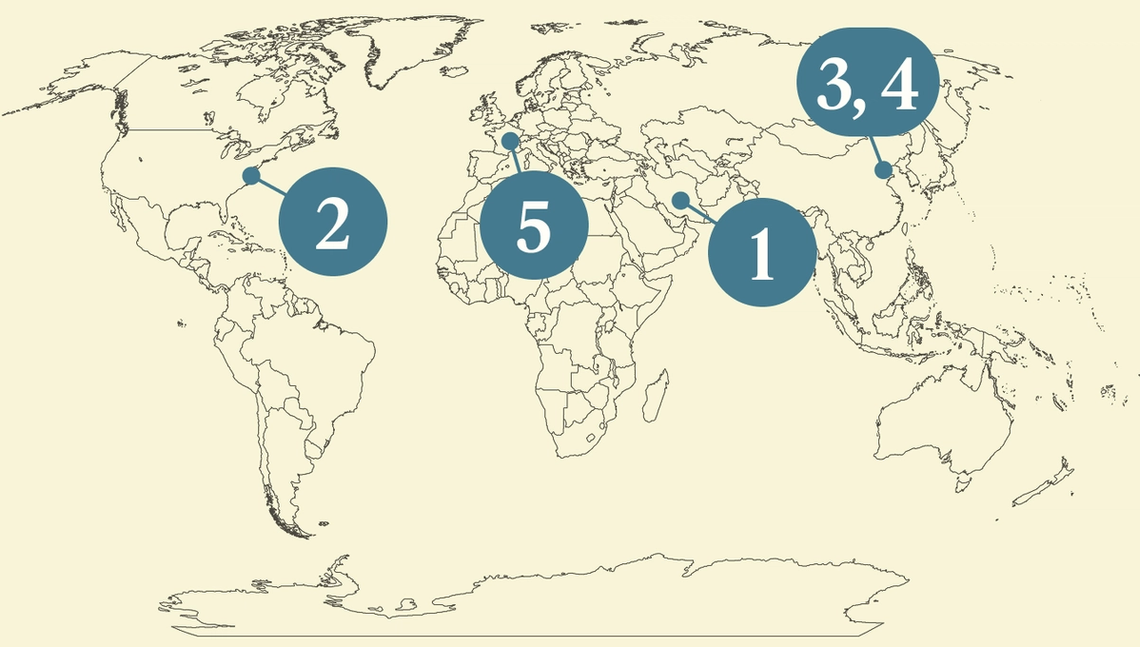 - Oil market oversupply risks
- Heatwaves and grid impacts
- Renewables’ record year
- China’s coming steel pivot
- Climate litigation on the rise
 New EV incentives in India, and Tesla sales are on the rise in Europe again. |
|
 Essam Al-Sudani/File Photo/Reuters Essam Al-Sudani/File Photo/ReutersThe oil market is coming full circle as millions of barrels that were stranded in the Persian Gulf head to global markets, creating a sudden oversupply that has pushed prices to their lowest level since the US-Iran war began. Morgan Stanley analysts said in a note to clients that they counted 35 oil tankers exiting the Strait of Hormuz on Thursday, close to the typical daily average seen before the war. “Yet the ‘twin solvers’ of high US exports and low Chinese imports remain in place,” raising the risk of a return to structural oversupply. To balance the market next year, flows through the strait need only recover to 65% of their pre-conflict level. With the market suddenly awash with oil, price estimates are being pared across the board. Goldman Sachs lowered its Brent crude forecasts, cutting its fourth-quarter 2026 and its 2027 average. Morgan Stanley sees prices going even lower. “Strip away the narrative for a moment and read only the prices,” the latter wrote. “They describe a market that has weakened across the board.” |
|
Heatwave hits power grids |
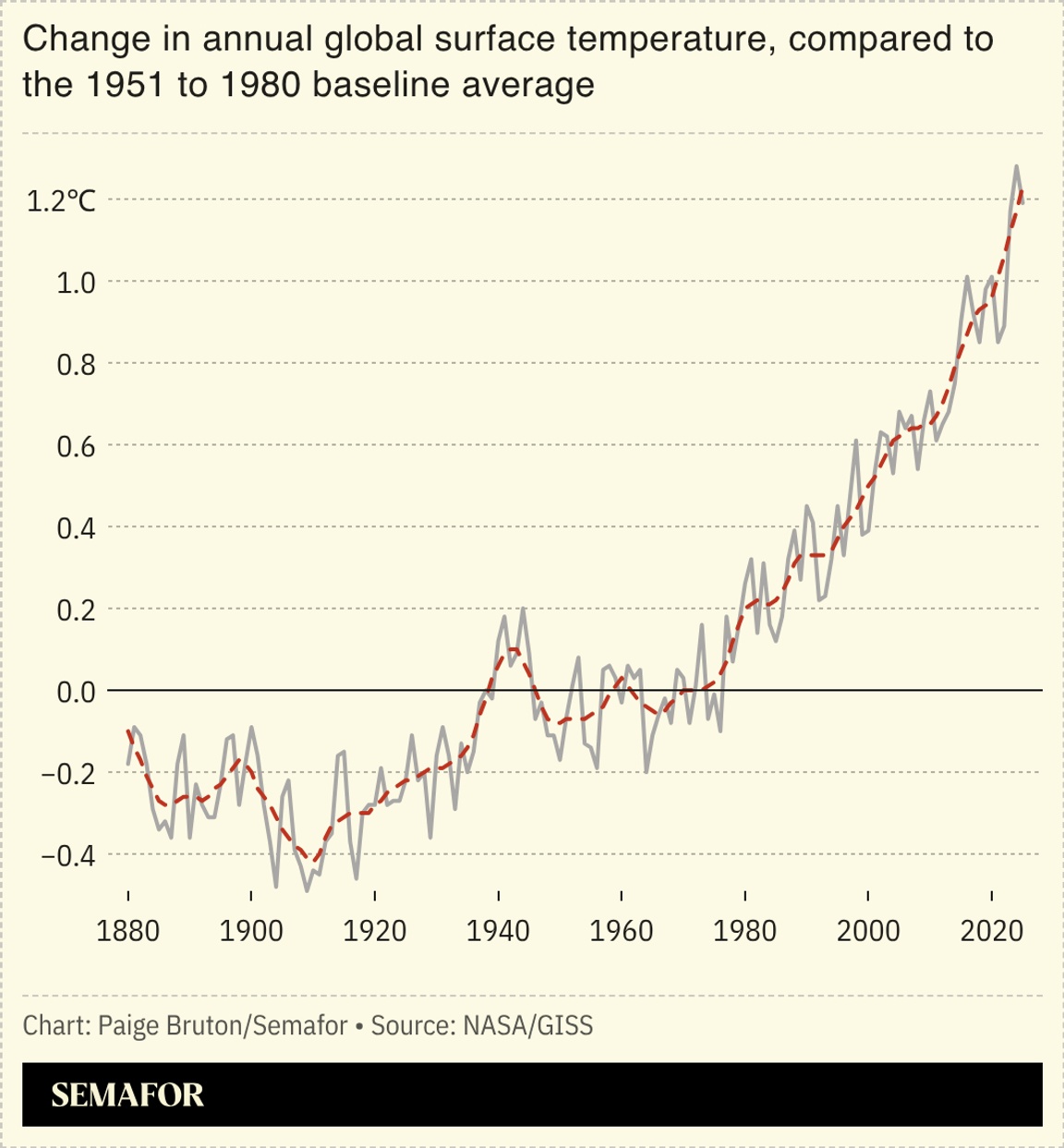 More than 220 million people in the US will face dangerous temperatures this week, including over the July 4 holiday. Forecasters predict record-breaking heat across the East and Midwest — New York and Washington could see 100°F (37.7°C) — with a high-pressure system rivalling the deadly heatwave that is still affecting much of Europe and which has been linked to 1,300 deaths. Europe’s heatwave was unequivocally blamed on climate change, an attribution study found: Such temperatures would have been “virtually impossible” in June 50 years ago and very unlikely even in the early 2000s. The temperatures have piled pressure on the continent’s electricity system, too: Surging demand for air conditioning, with temperatures staying high into the evening when solar output falls, combined with the high-pressure system behind the heat wave stilling the air and limiting wind generation, have forced European power networks to scramble. |
|
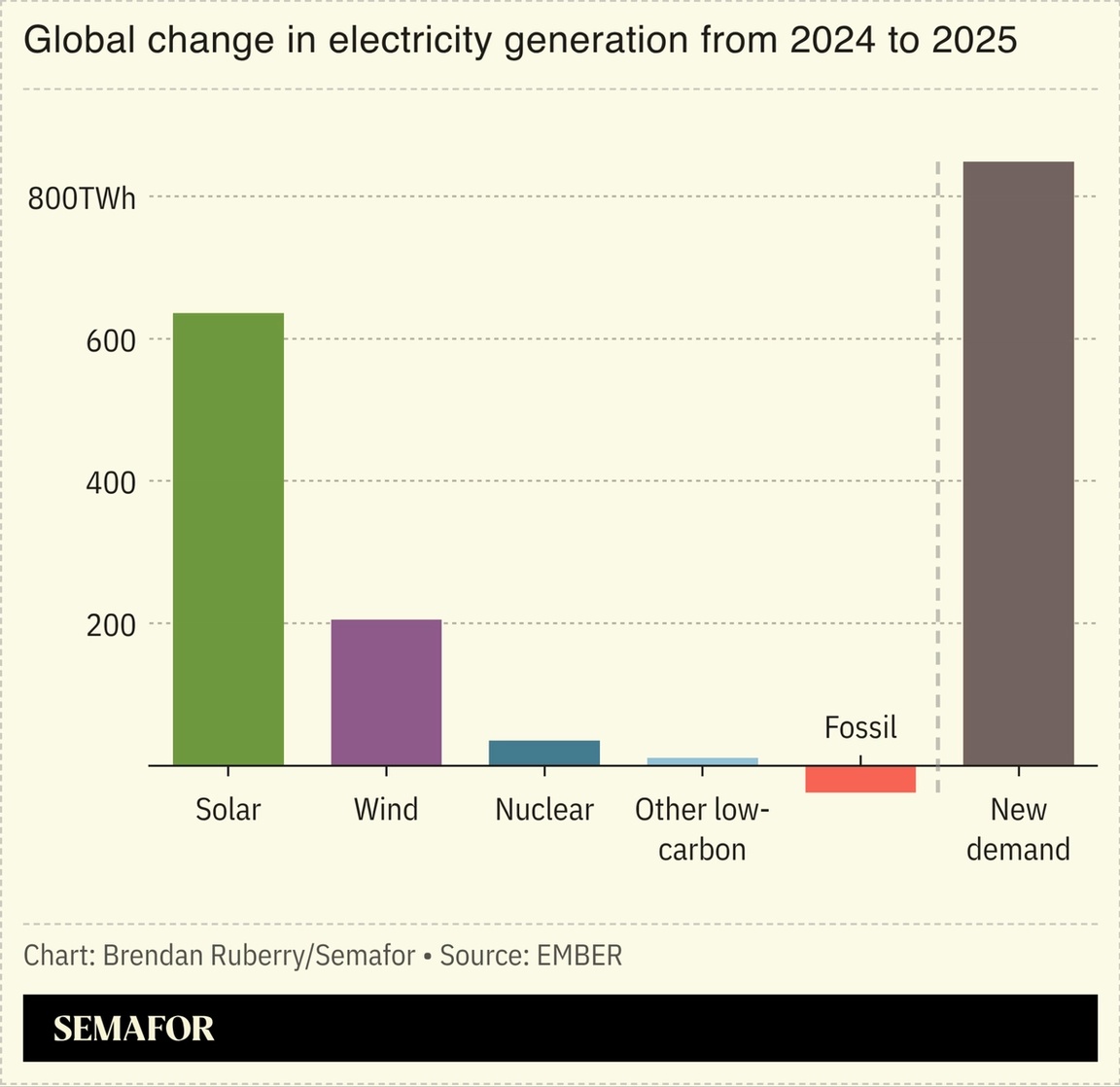 Renewables were the world’s largest source of total energy supply growth last year for the first time outside a recession, according to a new Energy Institute report, with solar accounting for 72% of the total. China delivered another record year for both solar and wind — more than the rest of the world combined — but analysts said it is stockpiling fossil fuels as insurance. In 2025, US emissions rose 3.2%, four times the growth of China. Solar’s advance is supported by battery storage, whose average cost plunged 45% in 2025, according to Ember, an energy-focused think tank. The Iran war has turbocharged these trends as countries seek to reduce their reliance on oil and gas from the Gulf. |
|
China’s coming steel decision |
 Maxim Shemetov/Reuters Maxim Shemetov/ReutersChina is nearing a key decision point, in which refurbishment of its steel sectors could lock in the high-emissions industry’s carbon output for more than a decade, a top expert noted. Blast furnaces must be “relined” every 15-20 years to ensure they can safely handle enormous temperatures. Chinese steelmakers are coming to the point of deciding when and how to do so: Around three-quarters of Chinese blast furnace capacity will need relining by 2030, according to Wood Mackenzie. “We’re facing … a stark dilemma,” Zhang Yan, advisor to the China Iron & Steel Research Institute, the country’s biggest steel R&D-focused state-owned enterprise, said in an interview. Chinese steelmakers, she noted, must determine whether they use traditional methods, locking in 34 gigatons of emissions, or spend more on new technologies and potentially reduce that by two-thirds. |
|
TotalEnergies suffers court defeat |
 Alice Sacco/Reuters Alice Sacco/ReutersA Paris court ordered TotalEnergies to set out plans to mitigate the climate risks linked to emissions from its oil and gas products, a key decision in the growing wave of legal cases against fossil fuel companies over their environmental impact. The ruling highlights how the fight against climate change is increasingly being waged in courtrooms: A new London School of Economics study found that three-quarters of the more than 3,600 climate cases ever filed have been submitted in the last decade, across more than 60 countries. Yet they have had mixed success. A 2021 ruling in the Netherlands ordering Shell to cut its emissions was overturned, and is now before the Dutch Supreme Court. |
|
 Bradley Tusk built a career fixing Silicon Valley’s toughest political problems for companies like Uber and FanDuel. But there’s one problem he believes can’t be fixed. On this week’s Compound Interest, presented by Amazon Business, venture capitalist Bradley joins Liz and Rohan to discuss AI’s Darth Vader-Luke Skywalker divide, the local element that big labs still haven’t figured out, and why he’s parting ways with venture capital altogether. Listen to the latest Compound Interest now. |
|
 New EnergyFossil Fuels- Oil executives sponsored an elite research center to conduct a landmark study on the climate crisis without getting off fossil fuels, according to an investigation by ProPublica, which found that the results of the study “stretched the facts” of what was currently possible for carbon capture technology.
- Stocks in the US Strategic Petroleum Reserve fell to their lowest level since 1983, according to data from the Department of Energy.
Finance- Weather trading has begun to gain momentum, with the Chicago Mercantile Exchange seeking to launch new wind derivatives across three continents in the coming months.
- Hedge fund Moreton Capital Partners is targeting $500 million for a new commodities fund focused on crops due to be impacted by this year’s El Niño.
Politics & Policy- The World Bank scrapped the quantitative targets adopted in order to incorporate its climate objectives into its financing, following months of criticism from the US.
Minerals & Mining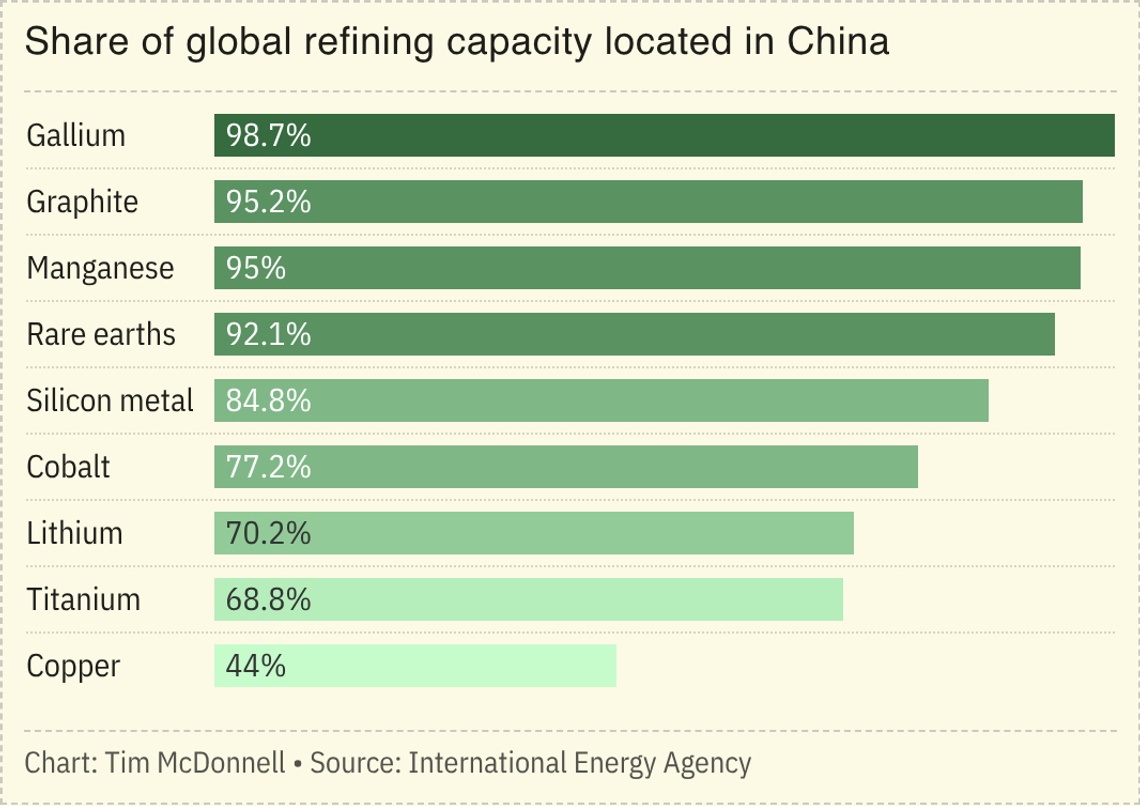 EVs- India launched a campaign in New Delhi, one of the world’s most polluted cities, offering a $1,000 cash incentive for car owners willing to scrap their old vehicle for an EV.
- Tesla sales are once again rising in Europe, following a long period of decline driven in large part by political opposition to Elon Musk.
|
|
| |  | | | You’re receiving this email because you signed up for briefings from Semafor. Mana |
|


