|
Life After Cancer: Orlando VA Program Helps Veterans Navigate the Journey Beyond Treatment By Joseph Nunez, Public Affairs Specialist, Orlando VA Healthcare System
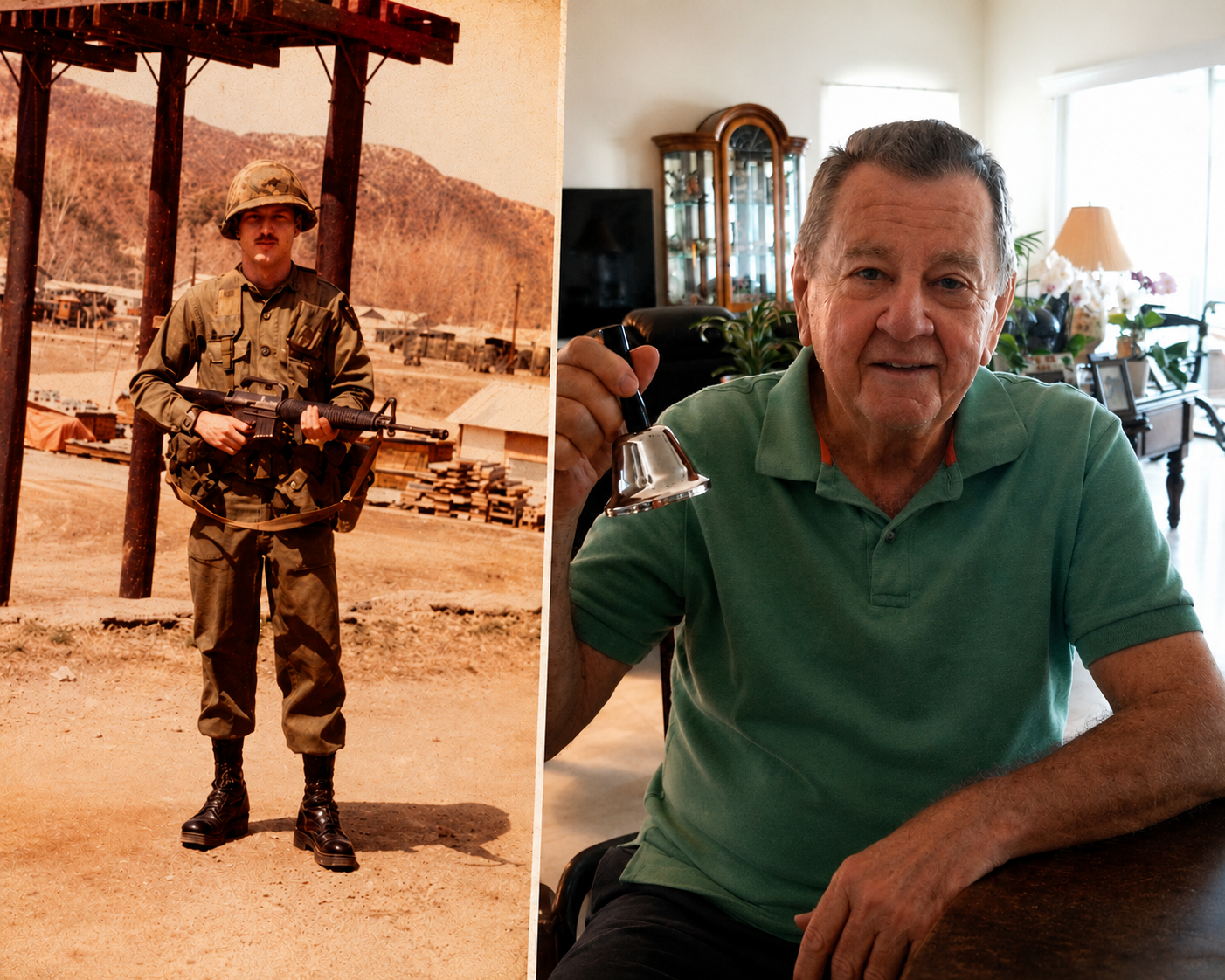
Photo (left to right): Army Veterans Thomas Jenkins (left) and Craig Cusanelli (right) are cancer survivors in the Orlando VA Healthcare System’s Cancer Survivorship Program. Jenkins, who had surgeries to remove cancer from both lungs, says the program helped him realize he was not alone. Cusanelli, pictured ringing a survivorship bell, credits its peer support and education for helping him after treatment. The monthly program connects Veterans with resources, wellness education, and fellow survivors.
June is National Cancer Survivor Month, a time dedicated to recognizing those who have faced cancer and the challenges that continue long after treatment ends. For many cancer patients, completing treatment brings relief and hope. But for some Veterans, it also brings uncertainty. The appointments become less frequent, the support system changes, and questions remain about what comes next. Recognizing that need, the Orlando VA Healthcare System (OVAHCS) launched a Cancer Survivorship Program to help Veterans navigate life after cancer treatment. Created by Supervisory Social Worker for Oncology, Brittany Hahn, the monthly program connects cancer survivors with education, resources, and most importantly, each other. “Just because treatment ends, it does not mean the journey is over,” Hahn shared. “Veterans continue with medical side effects, emotional concerns, and questions about what comes next. We want them to know they’re not alone.” The virtual group, launched in November 2025, brings together Veterans from across Central Florida to discuss survivorship, wellness, mental health, and VA resources. For Army Veteran Thomas Jenkins, the program has become a source of connection. In 2020, doctors discovered cancer in his left lung. Five years later, another diagnosis led to surgery on his right lung. While treatment addressed the disease, survivorship presented a different challenge. “You often question if you’re alone,” Jenkins shared. “Then you hear other Veterans talking about the same fears, the same pain, the same experiences. It helps you realize you’re normal.” Army Veteran Craig Cusanelli found a similar sense of connection after his cancer journey. Cusanelli, who served in the Army from 1970 to 1973, discovered cancer after a routine follow-up appointment with his pulmonologist revealed a suspicious spot on his lung. After additional testing, he underwent surgery to remove part of his left lung and later received treatment for cancer found in his right lung. “The journey’s been okay,” Cusanelli shared. “It really hasn’t been as painful or as mentally challenging as I anticipated.” After joining the Cancer Survivorship Program, Cusanelli found value in hearing other Veterans share their experiences. “I realized there were others who faced similar challenges,” Cusanelli reflected. “Everyone gained something from it day one.” Cusanelli also credits Hahn for creating a space where Veterans feel supported. “It takes dedication, not for yourself, but for all the Veterans,” Cusanelli said. “Knowing that she cares enough to spearhead such a program says a lot.” Dr. Ashley Brevil, Supervisory Social Worker for Specialty Programs, said survivorship support fills a critical gap in cancer care. “Many people think treatment is the end of the story,” Dr. Brevil stated. “What we’ve learned is that Veterans still need support, community, and resources long after treatment ends.” Hahn compares survivorship to an iceberg. While others may see a Veteran who has completed treatment, much of the struggle remains beneath the surface, anxiety, lingering symptoms, and the fear of cancer returning. “People think you’re done with treatment, so everything must be back to normal,” Hahn explained. “But there is a new normal, and Veterans deserve support as they learn how to navigate it.” The program has already served more than 50 Veterans and continues to grow, providing a community where survivors can learn, share, and heal together. For Veterans like Jenkins and Cusanelli, the greatest benefit is knowing they do not have to face survivorship alone. Veterans interested in learning more about the Orlando VA Healthcare System’s Cancer Survivorship Program can reach out to Brittany Hahn, Supervisory Social Worker for Oncology (shown below), at 407-750-1904 or through their VA healthcare team or ask their provider for a referral. For more information, please visit: VA Orlando Health Care | Veterans Affairs, subscribe to receive email updates by clicking here, like us on Facebook at: @OVAHCS, follow us on Instagram at: @OVAHCS, or on Twitter at: @OVAHCS. ### Established in October 2006, the Orlando VA Healthcare System (OVAHCS) was designated a 1a facility (most complex) in 2021, with more than 5,660 employees and an annual budget of $1.5B and serves more than 131,000 Veterans in Central Florida. The Orlando VA Medical Center at Lake Nona provides outpatient, inpatient and emergency services. Lake Nona’s 65-acre medical campus encompasses 134 acute inpatient beds, providing complex Medical/Surgical/Mental Health specialty care, advanced diagnostic services, and a large multispecialty outpatient clinic, as well as a 120-bed Community Living Center, two Mental Health Residential Rehabilitation Treatment Programs/Domiciliaries (60-beds located at the Lake Nona Campus and 58-beds at the Lake Baldwin Campus). Outpatient services are provided at a Health Care Center in Viera, a Multispecialty Community Based Outpatient Clinic in Daytona Beach, and five Community-Based Outpatient Clinics located in Clermont, Lake Baldwin, Kissimmee, Deltona, Palm Bay and Tavares.
|


Keep updated & let us know how we're doing. |
|


|
You have received this message because you are subscribed to Veterans Health. Access your Subscriber Preferences to make changes to your subscription or Unsubscribe. Get this as a forward? Sign Up to receive updates from Veterans Health. Having questions or problems? Please visit Subscriber Help for assistance. |
||
 |
 |
|