A surge of CEO and CFO retirements is looming, raising urgent questions about succession planning and board readiness.
 ͏  ͏  ͏  ͏  ͏  ͏  ͏  ͏  ͏  ͏  ͏  ͏  ͏  ͏  ͏  ͏  ͏  ͏  ͏  ͏  ͏  ͏  ͏  ͏  ͏  ͏  ͏  ͏  ͏  ͏  ͏  ͏  ͏  ͏  ͏  ͏  ͏  ͏  ͏  ͏  ͏  ͏  ͏  ͏  ͏  ͏  ͏  ͏  ͏  ͏  ͏  ͏  ͏  ͏  ͏  ͏  ͏  ͏  ͏  ͏  ͏  ͏  ͏  ͏  ͏  ͏  ͏  ͏  ͏  ͏  ͏  ͏  ͏  ͏  ͏  ͏  ͏  ͏  ͏  ͏  ͏  ͏  ͏  ͏  ͏  ͏  ͏  ͏  ͏  ͏  ͏  ͏  ͏  ͏  ͏  ͏  ͏  ͏  ͏  ͏  ͏  ͏  ͏  ͏  ͏  ͏  ͏  ͏  ͏  ͏  ͏  ͏  ͏  ͏  ͏  ͏  ͏  ͏  ͏  ͏  ͏  ͏  ͏  ͏  ͏  ͏  ͏  ͏  ͏  ͏  ͏  ͏  ͏  ͏  ͏  ͏  ͏  ͏ ­ ­ ­ ­ ­ ­ ­ ­ ­ ­ ­ ­ ­ ­ ­ ­ ­ ­ ­ ­ ­ ­ ­ ­ ­ ­ ­ ­ ­ ­ ­ ­ ­ ­ ­ ­ ­ ­ ­ ­ ­ ­ ­ ­ ­ ­ ­ ­ ­ ­ ­ ­ ­ ­ ­ ­ ­ ­ ­ ­ ­ ­ ­ ­ ­ ­ ­ ­ ­ ­ ­ ­ ­ ­ ­ ­ ­ ­ ­ ­ ­ ­ ­ ­ ­ ­ ­ ­ ­ ­ ­ ­ ­ ­ ­ ­ ­ ­ ­ ­ ­ ­ ­ ­ ­ ­ ­ ­ ­ ­ ­ ­ ­ ­ ­ ­ ­ ­ ­ ­ ­ ­ ­ ­ ­ ­ ­ ­ ­ ­ ­ ­ ­ ­ ­ ­ ­ ­  
Tuesday, June 23, 2026
Corporate America’s top ranks are nearing a retirement tipping point, expert says

Good morning. I’ve been writing about CFO turnover and the wave of retirements in accounting and finance, and an expert says baby boomer leaders are already heading for the exit—with a tipping point just a few years away.

Shawn Cole, president and founding partner of executive search firm Cowen Partners, wants to sound an alarm: “We are literally facing the collapse of the C-suite as we know it.”

Cole has been working in executive recruiting for more than 20 years. He and his team set out to pinpoint a “date of no return,” the point at which the leadership population no longer supports “the game of musical chairs,” he said. They estimate that the peak departure window will arrive between 2029 and 2034.

The team pulled CEO and CFO age data for a sample of 50 S&P 500 companies from 2024 and 2025 DEF 14A proxy filings available through SEC EDGAR. To reduce industry bias, the sample included companies from a variety of industries and market-capitalization ranges, and 65 was set as the baseline retirement age, he said.

The CEO and CFO seats represented the most immediately exposed positions. Forty-two percent of CEOs in the sample are age 60 or older, the average is 59, and 16% are already at or past 65. (A separate Fortune analysis last year found that about 41.5% of CEOs in the Russell 3000 are at least 60 years old, up from 35.1% in 2017.)

A quarter of the CFOs in Cowen’s sample are within five years of retirement, and across the CEO and CFO roles, 33.7% of those positions fall within the retirement window at once.

The danger is structural. Losing both leaders within the same window means an incoming CEO may be operating without a CFO who knows the organization, board, or operating rhythm, creating continuity risks, Cole said.

The most acute exposure appears in financial services, industrials, and health care, where deep pools of long-tenured leaders are expected to retire around the same time.

Cowen found that technology companies face a different version of the problem—less about age concentration at the top and more about the role itself being redefined. Do tech companies, in a sense, now need a new type of CFO?

“The CFO who steered a tech company through the pre-AI era brought one set of capabilities,” Cole said. “Leading the same company through an AI-driven reinvention of the core business calls for something different, particularly around how you allocate capital under real uncertainty.”

So succession planning in tech has to grapple with two things at once: the demographic reality every sector faces, plus uncertainty about what the role will demand going forward. “You’re effectively trying to hire for a job whose definition is still moving,” he said.

Cowen’s analysis covers only 50 companies in the S&P 500, but it is notable that the dataset points to an overall trend that is occurring simultaneously with AI’s rising prominence in the workplace.

Cole’s advice: “Treat succession planning as a governance priority, not a last-minute search.” Boards that fail to build a credible succession pipeline will ultimately be held accountable for the consequences, he added.

And for the tech industry, succession planning could look very different.


Sheryl Estrada
sheryl.estrada@fortune.com
Leaderboard
Fortune 500 Power Moves

Laura Cockrill was promoted to CFO of Reinsurance Group of America, Incorporated (No. 193), a global life and health reinsurer, effective immediately. She succeeds Axel André, who will leave the company on July 17. André was named partner and CFO of TPG Inc., a global alternative asset management firm, effective July 27. Cockrill has been with RGA for more than 25 years, most recently serving as chief strategy officer and as a member of RGA’s executive committee. She previously served as deputy CFO, and before that, as CFO for the Americas region.

Matt Bilunas will step down as CFO of Best Buy Co., Inc. (No. 113) and depart the company at the end of July. Best Buy has engaged an external search firm for its next chief financial officer. Current CEO Corie Barry, who previously served as CFO, will provide financial oversight during the transition if needed, according to the company. Bilunas joined Best Buy in July 2006 as a territory finance director. During his tenure, he held numerous finance roles, including SVP of enterprise finance, before assuming the CFO role in 2019. As CFO, Bilunas worked closely with Barry and incoming CEO Jason Bonfig, who will become the company’s sixth CEO on Nov. 1.

Every Friday morning, the weekly Fortune 500 Power Moves column tracks Fortune 500 company C-suite shifts—see the most recent edition.
Big Deal
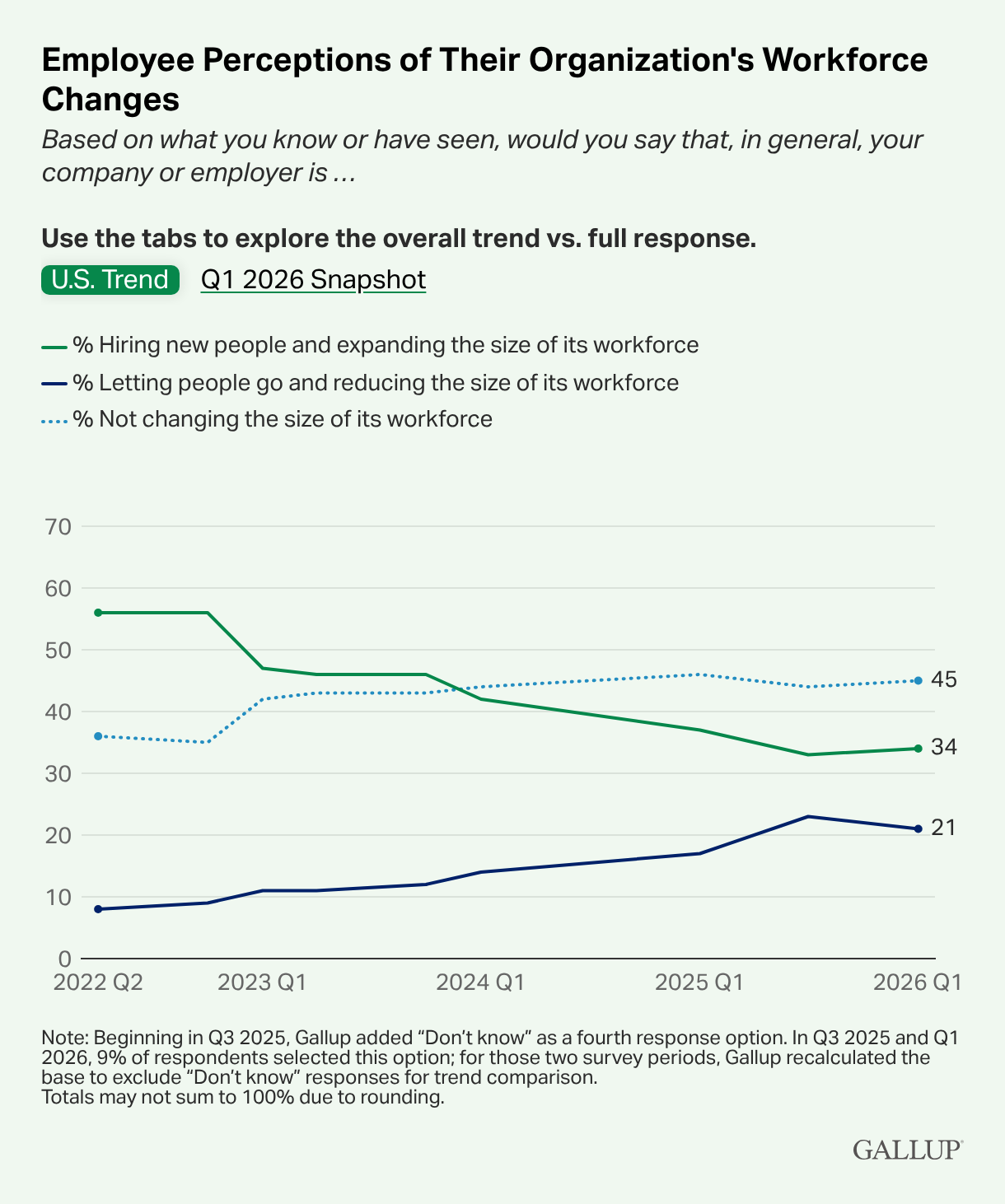
U.S. employers are still hiring more than they’re laying off, but the pace and perception have shifted, according to a new Gallup report. About one in five workers say their employer is cutting staff, roughly one-third say it’s expanding, and the largest share—around half—see no change, a marked shift from 2022–2023 when hiring dominated. Since 2022, hires have consistently outpaced layoffs in absolute terms, with March 2026 showing 5.5 million hires versus 1.9 million layoffs and discharges.

Gallup’s data suggest AI is not yet a major direct driver of layoffs. As of early 2026, only about 1% of laid-off workers explicitly named AI or automation as the primary reason they lost their jobs, even though most were laid off within the past two years. Many more pointed to restructuring, cost-cutting, or role elimination—factors that may quietly reflect AI’s influence on employer decisions without being labeled as such to workers.

Courtesy of Gallup
Going deeper
In the latest episode of This Week in Business, a Wharton podcast, Wharton management professor David Hsu breaks down SpaceX’s historic IPO, its massive valuation, and how Starlink, launch services, AI, and Elon Musk’s leadership are fueling investor enthusiasm. He also explores what SpaceX’s success could mean for the future of the space economy.
Overheard
“Some visitors leave with souvenirs. Others leave with America’s favorite dressing.”

—Kraft recently wrote on Instagram to introduce Kraft TSA Compliant Ranch, a travel-friendly version of the popular salad dressing. As international fans descend on the U.S. for the 2026 FIFA World Cup, which is also being hosted by Canada and Mexico, ranch dressing has emerged as one of the more viral stars of the tournament, Fortune reported.