The age of hoarding
 

Power Up

Power Up

A Reuters Open Interest newsletter

By Ron Bousso, ROI Energy Columnist


Data refreshes every time you open this email. For more energy news, click here. Please send any feedback to powerup@thomsonreuters.com.

Hello Power Up readers,

Is the Strait of Hormuz open or closed? The answer is "yes."

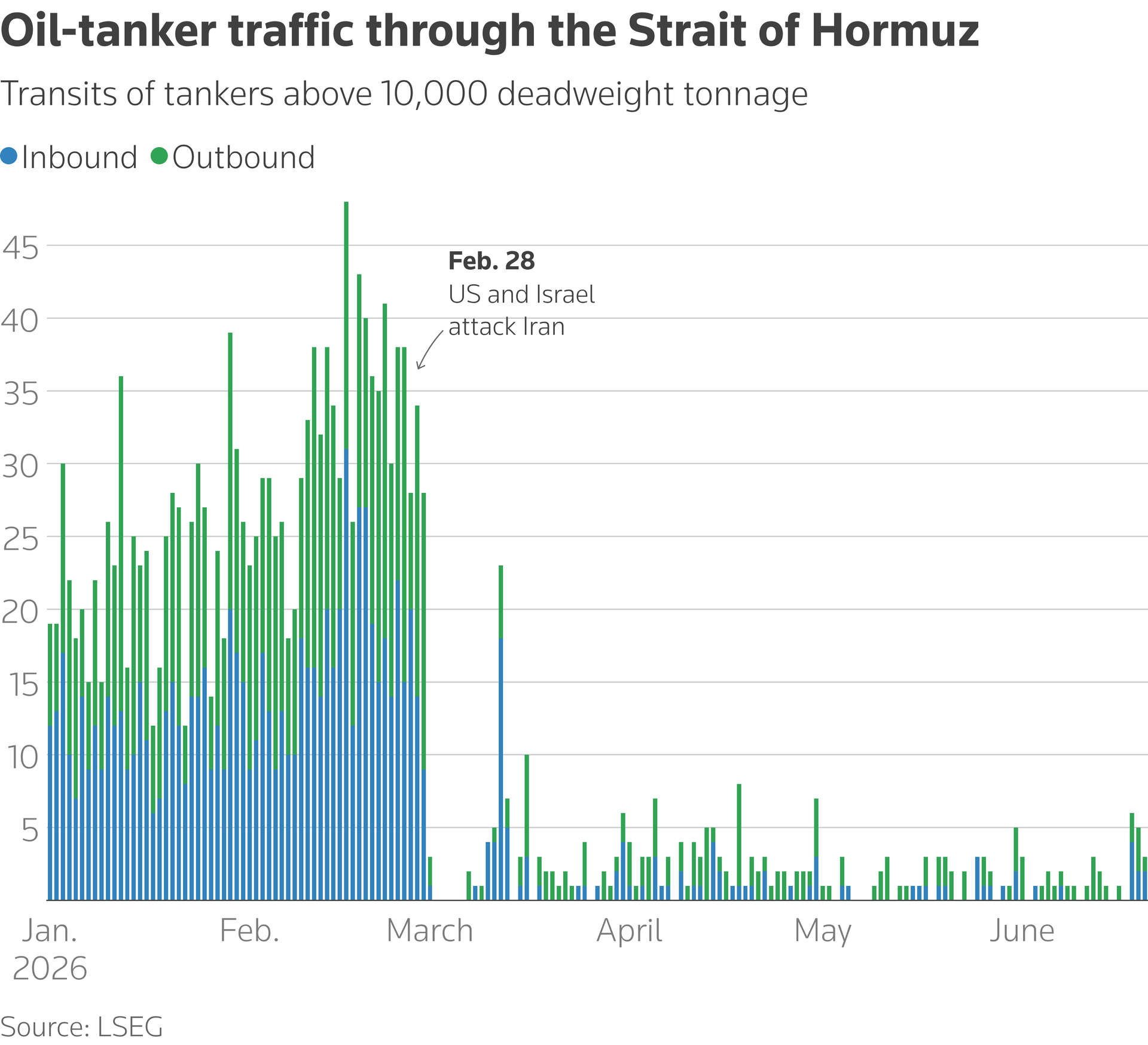
Ship transits through the vital waterway significantly picked up pace last week following the U.S.-Iran agreement to end the conflict, with dozens of tankers carrying oil and gas making the crossing, to the huge relief of the global economy.

The flow dropped sharply on Sunday, however, after the Iranian Revolutionary Guard declared the strait closed again due to Israel's strikes in Lebanon. The announcement came just as high-ranking U.S. and Iranian officials were supposed to meet in Switzerland to kick off the first round of talks aimed at resolving key issues including Iran's nuclear ambitions within 60 days. President Donald Trump responded to Iran’s actions by threatening to restart the war.

But much of this may be bluster. After a two-day delay, the Sunday talks appeared to go well, according to mediators, who said in a statement that the parties agreed to a mechanism to end the fighting in Lebanon and open a communications line to help ensure safe passages for commercial ships through the contested strait.

Hormuz appears to be open once again, but the weekend events reveal what is most likely the first example of a pattern that will persist for months, if not years, as I wrote last week. Now that Iran has shown it is willing and able to block the Strait of Hormuz, Tehran can flex this “H-bomb” any time it's unhappy with U.S. negotiations, Israeli action in Lebanon, or any other regional issue.

This is a structural risk that energy markets will have to learn to live with. Many countries around the world, particularly in Asia, are taking note – and responding accordingly.

The Iran war highlighted the importance of having large domestic oil reserves to cushion supply disruptions, so countries are now seeking to increase their storage capacity. This, in turn, has massive implications for the global energy market’s supply-demand balance coming out of this conflict. More on this below


Here are a few more headlines:

  • Asia's imports of crude oil are on track to return to pre-Iran conflict levels, but flows of refined products are still constrained and fuel prices reflect the supply stresses, writes ROI Asia Commodities Columnist Clyde Russell.
  • China's drive to ramp up renewable power for its fast-expanding AI data centre sector is running into ‌hurdles, as industry experts warn that forecasting peak demand remains difficult and grid operators are wary of taking on added risk.

As always, don’t hesitate to contact me at ron.bousso@thomsonreuters.com or follow me on LinkedIn with any questions or thoughts.


Top energy headlines

  • Oil falls after US-Iran talks signal easing supply risks
  • Tanker traffic through Hormuz picks up after slower flows due to crossing concerns
  • China's push for green power use in AI projects faces hurdles, experts say
  • Saudi Arabia top buyer of Russian seaborne fuel oil in May, data shows​
  • Goldman Sachs says EV surge may cut oil demand by late 2027


The race for reserves

Vulnerable countries that paid a high economic price during the Iran war are seeking to build domestic oil and gas storage buffers against future shocks, a drive that could bring roughly half a billion barrels of additional demand down the pike.

While the near-total closure of the Strait of Hormuz cut off a fifth of global oil and liquefied natural gas supplies for over three months – reshuffling energy markets and boosting Brent crude to nearly $120 a barrel – it could have been far worse.

One key stabilizing force was the world’s ability to tap emergency reserves.

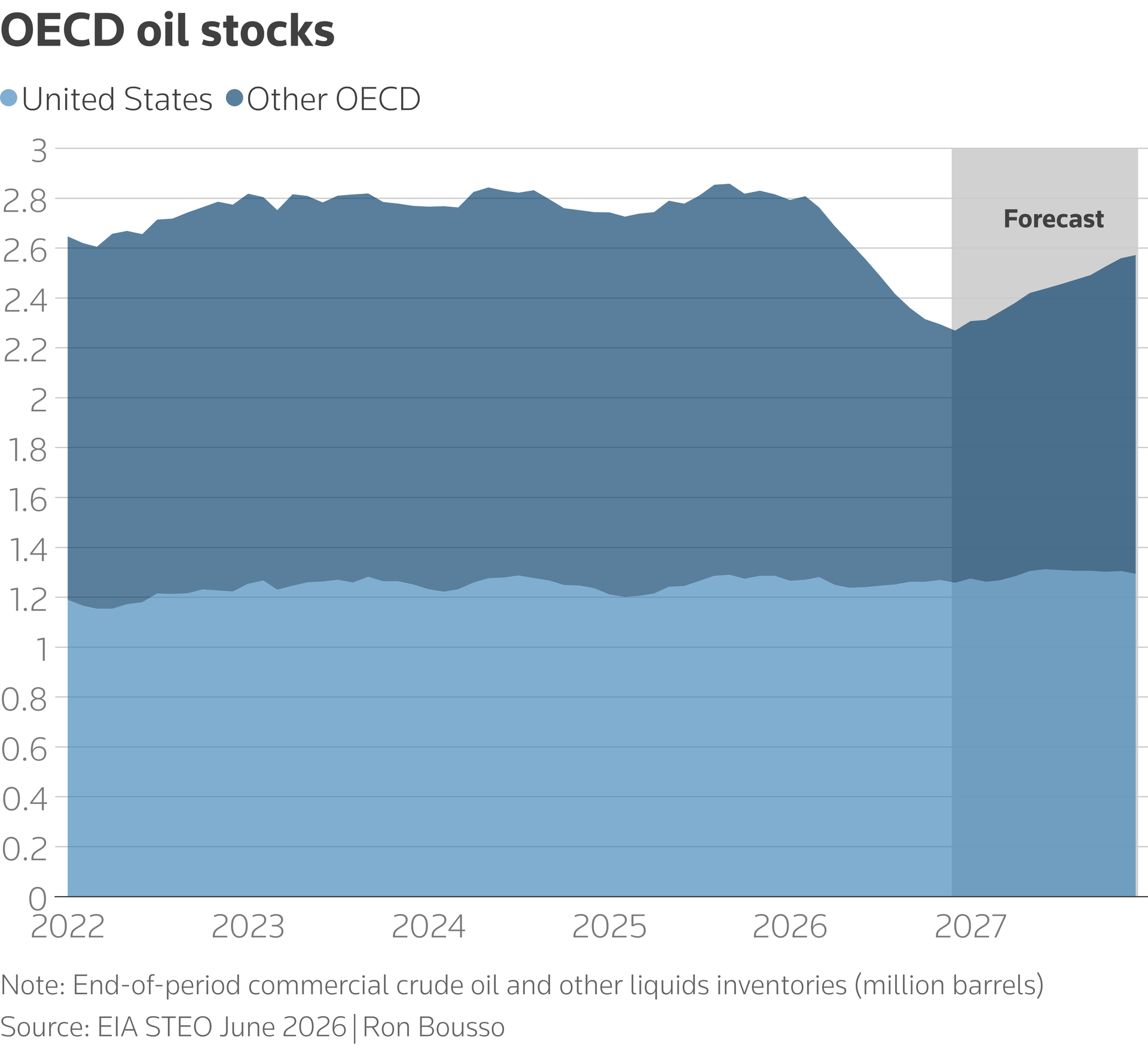
Early in the conflict, all 32 ‌members of the International Energy Agency agreed to a record 400 million-barrel release from strategic petroleum reserves (SPRs), with the U.S. contributing the largest share.

The drawdown — the sixth since the energy watchdog's creation — validated a strategy forged after the 1973 Arab Oil Embargo, under which IEA members must hold emergency stocks equal to at least 90 days of net imports.

China offered a second lesson. The vast oil reserves Beijing built in recent years allowed it to sharply scale back oil imports, saving itself billions and helping balance the global market.

The pain was particularly acute in India, Pakistan, Thailand and other economies with limited domestic reserves. Lacking substantial emergency stockpiles, governments turned to subsidies, fuel curbs, shorter work weeks and other austerity measures to curb consumption.

That may change now.

Read the full column
 

Opinions expressed are those of the author. They do not reflect the views of Reuters News, which, under the Trust Principles, is committed to integrity, independence, and freedom from bias.