|
|
|
|
Good morning. In focus today, we dive deep on industrial friction along the Halifax waterfront, where a federal infrastructure plan for Canada’s future submarine fleet is triggering a debate over a finite regional labour pool. |
|
|
|
|
|
|
|
|
|
|
|
|
|
|
|
|
|
|
|
|
|
|
Taxes: Complaints to the taxpayers’ ombudsperson spiked despite a 100-day plan to improve CRA service. |
|
|
|
|
|
|
|
|
|
|
|
|
|
|
|
|
|
|
|
|
|
Irving Shipbuilding workers at a keel laying ceremony for the HMCS Fraser, the first of Canada's River-class destroyers, at the company's Halifax Shipyard last Friday. Devin Stevens/The Canadian Press
|
|
|
|
|
|
|
|
|
|
|
How defence spending is straining an already small pool of skilled workers |
|
|
|
|
Ottawa is evaluating two separate sites in Halifax for a brand-new submarine maintenance facility to service Canada’s future 12-ship fleet, an infrastructure plan that the region’s largest naval contractor warns could disrupt the work force needed to build the military’s multibillion-dollar surface fleet. |
|
|
|
|
|
|
|
|
The federal government’s plans to set up a new publicly owned, privately contracted facility risks breaking an already strained supply of skilled workers, according to leadership at Irving Shipbuilding, the 3,000-employee division of the J.D. Irving empire. |
|
|
|
|
A new private operator entering the local market would pull skilled tradespeople directly from its own work force, the company argues, just as its yard attempts to scale up for Canada’s $60-billion order for 15 new River-class destroyers. |
|
|
|
|
I spoke with Jean-François Séguin, who served a more than two decades in the Royal Canadian Navy and now leads the shipbuilder’s government relations and communications, about what a competing naval contract down the harbour could mean for Canada’s core surface fleet. |
|
|
|
|
Irving Shipbuilding is looking to expand its headcount by 400 to 600 skilled tradespeople by the early 2030s. What’s driving that specific requirement? |
|
|
|
|
That net growth is entirely driven by the production timeline for Canada’s new River-class destroyers. As that program achieves its full rate, we project having four or five combat ships in the yard at the same time. Managing that kind of simultaneous industrial volume requires a substantial, permanent increase in our core trades work force and that of our subcontractors. This is a scaling-up effort just to deliver on our existing commitments to the surface fleet. |
|
|
|
|
Why is Irving Shipbuilding concerned about a new, independent private operator setting up a submarine facility right down the street? |
|
|
|
|
What we’ve built at Irving Shipbuilding is a knowledgeable and capable work force dedicated to finishing the Arctic and Offshore Patrol Ships program, building the River-class, and maintaining the Halifax-class frigates. Our fear is that if a new entry comes into the market to run a separate submarine facility, they are going to need to staff it immediately. They aren’t going to bring those workers with them; they will come right next door to our yard to get those tradespeople and train them up. That new entity will essentially take the very work force that is actually delivering for Canada right now at this moment. |
|
|
|
|
Instead of a new contractor building a work force from scratch, what is Irving proposing as an alternative? |
|
|
|
|
Since the pandemic, we have been largely successful in recruiting the right people and keeping our numbers up because we put apprenticeship programs in place to reach potential tradespeople early. If the government needs to build a submarine maintenance work force, we are proposing that they use the pipelines and mechanisms we already have in place and bolster them. We need to start training that work force immediately so that when the submarines come, you already have the welders, pipefitters, electricians and technicians ready to go. Both bidding consortia have acknowledged the need to cross-train maintainers; we just need to be at the table to integrate that work. |
|
|
|
|
What is your specific message to Ottawa right now about how they plan out submarine sustainment? |
|
|
|
|
Our message to the government is: Please involve Irving Shipbuilding as you plan this out. We want to look at the labour we already have and plan that together so we can execute it with maximum opportunity and minimum risk. If we plan this together, we can ensure that setting up a new submarine initiative doesn’t actively penalise or derail Canada’s ongoing surface ship programmes. |
|
|
|
|
International bidders and industry executives have said the submarine project will create thousands – or even up to 10,000 – jobs. Is that a realistic projection based on what you see? |
|
|
|
|
The numbers I am tracking – 450 to 650 people in Halifax, and likely the same on the West Coast – are the permanent staff who will directly work to support and maintain the submarines. But there is a massive layer of indirect work beyond that. A facility that costs billions of dollars to build could easily require a couple thousand workers just for construction. Then you have to factor in the people maintaining the buildings, servicing the equipment that maintains the submarines, and working further down the supply chain. So while the permanent technical footprint is just over a thousand people across Canada, the total economic number could easily be much bigger. |
|
|
|
|
This interview has been edited and condensed for length. |
|
|
|
|
|
|
|
|
|
|
|
|
|
|
|
|
|
|
|
|
|
|
|
|
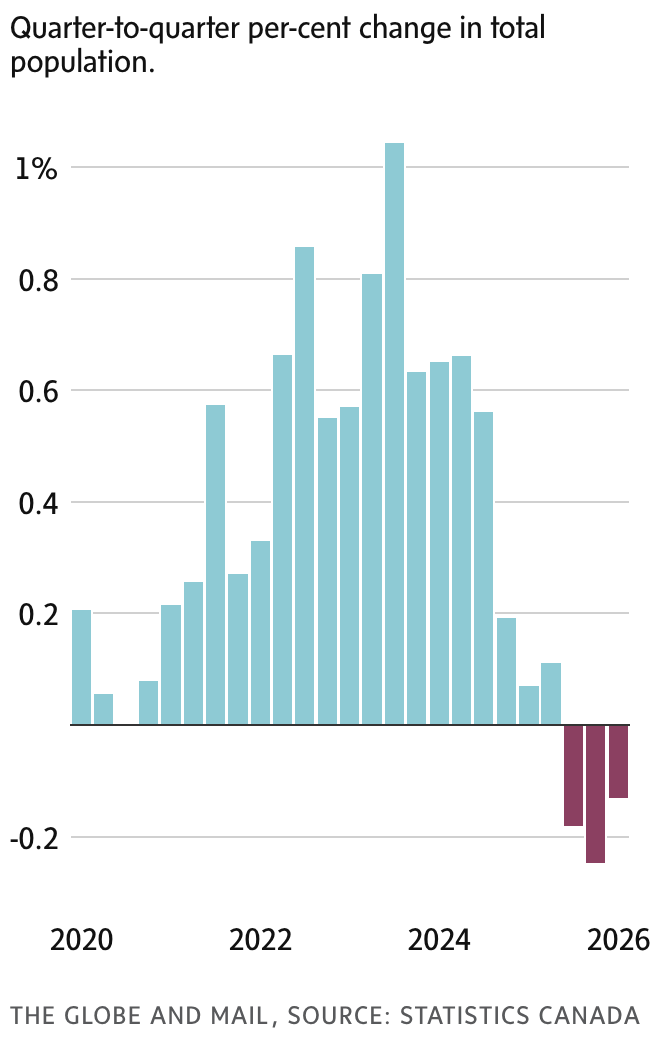
Canada’s population fell by about 55,000 people in the first quarter of 2026, a third-consecutive quarterly decline that is being driven by the federal government’s efforts to reduce the number of temporary residents in the country. (By the way, a population dive won’t make it any easier for the defence sector to solve its labour crunch, according to industry leaders.) |
|
|
|
|
|
|
|
|
|
|
|
|