| | President Donald Trump wants Iran to be in the ‘rearview mirror,’ DeepSeek becomes China’s most valu͏ ͏ ͏ ͏ ͏ ͏ |
| |  Edmonton Edmonton |  Brussels Brussels | Hangzhou |
 | Flagship |  |
| |
|
The World Today | 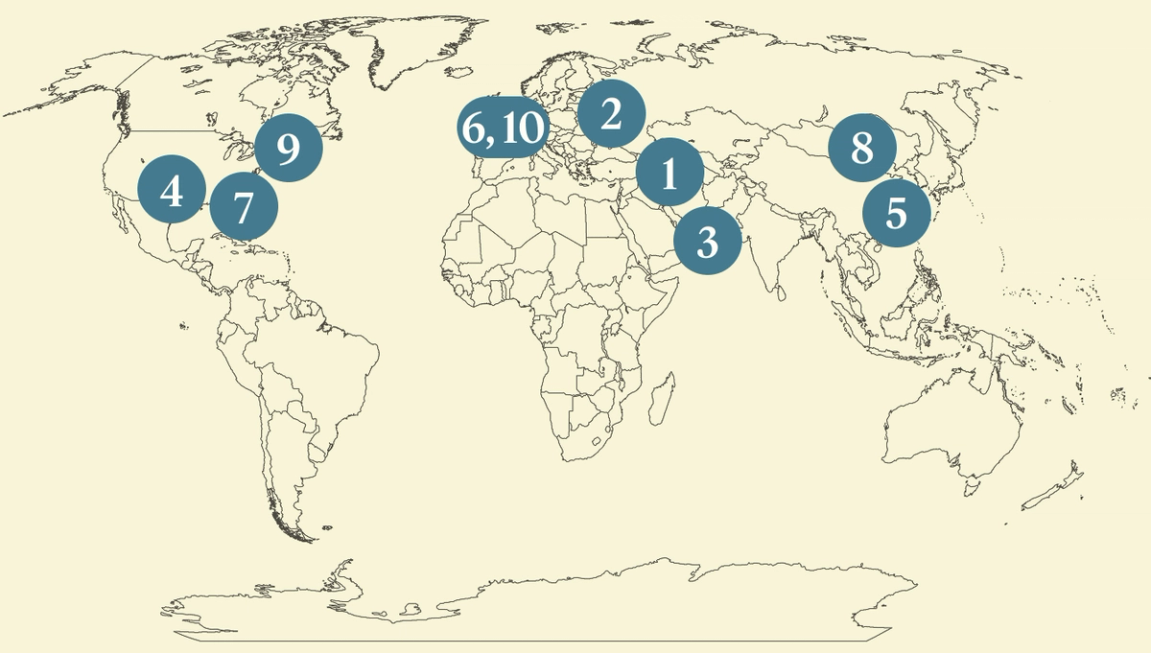 - Iran in Trump’s ‘rearview’
- Rekindling Ukraine interest
- Hormuz will never be ‘open’
- SpaceX tops Amazon
- DeepSeek’s $50B valuation
- EU-US sign trade deal
- Europe scrutinizes Palantir
- Global EV sales surge
- NASA’s supersonic milestone
- Breeding sterile mosquitoes
 A book on a historic alliance bound by argument, cajolery, and — above all — a common enemy. |
|
Trump wants Iran in ‘rearview mirror’ |
 Tyre, Lebanon. Zohra Bensemra/Reuters Tyre, Lebanon. Zohra Bensemra/ReutersUS President Donald Trump said Tuesday he hoped the Iran war would be in the “rearview mirror” soon, but details of the ceasefire deal are still a mystery and Israel’s presence in Lebanon remains a thorny issue. The US vice president suggested the initial agreement was a “very general document”: The Wall Street Journal reported that the deal allows Iran to immediately begin selling oil and fuel, and Iran said that it ensures Israel will immediately withdraw from Lebanon — but Israel insisted its military will remain. Trump admonished Israel for “vicious” attacks in Lebanon and reportedly refused Israel’s request to access the deal’s text, while striking a conciliatory tone on Iran, saying he was dealing with “very rational people.” |
|
Trump signals Ukraine not a priority |
 Thibault Camus/Pool via Reuters Thibault Camus/Pool via ReutersPresident Donald Trump suggested Tuesday that the Ukraine war was not a priority for the US, a striking shift in tone a day after he said he would turn his focus to ending it after announcing the Iran deal. Trump’s comments that the US had “nothing to do” with a faraway war will worry Washington’s European allies who want to redirect Trump’s attention to the conflict he once vowed to end in 24 hours. Instead, Trump has cut military aid to Ukraine, leaving Europe as Kyiv’s biggest backer. There have been signs of movement, though: Trump signaled a return to sanctions on Russian oil shipments and met with Ukraine’s president to discuss providing anti-air missiles. |
|
Hormuz will never truly be ‘open’ |
 Stringer/Reuters Stringer/ReutersThe Iran war will permanently reshape the world’s energy markets and the wider economy, analysts argued. While oil prices have fallen since the ceasefire deal was announced, it will be months before shipping and infrastructure is back to capacity, Semafor’s energy editor wrote, and Iran’s ability to shut the Strait of Hormuz with relative ease means the waterway “will never really be ‘open’ in the same way again.” Gulf nations are building new pipelines to circumvent the chokepoint, and “the race to electrification” is accelerating. Improvements in battery technology make electrification more feasible than it was during the energy shock caused by the Ukraine war, The New York Times reported. China, the largest exporter of renewables, will benefit most from the shift. |
|
SpaceX overtakes Amazon in value |
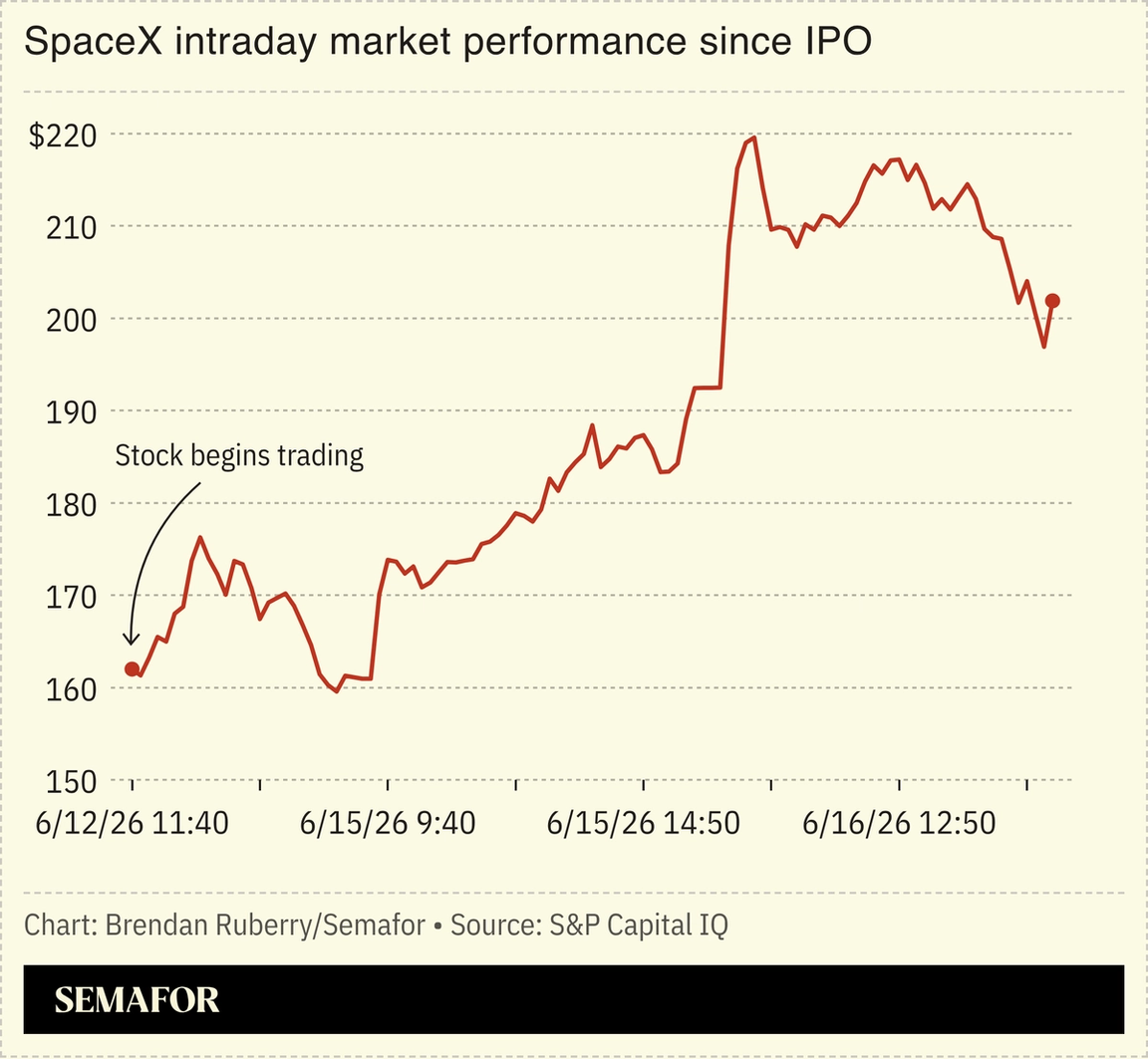 SpaceX shares jumped further Tuesday, making the company more valuable than Amazon but further raising concerns of a bubble. The space giant’s IPO last week broke records and investors have only piled in since. But the numbers are startling: Its price-to-sales ratio is almost 150, compared to less than four for Amazon, and while Amazon made $77 billion last year, SpaceX made a $4.9 billion loss. The soaring value “feels like one of those meme stocks,” an analyst told Reuters: “You have to be very, very careful.” SpaceX itself is pushing ahead, completing a $60 billion deal to buy coding startup Cursor to advance its AI side, alongside building massive data centers in Tennessee. |
|
DeepSeek fundraises $7.4 billion |
 Tingshu Wang/Reuters Tingshu Wang/ReutersDeepSeek became China’s most valuable AI startup after raising $7.4 billion, but its $50 billion valuation is eclipsed by the astronomical market values of its US rivals. The AI upstart upended Silicon Valley with its cost-effective open-source model last year, and is seen as leading Beijing’s race against the US. While it marks one of China’s largest private tech fundraisings, US frontier labs Anthropic and OpenAI recently raised $65 billion and $122 billion respectively. The disparity is largely due to geopolitical constraints, Reuters reported, which confine DeepSeek’s fundraising to China and limit its access to American hardware, making it pointless to “match the multi-billion-dollar computing budgets” of US rivals, an analyst said. |
|
EU removes tariffs from US goods |
 Yves Herman/Reuters Yves Herman/ReutersThe European Parliament approved its trade deal with the US, agreeing to reduce tariffs on industrial and agricultural goods. Washington agreed to cap its own tariffs. The deal was agreed last year, but votes were postponed after US President Donald Trump threatened to annex Greenland, leading parliamentarians to demand extra safeguards. The delays have frustrated Trump, who threatened tariff hikes if a deal wasn’t made soon, but Brussels no longer trusts Washington and demanded exit clauses. Europe is fighting a trade war on two fronts: At the G7, France’s president called for stronger action against Chinese overproduction, including protecting European industries from subsidized imports, although the odds of a coordinated EU position on Beijing are “exactly zero,” one analyst said. |
|
France’s spy agency drops Palantir |
|
 In this special episode of Compound Interest, Semafor’s Chief Commercial Officer Rachel Oppenheim sits down with Todd Heimes, Vice President and General Manager at our season sponsor, Amazon Business, to discuss how Amazon Business is reshaping the way organizations make purchases. Heimes, who has been with Amazon since 1999 and has helped build Amazon Business since 2016, discusses how the platform is making buying smarter and more strategic — reducing friction through broad selection, fast delivery, and a customer-first approach grounded in trust. Disclaimer: This season of Compound Interest is sponsored by Amazon Business. This episode is commercial content produced by Semafor Global Studio with Amazon Business. |
|
Global EV sales surge during Iran war |
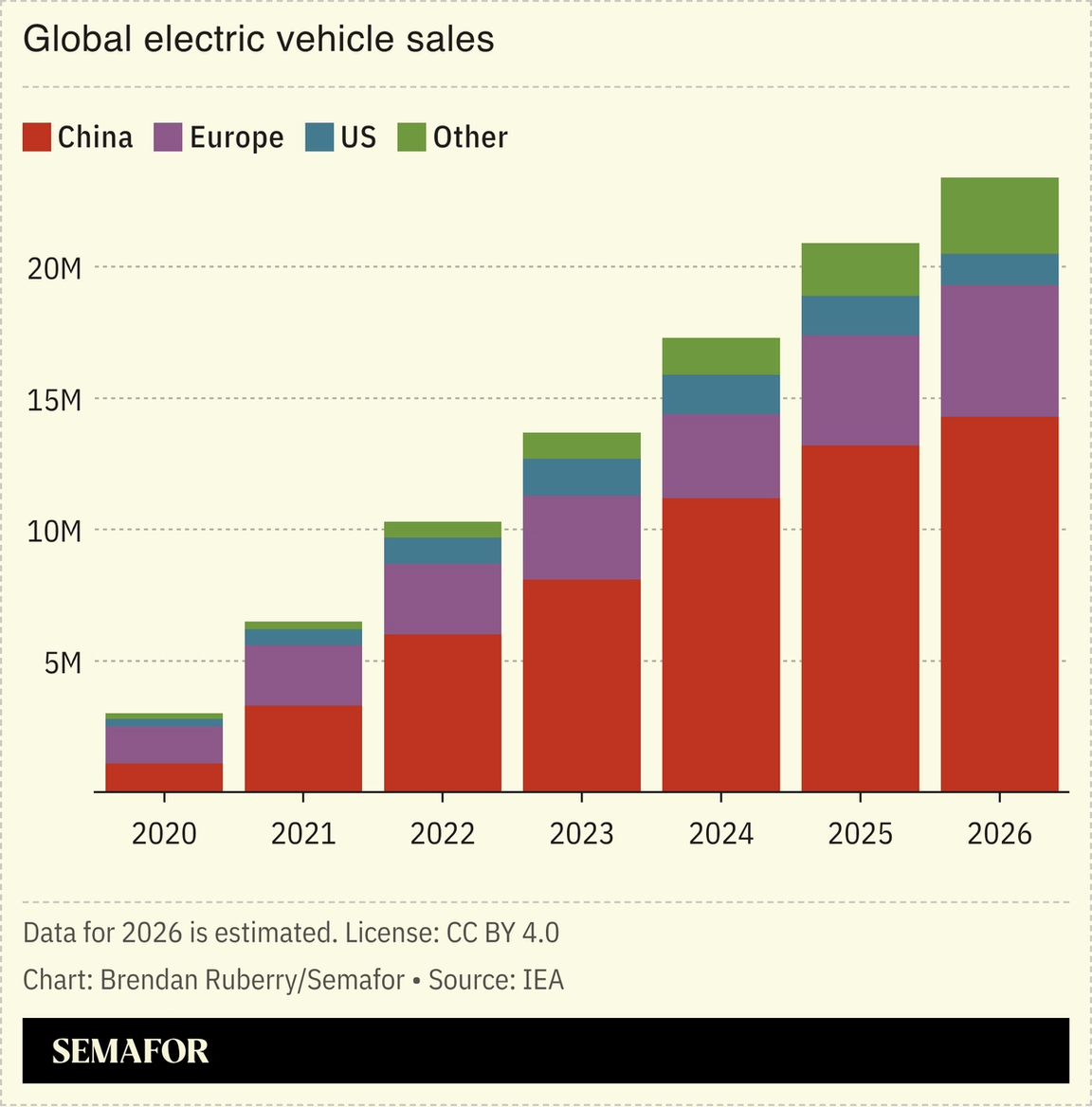 Global EV sales are expected to hit 23 million this year, an 11% jump from 2025, as the Iran war drives demand for cheaper electric mileage. Thanks to falling lithium-ion prices, EVs are becoming more affordable just as gas prices have risen, prompting more drivers to make the switch even as demand slows in the world’s largest market: China’s domestic EV sales slumped last month, but its exports soared by 73%, reflecting the extent to which “war in Iran has changed the math” around EVs, The New York Times wrote. In the US, it’s nearly three times more expensive to fuel a gas car as an EV, and Carbon Brief found that the UK’s EV drivers save nearly $1,500 annually over their petrol counterparts. |
|
NASA’s supersonic jet breakthrough |
|
|


