| | Wall Street is looking favorably on the prospects for a US-Iran peace deal.͏ ͏ ͏ ͏ ͏ ͏ |
| |  | Energy |  |
| |
|
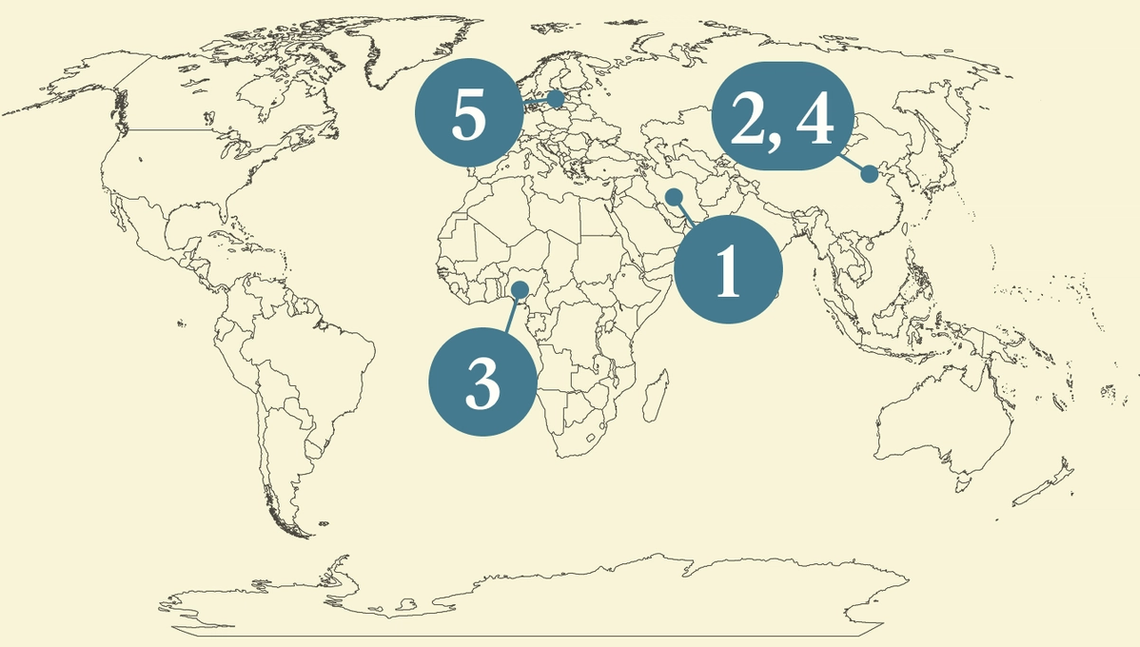 - ‘Acute’ to ‘managed’
- China’s oil influence
- Africa’s biggest IPO
- EV sales jump
- Nord Stream conspiracies
 A rare earth expansion, and an offshore wind contraction.
|
|
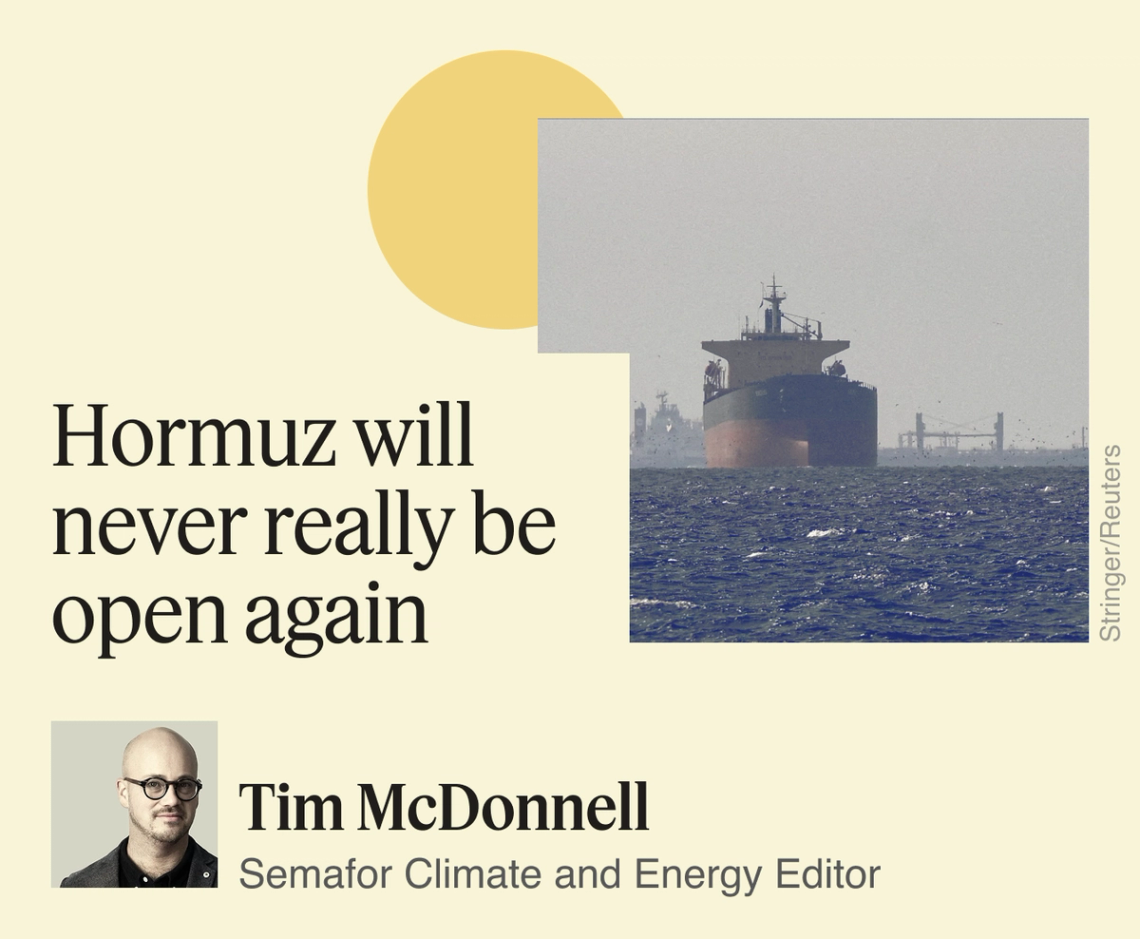 The US-Iran de-escalation deal may bring oil tanker traffic back to something resembling the pre-war norm, but the global energy trade will never be the same. Oil prices will very likely fall — Goldman Sachs lowered its fourth-quarter Brent forecast from $90 to $80 per barrel on Monday. But with so much uncertainty ahead, no one believes oil prices are fully out of the woods yet: Assuming a real ceasefire actually holds, it will take time, possibly months, to clear out trapped tankers and bring in new empty ones, and to rebuild and restart damaged production and export facilities. There will also be demand for oil to refill heavily depleted reserves in the US and elsewhere (China’s reserves, conversely, remain robust, and its restocking appetite unknown). Still, the crisis was remarkable in that, despite the 1-billion-plus barrels yanked from the market since February, US and European benchmark crude prices didn’t top the spike following the 2022 invasion of Ukraine. US “energy dominance” definitely helped, as did the strategic reserves that were made for this moment, alongside the global clean energy transition. More long-term changes are coming. The race to electrification is being redoubled, especially in Asia, which took the most painful hits in the past few months. In a survey last week of 2,000 global executives, 91% agreed switching from fossil fuels to electric alternatives would improve their company’s energy security. “The countries that succeed will electrify, while diversifying supply chains and investing in resilience,” Meghan O’Sullivan, a former senior US energy security official, told me. “Energy geopolitics is shifting from barrels and tankers to minerals, grids, batteries, and technology.” The Strait of Hormuz will never really be “open” in the same way again, either. Iran has proven, and maintains, its military capacity to shut it down with relative ease, and may emerge from these talks with the long-term ability to exact “fees” for transit. Yet “Hormuz is a diminishing asset,” Richard Goldberg, a Trump administration National Security Council official until last year, told me, as Gulf countries drive more investment into new pipelines and other chokepoint-defeating infrastructure. Whereas the years following the 1970s Arab oil embargoes saw Gulf states coordinating more closely on oil, the next few years may be defined more by competition, “as Gulf exporters seek to offer discounts against each other,” Columbia University’s Karen Young said. Meanwhile, Washington no longer functions in its traditional role as a guarantor of global energy security. And while “energy dominance” did work to US consumers’ advantage, it came at a cost to many allies. “That asymmetry could create important tensions between the US and its partners,” O’Sullivan said. Until there’s a strong deal in place with Iran, it won’t be clear whether US “energy dominance” really served a useful geopolitical function — or just made Trump’s foreign policy adventures a little less painful for American voters. |
|
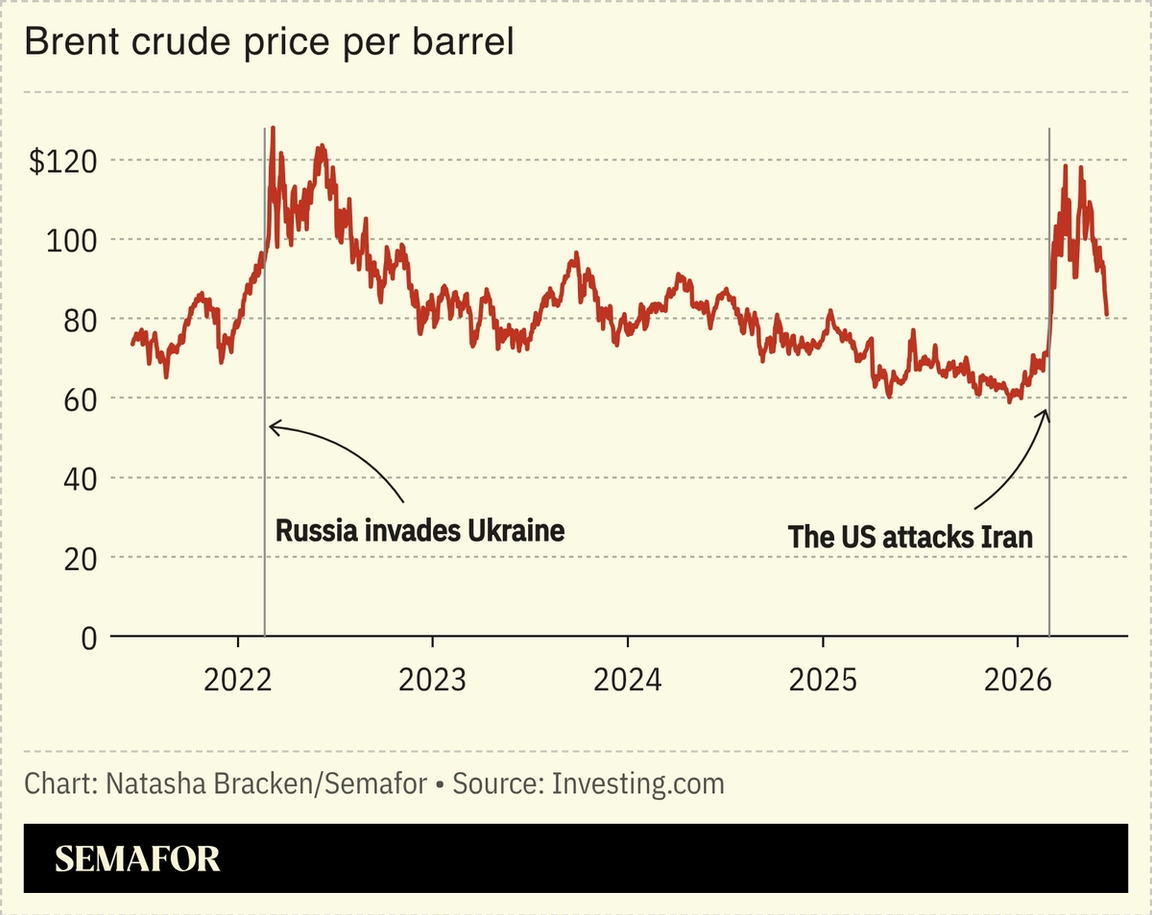 Wall Street is looking favorably on the prospects for a US-Iran peace deal. Oil prices fell to a three-month low Monday (although still above pre-war levels) and several major banks cut their price forecasts. Natural gas prices could also see relief if Qatar follows through on plans to return to 80% of full production capacity at its LNG terminal within two months. Other steps needed to restart regular shipping traffic — from resetting insurance rates to scraping barnacles off tanker hulls — will take longer. “For energy markets, this is a transition from acute disruption risk to managed geopolitical risk,” said Jorge Leon, Rystad Energy’s head of geopolitical analysis. But some close counters of oil barrels still think Wall Street is being pollyannish. “Many traders that ordinarily would use the futures market to express a bullish position on oil fundamentals were relegated to the sidelines,” Clay Seigle of the Center for Strategic and International Studies told me, “because you’re basically going up against Trump.” |
|
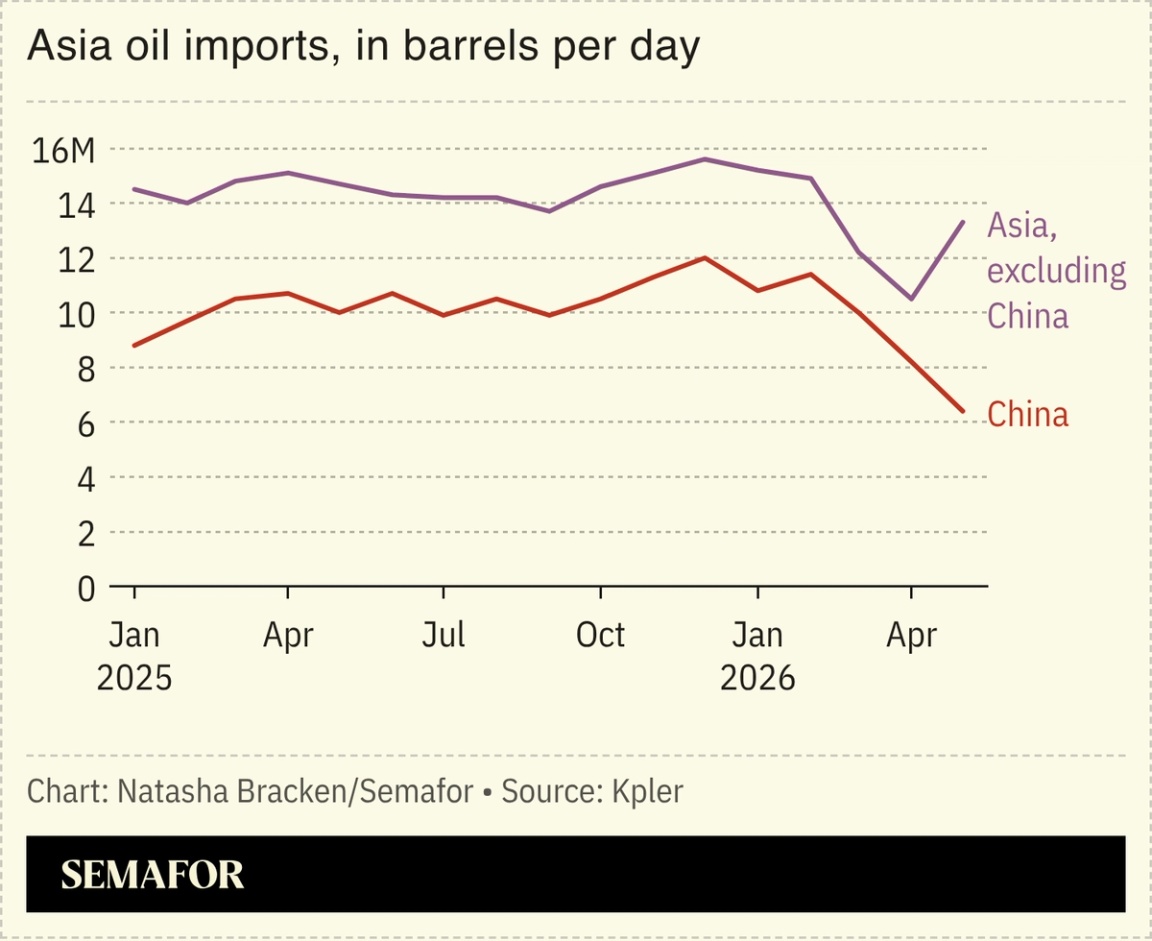 China’s slowdown in crude imports helped cushion global energy markets during the Iran war, but its next move following the US-Iran deal to reopen the Strait of Hormuz could push prices higher. Beijing will likely keep leaning on its massive commercial stockpiles over the next few months, analysts said, but the buffer has limits. “Any recovery in Chinese oil demand … could tighten global energy markets, reignite inflation pressures, and complicate the task facing central banks,” Bloomberg economists wrote. If the deal collapses and Hormuz stays shut, it’s unclear how long China will go without tapping the global market. “There will be a return,” an analyst told The New York Times, and with it a potential rise in oil prices. Either way, it’s clear that the global shift to non-fossil energy accelerated by this crisis will leave China as one of the war’s main victors. |
|
| |  | Alexander Onukwue |
| |
 Aliko Dangote at the refinery. Sodiq Adelakun/Reuters Aliko Dangote at the refinery. Sodiq Adelakun/ReutersAnticipation is growing for Africa’s largest-ever initial public offering by Nigeria’s Dangote Refinery, with the continent’s financial services giants and retail investors gearing up to get a piece of the action. The company wants to raise $5 billion in its debut on Nigeria’s stock exchange by September, which would value it at $50 billion, according to reports. But the offer is currently being preceded by a push to raise $1 billion in debt from international investors, as well as a separate private sale of $1 billion worth of shares to high-net worth individuals and corporations. “We held an investor meet and greet in Ghana, and everyone’s interest was finding out how to participate in the Dangote IPO,” Richard Bassey, CEO of Bamboo, a Nigerian broker that operates a stock trading app with 1.7 million users, told Semafor. |
|
 Global electric vehicle sales are expected to hit 23 million this year, an 11% jump from 2025, even as demand slows in two of the three biggest EV markets. The rise is mostly due to falling lithium-ion prices, the introduction of more affordable EVs, and booming adoption in emerging markets. China retains its familiar first place in sales, accounting for 63% of electric cars sold globally last year. Domestically, Beijing also leads in EV adoption, but its slowing sales — a combination of tightened eligibility requirements and an increasingly competitive EV market — have prompted a downgraded outlook for the sector in BNEF’s latest report. The US played a significant role too, with EV sales set to fall 19% this year because of the full withdrawal of federal regulatory support for electrification. |
|
| |  | Ben Smith |
| |
 Danish Defence Command/Forsvaret Ritzau Scanpix/via Reuters Danish Defence Command/Forsvaret Ritzau Scanpix/via ReutersThe fallout from the 2022 sabotage of the Nord Stream gas pipeline offers a damning critique of US media credulity. When the American media, bolstered by official statements from unnamed officials, suggested Russia was behind the attack, the actual attackers were “overjoyed by the proliferation of fake news,” reveals Bojan Pancevski, The Wall Street Journal’s chief European political correspondent, in his cinematic new book, The Nord Stream Conspiracy. The episode is a revealing moment in the story, much of which Pancevski broke in the Journal in 2023, and a useful glimpse at Washington’s — and the world’s — disorienting fog of war in a broken information environment. At the time, Kremlin spokesman Dmitry Peskov got it right: The idea that Russia had blown up its own pipeline, and its leverage over Europe, was “predictably stupid.” But the story turns out to have been crazier than anyone could have guessed. The truth in this case — as is often true — is specific, chaotic, and at times just dumb. |
|
 In this special episode of Compound Interest, Semafor’s Chief Commercial Officer Rachel Oppenheim sits down with Todd Heimes, Vice President and General Manager at our season sponsor, Amazon Business, to discuss how Amazon Business is reshaping the way organizations make purchases. Heimes, who has been with Amazon since 1999 and has helped build Amazon Business since 2016, discusses how the platform is making buying smarter and more strategic — reducing friction through broad selection, fast delivery, and a customer-first approach grounded in trust. Listen to the latest episode of Compound Interest now. Disclaimer: This season of Compound Interest is sponsored by Amazon Business. This episode is commercial content produced by Semafor Global Studio with Amazon Business. |
|
 New Energy- A consortium of renewable energy groups is suing the Pentagon for allegedly freezing national security reviews of new wind farms on private land for months.
- Shell is looking to sell its offshore wind farms in an effort to move away from the green energy sector and focus more on its higher-returning fossil fuel business.
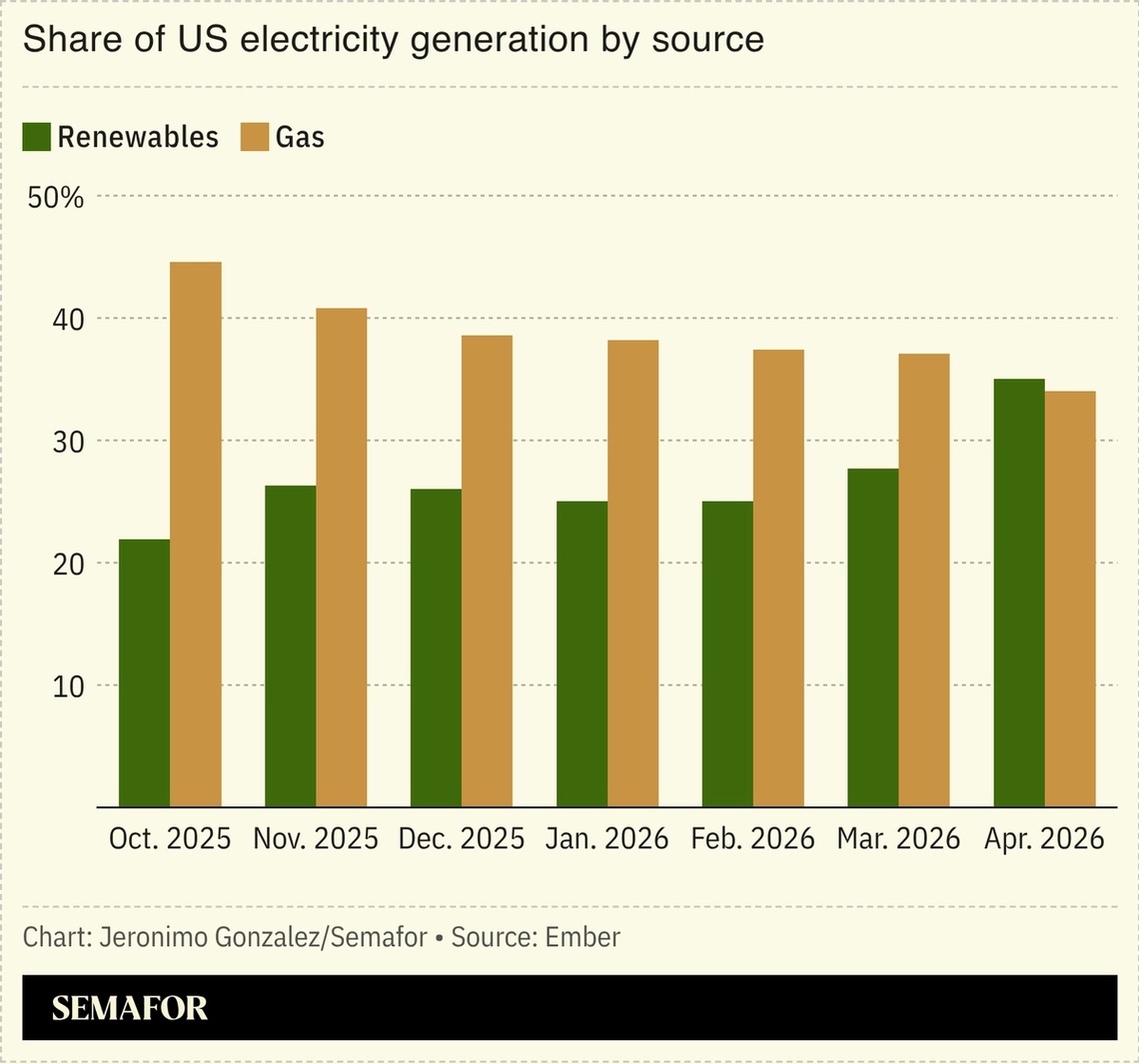
- Still, the biggest wind farm in the US began commercial operations, highlighting the country’s rapid rollout of green energy despite the Trump administration’s hostility to the industry.
 Fossil FuelsFinance |
|
|


