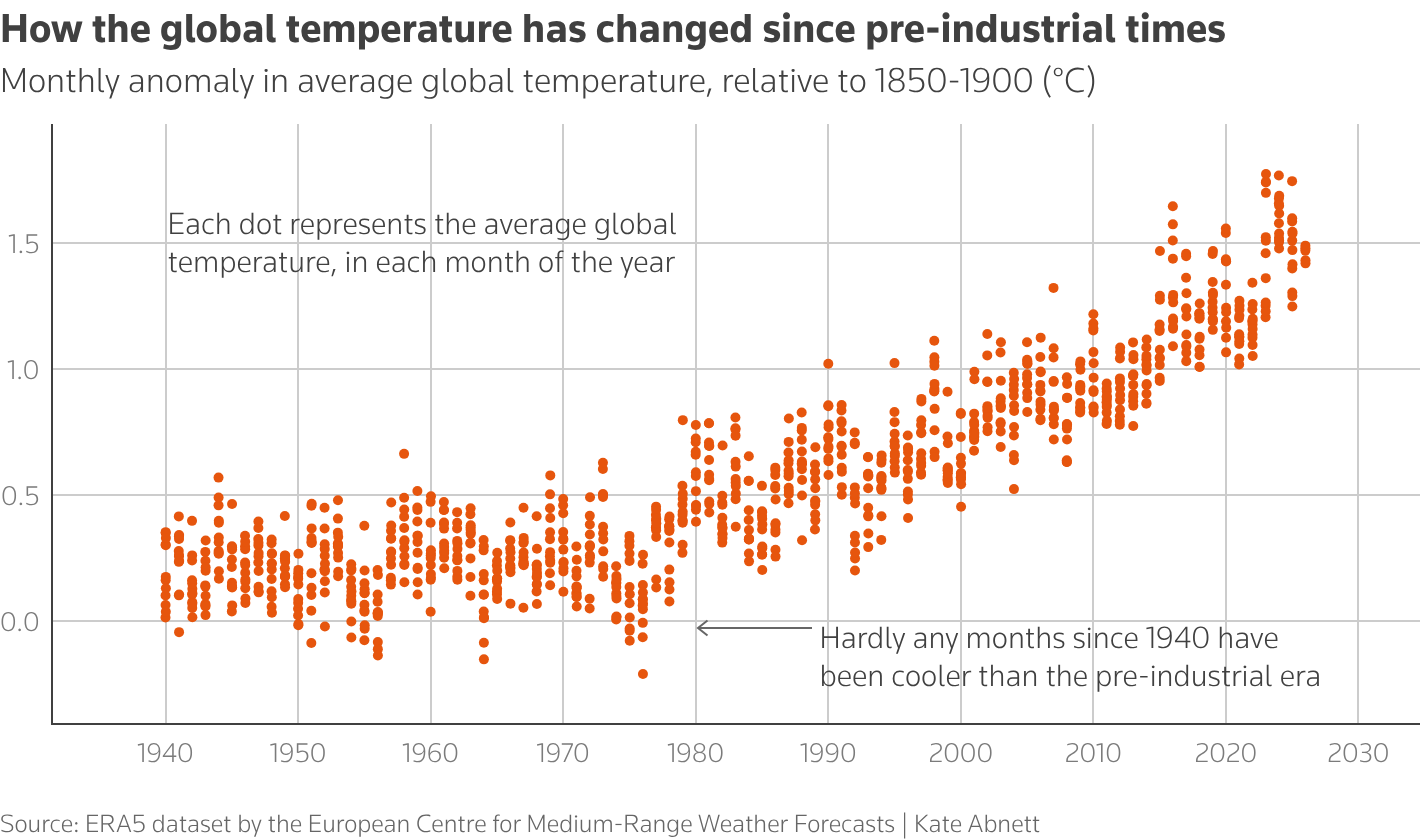
And the world experienced the second-hottest May on record.

See how companies and governments are responding to climate change and social challenges. Subscribe to Reuters.com for $1/week.


Sustainable Switch

Sustainable Switch

Climate Focus

By Sharon Kimathi, Energy and ESG Editor, Reuters Digital

Hello!

It’s yet another World Cup focus today as the tournament opened with quite the dramatic game between Mexico and South Africa in Mexico City, which ended with three red cards.

But this isn’t about the games, which you can track with Reuters special World Cup focused newsletter Reuters Inside Track. Sign up here.

Today’s focus is about how the weather is affecting fans attending the World Cup fan festival in Toronto.

Fans were met with disappointment on Thursday after organizers canceled the FIFA Fan Festival Toronto due to ‌poor weather on the eve of World Cup co-host Canada's first game.

Environment and Climate Change Canada said there was a risk of thunderstorms early in the evening, with a 40% chance of showers overnight on June 11.

As for today, the Reuters Climate Monitor shows that the weather on June 12 is 30 degrees Celsius (85 degrees Fahrenheit), which is 6.9 C above the normal high from 1961-1990.

Sports scientists say there are clear weather-related risks facing a summer World Cup in Canada, Mexico and the United States.

Seasonal forecasts indicate above-normal temperatures across large parts of the U.S., while moisture flowing north from the Gulf of Mexico ‌could ⁠fuel thunderstorms and severe weather during the opening weeks of the tournament.

Fans took to social media to question Toronto's readiness for the tournament after the city had also faced criticism for proposing ⁠no free tickets for the festival. 

The city reversed course on its plans and released some free tickets in May, which sold out within hours. The festival, ⁠which is set to include live game broadcasts, food and entertainment, will run till July 19.


Climate Buzz

1. China warns of risk of 'extreme floods' in desert regions

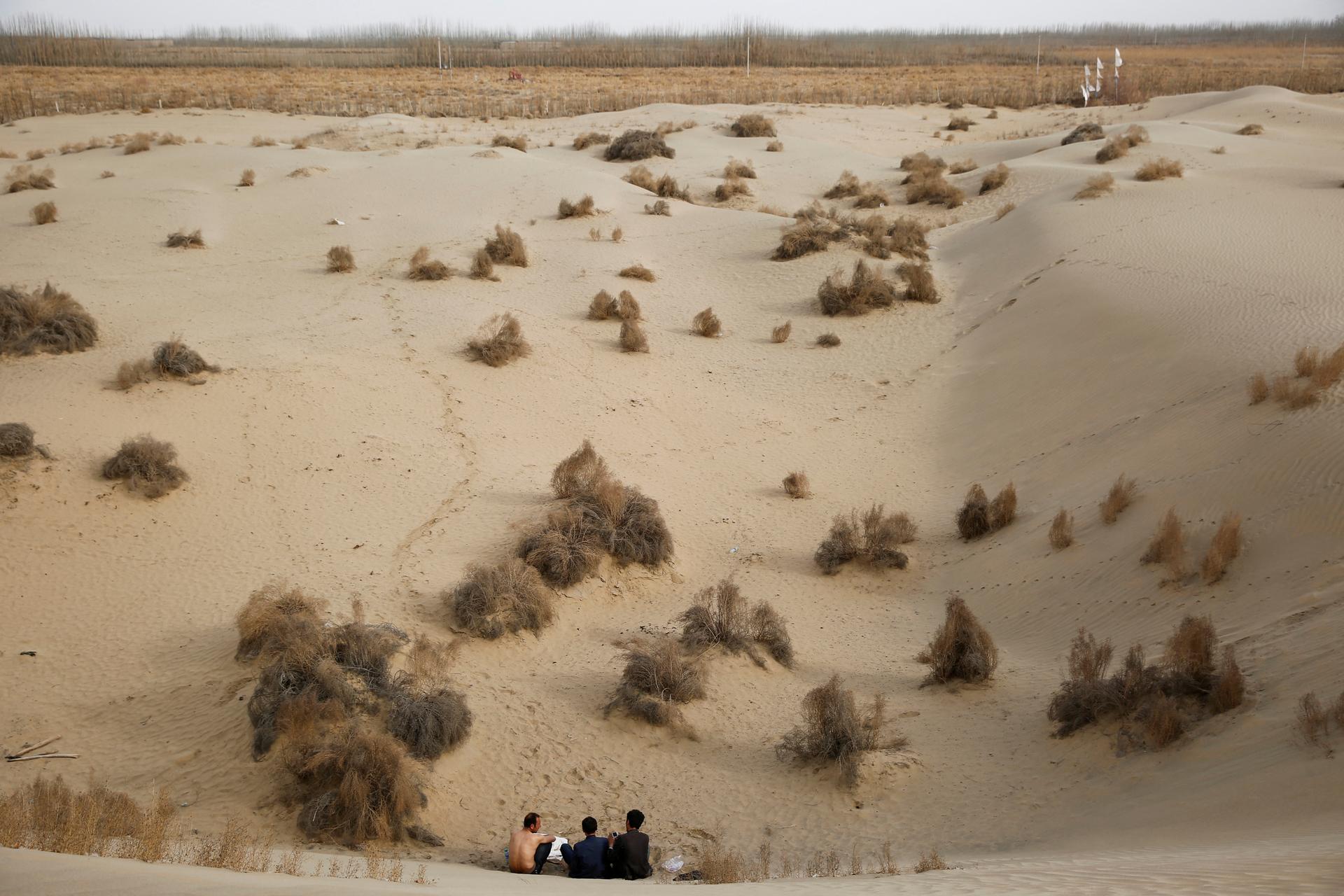
China warned communities in its ‌northwestern Xinjiang and nearby regions on Friday to prepare for "extreme floods" this summer, driven by abnormally high temperatures, heavy rainfall, and rapid glacier melt.

Xinjiang's Taklamakan Desert has ⁠experienced similar floods since 2021, they typically occur in August, when temperatures peak. On June 12, Xinjiang was 7.3 degrees hotter than average for this time of year, reaching 38 degrees Celsius (100 degrees Fahrenheit), according to the Reuters Climate Monitor.


Men sit at the foot of a dune in Taklamakan Desert outside the village of Jiya near Hotan, Xinjiang Uighur Autonomous Region, China. REUTERS/Thomas Peter

2. Ocean watch: From antibiotic resistance to marine carbon removal research

There are two ocean-based stories that caught my eye this week. One was how genes linked to antibiotic resistance are present across multiple ocean basins, including remote waters, according to findings by the SeA Care project, an Italian-led research venture that analysed seawater samples worldwide. Click here to find out more about their research.

The other is an Ethical Corp Magazine piece by contributor Angeli Mehta who wrote about Trump-era cuts that have hit U.S. marine carbon removal research and funding, which adds to the risk of not exploiting the ocean’s considerable potential to help combat climate change. Click here for the full piece.

3. Hungary's Lake Velence drying up, threatening tourism and wildlife

The water level of Hungary's third-largest lake is expected to drop to near historic lows this summer due to climate change and decades of water mismanagement, threatening its ecosystem and tourism industry, experts and locals said. The ⁠lake's water level measured at just 3 centimeters (1.1 inches) above the historic low recorded in 2022, data from the National Directorate General for Water Management showed.

4. Man accused of sparking deadly LA wildfire faces high-profile arson trial

Jonathan Rinderknecht, a 30-year-old former Uber driver, is facing one of the most high-profile arson charges as his trial in a U.S. District Court began this week over starting a brush fire on January 1, 2025, that grew into one of the deadliest and most destructive wildfires in Los Angeles history. 

His attorneys argue that the hilltop New Year's Day blaze was triggered by fireworks, not ‌his client, and that the massive Palisades inferno that killed 12 people and destroyed thousands of homes a week later was a separate fire set off by others.

5. Deadly Indonesian floods wiped out at least 7% of rare orangutan population, report says

At least 58 Tapanuli orangutans, which are endemic to an area around Indonesia's north Sumatra's Batang Toru forest, were killed in the nation’s deadly floods and landslides last year, according to a newly released report. Click here for more on the report. 


What to Watch

 
Play 
 

Want to learn more about the Reuters Climate Monitor? Click here for a video on its origins from the tool’s creator Ben Welsh.


Climate Commentary

  • Brands need to tell more authentic stories to get their sustainability message across, writes Ethical Corp Magazine contributor Oliver Balch. Click here for the full piece.
    • Could Germany's electricity output – which is on track to expand by the most in more than a decade in 2026 – offer a lifeline to its industrial sector? Click here to find out if it did in a comment by Reuters global energy transition columnist Gavin Maguire.
 

Climate Lens


The world has just experienced the second-hottest May since records began, according to the European Union's Copernicus Climate Change Service (C3S). The ⁠average global temperature last month was 1.42 degrees Celsius above the average in 19th-century pre-industrial times.