| | US President Donald Trump cancels planned strikes on Iran, the European Central Bank raises interest͏ ͏ ͏ ͏ ͏ ͏ |
| |  BRUSSELS BRUSSELS | NEW DELHI | HAIKOU |
 | Flagship |  |
| |
|
The World Today | 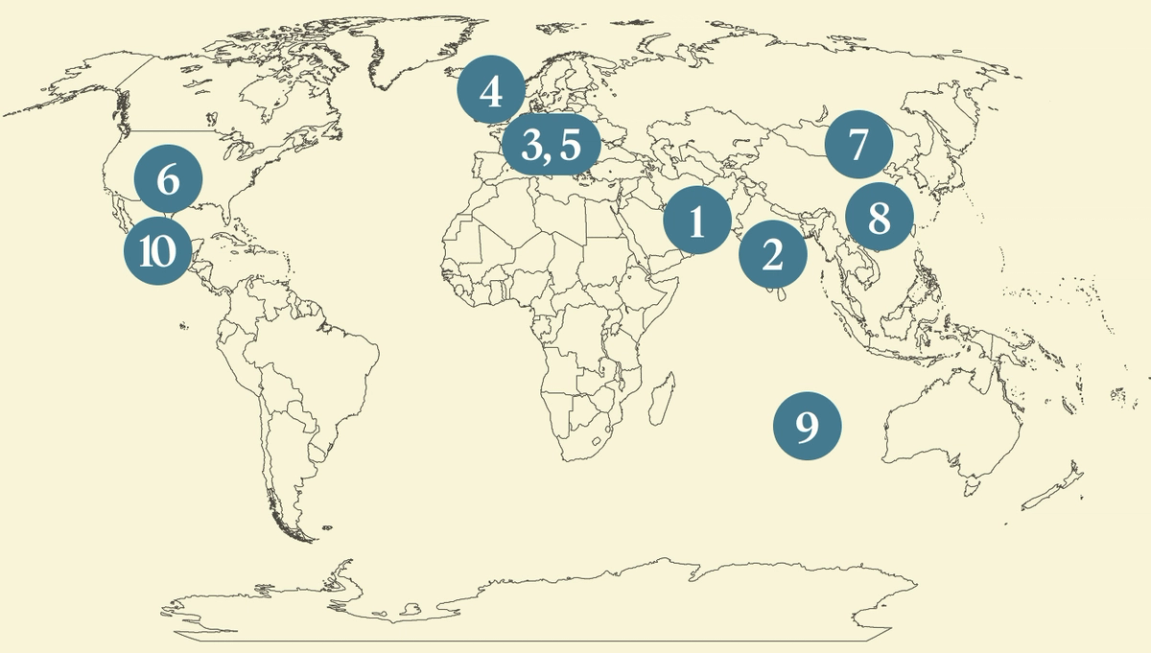 - Trump cancels Iran attacks
- India protests US ship strikes
- ECB raises interest rates
- UK defense chief quits
- Risks of Europe’s AI lag
- Energy tech IPO boom
- Beijing’s e-commerce warning
- China attracts medical tourists
- A giant whale graveyard
- A World Cup for polyglots
 A book explores the historic systematic gaming of the H-1B visa. |
|
No ‘final decision’ on US deal, Iran says |
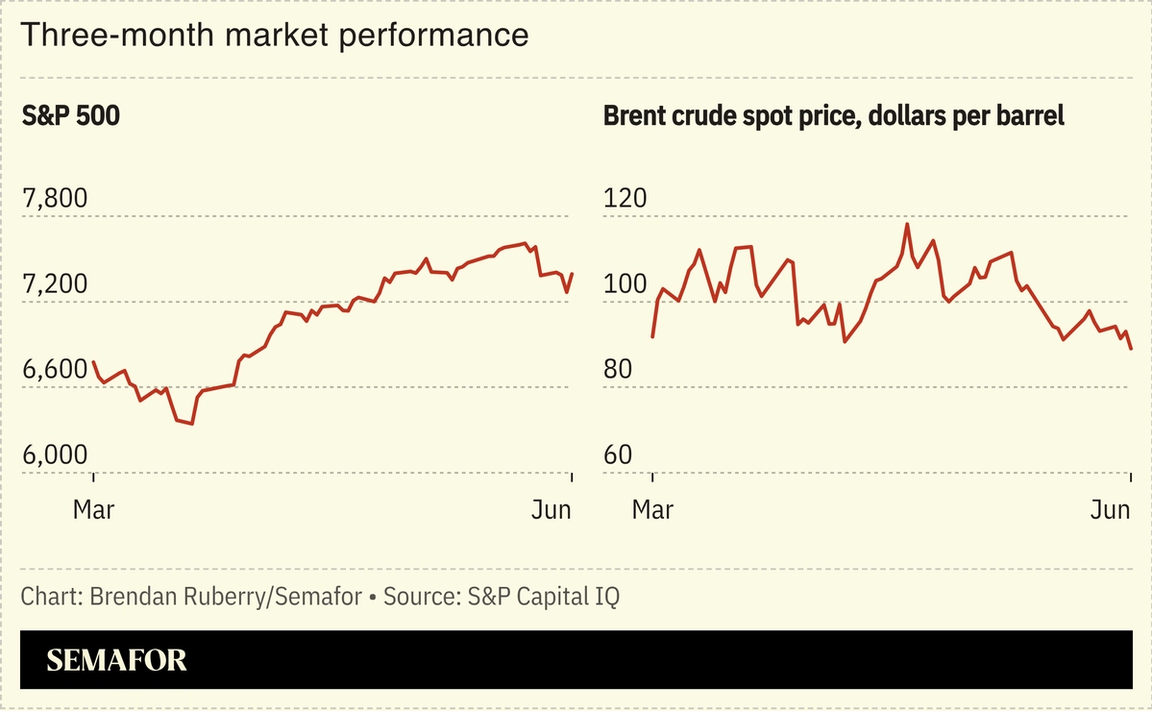 US President Donald Trump on Thursday said he canceled scheduled strikes on Iran after reaching an agreement with Tehran to end the war, though the Islamic Republic said it hadn’t reached a “final decision” on a deal. Trump’s announcement of a “great settlement” — he suggested it could be signed over the weekend — was welcomed by US markets, which surged after sliding in recent days when the US and Iran resumed strikes. Oil prices fell more than 4%. Israel sought to downplay the significance of the possible pact, saying it was not party to the agreement. Trump has predicted an Iran deal was imminent dozens of times, only for talks to fall apart. |
|
India protests over US strike on ship |
 Benoit Tessier/Reuters Benoit Tessier/ReutersNew Delhi lodged a diplomatic protest with Washington after three Indian sailors were killed in a US military strike on a tanker in the Gulf of Oman. Two other ships attacked by the US in the Gulf this week had Indian crew members on board — India supplies around 12% of the global merchant shipping workforce. “They are ordinary people, not trained for war,” an Indian maritime union leader told The New York Times, urging the government to “ask tough questions.” But New Delhi appears “to have little appetite for a diplomatic confrontation,” the Financial Times wrote, as it races to finalize a trade deal with Washington, with whom relations have soured during the second Trump administration. |
|
ECB raises interest rates as inflation bites |
 Heiko Becker/Reuters Heiko Becker/ReutersThe European Central Bank raised interest rates on Thursday, becoming the first of the world’s major developed economies to do so since the outset of the Iran war. Frankfurt cited “a broadening of inflation throughout the economy.” A spike in US inflation is also putting pressure on the Federal Reserve — and its new chair — to hike the cost of borrowing this year. Policymakers worldwide are in a bind: The World Bank projected Thursday that the Iran war will drag the global economy to its slowest growth since the start of the pandemic. The group forecast GDP growth to fall to 2.5% this year and has cut its forecasts for two-thirds of countries since January. |
|
Europe’s defense setbacks pile up |
 Former British defense secretary John Healey. Toby Melville/Reuters Former British defense secretary John Healey. Toby Melville/ReutersThe UK defense secretary resigned Thursday after accusing the prime minister of being too frugal with military spending at a time of “rising threats,” adding to Europe’s defense woes. Italy’s defense chief said peers across the continent are “grappling with the very same challenges,” as calls for increased military spending run up against economic and political headwinds. A Franco-German fighter jet development project fell apart this week, while the EU’s defense chief warned that the bloc can only fill the gap left by the US’ withdrawal of military assets from the continent with cooperation and a “big spend” to defend from aggressors like Russia. Despite Europe’s concerns, NATO’s top US commander said that Moscow is “not looking for a conflict.” |
|
Europe at risk of AI-driven irrelevance |
 Phil Noble/Reuters Phil Noble/ReutersEurope’s AI buildout is orders of magnitude too small, and if it does not step up it will be left as an economic backwater, a group of AI policy thinkers warned. Europe hosts just 5% of global AI compute, compared to the US’ 80%, the group said. The EU’s flagship €200 billion ($230 billion) investment plan, much of it repackaged and spread over years, is dwarfed by the more than $400 billion US tech firms spent largely on expanding AI infrastructure in 2025 alone. In a fictionalized near-future scenario — Europe 2031 — part-written by Flagship’s Tom Chivers, they warn that the EU’s overregulation and underambition, and its understandable skepticism toward Big Tech, will leave it powerless as AI dominates defense, cybersecurity, and geopolitics. |
|
SpaceX breathes life into energy tech IPOs |
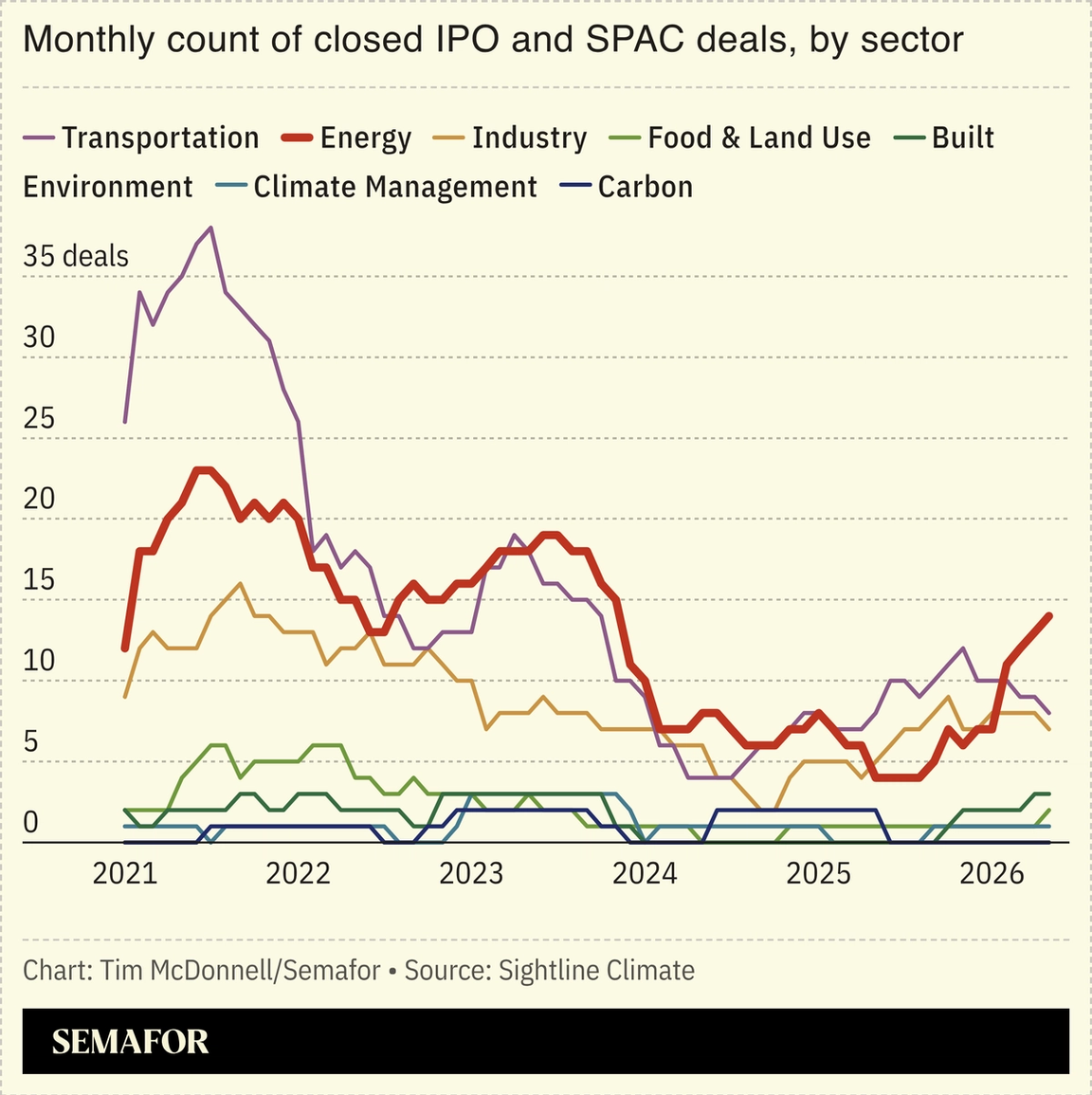 The wave of record-breaking IPOs for AI megacompanies — led by SpaceX on Friday — is also buoying energy startups that see a chance to win back investors’ favor after the disappointing climate tech boom of the early 2020s. Geothermal pioneers and nuclear reactor manufacturers have hit the public market in recent months, with a plan of selling electrons to data centers and “a conviction that the stock market is the best place to find the capital they need to do so,” Semafor’s Tim McDonnell wrote. While the hullabaloo around gigantic AI IPOs could dwarf the new entrants, for now, “the rising tide will lift many boats.” The real risk, an investment executive said, is a “softening of the overall AI demand narrative.” |
|
China scolds e-commerce giants |
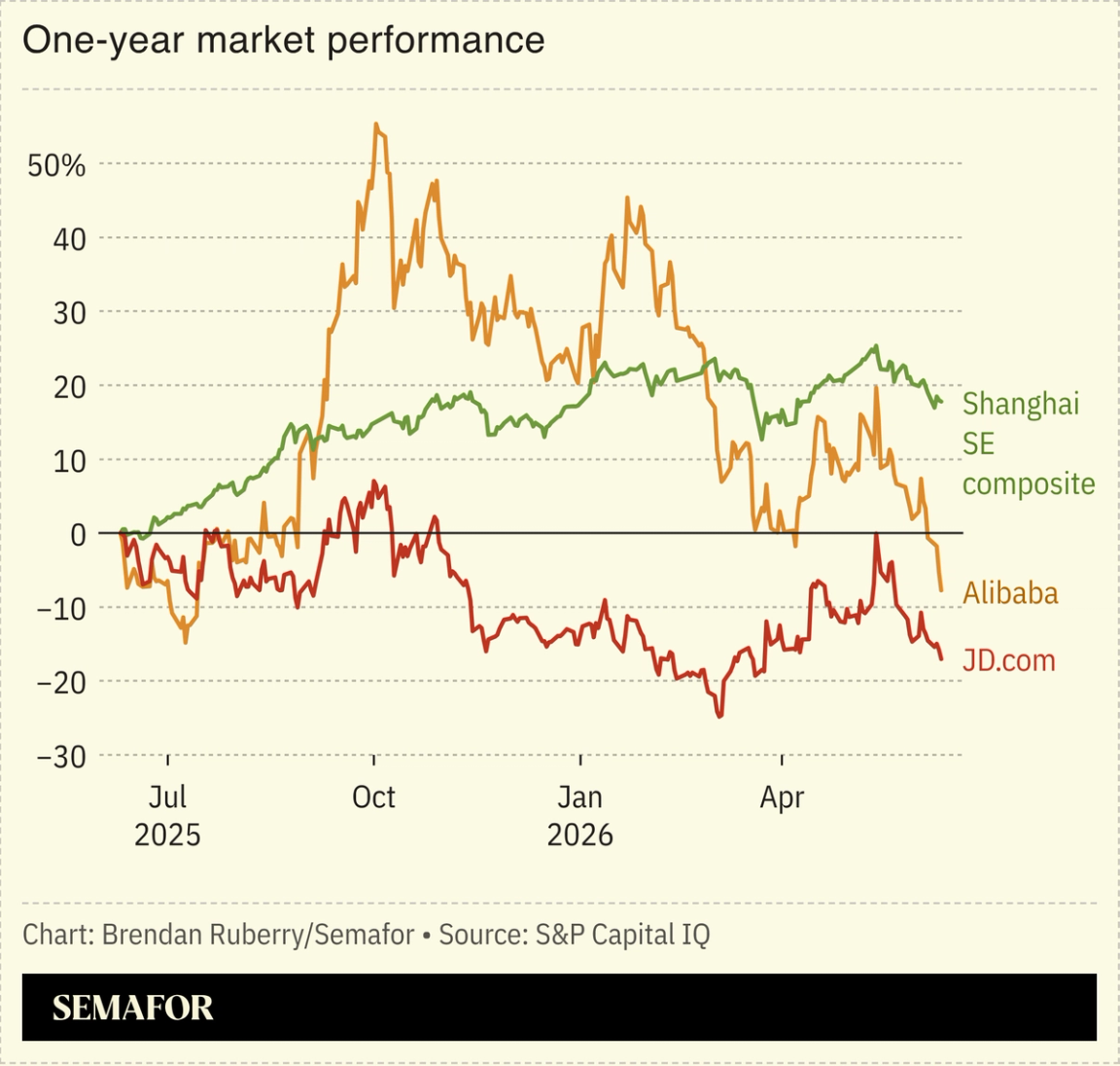 Chinese regulators accused leading e-commerce platforms of misleading marketing tactics ahead of 618, the country's second-largest annual shopping bonanza. The scolding dented shares of Alibaba and JD.com and came weeks after regulators told the companies to avoid an aggressive price war that has squeezed profits and set the government back in its fight against deflation. Beijing has looked to curb so-called “involution” among e-commerce players since 2024, but “what has changed is regulators’ willingness to publicize their enforcement activities,” a strategist said. Alibaba’s Taobao and JD.com have also recently rolled out AI features, but some of the agents provided misleading product information, a China tech newsletter wrote. |
|
 Tired of the same old talking heads? Check out Interruptrr, a weekly curated newsletter linking to op-eds and analysis on what’s happening in the world, only through female experts. The world has evolved, and the op-ed page should too — subscribe for free. |
|
Medical tourism boom in China |
 cnsphoto via Reuters cnsphoto via ReutersChina is a growing hub for medical tourism, offering cutting-edge procedures cheaper than Western patients can access at home. An infusion of CAR-T cancer immunotherapy costs up to $475,000 in the US; in China, as little as $150,000. China has set up a special international medical tourism zone in Hainan, and relaxed visa rules have encouraged visitors, Bloomberg reported. Beijing has a cost advantage over the West in development as well as treatment: Drug discovery is 30-40% cheaper than in the US or EU, and big pharma — with many products falling out of patent soon — is looking to Chinese-developed drug candidates. Licensing deals between Chinese biopharma companies and global drugmakers hit a record $137 billion last year. |
|
Scientists find largest whale graveyard |
 Joshua Barton/Reuters Joshua Barton/ReutersA huge whale graveyard, with nearly 500 skeletons spanning 5 million years and 750 miles of seafloor, was found in the Indian Ocean. The site, to one scientist, was “the marine equivalent of the… La Brea Tar Pits,” Scientific American wrote. Whales’ deaths are major events: Mobile scavengers such as sleeper sharks strip the soft tissue within months, but the bones feed smaller creatures for decades. Such “whalefalls” create deep-sea blooms of biodiversity. Although rare, whales are crucial to ecosystems. They feed at depth and defecate at the surface, reversing the ocean’s usual downward flow of nutrients; the iron they bring up supports vast amounts of plankton and the life that feeds on it, ironically including krill, baleen whales’ chief prey. |
|
|


