| | In today’s edition: Riyadh is preparing to shoulder high costs from shutting down NEOM projects, and͏ ͏ ͏ ͏ ͏ ͏ |
| |  Washington DC Washington DC | Riyadh | Abu Dhabi |
 | Gulf |  |
| |
|
 - Iran and Israel trade blows
- NEOM’s cancellation costs
- Khaldoon in Washington
- Kuwaiti drone defenses
- SpaceX can’t lift Alwaleed
 Saudi entertainment chief docks his critics’ allowance. |
|
Trump pushes deal as missiles fly |
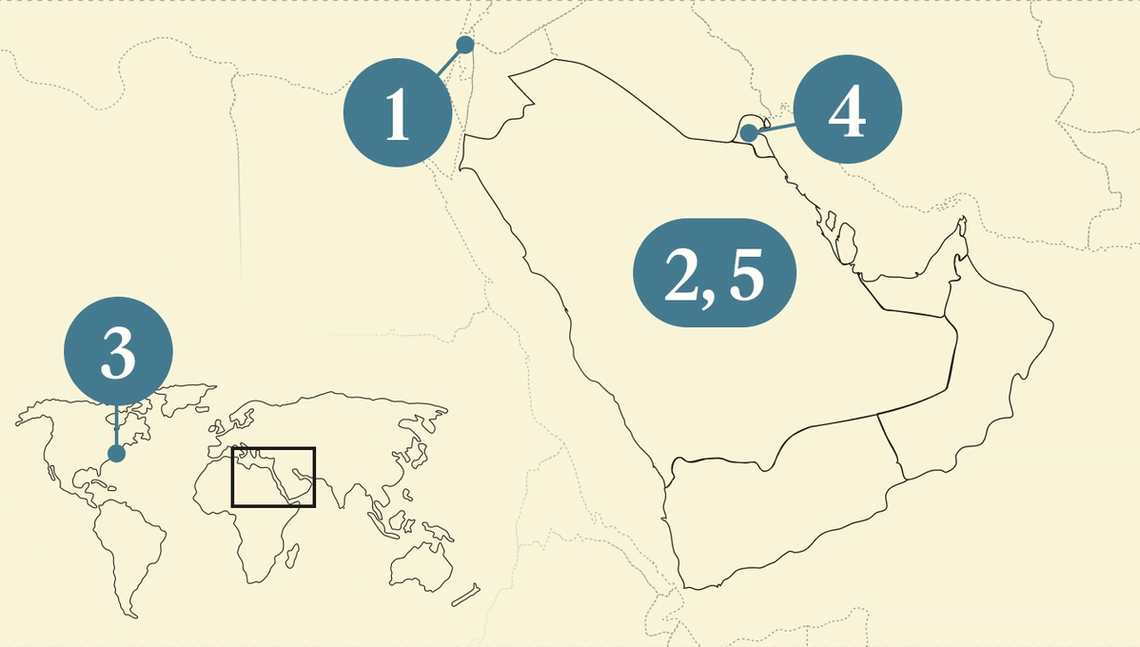
 Ammar Awad/Reuters Ammar Awad/ReutersIran and Israel exchanged strikes for the first time since the April ceasefire, disrupting aviation across the region and raising concerns that the war is far from over. Oil jumped 5%, most stock markets in the Gulf fell, and air raid sirens sounded in parts of Saudi Arabia near the Prince Sultan Air Base, which hosts US forces. US President Donald Trump urged both sides to halt the attacks, which damaged Iranian military and petrochemical facilities but don’t appear to have caused significant harm in Israel. Yemen’s Houthis are entering the fray, threatening to block “enemy” shipping in the Red Sea, potentially disrupting the region’s other maritime chokepoint. The violence — triggered by Israeli attacks in Lebanon, where the country is targeting Hezbollah — comes as US-Iran negotiations remain deadlocked. The latest from Washington: A proposal to use frozen Iranian assets to help fund reconstruction in the Gulf, an idea unlikely to find support in Tehran where the economy is crumbling. Iran said on Monday that it’s halting attacks on Israel but warned it would resume if Israel strikes Iran or Lebanon. This combination of military pressure, naval blockade, and diplomacy could be seen, charitably, as a coordinated effort to push all sides toward a deal. Or more plausibly, as many critics note, it may reflect the realities of a war that the Trump administration began but which Iran is happy to prolong to extract maximum concessions. — Mohammed Sergie |
|
Saudi’s $16B NEOM cancellation bill |
 Semafor illustration/Photos courtesy of NEOM. Semafor illustration/Photos courtesy of NEOM.Saudi authorities expect to spend $16 billion canceling contracts at NEOM over the next five years, according to people familiar with the matter. That is more than the $8 billion earmarked for construction work that is still going ahead on the project over the same period. The gigaproject was, at one point, a key part of the kingdom’s plan to diversify its economy from oil, but the government is now shifting its investment focus to sectors such as AI, defense, and logistics. The kingdom has been trimming back some of its most ambitious plans as it tries to cut costs amid budget deficits and foreign investment that has been weaker than hoped. The projected cancellation costs for elements of NEOM like The Line — a pair of mirrored skyscrapers running from the coast 170 kilometers into the desert that were expected to cost more than $1 trillion — are equal to more than a third of the government’s projected 2026 budget deficit. The kingdom has spent $64 billion on NEOM so far, the people said, yet has little to show for it other than parts of the industrial city OXAGON, where the port has become an important node for bringing in goods during the Iran war and the effective closure of the Strait of Hormuz. |
|
Al Mubarak goes to Washington |
 Courtesy of Embassy of the United Arab Emirates Washington DC Courtesy of Embassy of the United Arab Emirates Washington DCKhaldoon Al Mubarak, one of Abu Dhabi’s top money men, visited Washington last week to tout progress one year into the UAE’s decade-long, $1.4 trillion investment commitment to the US. Al Mubarak pledged to accelerate the UAE’s investments in technology and energy infrastructure in the world’s largest economy “despite regional and macroeconomic challenges,” he said in a statement. The Mubadala managing director and chairman of the UAE’s Executive Affairs Authority, which advises President Mohamed bin Zayed on policy, met with several members of the Trump administration including Commerce Secretary Howard Lutnick, who greenlit AI chips to the Gulf earlier this year, as well as Vice President JD Vance and Treasury Secretary Scott Bessent. The UAE has announced more than $100 billion in investment and trade deals since President Donald Trump’s visit to Gulf states in May 2025, according to the US-UAE Business Council. The UAE’s recent decision to quit OPEC puts it on track for additional oil revenue that will be reinvested, according to its Ambassador to the US Yousef Al Otaiba, further boosting its profile as a global investor. |
|
Kuwait arms up against Iranian drones |
 The US government approved a Kuwaiti order for $2 billion in counter-drone systems, days after an Iranian strike got through the country’s defenses and hit Kuwait International Airport, killing one person and injuring 63. Kuwait already has Patriot missile batteries and other lines of defense, but its capital city sits less than 90 kilometers from Iran, so defenders can have as little as 45 seconds to spot a weapon and try to intercept it before it reaches its target, The National reported. Patriots are built to stop ballistic missiles, but drones are harder to deal with as they fly low and can come from unexpected directions; the more an attacker launches at once, the more likely it is that one slips through. Analysts say the big challenge is linking radars, sensors, and command systems tightly enough so that they can react in time. |
|
View: SpaceX won’t help Alwaleed’s stock |
 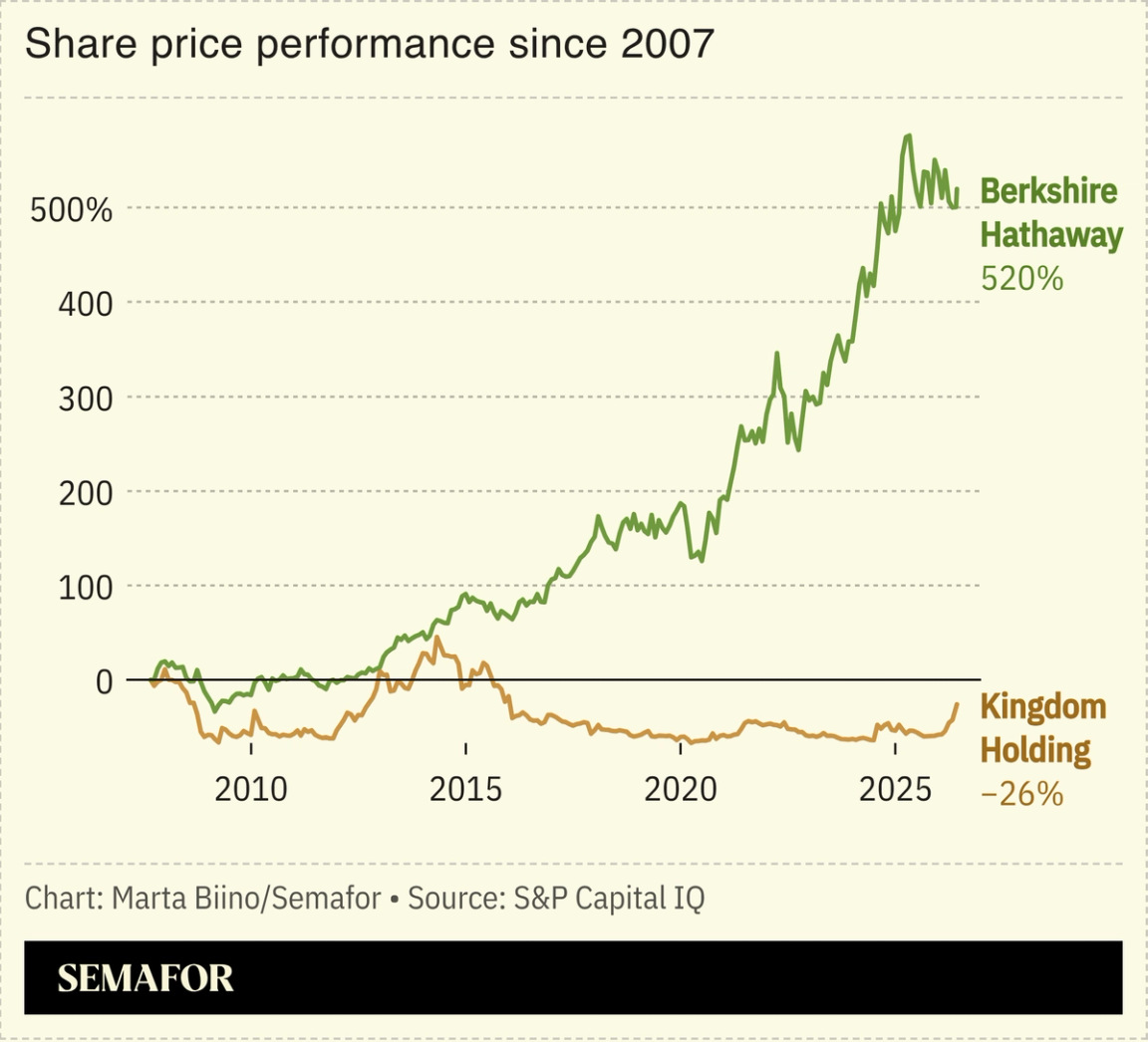 Saudi billionaire Prince Alwaleed bin Talal has often been described as the “Warren Buffett of the Middle East” for picking winners including Apple, Amazon, Citigroup, and Twitter, but his listed vehicle hasn’t made money for investors. His latest windfall — a large stake in SpaceX — still won’t provide the gains needed to catch up with the “Oracle of Omaha,” writes independent commentator and Saudi economy specialist Wael Mahdi in a column for Semafor. “Despite owning positions in some of the world’s top companies, Kingdom Holding hasn’t been able to convince investors that those assets can generate sustainable returns,” writes Mahdi. “Shortly after going public, the global financial crisis triggered a nearly 31 billion riyal ($8.27 billion) quarterly loss, a blow from which it has never fully recovered.” |
|
 Crime- For those with a need for speed, Kuwait is no longer the place. The country has started deporting foreigners caught driving faster than 150 km/h (93 mph). Citizens face fines and vehicle impoundment for exceeding the limit, while those who press past 200 km/h can be jailed. — Arab Times
Education- Gems Education, the UAE-based school operator, plans to invest 2 billion dirhams ($545 million) over three years to add 20,000 seats in the emirates, double last year’s plan, signaling confidence in demand even after some families left during the Iran war. — Enterprise News
Gambling- World Cup watchers in the UAE will have a local option for betting on the outcome of matches: The UAE’s only licensed lottery operator, Momentum, has launched a sports betting website called Play971, marking the first time residents can legally wager on games. — AGBI
Jet- Riyadh Air received its first Boeing 787-9 aircraft ahead of the launch of flights to London this week.
 @RiyadhAir/X @RiyadhAir/XMining- Botswana, the world’s largest producer of rough diamonds, is in talks with Oman and the UAE to help it acquire a larger stake in De Beers, whose operations are a crucial part of the local economy. — Bloomberg
Tech- Iran has suggested charging tolls on data passing through international communications cables running through its waters; cables in the Strait of Hormuz carry about 20% of global data flow, giving Tehran another point of leverage in its war with Washington.
|
|
 @turki/Instagram @turki/InstagramTurki Al-Sheikh, the architect of Saudi Arabia’s entertainment boom, has written a movie, and woe betide anyone who criticises it. 7 Dogs, a $40 million-plus action film and the most expensive Arabic production ever made, was released across the region last week, complete with Monica Bellucci, a Cairo premiere starring Jason Statham, and two Guinness World Records, including the largest cinematic explosion ever filmed. After screening it for his family, Al-Sheikh posted that they had given him some feedback, and that he had responded by cutting their allowance. Saudis took the lesson to heart, and a national bit was born: Rave reviews from people who walked out halfway through, or hadn’t seen it at all. The best film ever made, apparently. Can you raise my allowance, please? |
|
|


