| | Patrick Pouyanné’s extended reign, and Trump Jr’s rare earths play.͏ ͏ ͏ ͏ ͏ ͏ |
| |  Tehran Tehran | Washington DC |  Caracas Caracas |
 | Energy |  |
| |
|
 - Tolls under consideration
- SEC scraps climate rule
- Oil strikes make an impact
- Exports on the rise
- Lithium export restrictions
 Patrick Pouyanné’s extended reign, and Trump Jr’s rare earths play. |
|
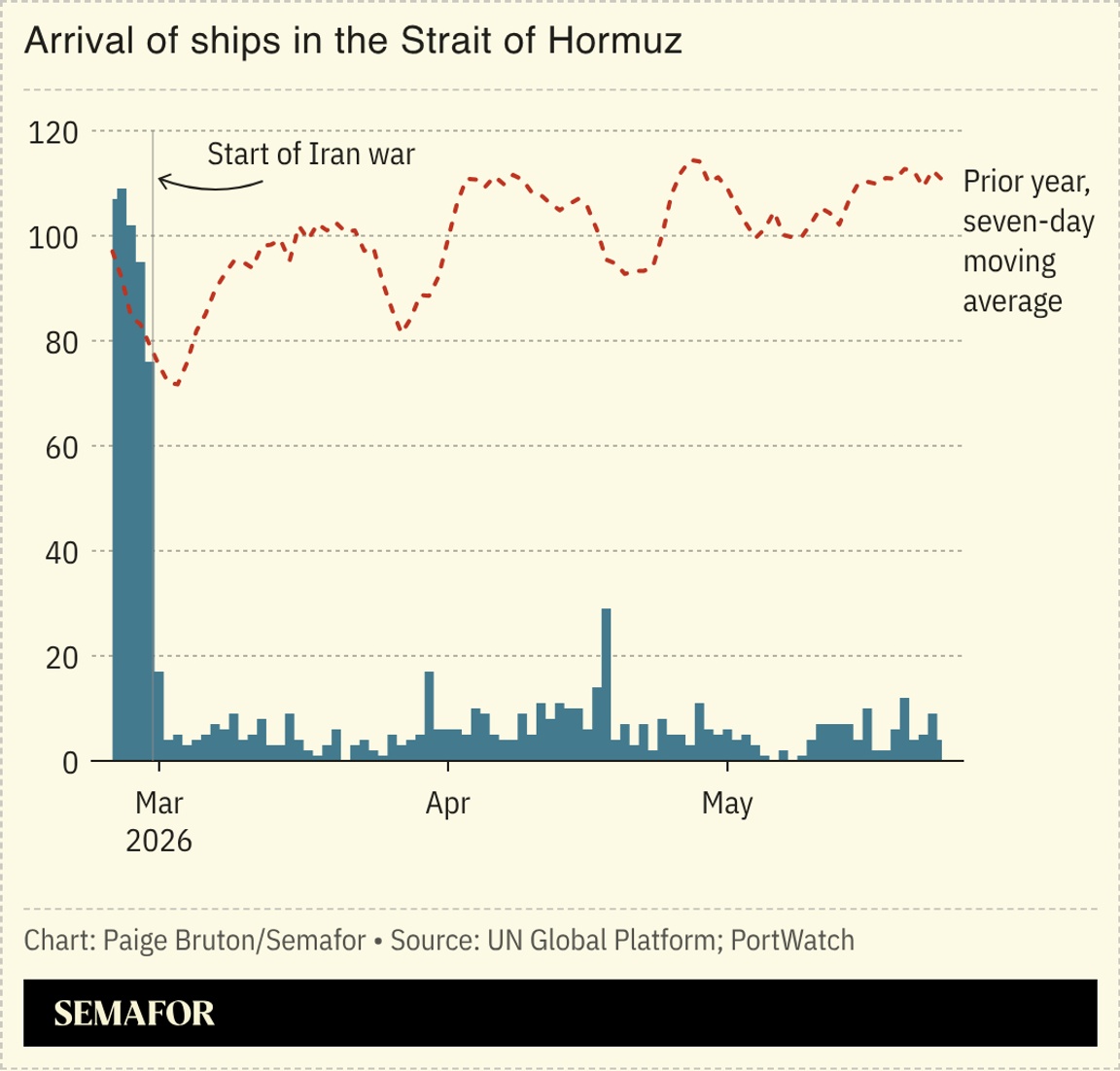
 With peace talks between Iran and the US in limbo, one of the main questions looming over global energy markets is why the price of oil isn’t much higher than it is. Prices ticked down on Tuesday after US President Donald Trump insisted talks were ongoing, contradicting an earlier report from Iran’s state news agency. They are now hovering around $95 per barrel, 30% above pre-war levels. But given that we’re now into the fourth month of the biggest supply disruption in history, it feels remarkably mild. Natasha Kaneva, head of commodities research at JP Morgan, pondered in a recent note whether the fact this crisis has “felt oddly more manageable” than the post-Ukraine invasion crisis of 2022 is an indication that the world actually just needs significantly less oil than most people thought. Still, we’re far from being out of the woods. A few factors have helped to keep prices relatively in check. The UAE and Saudi Arabia were able to push crude through pipelines that bypass the Strait of Hormuz. China, which had been on a stockpiling spree, slashed its buying. In fact many countries went through a spasm of panic-buying at the beginning of the conflict, which has since cooled off. The US and others tapped strategic reserves, US exports hit a record high, temporary waivers on some sanctioned Iranian and Russian crude unlocked more frozen barrels, and a handful of tankers have managed to slip through the strait. On top of all that is demand destruction: People use less energy when it’s expensive, so high prices beget lower ones. 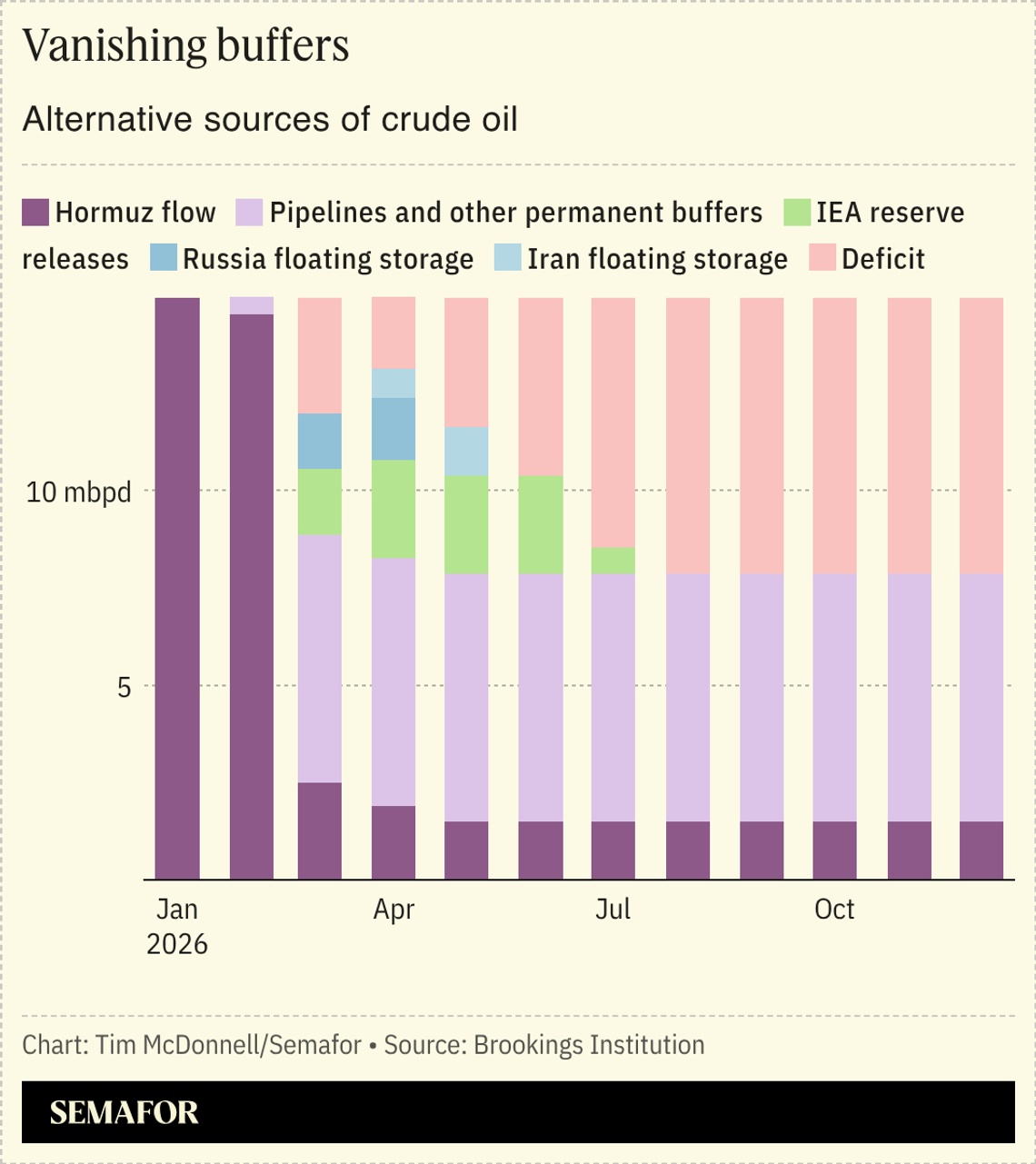 The question is how long all these buffers can last relative to the pace of ceasefire talks. Robin Brooks of the Brookings Institution made a useful forecast showing that in May, the various buffers added up to enough crude to cover all but about 3.3 million barrels per day of what used to flow through the strait. But that gap is set to double to 6.4 million by July. $150, Brooks concludes, is still very much within reach, a sentiment repeated Friday by a senior ExxonMobil executive. Some version of that future appears to be locked in already, since Tehran has indicated it will need at least 30 days from the signing of a ceasefire to facilitate the return of pre-war flow levels through the strait. And that’s a hopeful timeline, given the hurdles of demining, returning confidence to captains and insurers, and bringing in a legion of empty tankers to stock up — and the risk that one errant drone could reset the whole process to square one. “With all due respect to the optimism that continues to be shown in trading markets, we haven’t even peaked,” veteran analyst Bob McNally said Friday on the (excellent) Oil Ground Up podcast. “Things haven’t even stopped getting worse, let alone getting better.” |
|
Tolls under consideration |
|
 Benoit Tessier/Reuters Benoit Tessier/ReutersThe move by Trump administration financial regulators to roll back climate disclosure rules could leave big companies with a more onerous task ahead in reporting their carbon footprints to shareholders. The Securities and Exchange Commission said on Friday it will withdraw a rule designed during the Biden administration requiring most public companies to disclose climate-related risks. The decision isn’t a surprise, and doesn’t mark an immediate change for corporate compliance officers, since the rule was on hold pending litigation against it. But similar requirements are moving ahead in California, New York, and the EU, meaning that companies will now face a “patchwork” of regulations instead of one federal rule, Taylor Pullins, a partner in the global environmental practice at law firm White & Case told Semafor. The pullback was only partially political, Pullins said; many companies had argued that even for those concerned about climate change, the rule was overly prescriptive, covered emissions over which companies have little direct control, and was redundant, since firms are already required to disclose any material risks. Still, under a future Democratic administration, “I think it could likely return,” Pullins said. “There are some chapters yet to be written in the story of federal regulation of climate disclosure.” |
|
Oil strikes make an impact |
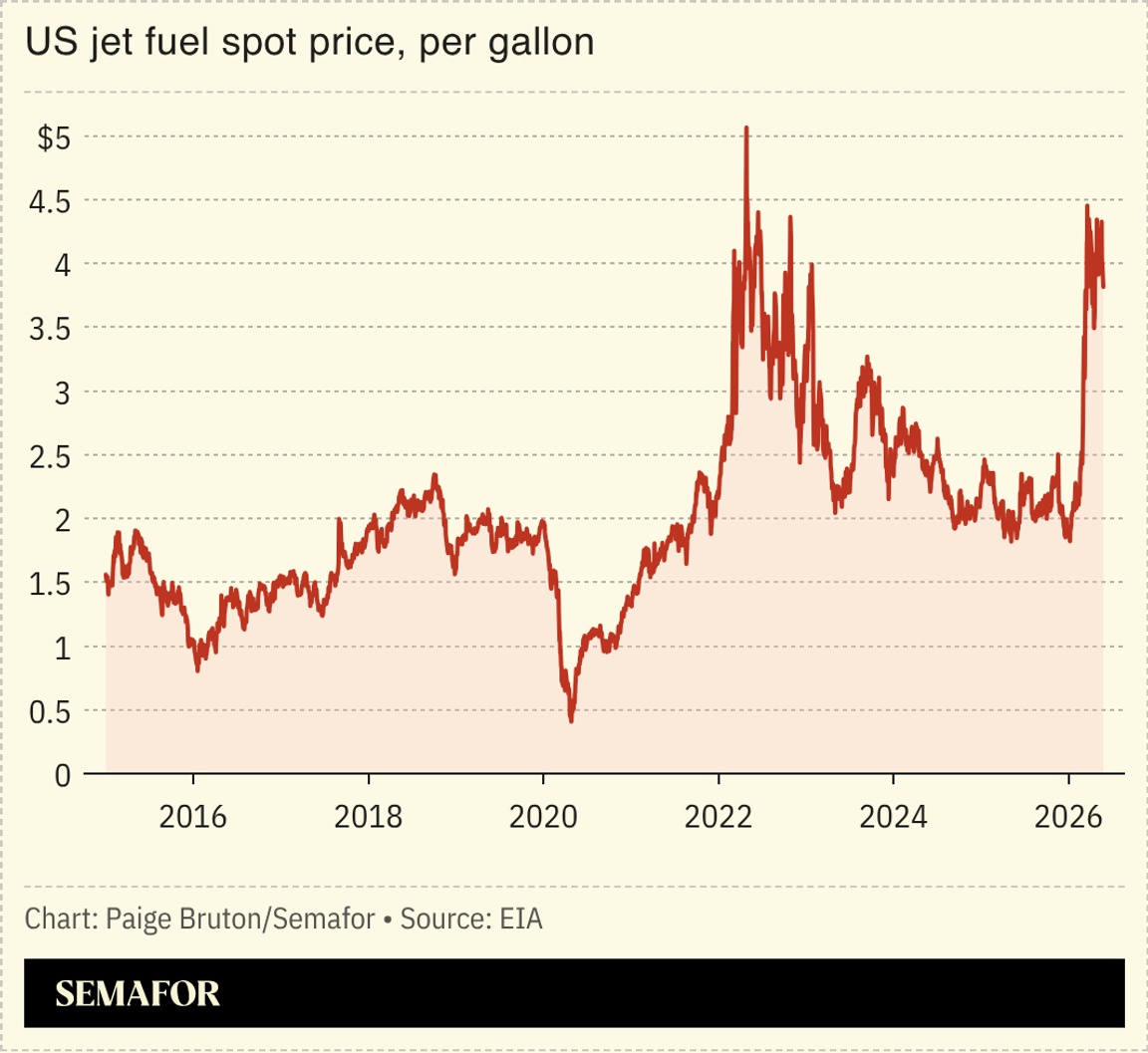 The pressure campaign by Europe and Ukraine against Russia’s oil industry is gaining momentum, but risks being offset by rising oil prices. The EU is weighing a plan to freeze its price cap on Russian oil rather than allowing it to rise, Bloomberg reported, as a way to counteract the benefit to the Kremlin of the price spike brought on by the war in Iran. In the meantime, Ukrainian long-range drones continue to pound Russian refineries and export terminals at a record pace. “The deep strikes really do have an impact, and the persistence with which they’ve gone after oil assets is really worrying to [Russian President Vladimir] Putin,” Kurt Volker, a former Trump administration Ukraine negotiator, told Semafor this weekend. That impact was underscored this week, as Moscow implemented a ban on jet fuel exports and passed rules allowing private energy companies to buy and use military-grade air defense systems against Ukrainian attacks (Ukraine passed similar rules last year). The French Navy also interdicted another Russian shadow fleet tanker on Sunday, and the EU is readying new sanctions, in a sign that Europe isn’t ready to follow the US’ lead on relaxing restrictions on Russian oil shipping as an antidote to the Strait of Hormuz crisis. Altogether, Putin is facing what one Carnegie analyst called “the most serious crisis” of his more than quarter-century in power. |
|
 Venezuela’s oil exports rose for the third consecutive month, to 1.25 million barrels per day in May, a sign that steps to revitalize the country’s battered oil sector are working. Venezuela is on pace to push exports to 1.37 million barrels per day by the end of the year, which would mark a 22% increase from 2025 and the highest level since the first US sanctions were imposed in 2019. But more work is needed to convince US oil companies to reinvest: ExxonMobil and ConocoPhillips are seeking new financial protections in negotiations with Venezuelan officials before returning to the country, and Chevron CEO Mike Wirth warned on Friday that the country’s current tax rate is too high for investors to make an adequate return. |
|
Lithium export restrictions |
 Glody Murhabazi/AFP via Getty Images Glody Murhabazi/AFP via Getty ImagesDR Congo added lithium to a list of strategic minerals that are subject to increased royalties, the country’s latest bid to boost revenues from its natural resources. Niobium, tantalum, tungsten, and uranium were also added to the list of minerals in the higher 10% tax bracket. The country’s southeastern region is home to one of the world’s largest hard-rock deposits of lithium, key for making batteries used in the renewable energy sector. DR Congo, like other African nations, is trying to capture more value from their raw materials. It imposed restrictions on cobalt exports late last year, forcing the metal’s largest producers to adopt new strategies. Ghana’s gold regulators, for example, introduced a new sliding‑scale royalty rate in March that rises in line with bullion prices. And Mali’s revised mining code sparked a dispute with Canadian miner Barrick last year, while Zimbabwe suspended its lithium exports earlier this year. — Alexis Akwagyiram |
|
 New EnergyFossil FuelsFinance- Ex-Meta CTO Mike Schroepfer’s VC firm Gigascale Capital launched a new $250 million fund for startups “rebuilding the physical economy for climate impact.”
- Princeton University backed away from its pledge four years ago to divest from publicly traded oil and gas companies.
Minerals & MiningEVs Xavier Becerra. Carlos Barria/Reuters. Xavier Becerra. Carlos Barria/Reuters.Personnel- BP’s former chairman Albert Manifold clashed with a director and former CEO over sensitive talks about a potential deal before he was ousted last week.
- Abdullah bin Hamad Al Attiyah, the architect of Qatar’s LNG industry that transformed the country from a declining oil producer into one of the world’s wealthiest nations, died in London last week.
- Total Energies’ shareholders approved a resolution that would allow chief executive Patrick Pouyanné to extend his term beyond the end of the decade.
|
|
|