And, a new cricketing star emerges in India.
 

India File

India File

By Ira Dugal, Editor Financial News, with global Reuters staff

More than a decade after the then chief of India's central bank announced bold measures on his first day at work to support the sliding rupee, the spotlight is on the current governor as to whether he will launch a similar rescue act for the battered currency.

As the rupee flirts with 100-per-dollar levels and with the Reserve Bank of India (RBI) meeting this Friday for setting interest rates, investors want clear signals and action. But with both inflation management and currency stability as its mandate, how can the RBI balance its policy? Share your views with me on ira.dugal@thomsonreuters.com.

And, scroll down to our 'must-reads' section for Reuters exclusives on India's auto sector, the liquor industry and bond markets.


This week in Asia

  • The great Indo-Pacific hedge - deeper defence ties as US doubts grow and China ascends
  • From lottery draws to fiscal spending, China broadens digital yuan footprint
  • China works on AI token futures market, sources say, in race with US
  • BOJ may heed calls to pause bond taper next year
  • A warning to critical minerals buyers: avoid butter mountains, aluminium floods
 

A defining moment


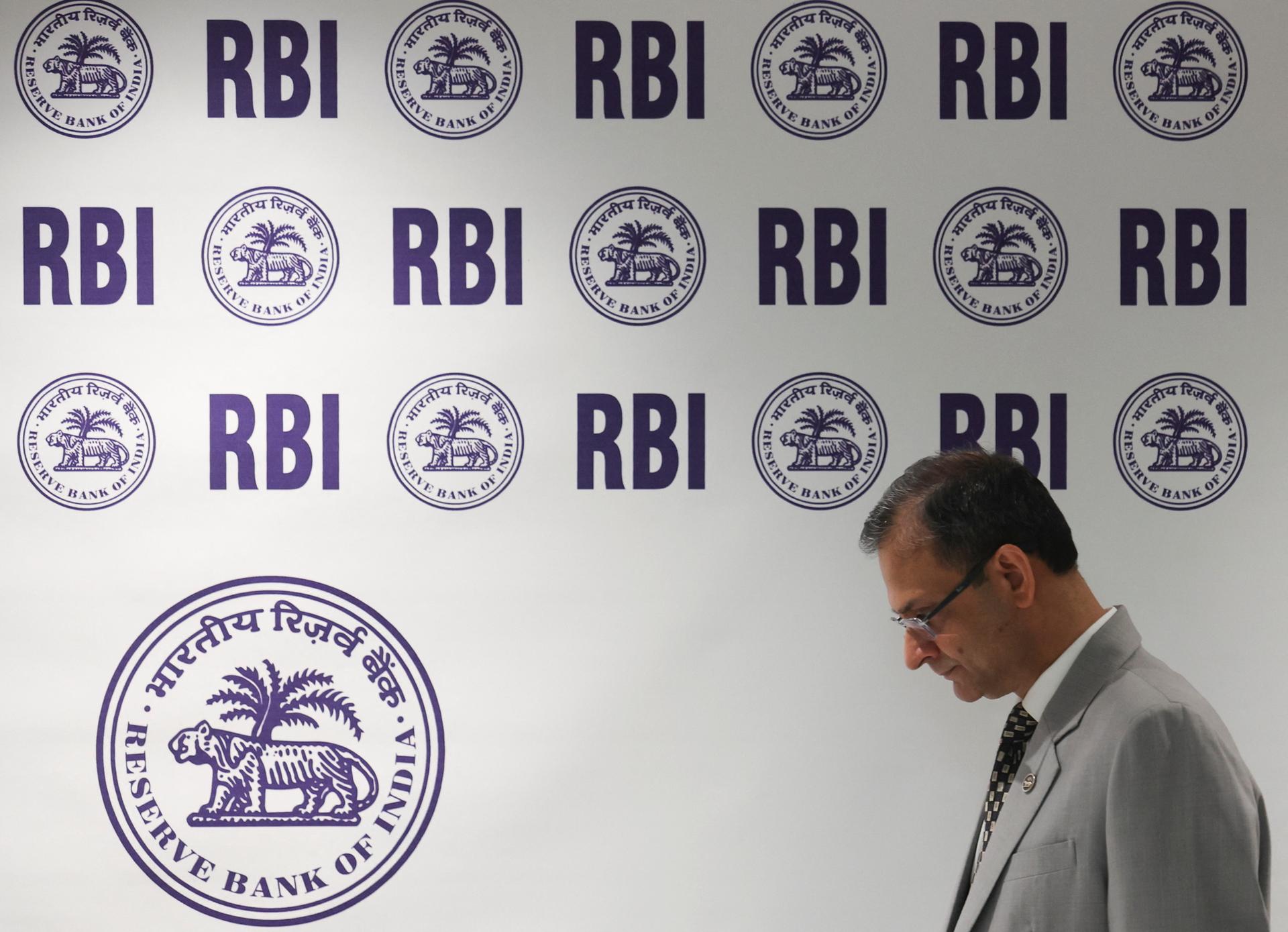
Reserve Bank of India (RBI) Governor Sanjay Malhotra arrives at a press conference in Mumbai, India, June 6, 2025. REUTERS/Francis Mascarenhas

When India last faced a currency crisis, then central bank governor Raghuram Rajan used his inauguration address on September 4, 2013, to outline a series of measures to support the rupee and commit to restore macroeconomic stability and confidence. It was a defining moment, as the rupee reversed its slide thereafter.

Investors are hoping Sanjay Malhotra, who has led the RBI for 18 months now, will leave his own mark on history by taking a leaf out of Rajan's book.  

The rupee has fallen about 6% since the start of 2026, after a 5% decline last year, pressured by higher oil prices and sustained foreign investor outflows.

Several steps to raise dollars — from tapping the diaspora to incentivising overseas fundraising by companies — have been mooted, but few firm announcements have followed even as the Iran war stretches into its fourth month.

"There is a need for a comprehensive BOP (Balance of Payments) package," Soumya Kanti Ghosh, chief economist at State Bank of India, said in a note.

The RBI so far has remained non-committal, although Malhotra last week took an ex-ECB chief Mario Draghi-like stance, saying the central bank would do “whatever is required” to ensure orderly moves in the forex market, while arguing that the rupee is now undervalued.

The need to restore confidence in its policies towards the rupee has been heightened by early missteps.

The RBI’s abrupt curbs in February on banks’ net positions in the non-deliverable forwards market — aimed at cracking down on speculation — unsettled foreign investors so much that the central bank rolled them back partially, in a rare such instance.

“Clear communication on exchange-rate management, giving confidence to foreign institutional investors that there will be no ad hoc measures…, and matching the communication with action is important,” said Smita Roy Trivedi of the National Institute of Bank Management, speaking in a personal capacity.

She said raising short-term interest rates and encouraging dollar deposits could help, although a weaker rupee could also act as an automatic stabiliser by curbing imports.


To hike or hold?

Whether the RBI needs to raise rates to defend the currency is a matter of debate in the market. Reuters reported this is not the central bank's preferred option and a majority of economists polled expect a status quo.

Several Asian peers have hiked rates in defence of their currencies. Read this column by Reuters Breakingviews' Shritama Bose on the conundrum faced by Asian central banks.

At the core is a broader question: can an inflation-targeting central bank raise rates to support the currency, when its mandate is to anchor inflation at 4%, and within a 2%-6% band.

Despite higher oil prices, inflation remains moderate and, while expected to rise, is still seen staying below the upper threshold. At the last policy meeting in April, most rate panel members treated rising oil prices as a supply shock and signaled a wait-and-watch approach for second-round effects.

An abrupt shift to rate hikes could lead to a selloff in the domestic bond markets, said DSP Mutual Fund’s fixed income head Sandeep Yadav, noting that the RBI rarely raises rates purely to defend the currency.

Typically, hikes are preceded by regulatory measures and tighter liquidity, neither of which has materialised yet, he said.

Others argue a delay risks further damage to the rupee, especially as several peers have already tightened policy.

“Monetary policy will also have to move in a direction that is supportive of the currency,” Capital Economics said, expecting a 25-basis-point hike next week.


Market matters

India faces its weakest monsoon in 11 years as the El Nino phenomenon is expected to pare rainfall to 90% of the long-period average, the country's Meteorological Department said last week.

Rains in June are also likely to be below average.

Several Indian states are reeling under heatwave conditions, with temperatures soaring above 45 degrees Celsius (113 F) - levels that usually ease with the arrival of monsoon rains.

A weak monsoon can push up food prices and hurt rural incomes, crucial to companies from consumer goods to tractor manufacturers.

Read more here.


This week's must-reads

Catch up on some of the biggest Reuters stories on India in this section. This week, we recommend scoops from the auto sector, the liquor industry and bond markets.

• China's SAIC Motor will sell a further 10% stake in its carmaking venture JSW MG Motor, Aditi Shah and Neha Arora reported.

• Indian investigators have concluded Pernod Ricard withheld the age and composition of its Scotch whisky imports to hide their true value and pay lower tariffs, sparking a legal fight, reported Aditya Kalra.

• An Indian state-owned maritime lender is preparing to issue the country's first blue bond, Khushi Malhotra reported.