| | Donald Trump looks to salvage US-Iran talks, Anthropic files to go public, and Mexico’s president re͏ ͏ ͏ ͏ ͏ ͏ |
| |  MEXICO CITY MEXICO CITY |  BEIRUT BEIRUT | SHENZHEN |
 | Flagship |  |
| |
|
The World Today | 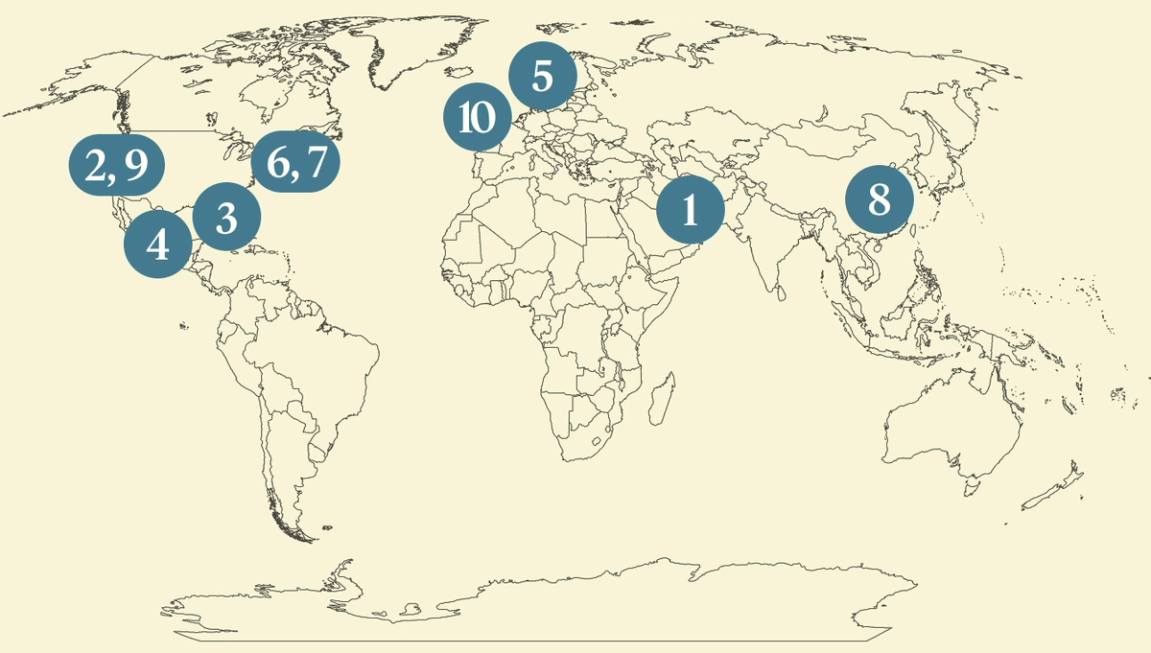 - US-Iran talks in doubt
- Anthropic files for IPO
- Florida sues OpenAI
- Mexico’s strong US rebuke
- Oslo eyes EU membership
- Trump payout fund retreat
- US bets on quantum
- China biotech concerns
- Remote work vs. AI
- Festival ticket prices rise
 A look back at the first international financial crisis. |
|
Trump insists Iran talks are on |
 Lebanon. Amir Cohen/Reuters Lebanon. Amir Cohen/ReutersUS President Donald Trump on Monday sought to salvage US-Iran peace negotiations after Tehran suggested it was suspending talks over Israel’s intensifying campaign against Hezbollah in Lebanon. Trump initially declared he “couldn’t care less” if negotiations ended, but within hours, he said that after he made several calls to Israel and Hezbollah, they agreed to scale back attacks. Trump also insisted talks with Tehran were “continuing, at a rapid pace.” The cleanup followed a White House effort to broker a renewed ceasefire agreement between Israel and Lebanon, but Israeli Prime Minister Benjamin Netanyahu said his country’s military will continue “to operate as planned” in southern Lebanon, complicating the US-Iran dynamic. |
|
Anthropic files to go public |
 Courtesy of Anthropic Courtesy of AnthropicAnthropic on Monday confidentially filed to go public, setting up a blockbuster market debut alongside other tech heavyweights. The startup behind popular chatbot Claude joins rival OpenAI and Elon Musk’s SpaceX in planning for an IPO — together, they are poised to create “a tsunami of investment and employee wealth,” The New York Times wrote, though the mega-IPOs will test investor appetite for big-spending AI labs. Anthropic last week closed a new funding round valuing it at $965 billion, surpassing OpenAI. “The economics are so unprecedented that Anthropic… seems to be teetering on the brink of either growing too fast, or too slowly,” Semafor’s Reed Albergotti wrote, but as one Anthropic investor told him, “Capitalism will find a way.” |
|
Florida sues OpenAI over safety concerns |
 Manuel Orbegozo/Reuters Manuel Orbegozo/ReutersFlorida on Monday became the first US state to sue OpenAI, alleging that the ChatGPT maker ignored safety concerns. The wide-ranging lawsuit argued that OpenAI was driven by an “insatiable quest to win the AI arms race and amass large fortunes,” and accused the AI startup of aiding mass shooters, harming users’ cognitive capabilities, and encouraging people to take their own lives. OpenAI, in response, defended its safety mechanisms. The legal challenge from the Republican-led state is part of the growing backlash against the fast-growing AI industry, even as President Donald Trump postponed signing an executive order aimed at giving the government more oversight. OpenAI and other AI companies have faced wrongful death lawsuits. |
|
Sheinbaum decries US ‘interference’ |
|
Norway reevaluates EU relationship |
 Norwegian Prime Minister Jonas Støre and Ukrainian President Volodymyr Zelenskyy in February. Alina Smutko/Reuters Norwegian Prime Minister Jonas Støre and Ukrainian President Volodymyr Zelenskyy in February. Alina Smutko/ReutersNorway is reconsidering joining the EU, the country’s foreign minister said, citing a shift from a “benign world” to a “crazy world.” Norwegians voted in 1972 and 1994 to remain outside the bloc. However, the country joined the single market, meaning it is subject to EU trade agreements but has no say in negotiations. Tariff wars with Washington and NATO’s growing divisions are making membership attractive, Espen Barth Eide told the Financial Times. The EU would be keen to admit Europe’s biggest oil and gas producer, and is looking to add new members: Iceland is holding a referendum in August, and nine other states are candidates, including Ukraine. The bloc is less open to a British return, however. |
|
Trump retreats on payout fund |
|
US backs quantum startups |
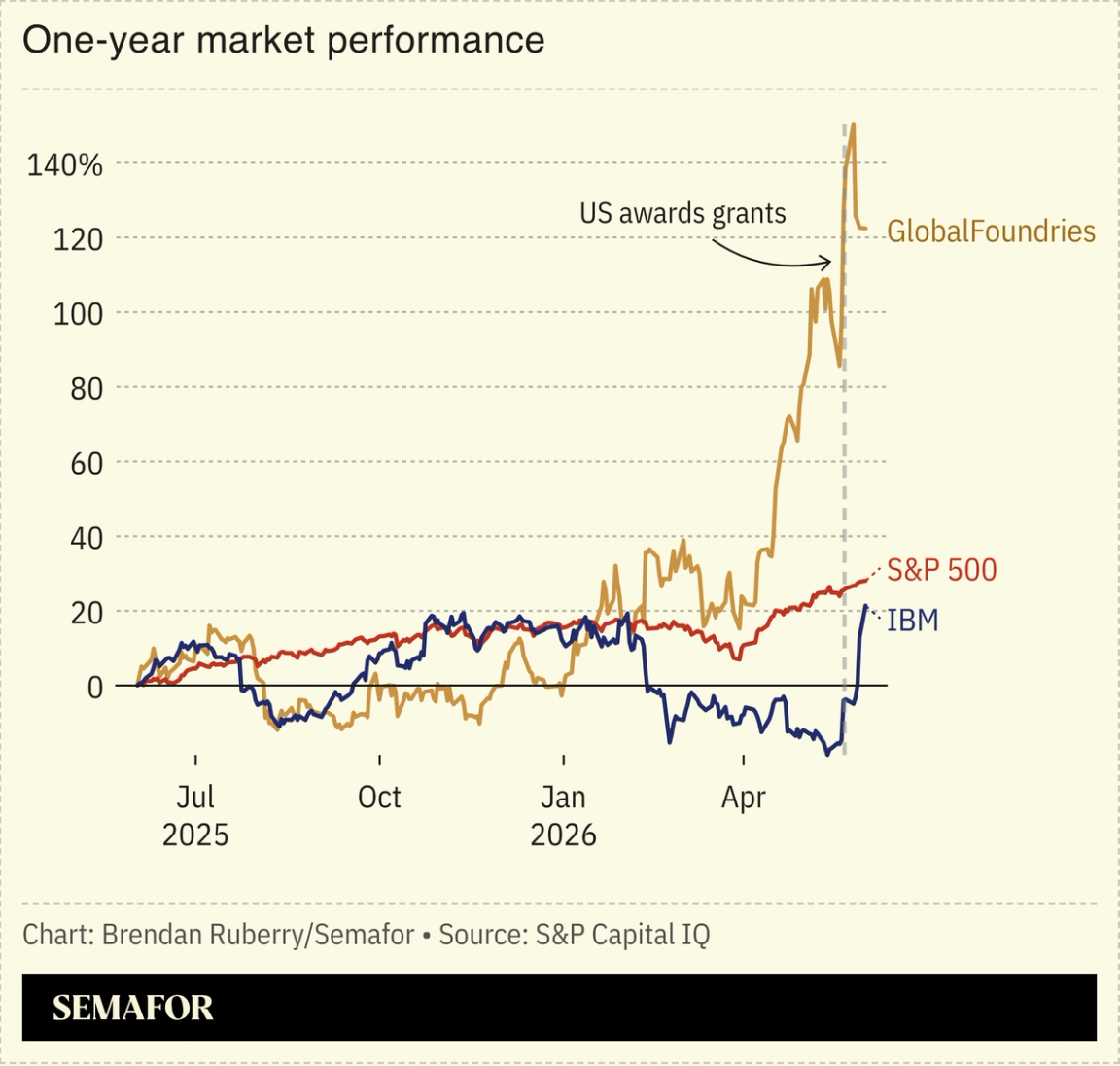 The Trump administration is investing $2 billion in nine quantum computing companies, a major bet on the nascent technology becoming commercially viable. The US government will receive some equity in return, as it acts ever more like a sovereign wealth fund: It recently backed a rare-earths magnet maker and a mining company, The Wall Street Journal noted. Quantum, like fusion power, self-driving cars, and AI, is one of those technologies that skeptics joke is 30 years away and always will be, but like those industries — especially AI — it also appears to have turned a corner, with remaining obstacles mainly ones of scale and engineering rather than theoretical breakthroughs. |
|
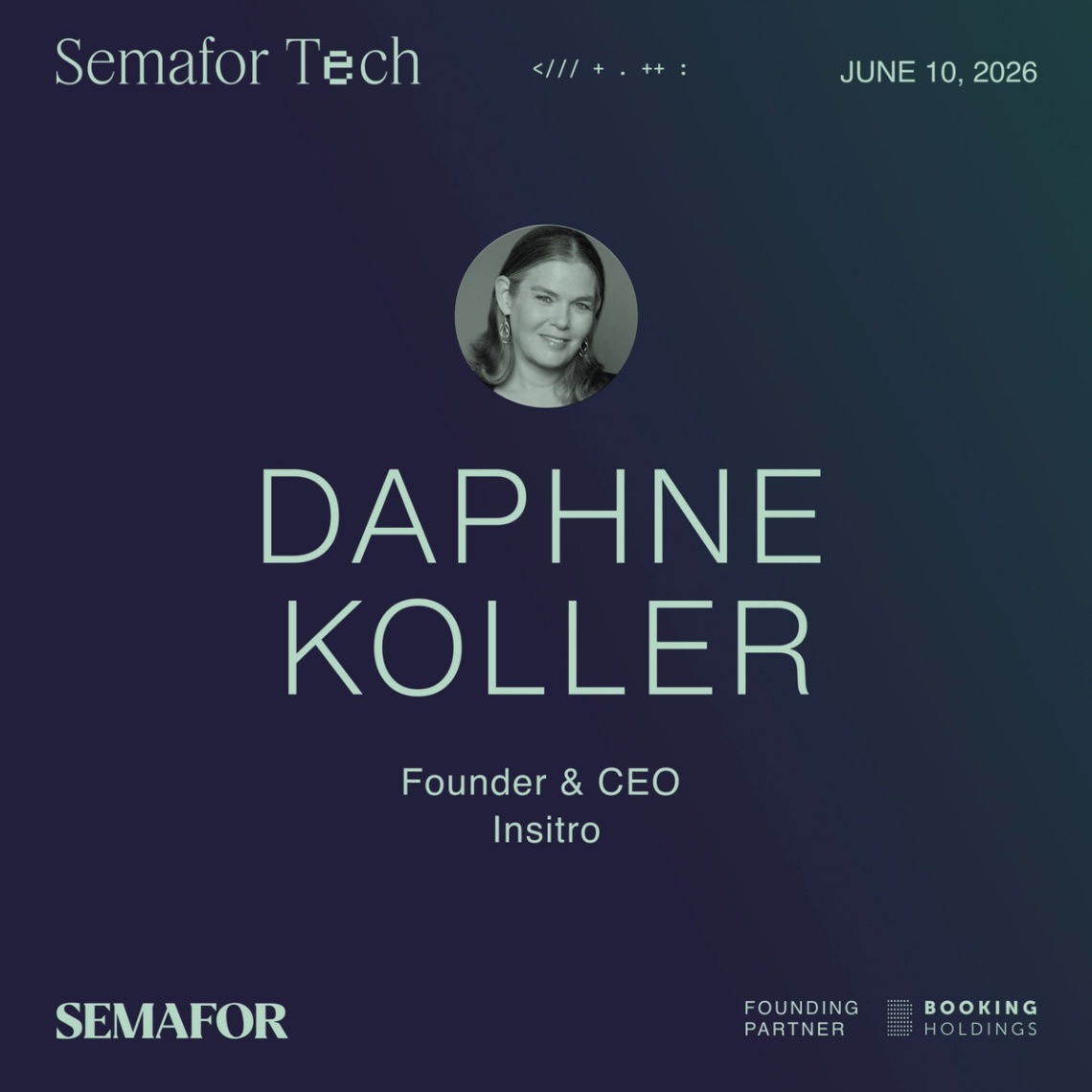 On Wednesday, June 10, Daphne Koller, Founder & CEO of Insitro, will join Semafor Tech in San Francisco to unpack the breakthroughs pushing technology into a new phase of economic and geopolitical consequence. Understanding innovation requires first-principles thinking: breaking complex problems down to their core inputs, constraints, and incentives — then rebuilding from the ground up to see what comes next. Semafor will host conversations with Charina Chou, Chief Operating Officer, Google Quantum AI; Aaron Levie, Co-Founder & CEO, Box; Jeetu Patel, President & Chief Product Officer, Cisco; Qasar Younis, Co-Founder & CEO, Applied Intuition; Max Hodak, Co-Founder & CEO, Science Corporation; Pete Shadbolt, Co-Founder & Chief Scientific Officer, PsiQuantum; and Glenn Fogel, CEO, Booking Holdings Inc.; to unpack how innovation is reshaping industries, redefining competitive advantage, and transforming the global economy. |
|
China’s biotech growth alarms West |
 Aly Song/Reuters Aly Song/ReutersChina’s ascendance in biotech is raising alarm bells among some lawmakers and investors in the West. Eli Lilly entered into its latest agreement with a Chinese drugmaker Monday, while Pfizer last week announced a tie-up with a Chinese firm to develop drugs. The licensing deals have prompted concerns that the US could grow over-reliant on Chinese biotechs, allowing the industry to potentially be weaponized in a future spat between the superpowers, the Financial Times wrote. “Biotech is just the latest battleground,” one investor said. China’s advantage in pharma is similar to that of its dominant EV sector, ChinaTalk wrote: “process expertise, cost efficiency, labor and talent, and deep integration into global supply chains.” |
|
How remote work impacts hiring |
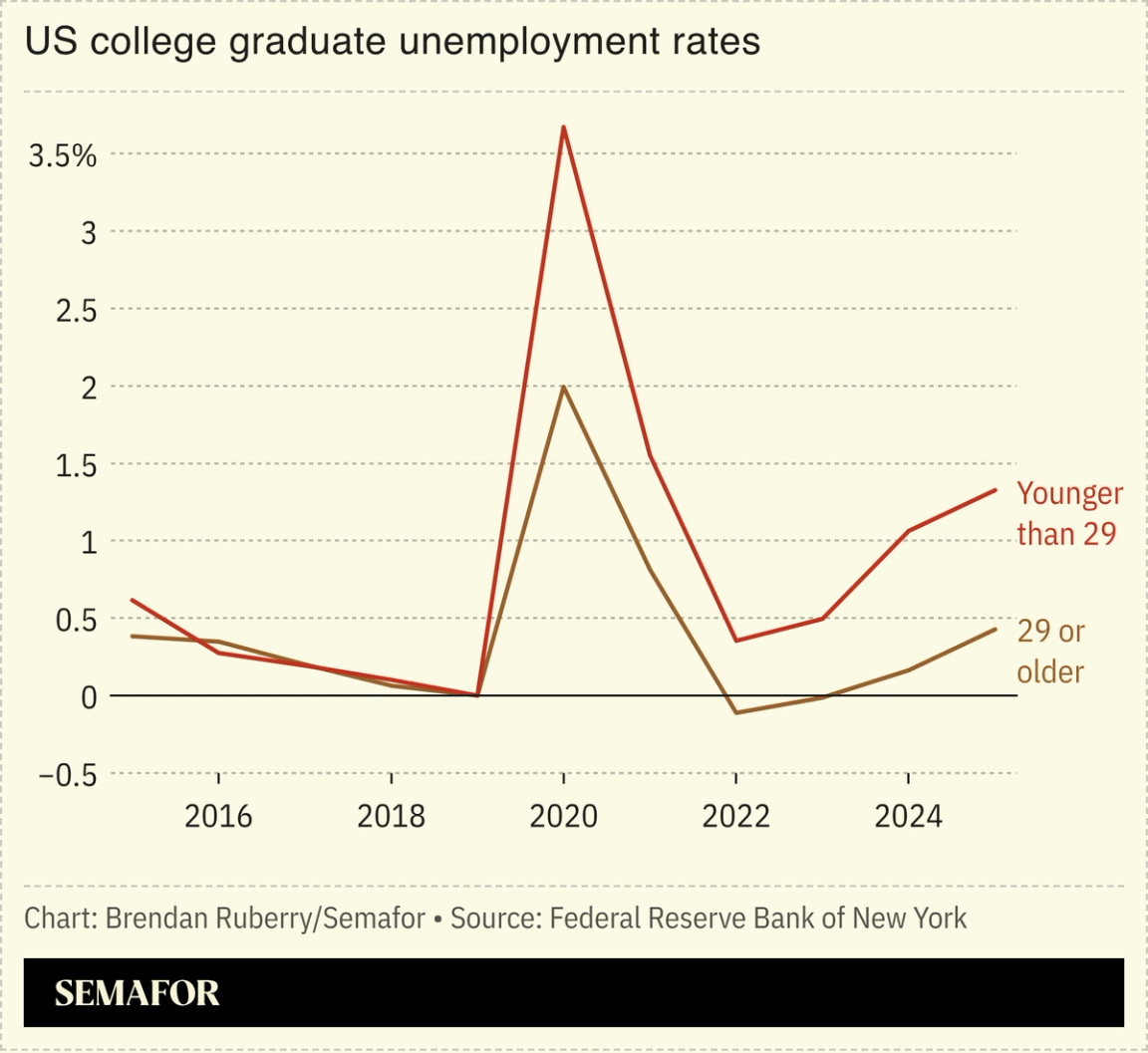 Remote work policies — not AI — may be to blame for the challenging job market facing new US college graduates, a new study found. The Class of 2026 is entering a brutal hiring landscape in which some grads are ditching hopes of landing their dream jobs, or settling for unpaid roles, Semafor reported last month. While AI has undoubtedly upended white-collar work, an analysis from the Federal Reserve Bank of New York showed that companies are less likely to hire recent college grads for remote jobs. The thinking is that employers are |
|
|


