Also: an update on thermal battery storage.

See how companies and governments are responding to climate change and social challenges. Subscribe to Reuters.com for $1/week. Subscribe now.


Sustainable Switch

Sustainable Switch


By Ross Kerber, US Sustainable Business Correspondent

Greetings from Boston!

Ross Kerber here again, standing in for Sharon Kimathi, who will resume normal service next week.

It is notable that just a few years ago, big energy company shareholder meetings were a major focus for climate activists. But the outcomes of two big meetings show that has faded. You can read more details below. 

Also in this week's newsletter, you'll find an update on a thermal energy storage project in South Dakota and links to our coverage of heat risks in Germany, a new French wind farm and a scrapped water park plan in Mexico.

You can follow me on LinkedIn and reach me at ross.kerber@thomsonreuters.com 

Also on my radar today:

  • Illegal miners extract billions in Amazon gold despite Brazil crackdown, Greenpeace finds
  • District court denies California parks department bid to stop Sable Offshore pipeline
  • Electrical workers threaten strike at BHP iron ore port by end of June
  • Minority union at Samsung Electronics to challenge pay deal in court
 

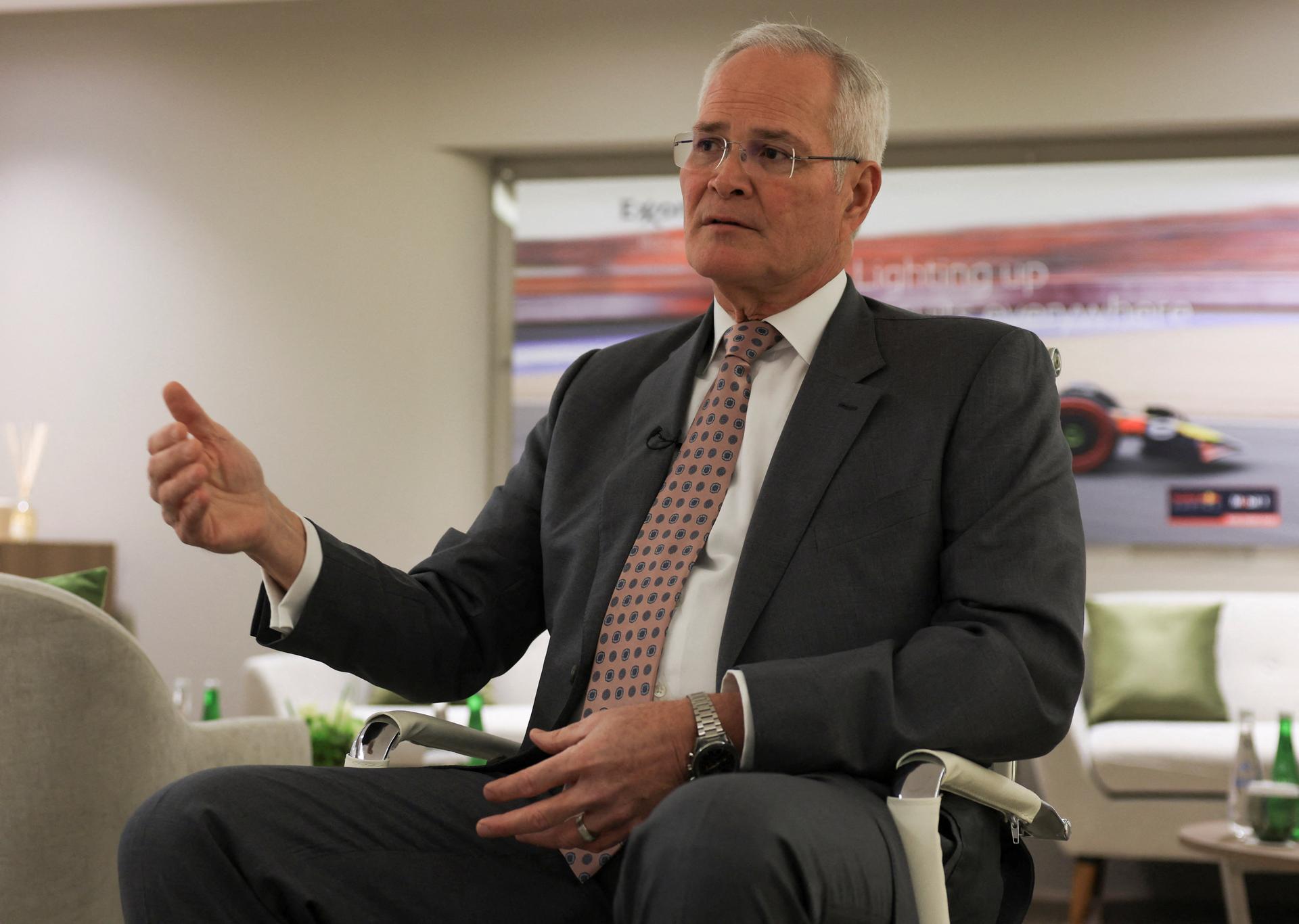
ExxonMobil CEO Darren Woods gestures during an interview with Reuters in Abu Dhabi, United Arab Emirates, November 3, 2025. REUTERS/Abdel Hadi Ramahi

Texas big oil vs New York City Police

Once upon a time climate activists were able to harness the power and interest of many big investors to press for environmental reforms like emissions disclosures from top energy firms. The trend really took off in 2017 with a successful climate-reporting vote at Occidental. 

Those days appear to be over, as shown by the annual meetings of Texas-based U.S. oil majors held on Wednesday. At Chevron directors won 97% support, as did its executive pay, and only 9% of votes cast were in support of a shareholder item on indigenous people's rights in the context of environmental concerns. 

At Exxon meanwhile shareholder activists faced an un-welcome mat. The company said 71.3% of votes were cast in favor of its proposal to redomicile from New Jersey to Texas, which proxy advisers said could erode shareholder rights; and said that 23.5% of votes supported a call for reforms to an Exxon investor-voting program seen as friendly to management. 

At many companies the two results, while victories for management, might signal at least some significant investor dissatisfaction and cause directors to look for compromise. But Exxon CEO Darren Woods has pushed back and at Wednesday's meeting dismissed the New York City Comptroller's office as a "serial proponent" whose idea for voting reforms was "not a serious use of the shareholder proposal process". 

He also criticized conservative-leaning National Legal and Policy Center over its proposal for Exxon to have an independent board chair, an idea Woods said "has been withdrawn or excluded five times and voted down 16 times by Exxon Mobil shareholders since 2000", according to a transcript. 

Activists see Woods' efforts as overkill.

"In our view, the response is more a reflection of the company’s governance and maturity shortcomings than our shareholder proposal activities," Paul Chesser, a director at the National Legal and Policy Center, whose proposal won 15.2% of votes cast, said in an email. He noted the independent chair idea hasn't been voted at Exxon since 2021.

New York City Comptroller Mark Levine said in a statement the vote result on the reform measure, brought on behalf of the New York City Police Pension Fund, showed "a meaningful showing of support for our proposal and against reincorporation."

In a separate blog post published Friday, Levine's assistant comptroller Michael Garland wrote how Exxon's approach is in line with recent moves by other Texas companies AT&T and SpaceX to diminish shareholder influence.

"This is not normal corporate behavior," Garland wrote. "It reflects a broader trend in American political and cultural discourse, increasingly normalized at the highest levels of public life: attacking institutions, impugning motives, and treating scrutiny itself as a form of aggression. That reflexive hostility toward scrutiny is now migrating into corporate boardrooms."   


Thermal battery update

South Dakota biofuels producer POET LLC has turned on in its home state a 5 gigawatt-hour thermal energy storage system made by Antora using insulated blocks of solid carbon.

Financial terms were not disclosed but the project was backed with "a significant preferred equity investment" from Australian investment firm Grok Ventures, a representative said. 

Other Antora backers include a BlackRock and Temasek joint venture, Trust Ventures, Lowercarbon Capital, Breakthrough Energy Ventures and Emerson Collective.


Talking Points


People cool off in a fountain in front of Berlin Cathedral on a hot summer day, during a heatwave in Berlin, Germany, July 2, 2025. REUTERS/Lisi Niesner

  • Steamy productivity hit: Extreme heat could cost Germany up to $131 billion by 2030 and shave up to 3% off economic output if ‌recent heat wave patterns persist, an analysis from Allianz Trade showed.      
  • Wind workers wanted: TotalEnergies filed for an authorisation ⁠of its 1.5 gigawatt offshore wind project in Normandy. The project represents a €4.5 ‌billion ($5.2 ⁠billion) investment and will employ up to ⁠2,500 people during the three-year ⁠construction phase, the ⁠French oil major said.   
  • Imperfect plan: Cruise company Royal Caribbean abandoned its plan to build a large water park known as "Perfect Day" on Mexico's southern Caribbean coast after ‌authorities denied environmental permits.


ESG Spotlight

Miniatures of windmill, solar panel and electric pole are seen in front of NextEra Energy logo in this illustration taken January 17, 2023. REUTERS/Dado Ruvic/Illustration/File Photo

NextEra Energy will add more carbon-intensive assets, including coal, to its generation mix through its deal to buy Dominion Energy, Sustainable Fitch said.  

"This could create modest negative pressure on NextEra’s sustainability profile and highlights a broader sector challenge: utilities stand to benefit from rising power demand, but decarbonisation may become harder if that growth is met with higher-emitting generation," says a summary of the report.