Policy changes, but facts endure. AP delivers accurate, fact-based journalism to keep the world informed in every administration. Support independent reporting today. Donate. |
|
|
By Holly Meyer and David Crary |
|
| |
|
By Holly Meyer and David Crary |
|
| |
|
Dear World of Faith readers,
This week, pilgrims in Saudi Arabia wrapped up the Hajj and joined Muslims worldwide in celebrating Eid al-Adha. In the U.S., several states have adopted new laws aimed at preventing protesters from disrupting worship services, and the pope made a big statement about regulating artificial intelligence. |
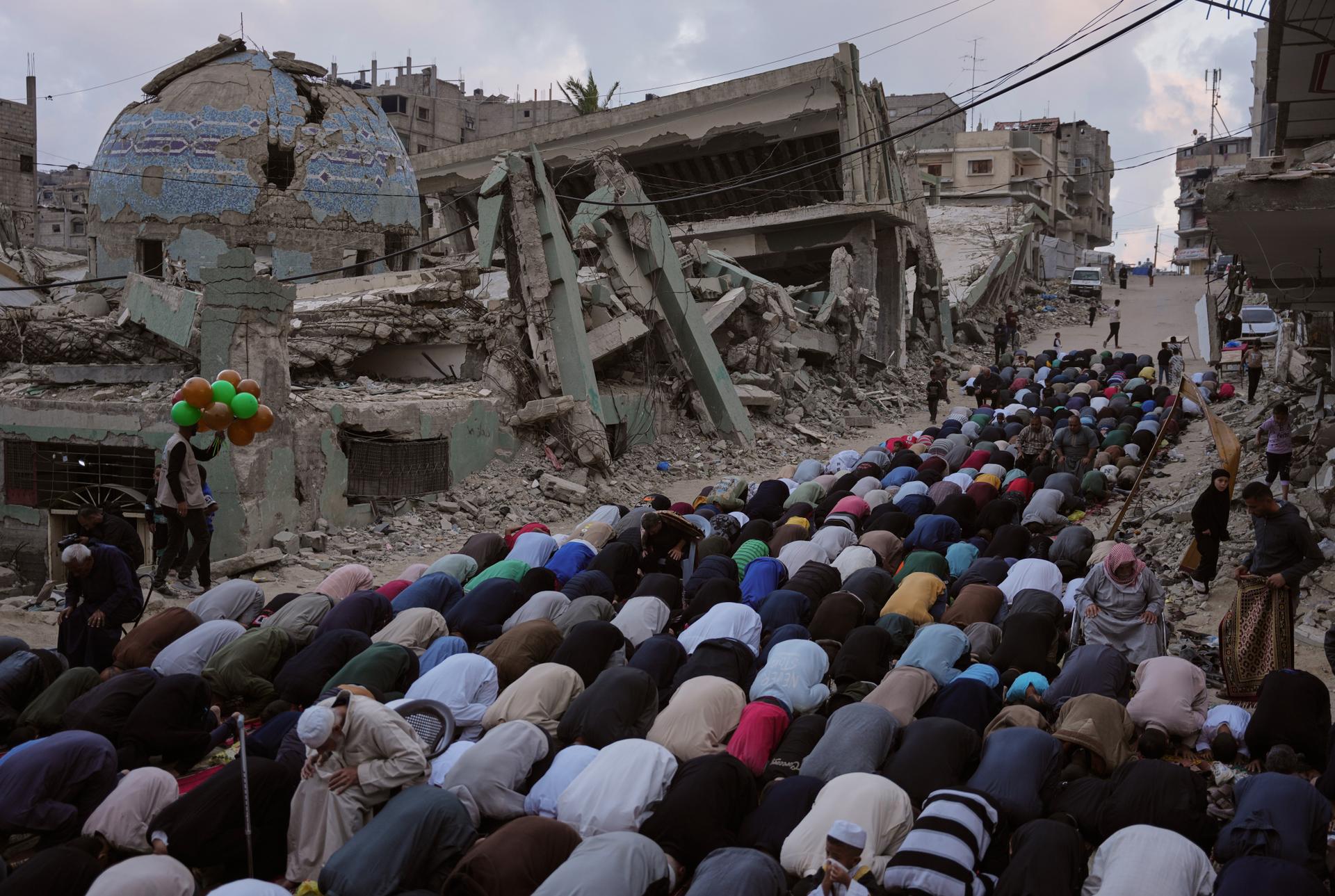
Palestinians offer Eid al-Adha prayers beside the ruins of a mosque destroyed by Israeli bombardment, in Khan Younis, Gaza Strip. (AP Photo/Abdel Kareem Hana) |
Hajj pilgrims perform rituals in soaring heat as Eid al-Adha celebrations unfold |
The annual Hajj pilgrimage in Saudi Arabia took place this week against the backdrop of a tenuous ceasefire in the Iran war and related uncertainty throughout the region. The Hajj also coincided with Eid al-Adha, a typically joyous Islamic holiday marked with communal prayers, food and festive gatherings. In some places, conflicts and economic pressures dampened the festivities. Read more
|
|
|
-
Lebanon observed Eid al-Adha amid a conflict between Israel and the Hezbollah militant group. Many displaced people are sheltering in tented settlements or public schools repurposed as shelters.
- In Saudi Arabia, crowds threw pebbles at a pillar in a symbolic Hajj ritual as temperatures soared above 100 degrees Fahrenheit (40 Celsius).
- The Hajj, one of the Five Pillars of Islam, is required once in a lifetime of every Muslim who can afford it and is physically able. Performed over several days, the Hajj can be a deeply moving spiritual experience and a chance to seek God’s forgiveness.
|
|
|
Pope calls for robust regulation of AI in manifesto that ponders the future of humanity |
Pope Leo XIV considers artificial intelligence the biggest challenge facing humanity today. The top Catholic leader issued his first-ever encyclical calling for robust regulation of AI and urging developers to work for the common good – not profit – in order to safeguard humankind. Read more.
|
|
|
-
Leo denounced the “culture of power” driving the AI race, especially in developing ever more sophisticated methods of remote warfare.
-
He declared that it was “not permissible” to entrust irreversible, lethal decisions to AI systems, setting up another flash point between the American pope and the Trump administration, which has worked aggressively to deregulate AI development.
-
Experts in the tech industry, academia and Catholic morality said the pope’s document will likely become a benchmark in the debate over AI, a point of reference for policymakers, researchers and ordinary folk.
|
|
|
After protests outside synagogues, New York makes it a crime to block entry to a house of worship |
Blocking someone from entering a house of worship, or acting in a way that makes worshippers entering the building fear for their safety, is now a crime in New York under a law approved after several raucous demonstrations outside synagogues. The law, signed by Gov. Kathy Hochul, allows police to establish 50-foot security perimeters outside houses of worship where protests are not allowed. At least four other states have adopted laws this year making it a crime to disrupt worship services, a reaction to a high-profile protest inside a Minnesota church that prompted outrage from faith leaders. Read more.
|
|
|
-
Hochul signed the law after a series of protests outside synagogues hosting real estate events promoting emigration to Israel and the Israeli-occupied West Bank. Pro-Palestinian groups say the events are part of a campaign to drive Arabs out of Israel and the land it controls.
-
The law signed by Hochul would apply statewide and would apply to any house of worship, including mosques, which have also been targeted by protests over the years.
- Bills making it a crime to disrupt worship services have been signed into law in Republican-dominated Idaho, Louisiana and Oklahoma. A Kansas bill is becoming law without the signature of the Democratic governor.
|
|
|
|