Key energy and shipping trends after three months of turmoil

Follow energy market shifts and the forces driving the transition to clean power. Subscribe to Reuters.com for $1/week. Subscribe now.


Power Up

Power Up

A Reuters Open Interest newsletter

By Gavin Maguire, ROI Energy Transition Columnist


Data refreshes every time you open this email. For more energy news, click here. Please send any feedback to powerup@thomsonreuters.com.

Hello Power Up readers,

Crude oil prices are on the rise again after U.S. and Iran armed forces traded fresh strikes overnight, dashing hopes of a peace accord any time soon. Iran targeted a U.S. air base in Kuwait on Thursday after the United States struck what Washington described as an Iranian drone operation near the Strait of Hormuz and President Donald Trump rejected a reported compromise deal with Tehran. Rolling coverage of the latest in Iran is here. 

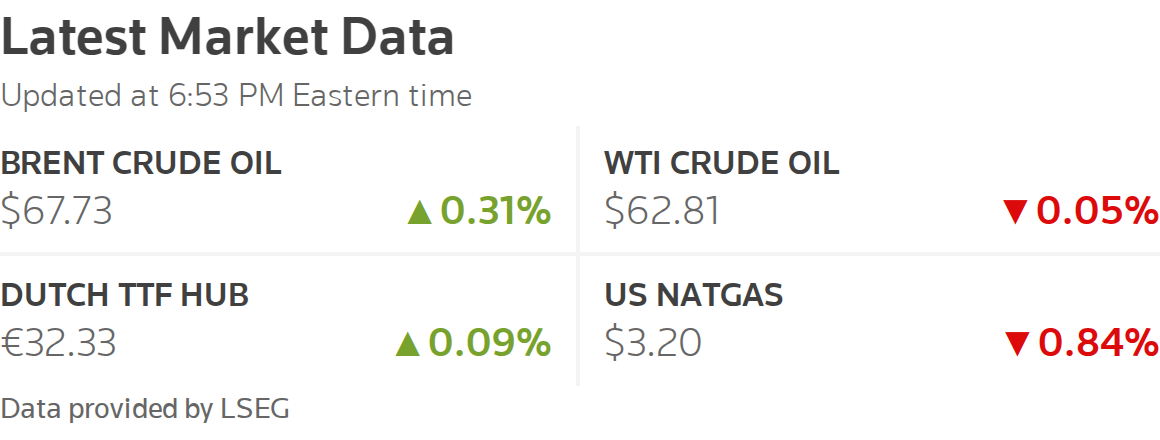
Brent futures are currently trading around 2% higher at around $96 a barrel while U.S. WTI futures are trading around $90.50 a barrel.  

U.S. crude markets were also supported by another draw on stockpiles, which have declined for six straight weeks to further tighten supplies just as the U.S. driving season gets underway. Keep up with the latest Reuters energy news here.

The hostilities in Iran have now lasted for three months, and despite a weeks-long ceasefire appear no closer to a durable peace that could see lead to a reopening of ship traffic through the Strait of Hormuz. I dig into how the conflict has reshaped energy and shipping markets around the world below.

But first, here are a few more key headlines and recent top stories and columns:

  • Argentina, Brunei and Gabon may not appear to have much in common. But as ROI columnist Clyde Russell explains, they are in a small group of energy producers that are big winners from the war against Iran.
  • From Antwerp to the Seychelles, Baton Rouge to Melbourne, or New York to Namibia, the closure of the Strait of Hormuz has upended global jet fuel flows. This deeply reported Reuters story highlights the widening impact of the Iran war on the global air travel industry. 
  • President Donald Trump’s waivers allowing foreign-flagged ships to move oil and fuel between U.S. ports have had little impact on high domestic gasoline prices due to elevated shipping rates and the relatively small fuel volumes transported so far, a Reuters analysis found.
  • Many of Asia's largest cities are already gripped by above-normal temperatures that are prompting widespread use of power-hungry air conditioners weeks ahead of the usual peak in summer thermometer readings across the region. Stepped-up competition for power-generating fuels by Asian utilities could ignite fresh strength in global coal and gas markets.

As always, don’t hesitate to contact me at gavin.maguire@reuters.com or follow me on LinkedIn with any questions or thoughts.


Top energy headlines

  • Oil trims gains on report of US-Iran ceasefire deal
  • Natural gas spending to hit 10-year high in 2026 as oil investment falls, IEA says
  • Baton Rouge to Melbourne: Iran war and rising prices upend jet fuel trade
  • Chevron files request to acquire offshore Greek block, energy ministry says
  • Ousted BP Chair says he may have 'pushed hard', but denies misconduct


Sea change

After three months of upheaval, the Iran conflict and near-total closure of the Strait of Hormuz have delivered a shock that has rewired global oil, fuel and LNG flows and caused historic disruption to energy product shipping in every region.

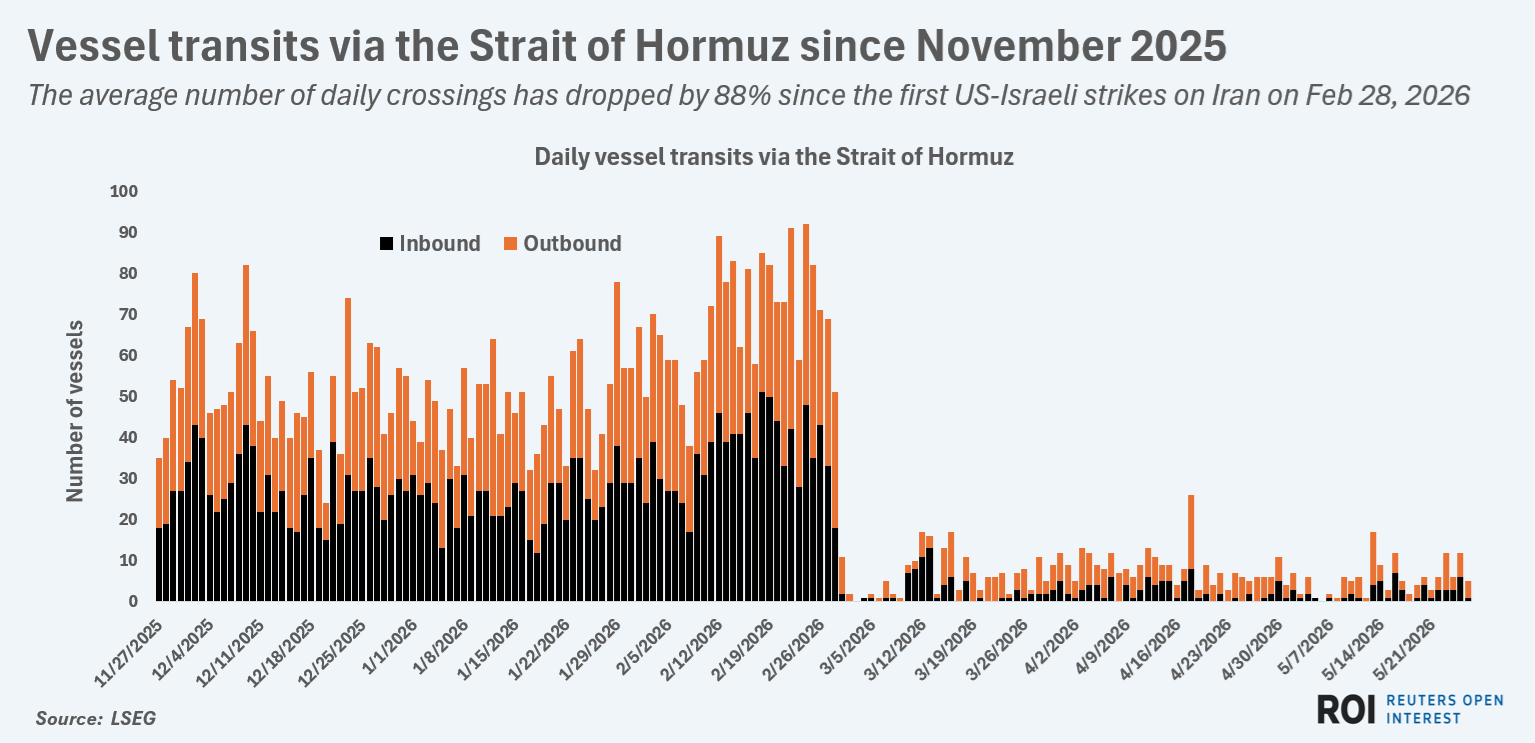
Despite an extended ceasefire and weeks of on-again, off-again talks, ship traffic via the Strait of Hormuz remains a fraction of its former levels.

In the month before the U.S. and Israeli strikes on Iran at the end of February, roughly 70 vessels carrying crude oil, fuels, liquefied natural gas and other products transited Hormuz every day, according to LSEG data.

The cargoes on those ships accounted for around a fifth of global supplies of those commodities, particularly to Asian buyers that in some cases sourced well over half of their oil and fuel supplies from the Middle East.

Since March 1, however, average total daily transits through the Hormuz Strait have dropped to less than 7, and have averaged less than 6 vessels a day so far in May despite steady efforts to seal a peace deal and restore normal traffic from the region.

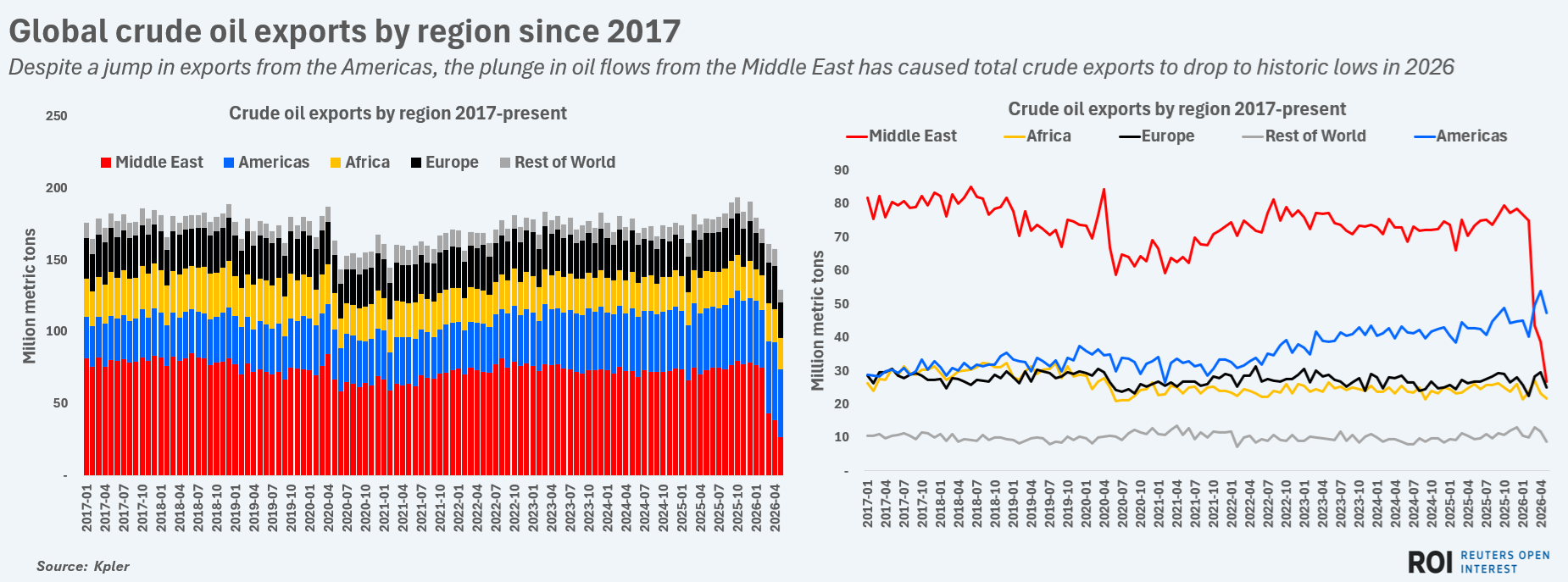
With ships denied passage through the Strait, export volumes of crude oil, refined products and LNG from the Middle East have collapsed to historic lows.

Read the full column below for six charts showing how global crude, fuel, LNG and shipping markets have all been changed by the Middle East turmoil.

Read the full column
 

Sponsors are not involved in the creation of newsletters or other Reuters news content. Advertise in this newsletter or on Reuters' website

LiveIntent Logo
AdChoices Logo
 

Power Up is sent twice weekly. Think your friend or colleague should know about us? Forward this newsletter to them. They can also sign up here.

Want to stop receiving this email? Unsubscribe here. To manage which newsletters you're signed up for, click here.