| | In this afternoon’s edition: The Senate strikes a college sports deal, while Republicans recalibrate͏ ͏ ͏ ͏ ͏ ͏ |
| |  | Washington, DC |  |
| |
|
 - Cold-water Cabinet meeting
- Senate’s college sports deal
- Tea party fever in 2026
- Trump’s base wavers
- Good news at gas stations
 Madison Square Garden Entertainment shares hit a mid-day record high after President Trump said he’d try to attend a Knicks NBA finals game. |
|
Trump insistent on elusive ‘great deal’ in Iran |
 Evan Vucci/Reuters Evan Vucci/ReutersPresident Donald Trump today cast doubt on the prospects of a deal to end the Iran war, telling Semafor during a Cabinet meeting that “it’s got to be perfect.” Trump added: “We can make a good deal right now, but maybe not a great deal, and if it’s not a great deal, we’re not making it.” He spoke amid US negotiations with Iran that have hit obstacles and conservative resistance after weekend optimism. While indicating that further military strikes remain an option, he suggested he might accept an agreement “for speed” that would extend talks on what to do with Iran’s enriched uranium, but that any long-term accord would need to resolve that question. Trump also kept pressing new nations to normalize relations with Israel, saying he’s unsure whether the US should sign any agreement with Iran if neighboring countries spurn the Abraham Accords. — Shelby Talcott |
|
Senate clinches bipartisan college sports deal |
 Ken Cedeno/Reuters Ken Cedeno/ReutersThe Senate finalized a major bipartisan college sports deal today after months of behind-the-scenes wrangling. Commerce Committee Chairman Ted Cruz, R-Texas, struck the agreement with the panel’s top Democrat, Maria Cantwell of Washington, and Sens. Eric Schmitt, R-Mo., and Chris Coons, D-Del. It’s a huge, comprehensive bill that would put in place new eligibility and transfer limits, bar professional athletes from playing college sports, and skirt the divisive unionization question of whether college athletes are university employees. Neutrality on that front helped create an environment for a deal. An aide said the Senate Commerce Committee will consider the legislation soon. Now it’s a race between the two chambers, after the House punted acting on its version to June. — Burgess Everett |
|
View: Senate Republicans’ tea party sequel |
| |  | Burgess Everett |
| |
 Evan Garcia/Reuters Evan Garcia/ReutersThe losses of two incumbent GOP senators this month show the staying power of the tea party — when it comes to anti-incumbency politics. Gone are the days of ideological purity contests. Instead, Republican primaries hinge on loyalty to Trump, who is egging them on. Consider that after Republicans’ 2010 debacle blew their shot at the Senate, only two GOP senators lost their party nominations in the ensuing 15 years — until this month. In the span of 10 days, two Republican senators, John Cornyn of Texas and Bill Cassidy of Louisiana, lost by such whopping margins that Trump’s endorsement of their opponents was probably just salt in the wound. And Republican incumbents aren’t totally out of the woods: Sen. Lindsey Graham, R-S.C., is laboring to avoid a runoff against Mark Lynch in his June primary. |
|
The number that explains Dem midterm advantages |
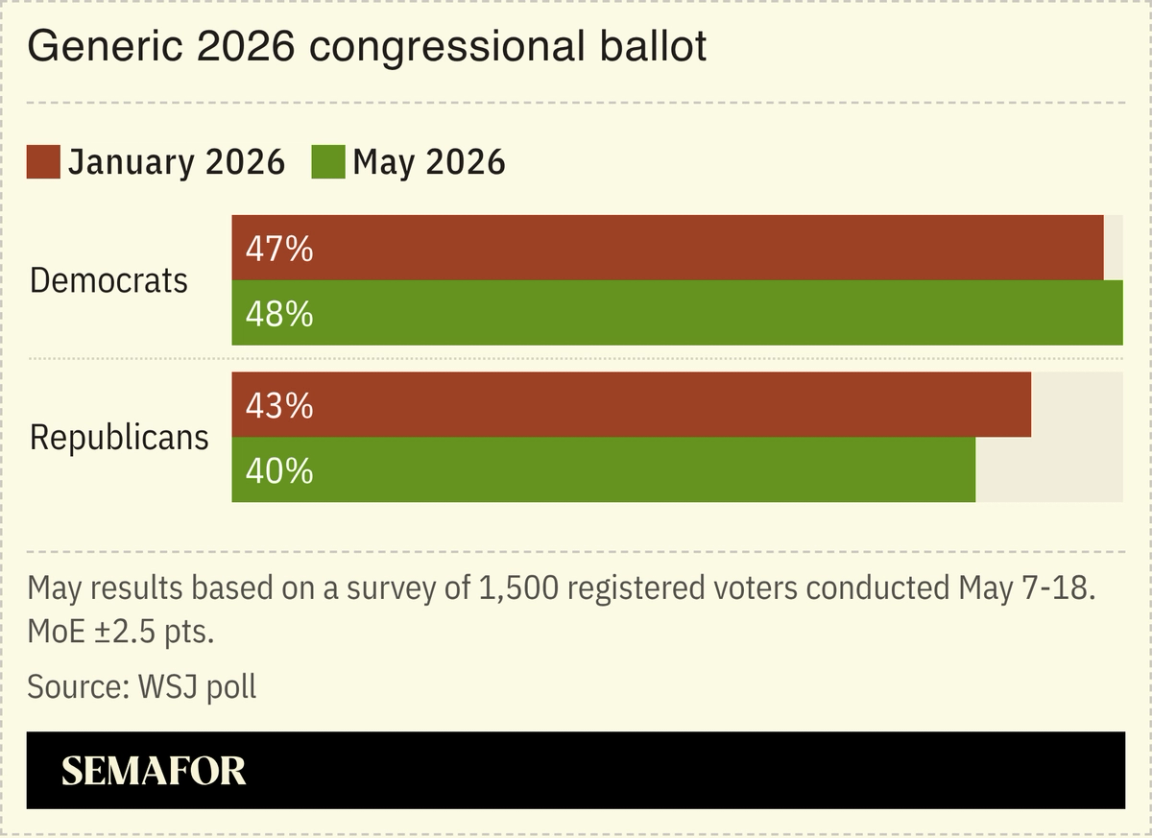 Outraised, disorganized, and distracted by primaries, Democrats continue to benefit from frustration that the president isn’t lowering prices like he said he would in 2024, Semafor’s David Weigel reports. Since US and Israeli airstrikes on Iran on Feb. 28, the Democratic lead in midterm polling has grown by around three points. In The Wall Street Journal’s polling, the shift is driven by Republicans, who have become less intense in their support for Trump. “Strong” Trump support among GOP voters was 72% in January, before the Iran war. It’s down to 57% now. That’s been more than enough for Trump to demolish Republicans who’ve crossed him — in Louisiana, Kentucky, and now Texas. But a crucial share of Republican voters are less engaged now, and the current GOP plan to get them back is mostly warning that Democrats would halt Trump’s agenda. |
|
Gas prices drop about 10 cents nationally |
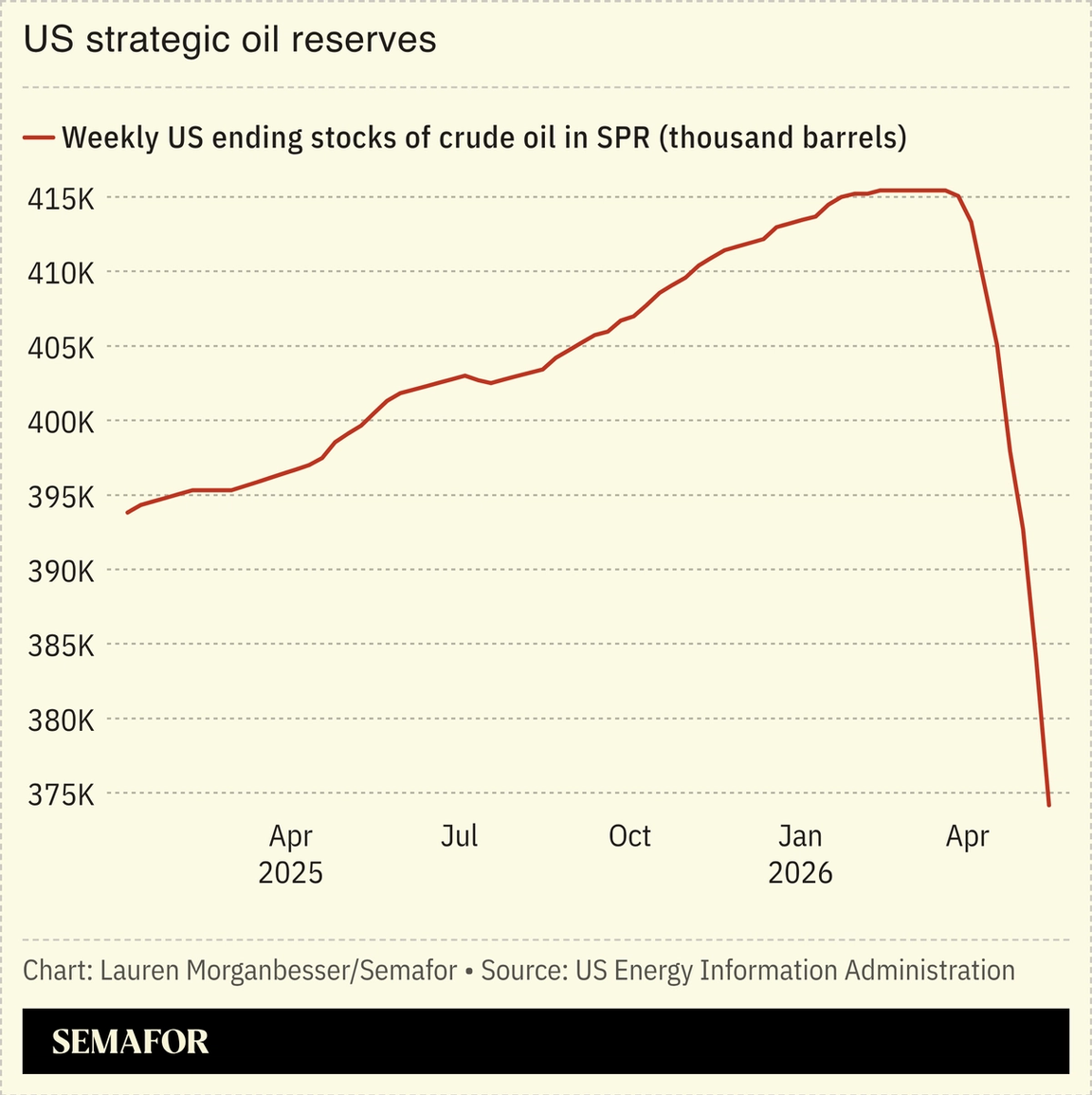 Treasury Secretary Scott Bessent said today that high gas prices are “transitory,” and for the first time since the start of the conflict in Iran, US drivers are seeing a shift: The average price of gas is down about 10 cents a gallon nationally since last week. The trend is the result of market optimism around sustained talks between the US and Iran, the new engagement of other Gulf countries, and a small increase in tankers traveling through the Strait of Hormuz. But oil watchers warn it might not last. If no deal to reopen the strait arrives soon, American drivers could be in store for a boomerang. And US officials could be in a weaker position to respond: The US strategic oil reserves have been tapped aggressively in recent weeks, and are on track to near their lowest levels since the early 1980s. |
|
 On Thursday, June 11, Emma Bloomberg, Founder & CEO of Murmuration, will join Semafor on stage for The Future of Philanthropy. For generations, philanthropy has backed ideas ahead of their time — from early childhood education to breakthrough research that later became public goods. As the United States approaches its 250th anniversary, the sector faces a pivotal moment: under increasing political scrutiny, yet more vital than ever to expanding opportunity and driving innovation. Semafor editors will host on-the-record conversations on how philanthropy can scale solutions for workforce mobility and community resilience. Featuring: Tim Shriver, Chairman of Special Olympics and CEO & Co-Founder, UNITE; Rep. Blake Moore (R-UT), Bipartisan Philanthropy Caucus; Marla Blow, President & Chief Operating Officer, Skoll Foundation; Richard Buery, Jr., CEO, Robin Hood Foundation; Asha Curran, CEO, Giving Tuesday; Steve Preston, President & CEO, Goodwill Industries International; and Stacey D. Stewart, CEO, MADD and former CEO, March of Dimes. June 11 | Washington, DC | Request Invite |
|
 White House- President Trump’s official Board of Peace fund, administered by the World Bank, is empty, as donors direct money to an account outside of the bank’s purview. — FT
- The Trump administration has directed the US military to set up a quarantine facility in central Kenya within a week to house Americans exposed to Ebola in the Democratic Republic of Congo..
- The National Park Service is using at least $67 million worth of park entrance fees to help fund Trump’s DC beautification projects. — NYT
- Defense Secretary Pete Hegseth said the Pentagon is planning a National Guard troop “surge this summer” in DC.
Media- CBS News chose not to extend the contract of 60 Minutes correspondent Sharyn Alfonsi, six months after she called a decision by editor-in-chief Bari Weiss to pull her report on torture in Salvadoran prisons “political.”
Immigration- Immigration officers have started asking green card applicants new questions, including why they did not leave the US and return to their home countries to apply, following a new directive issued last Friday by US Citizenship and Immigration Services.
Congress- Democratic Rep. Angie Craig is ceding her state party’s endorsement to Lt. Gov. Peggy Flanagan, but staying in the Minnesota Senate race.
World- Israel has intensified its attacks on southern Lebanon. — NYT
- The Pentagon has cut forces earmarked for an emergency in Europe. — WSJ
- European capitals fear Russia’s Vladimir Putin will expand the war in Ukraine. — WSJ
- The war in Iran has been a boon for Russian oil exports. — Bloomberg
Technology- Robinhood is letting customers use AI to trade stocks and make credit card purchases.
|
|
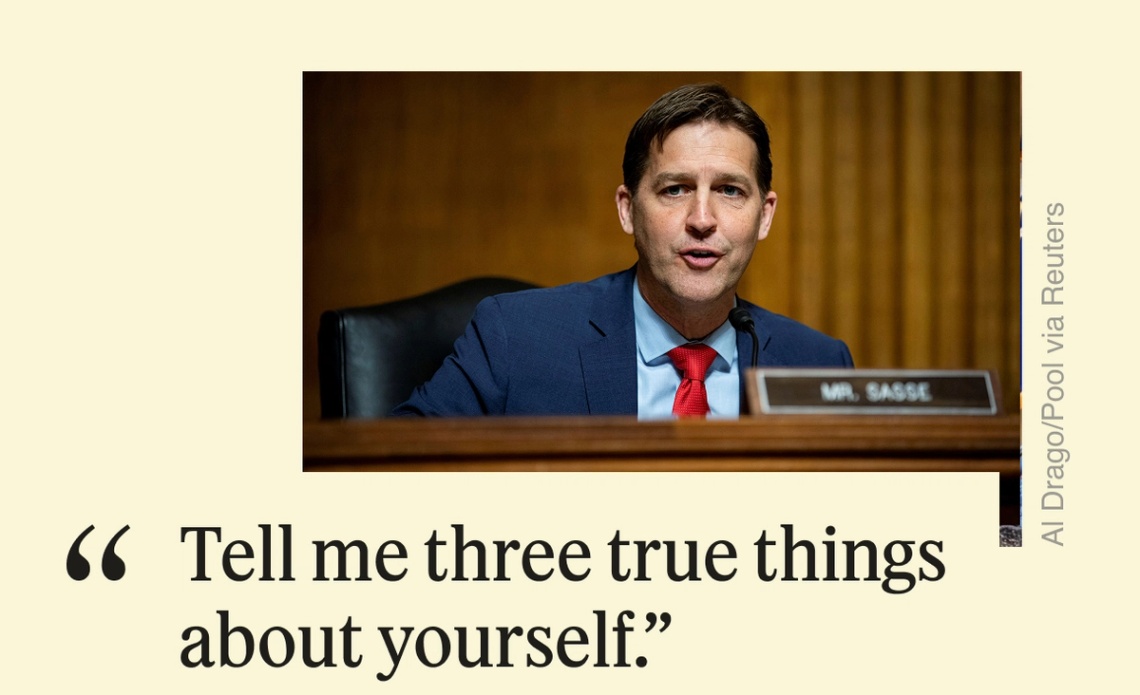 — Alex Sasse in an essay for The Free Press on the parenting style of her father, former Sen. Ben Sasse, R-Neb., who is battling pancreatic cancer. |
|
|


